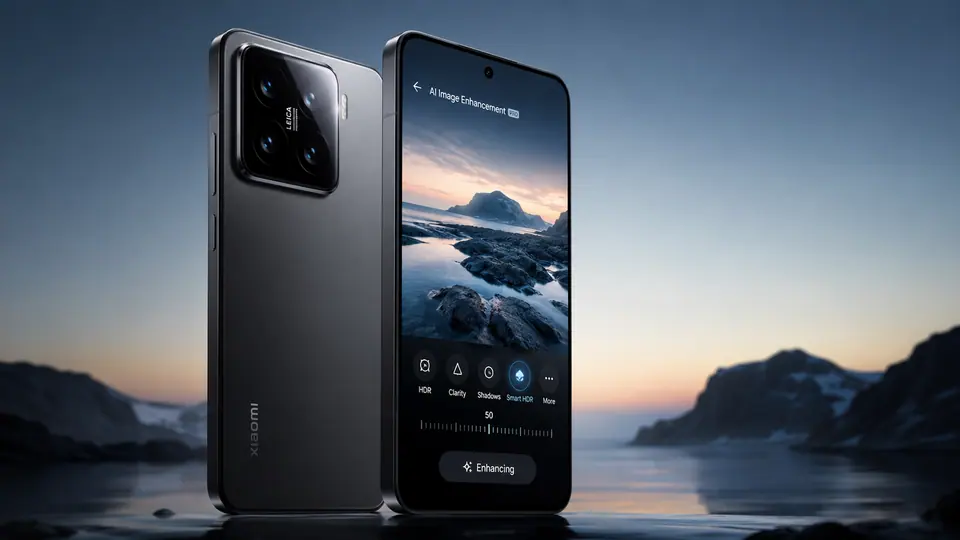
Phone makers are using sensors and AI together to keep flagships interesting. That pairing matters because the premium phone pitch has become harder. Many people already own good screens, fast processors, and capable cameras. To justify a costly upgrade, brands need improvements that are visible to ordinary users. Larger sensors, better lenses, computational photography, and AI editing all point toward the same goal: make the new phone produce results the old one cannot easily match.
Hardware still matters
The AI era has not made camera hardware irrelevant. A better sensor can capture more useful image data. Improved optics can affect sharpness, light, distortion, and zoom quality. Stabilization can help with motion and low light. These physical advantages give computational systems better material to work with. Software can do a lot, but it cannot fully replace the benefits of starting with a cleaner capture.
This is an important message for consumers because AI marketing can sometimes make photography sound magical. A phone may promise smarter edits, scene understanding, or automatic enhancement, but the original capture still matters. If the lens struggles, if motion blur is severe, or if the image lacks detail, AI has to guess more. That can produce a pleasing picture, but it may also move further away from what was actually in front of the camera.
AI improves and complicates the photo
AI editing can be genuinely useful. Removing distractions, improving lighting, sharpening a soft subject, expanding a frame, or helping search through a gallery can make everyday photography easier. These tools reduce the penalty for imperfect timing and imperfect conditions. They also make advanced editing feel less intimidating for people who would never open a professional photo app.
At the same time, AI blurs the meaning of a photo. A small cleanup is one thing. A major generated change is another. Most consumers may not want a philosophical debate every time they edit a vacation picture, but authenticity still matters in family memories, journalism, selling items, insurance claims, schoolwork, and social trust. Phone makers should give users clear cues when an image has been heavily altered and should avoid making fake-looking output the default. The best AI camera features help the user rescue a moment without making every image feel synthetic.
The upgrade has to be obvious
For a flagship buyer, the key question is simple: will the difference show up in my life? A bigger sensor sounds impressive, but the value becomes real when indoor photos look cleaner, kids and pets are less blurry, concerts are more usable, and video looks steadier. AI sounds impressive, but the value becomes real when edits take seconds, search finds the right memory, and group shots need fewer retakes. The premium pitch has to leave the stage and survive the camera roll.
This is why phone makers are combining hardware and AI rather than relying on only one side. Hardware gives credibility to the capture. AI gives flexibility after the capture. Together, they create more chances for a user to see a difference. The risk is that brands overcomplicate the story with too many modes, labels, and editing tricks. A flagship camera should not require homework to outperform a cheaper phone.
There is also a broader pressure on premium devices. If midrange phones keep improving, flagships need to feel meaningfully better in the areas people notice most. Cameras remain one of those areas. Battery life, display quality, durability, and long software support matter too, but the camera is still the feature people show to others. A better photo is easier to understand than a benchmark score.
The most persuasive flagship will be the one that makes its technology disappear into better results. Bigger sensors should mean fewer failed shots. AI should mean faster fixes and more useful creativity. The upgrade should be visible without needing to explain the pipeline behind it. In a mature phone market, that clarity may be the difference between admiration and purchase.