Strange Ideas Usually Point To Real Constraints
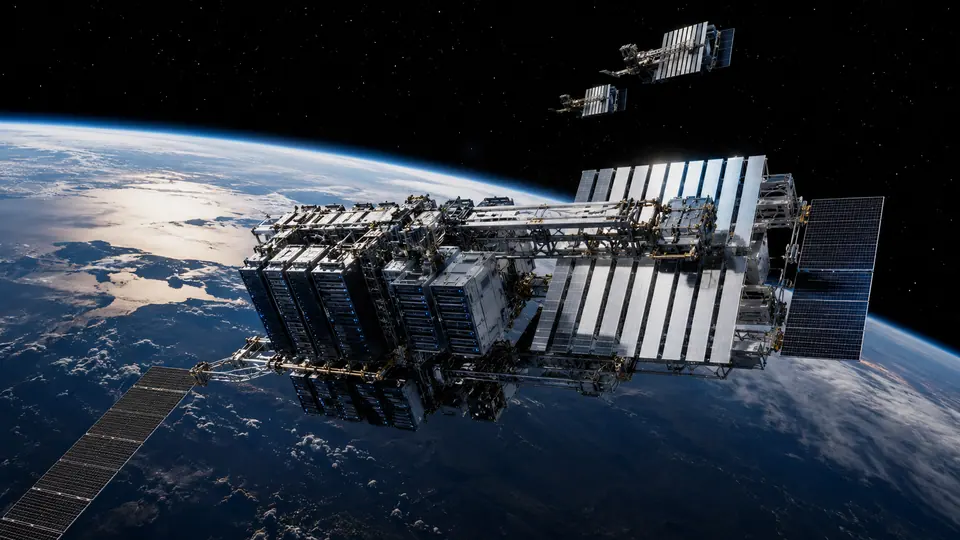
Orbital data center concepts sound like the outer edge of infrastructure imagination, and that is the useful part. They are not near-term defaults for most cloud buyers, and teams should be careful not to treat every unconventional proposal as a roadmap. But ideas like compute outside ordinary terrestrial facilities show how intense the pressure around AI infrastructure has become. When demand rises fast enough, the industry starts looking at power, cooling, land, latency, and location in unfamiliar ways.
The practical story is not that developers should plan to deploy production workloads in orbit next quarter. The story is that AI demand is making physical infrastructure a strategic constraint again. Data centers are not just neutral buildings where software happens. They are limited by electricity, heat, network access, construction timelines, regulation, and geography. As AI workloads grow, those limits become more visible to product and engineering teams.
Power And Cooling Are Now Product Inputs
For years, many developers could treat compute as elastic enough to ignore the physical layer. If an application needed more capacity, the team adjusted instance counts, changed a managed service tier, or negotiated cloud spend. AI changes the feel of that abstraction because training, inference, embedding generation, and media-heavy workflows can consume large amounts of compute in bursts.
Power availability becomes part of the platform conversation. Cooling affects density. Location affects latency, energy sourcing, and compliance. Hardware supply affects scheduling. None of this means every application team needs to manage substations or cooling loops. It does mean that infrastructure teams need to explain capacity constraints earlier and more clearly.
An AI feature that looks simple in a product spec may create heavy background work. A document assistant might require indexing large archives. A customer support agent might need retrieval, classification, and inference on every interaction. A developer tool might run code analysis repeatedly across repositories. Each feature has a physical footprint somewhere, even if the developer sees only an API call.
Experimental Concepts Can Still Be Useful
Unconventional data center concepts should be evaluated with skepticism and curiosity at the same time. Some may be technically difficult, expensive, or unsuitable for broad use. Others may influence narrower pieces of infrastructure thinking. The value of the discussion is that it forces teams to ask which constraints are becoming painful enough to justify new approaches.
Orbital or remote compute ideas raise obvious questions. How would maintenance work? What would latency look like? How would workloads be scheduled? What happens when hardware fails? What regulatory or safety concerns appear? How does data move securely? These are not small details. They are the difference between a concept and an operable platform.
Still, even speculative ideas can sharpen terrestrial planning. If the industry is seriously exploring stranger locations, that says something about the pressure on ordinary data center capacity. It suggests that cloud regions, power contracts, cooling technology, and workload placement will matter more to AI strategy than many software teams expected.
Developers Will Feel The Constraint Through Policies
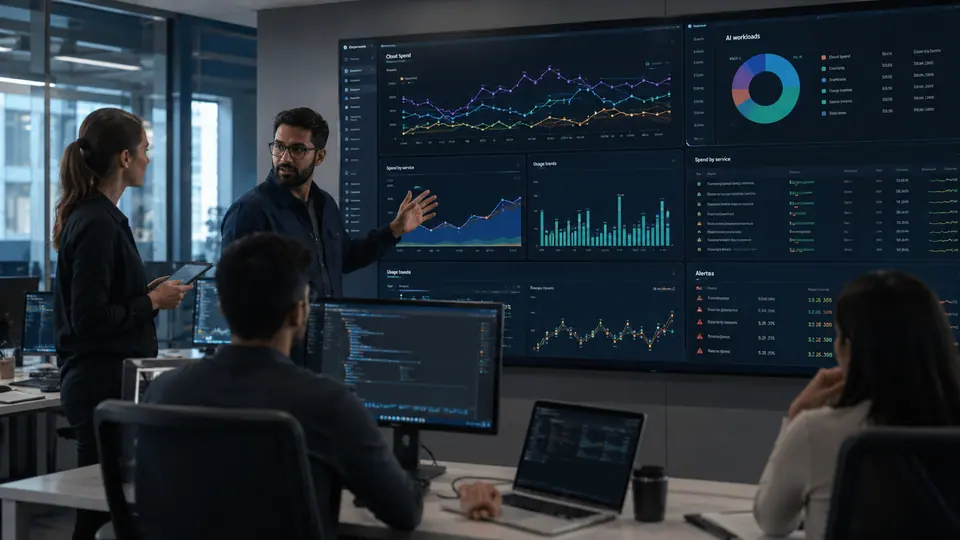
Most developers will not interact with infrastructure pressure directly. They will feel it through quotas, pricing, deployment policies, model selection rules, capacity reservations, and review gates. A platform team may ask product teams to estimate inference volume before launch. A cloud team may require cost checks for GPU-backed services. A security team may limit where certain data can be processed. These controls can feel like friction, but they are often the software-facing version of physical scarcity.
The healthier pattern is to make those constraints visible early. If a team knows that a feature will require bursty inference, it can design caching, batching, fallback behavior, or asynchronous processing before launch. If developers see estimated cost and capacity impact in the deployment workflow, they can make tradeoffs while changes are still cheap. Hiding the constraint until the bill arrives or capacity runs out creates worse friction later.
AI infrastructure pressure also encourages better workload design. Not every request needs the largest model. Not every task needs real-time processing. Not every dataset needs to be reprocessed on every change. Efficient architecture is no longer just about elegant engineering. It is a way to respect limited compute, power, and budget.
Orbital data center ideas may remain experimental for a long time. That does not make the conversation irrelevant. They are a signal that the cloud industry is searching for capacity wherever it can imagine it. For engineering teams, the grounded lesson is to design AI systems with infrastructure reality in mind: measure usage, control bursts, plan placement, and treat power and cooling as hidden dependencies behind every intelligent feature.