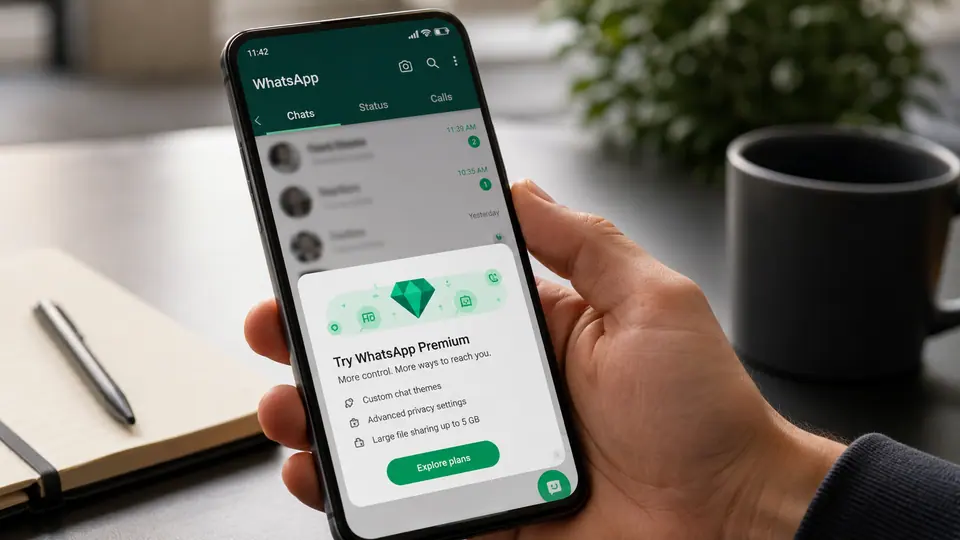
The Free Messaging Expectation Is Hard To Change
WhatsApp subscription rumors and reports about paid experiments point to a larger platform problem: messaging apps have enormous scale, but users often expect the core service to remain free. That expectation is not casual. For many people, messaging is basic communications infrastructure. Charging for the wrong part of the experience can feel less like a product upgrade and more like a tax on staying connected.
This makes monetization unusually delicate. A messaging platform can have hundreds of millions or even billions of users and still face limits on direct revenue from the consumer app. Ads can feel intrusive inside private conversations. Transaction features may not apply to every market. Business messaging can be lucrative, but it does not always capture value from heavy personal use. Paid tiers are an obvious idea, but they must be introduced without confusing the promise of free messaging.
Where Paid Features Fit
The most natural paid areas are features that sit around the core conversation rather than inside it. Privacy controls, backup options, larger storage, account protection, device management, business tools, and advanced customization can be framed as optional upgrades. They do not prevent someone from sending a message. They add convenience, assurance, or control for users who care enough to pay.
That distinction matters. If users suspect that basic reliability or privacy is being moved behind a paywall, trust can weaken quickly. A platform built on daily habit cannot afford broad confusion about who gets protected and who does not. Paid features should make the product feel more useful, not make the free product feel deliberately degraded.
Backup features are especially interesting because they connect convenience with anxiety. People care deeply about message history, photos, documents, and account recovery. They may be willing to pay for more secure or more flexible backup experiences. But the language must be precise. If backup monetization touches privacy, encryption, or recovery, the product has to explain what changes and what remains protected.
Scale Does Not Make Pricing Easy
At messaging scale, even a small paid conversion rate can create meaningful revenue. That makes subscriptions tempting. But the same scale also increases the cost of mistakes. A pricing test that would be minor in another category can create global confusion when applied to a default communication app.
Messaging platforms also operate across markets with different incomes, carrier relationships, device habits, and payment norms. A feature that feels reasonable in one region may feel exclusionary in another. Product teams have to think beyond a single subscription price. They need packaging, regional sensitivity, and clear separation between essential access and optional value.
There is also a social dimension. Messaging apps are network products. If one person pays for an upgrade and others do not, the experience must still work cleanly across the group. Paid features that create awkward incompatibilities can weaken the product's social fabric. The best monetization respects the fact that messaging is shared, even when billing is individual.
The Real Test Is Clarity
Subscription rumors can generate strong reactions because users fill in the blanks. If the company does not clearly say what is free, what is paid, and why, people imagine the most threatening version. That is why monetization communication needs to be treated as product design. Pricing pages, settings labels, onboarding prompts, and support explanations all shape whether the experiment feels fair.
A good paid tier should be easy to ignore. Users who do not need it should continue messaging without anxiety. Users who do need it should understand the benefit in plain terms. That balance is harder than it sounds, because a messaging platform cannot rely on novelty alone. It must preserve the feeling that the app is dependable, familiar, and socially safe.
The broader strategy is not simply to charge for messaging. It is to find paid surfaces that match the emotional value users already assign to the product. Privacy, continuity, backup, and control are credible because they protect what people already care about. Cosmetic extras or unclear bundles may work for some users, but they are less central to the trust contract.
WhatsApp and similar platforms are likely to keep testing the edges of consumer monetization. The winning approach will not be the one that extracts the most aggressively. It will be the one that makes paid value obvious while leaving the basic expectation intact: messaging should still feel free, simple, and reliable for everyone.