AI has changed the volume of code review
Code security platforms are moving closer to developer workflows because AI-assisted development changes how much code can be produced and how quickly it can enter review. Generated code may look clean, pass basic tests, and solve the immediate request while still carrying security risk. That is the uncomfortable part. Correctness and safety are related, but they are not the same. A function can return the expected result while handling input poorly, exposing too much data, skipping authorization checks, or introducing dependencies the team does not understand.
The buyer need is becoming clear: teams want to catch AI-generated or AI-assisted risk before it becomes production debt. This is not only about blaming AI for bad code. Human developers have always introduced vulnerabilities. The difference is speed and scale. If AI increases change volume, review systems must keep up without turning every pull request into a bottleneck. Security that arrives weeks later is less useful when the code has already shipped, been copied, or become a pattern for future work.
The risky code may not look broken
One reason early review matters is that generated code often has a polished surface. It can include comments, sensible names, and familiar structure. That polish can make reviewers less suspicious. But security review is about behavior under pressure: hostile inputs, missing permissions, unexpected states, sensitive data, and operational failure. AI-generated code can miss those concerns because the prompt focused on the happy path or because the surrounding project context was incomplete.
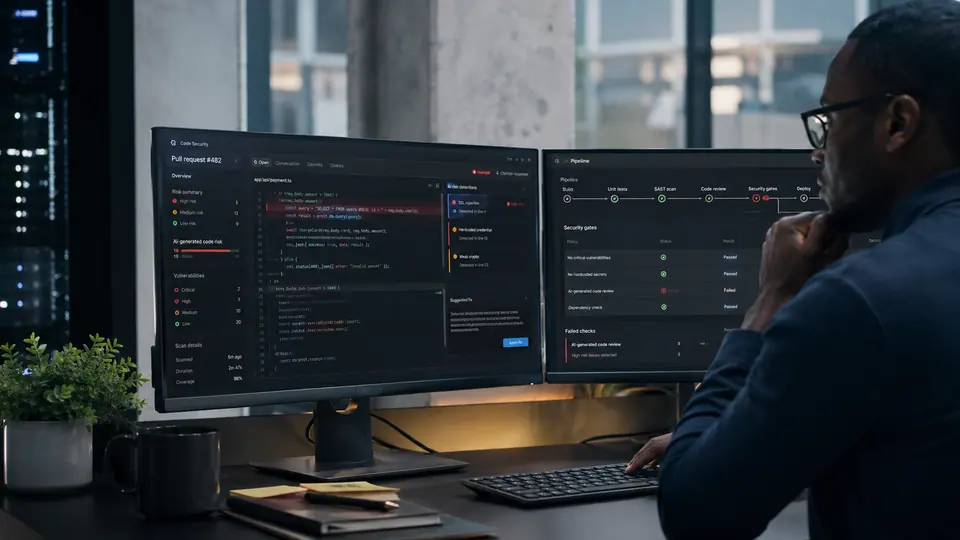
Security platforms are trying to meet developers where those decisions happen. That can mean scanning pull requests, checking dependencies, reviewing infrastructure changes, flagging secrets, or connecting findings to the files a developer is already editing. The closer the feedback is to the moment of creation, the more likely it is to be fixed. A warning after deployment may still be important, but a warning before merge is easier to act on.
Speed has to be paired with trust
The challenge for these tools is signal quality. If AI increases the number of changes, noisy security alerts become even more painful. Developers will not slow down for vague warnings that do not explain impact or remediation. Useful review needs to distinguish between theoretical concerns and practical risk. It should show why a pattern is dangerous in context and how to fix it without asking the developer to become a security specialist in the middle of a feature deadline.
Teams adopting AI coding tools should adjust their definition of done. A generated patch should not be considered safer because it came from a model or riskier by default because it did. It should pass through the same controls as other code, with extra attention to areas where generated output can be overconfident: authentication, authorization, input handling, cryptography, logging, and dependency use. If the organization already has secure coding standards, AI output should be measured against them. If it does not, AI adoption is a good reason to create clearer standards.
There is also a workflow lesson. Security cannot sit entirely outside development if development speed accelerates. The review path should be visible in the pull request, the editor, or the build process. Findings should be triaged quickly, and teams should track whether AI-assisted changes are creating repeat patterns. Over time, those patterns can inform prompts, templates, guardrails, and education.
The practical takeaway is not that every generated line is suspect. It is that generated code deserves the same skepticism as a fast patch from a talented but rushed developer. It can be useful, impressive, and still incomplete. Security platforms are racing to make that review earlier, faster, and more contextual because the cost of waiting grows with every AI-assisted change.