


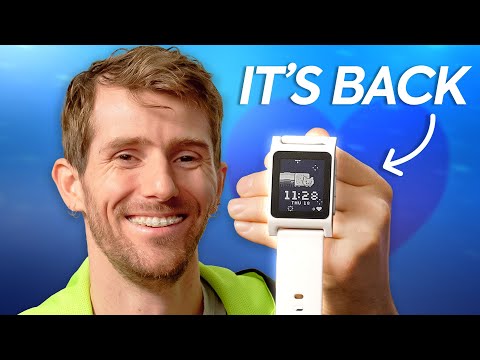
A Nostalgic Revival in a High Tech World
The tech landscape moves at a breakneck pace, often leaving behind the very devices that defined an era. In 2012, the original Pebble smartwatch took Kickstarter by storm, promising a simple, long lasting, and cross platform alternative to the burgeoning smartwatch market. After a series of acquisitions that saw the brand move to Fitbit and eventually Google, many assumed the Pebble story had reached its final chapter. However, the Pebble 2 Duo has arrived to prove that some legacies are too resilient to fade away.
This new release is not a modern reimagining with OLED screens or complex health sensors. Instead, it is a faithful re-release of a nearly decade old black and white smartwatch. It harkens back to a simpler time in technology, prioritizing utility and battery life over the flashy, distraction heavy features found on contemporary wearables. For those who remember the original, it feels like a first love returning, more refined but fundamentally unchanged.
The Long Road Back to the Wrist
The journey of the Pebble 2 Duo is as much about community as it is about hardware. When Pebble ceased operations in 2016, the community refused to let their devices die. Through the Rebble app and web services, enthusiasts maintained functionality long after official support vanished. This grassroots effort laid the groundwork for what happened in 2025, when Google made the pivotal decision to open source the original Pebble smartwatch software.
This opening of the software vault allowed the original founder, Eric Migicovsky, to re-acquire the trademark. Partnering with Core Devices, the brand has been relaunched with the Pebble 2 Duo. This device is essentially an updated original Pebble 2, utilizing the same polycarbonate frame but equipped with new internal chips to ensure compatibility with modern standards. It represents a rare moment in tech where a defunct product is resurrected by its creator and its fans.
Hardware and Specifications
The Pebble 2 Duo features a 1.2 inch black and white e-paper screen. This display technology is the cornerstone of the Pebble experience, offering perfect visibility in direct sunlight and contributing to the device’s legendary battery life. The frame is constructed from polycarbonate, giving it a lightweight feel on the wrist. While modern watches have moved toward touchscreens, the Duo sticks to its roots with physical buttons for navigation, ensuring the interface is tactile and reliable even when the watch is wet.
Despite its retro appearance, the internals have seen some upgrades. The watch includes a barometer and a compass, alongside improved step and sleep tracking capabilities. It is rated for 20 meter water resistance (IPX8), making it suitable for swimming and daily wear. One of the more surprising inclusions is a microphone, which allows users to dictate text responses directly from their wrist. The unboxing experience is minimalist, including the watch, a white wristband, and a magnetic USB-C charger, though it follows modern trends by omitting a wall power adapter.
Software, Customization, and the Ecosystem
The true strength of the Pebble 2 Duo lies in its software ecosystem. Because it utilizes the original software architecture, it has immediate access to over 10,000 watch faces and apps. Many of these are nostalgic favorites carried over from the original Pebble Appstore, such as Battery+, Timer+, and various specialized compass tools. The pairing process remains straightforward for both Android and iOS, though Android users may find that a factory reset is required to successfully link the device.
The firmware, currently at version 4.9.100, introduces several quality of life improvements. Users can now customize notification vibration patterns and timing, allowing for a more personalized haptic experience. However, some ghosts of the past remain. A known notification bug from the original Pebble, where the sender’s name occasionally appears twice, still exists in this version. For speech recognition, the watch offers flexibility, allowing for either on device processing or remote first options depending on user preference.
Battery Life and Longevity
In an era where many smartwatches struggle to last two days, the Pebble 2 Duo is a marathon runner. Currently, the device boasts a battery life of two to three weeks on a single charge. The development team has stated that they are targeting a full month of battery life through future software updates. This longevity is achieved through the efficiency of the e-paper display and a lack of power hungry sensors like continuous heart rate monitors. It is a device designed to be worn and forgotten, rather than managed and charged nightly.
The Cost of Nostalgia
Positioning the Pebble 2 Duo in the current market is a complex task. With a price point of $149 USD, it sits in a higher bracket than many entry level or mid range fitness trackers, including several models from Fitbit. Critics might argue that the device has a cheap feel compared to the premium glass and metal constructions of modern competitors. Furthermore, Core Devices currently offers only a 30 day warranty against manufacturing defects, a policy that has raised questions regarding its adequacy for a consumer electronics product.
Ultimately, the Pebble 2 Duo is an investment in an open source, distraction free wearable ecosystem. It is not trying to compete with the feature sets of the latest flagship watches. Instead, it offers a specific, focused experience for those who value privacy, simplicity, and the enduring appeal of a community driven platform. It is a testament to the idea that good design and functional software can outlast the companies that originally created them.
