



H.P. Lovecraft excelled at crafting mythos and building atmosphere.
However, Lovecraft struggled with writing dialogue, developing compelling characters, and notably, his pervasive racism. As a general horror enthusiast, Lovecraft remains a significant influence. Yet, his overt racism is undeniable, often manifesting within his stories. A prime example is The Horror at Red Hook, which depicts Detective Thomas Malone investigating a sinister cult in a Brooklyn neighborhood.
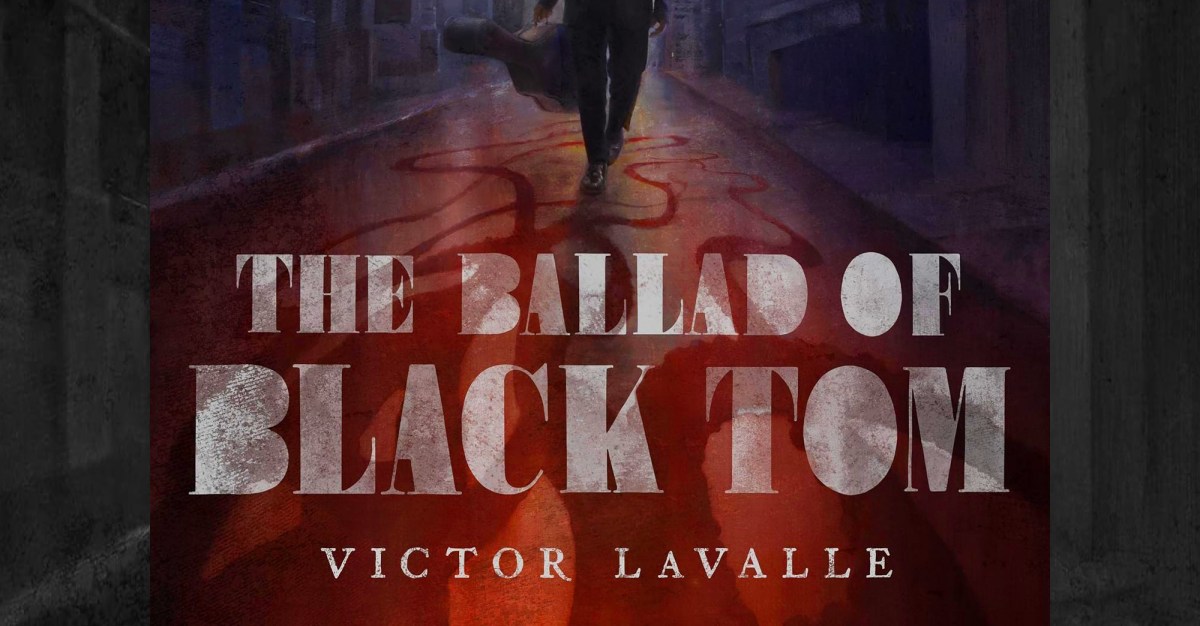
The Ballad of Black Tom reimagines this narrative from the perspective of Charles “Tommy” Tester, a Black man from Harlem. Tommy inadvertently becomes entangled in a powerful individual’s quest and police scrutiny. Author Victor LaValle subverts the original’s explicit xenophobia, transforming it into a critique of police brutality, racism, and the psychological toll of oppression. Lovecraft likely would have despised this interpretation.
Tommy is introduced as a hustler, working as a courier or fixer to earn a living. The reader also understands that Tommy possesses some knowledge of magic and arcane artifacts. The book avoids lengthy explanations of the magic system or how Tommy acquired his knowledge; it is simply an accepted aspect of the world presented.
While such an approach might be frustrating in a longer work, The Ballad of Black Tom, at 149 pages, prioritizes its story over detailing a magic system.
Tommy takes on a new hustle, leading him to Flatbush, where he plans to busk despite not being a skilled musician. There, he encounters an elderly man named Robert Suydam, who hires him to perform at a party. Officer Malone and a private detective, Mr. Howard, witness this interaction, shaking Tommy down and attempting to deter him from returning to Flatbush. However, the prospect of $300 in the 1920s proves too tempting, and Tommy returns, setting the stage for the unfolding narrative.
Warning: Spoilers for The Ballad of Black Tom ahead.
Amidst the cosmic horrors conjured at Suydam’s residence, the assault on the Red Hook cult compound, and the police harassment, the narrative includes several scenes between Tommy and his father. These moments develop the characters in a way Lovecraft rarely did. Tommy undergoes a genuine character arc, with clear motivations and a distinct personality. By the book’s climax, readers become fully invested in Tommy, now known as Black Tom.
This investment in Black Tom is crucial because he is not a hero. In fact, the story lacks traditional heroes. There are villains and victims, but no clear heroic figures. Black Tom retaliates against the white men who exploit and oppress him. This act is cathartic and satisfying for the reader, but his vengeance is indiscriminate, and it is implied to potentially lead to the end of humanity.
By the story’s conclusion, Tommy Tester is a broken man. He is so weary of the indignities faced as a Black man in a white-dominated world that he would prefer the destructive indifference of cosmic entities like Cthulhu to the destructive indifference of systemic racism.
The Ballad of Black Tom is not a subtle work, but it offers a quick and engaging read that takes Lovecraft’s iconic mythos and infuses it with genuine depth. The Horror at Red Hook is not a particularly strong story; it lacks plot, has a linear arc, and features shallow characters. The Ballad of Black Tom salvages the compelling theoretical aspects of Lovecraft’s work (despite his personal flaws) and offers a compelling read for the 21st century.
The Ballad of Black Tom is available on most e-book stores. Consider purchasing a physical copy from your neighborhood independent bookshop or supporting your local library.
