


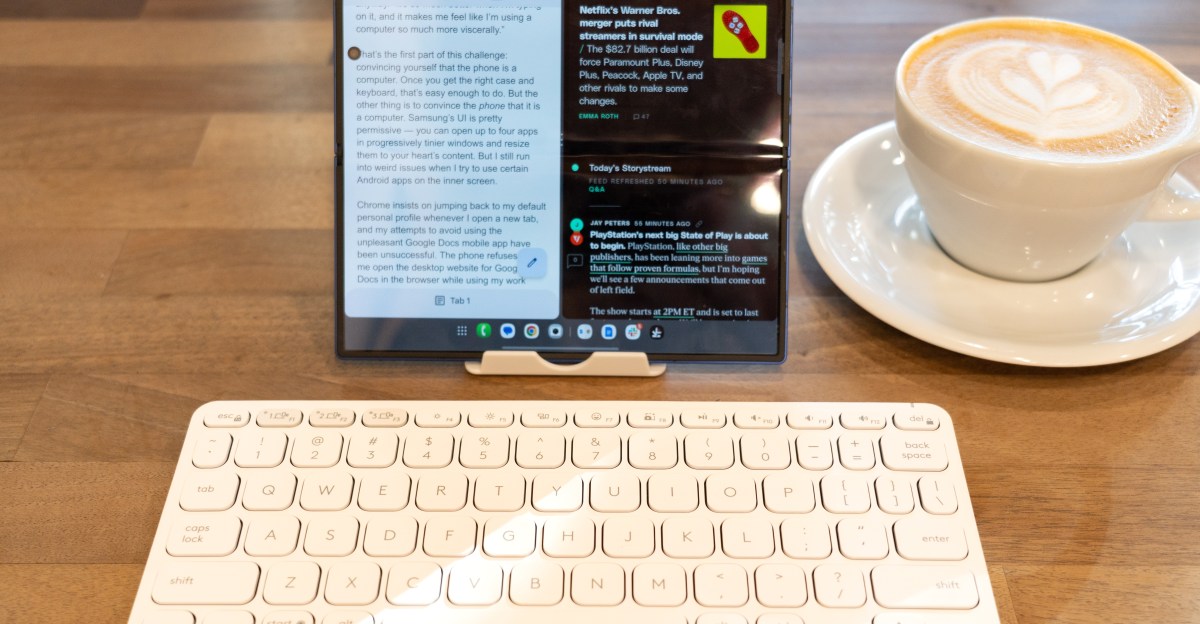


A powerful combination.
When relying on a “Purse Computer” setup, it is crucial to ensure all necessary components are packed before leaving home.
One experience involved a short walk to a coffee shop, anticipating a mobile workstation setup with a folding keyboard and a Galaxy Z Fold 7. The lightness of the bag, compared to carrying a MacBook, was noticeable.
Upon arrival, it was discovered that the keyboard had been forgotten. This resulted in typing emails using only thumbs before returning home.
Following extensive use of 2025’s leading phones, early 2026 presented an opportunity to revisit preferred devices. The Galaxy Z Fold 7, known for its slim and lightweight design, offers the advantages of a folding phone without the typical bulk. Recognizing its potential as a portable computing device, the idea of pairing it with a keyboard to function as a laptop replacement emerged. While not flawless, this setup proves difficult to abandon.
This setup is not perfect, but returning to a traditional laptop might be challenging.
The term “Purse Computer” refers to the combination of a lightweight travel keyboard and a foldable phone. This concept is not new, as folding phone enthusiasts have long been transforming their devices into mobile workstations. Similar efforts include iPads with keyboard cases and even older netbooks. The desire to downsize laptops has been a continuous trend since their inception.
The “Purse Computer” serves as a portable alternative to a traditional laptop, often referred to as a “Backpack Computer.” While modern laptops, such as a MacBook Air, can be lightweight, carrying them in a tote bag for extended periods can still feel cumbersome. For short trips to a coffee shop, it might suffice, but for longer remote work sessions or errands afterward, a laptop can be an inconvenience. The “Purse Computer” offers a solution for maintaining mobility without the burden of a larger device.
A significant part of adopting this mobile setup involves selecting the appropriate keyboard. Key criteria include being light and compact enough to be easily carried, yet providing a comfortable typing experience with full-size keys. Various options were explored, including a ProtoArc folding keyboard and a Samsers model, before settling on a Logitech Keys 2 Go. This keyboard stands out for its thin, lightweight design and full-size keys. While it lacks an integrated phone stand (unlike its first generation) and USB-C charging, a separate stand can be easily acquired. Logitech claims its coin cell batteries offer a three-year lifespan.

Latte sold separately.
The “Purse Computer” concept is also known as the “four-pocket laptop,” a term coined by Michael Fisher, recognized for his
https://www.youtube.com/channel/UCSOpcUkE-is7u7c4AkLgqTw
and enthusiasm for folding phones. Fisher has been exploring the idea of using a folding phone as a computer since the Fold 3’s release in 2021, offering valuable insights for those adopting this lifestyle.
A primary recommendation for this setup is to acquire a kickstand case for the phone. A separate stand can be inconvenient, adding an extra item to remember and set up. Samsung provides a Z Fold 7 case with an integrated kickstand, which addresses this issue.
Fisher’s personal Galaxy Z TriFold setup incorporates a kickstand case sourced from Taipei, as it is not available locally. He utilizes a NuPhy keyboard, acknowledging its slightly larger size but appreciating the enhanced typing experience it provides, which contributes to a more authentic computer feel.
A significant aspect of this transition involves perceiving the phone as a computer. A physical keyboard is essential for a productive typing experience, as relying solely on an onscreen keyboard can be less ideal. Beyond user perception, the phone itself needs to function like a computer. Samsung’s UI allows for flexible multitasking, enabling up to four apps to be opened and resized. However, challenges can arise with certain Android apps on the inner screen.
For instance, Chrome may revert to a default personal profile when opening new tabs, and accessing the desktop version of Google Docs in the browser while using a work profile can be difficult. Applications like Slack often fail to optimize for the larger screen, displaying a stretched mobile interface. A workaround for Slack involves opening it in a Chrome tab on the inner screen, bypassing the app. Future developments, such as the potential unification of ChromeOS and Android, might improve tablet functionality on Android foldables, though this may take time.
Utilizing a folding phone as a primary workstation often requires a willingness to find creative solutions, such as opening Slack in a browser tab on the inner screen.
An essential, often overlooked, component of this setup is patience. The dedication required to optimize app usage, like opening Slack in a Chrome tab on a folding phone’s inner screen, may not appeal to everyone, as evidenced by public reactions. Furthermore, limitations persist, particularly regarding battery life, which typically falls short of a MacBook’s endurance. This makes the “Purse Computer” more suitable for shorter work sessions, perhaps an hour or two, rather than a full workday without access to charging.
This approach acknowledges that a foldable device may not serve as an all-day laptop replacement. The “Purse Computer” aims to provide a highly portable solution for short bursts of productivity, allowing users to carry a lightweight setup in a standard bag. The ease of carrying a phone and a compact keyboard, compared to the effort of packing a full laptop, encourages more frequent outings for work or leisure.
Mr. Mobile concurs, stating that the utility of such a setup is best understood through direct experience. Once accustomed to it, transitioning back to a conventional phone can feel “almost primitive.” As new foldable models, like the upcoming TriFold, become available, they are expected to offer further opportunities to explore laptop-free productivity.
