


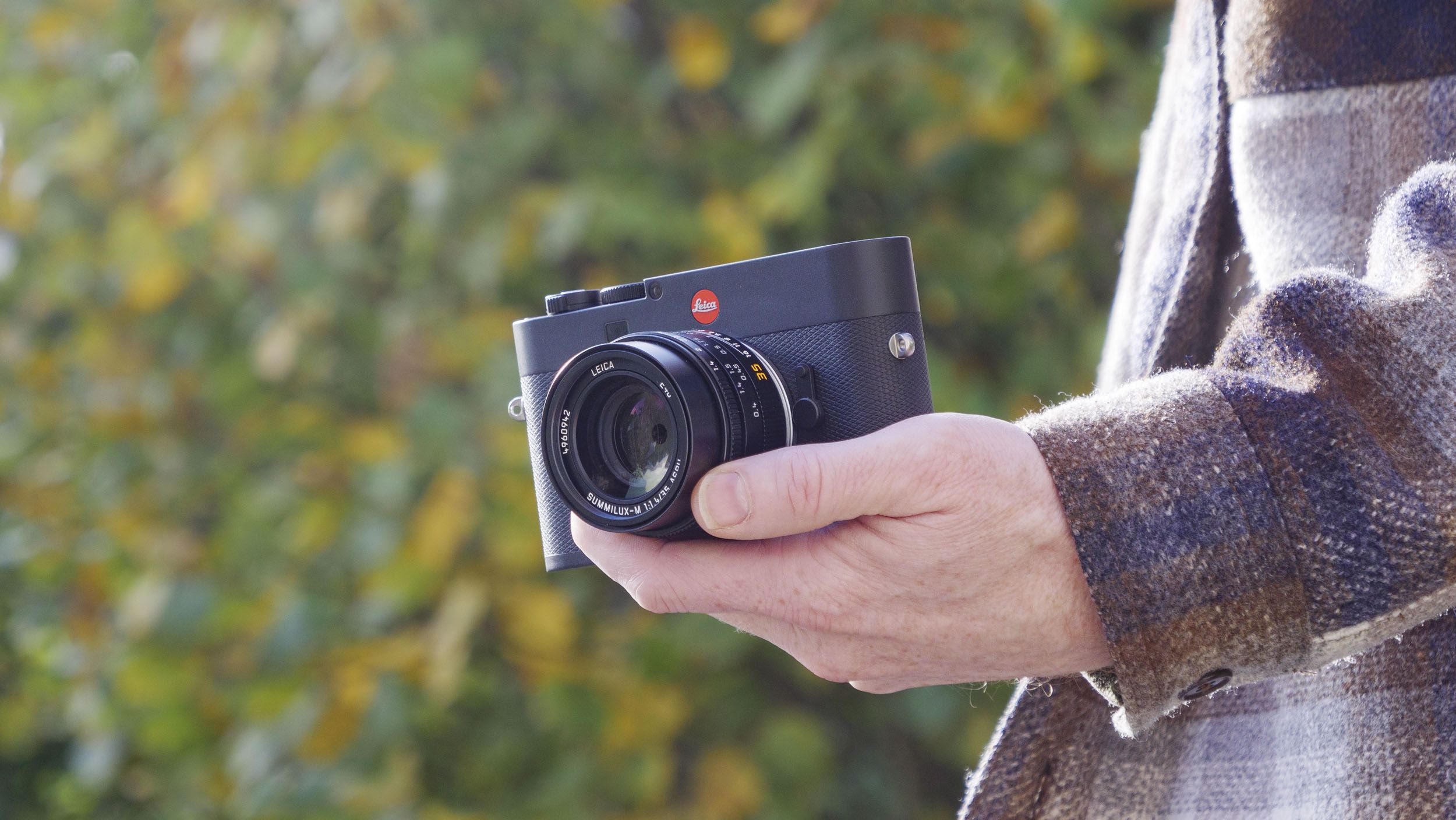
Leica M EV1 Verdict
The Leica M EV1 offers a simple control layout and a discreet rangefinder-style design, now enhanced with a useful electronic viewfinder (EVF) and focus-peaking assistance, replacing the traditional optical rangefinder. This represents an evolution for Leica’s M mount, though the photographic experience largely mirrors other Leica M cameras. It might offer less of the traditional “soul” but provides greater practicality. The M EV1 body, with its EVF, is priced lower than an M11 but higher than similarly specified Leica Q3-series cameras, which feature a built-in lens. For photographers without an extensive collection of Leica M glass, a Leica Q3 or Q3 43 might present a more compelling value proposition.
Pros
- Stunning 60MP photos
- Manual focus is simplified with an EVF compared to a rangefinder
- Premium, minimalist, and discreet body design
Cons
- Fixed rear screen is small
- Battery life is limited
- Perceived loss of traditional rangefinder “soul”
- No video recording capability
Leica M EV1: Two-Minute Review
The Leica M EV1 introduces a polarizing concept: replacing the optical rangefinder, a hallmark of Leica M cameras for over 70 years, with an electronic viewfinder (EVF). This move exemplifies Leica’s continuous evolution of its established rangefinder series, ensuring the longevity of the oldest active lens mount still in production.
Despite this significant change, the photographic experience with the M EV1 is not drastically different in many aspects. The Leica M EV1 shares core technical specifications with the Leica M11 / M11-P and Leica Q3 / Q3 43, all utilizing Leica’s 60MP full-frame sensor, renowned for delivering highly detailed images.
Operating the M EV1 feels akin to a Leica Q3 / Q3 43 premium compact, but with the added versatility of Leica’s M mount. This combination offers a familiar and intuitive experience for those accustomed to Leica’s M and Q series cameras.
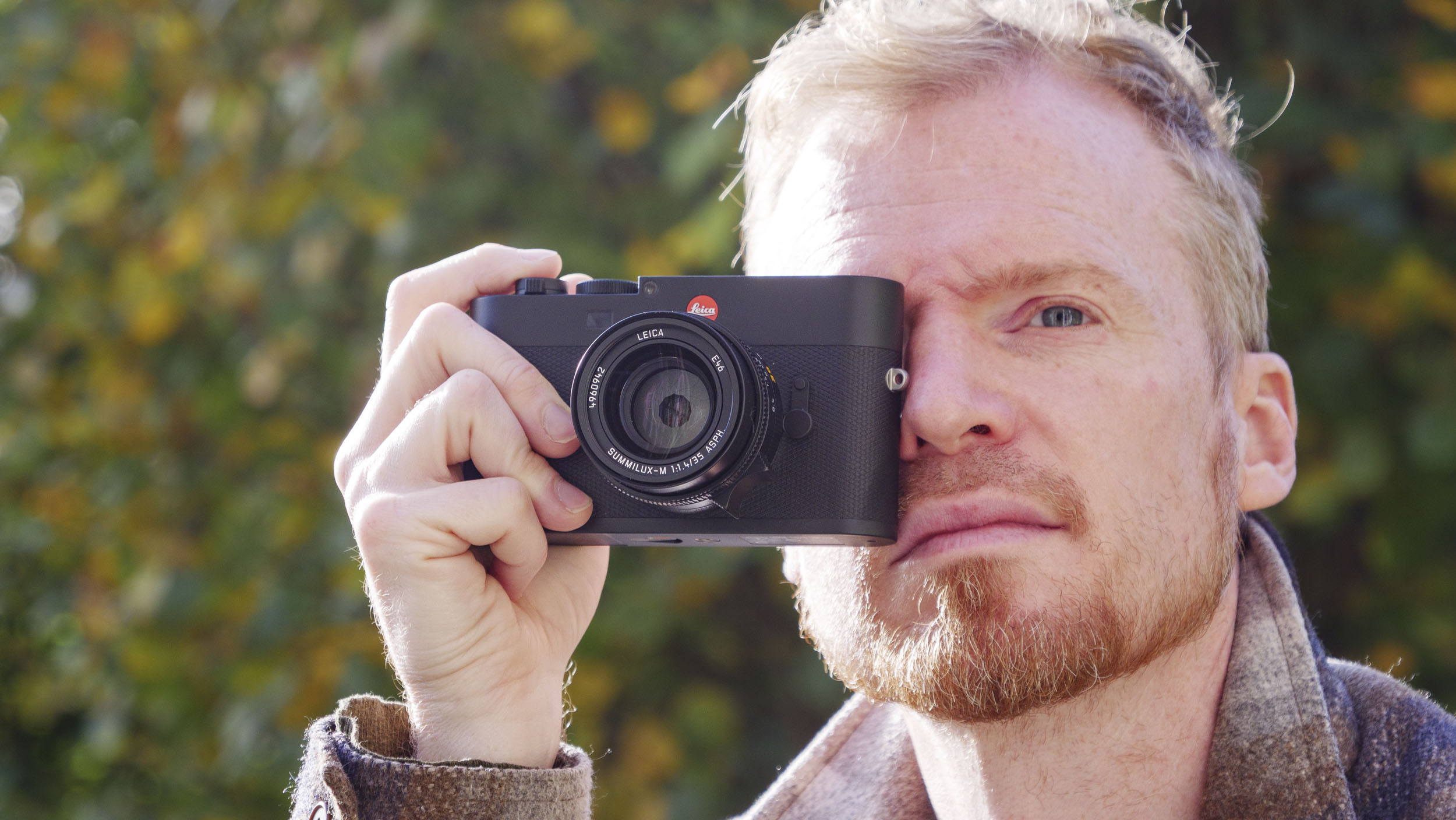
For many Leica enthusiasts, the M EV1 holds significant appeal. It integrates practical features from Leica’s Q series (excluding autofocus, a tilt screen, and video recording) with the adaptability of the Leica M mount and its extensive lens selection. This blend can be seen as offering the best of both worlds.
A key advantage of the EVF is its focus peaking feature, a valuable visual aid for manual focusing. This significantly improves the accuracy of sharp shots compared to relying solely on Leica’s optical rangefinder, particularly when focusing spontaneously rather than using pre-set distances. While some of the traditional rangefinder charm might be diminished, the EVF offers enhanced practicality.
The camera’s construction aligns closely with the M11, featuring the M mount, interchangeable lenses, a similar control layout, and a fixed rear screen. However, some users might prefer more design attributes from the Q3.
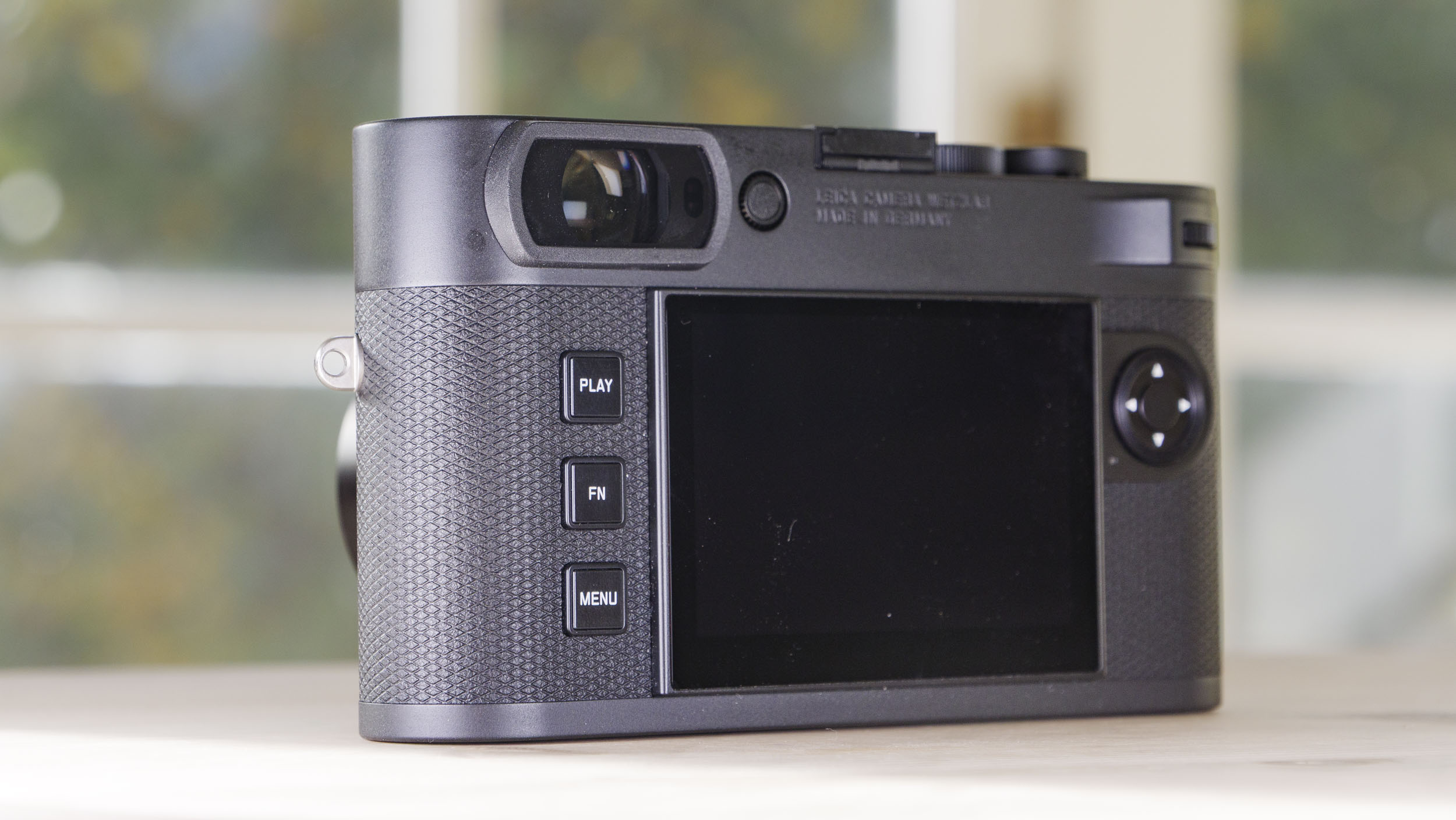
The EVF’s profile differs slightly from the optical rangefinder found in other Leica M cameras, but the 2.95-inch fixed screen is identical to the M11’s. The Q3’s tilt screen is particularly useful for varied shooting angles, such as waist-level street photography. Consequently, the 5.76m-dot viewfinder of the EV1 becomes a primary tool, performing exceptionally well. The discreet nature of rangefinder-style cameras like the EV1 also makes them well-suited for street photography.
Conversely, some photographers may view the M EV1 as a compromise, finding it less compelling as a complete package. Although it is less expensive than the M11, its price exceeds that of the Q3, which offers more features, including a built-in lens, autofocus, a tilt screen, and video recording. This comparison becomes particularly relevant when the optical rangefinder is no longer a differentiating factor.
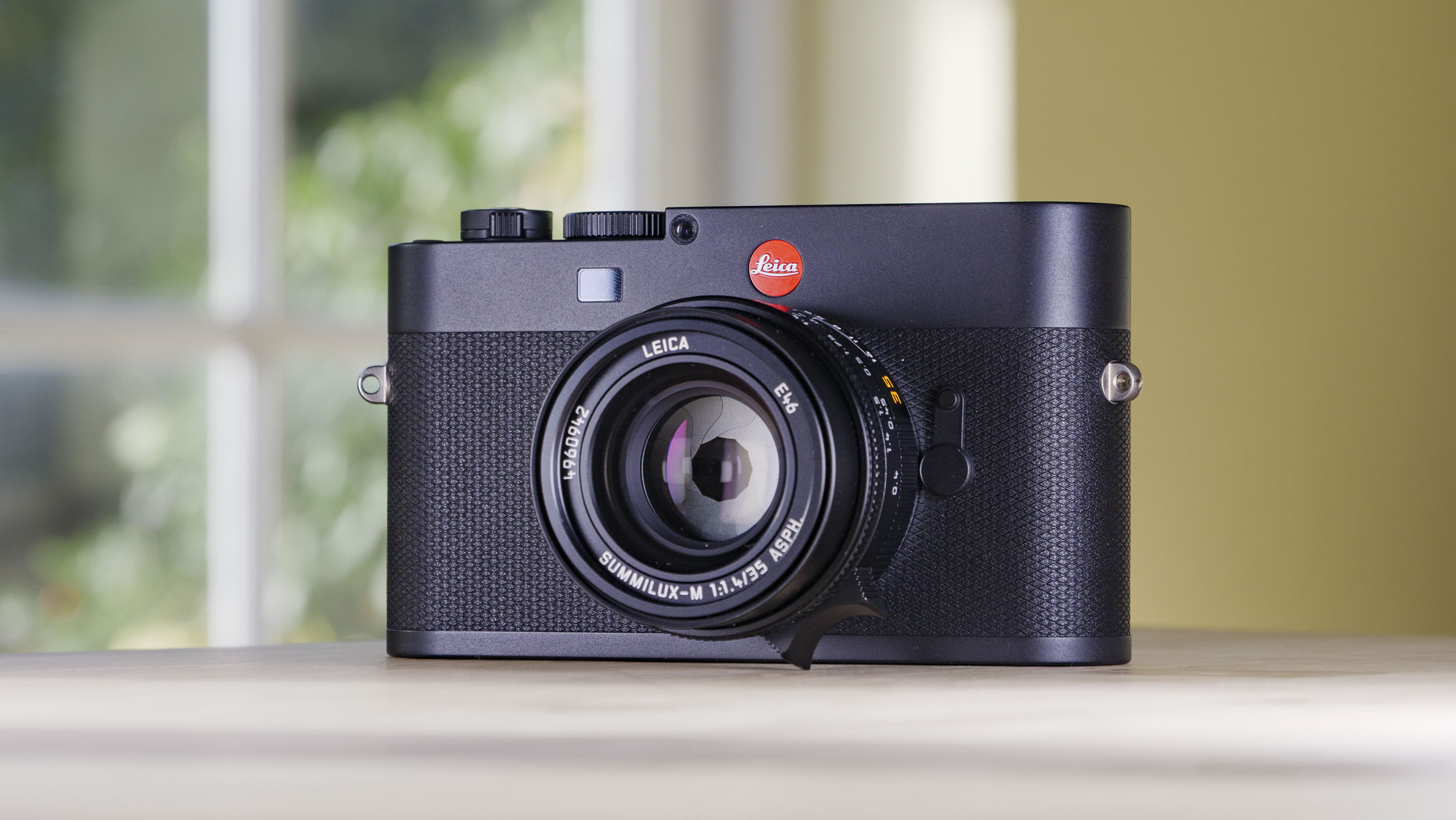
The M EV1 is a sensible choice for individuals who already possess multiple Leica lenses. However, for those new to the system or who typically use only one or two lenses, its value proposition may be less clear. The experience of using the camera extensively with the Leica 35mm f1.4 Summilux-M Asph lens was thoroughly enjoyable. While it may feel slightly less organic than the M11, the EV1 stands out as a strong contender for those open to an EVF in a Leica M camera.
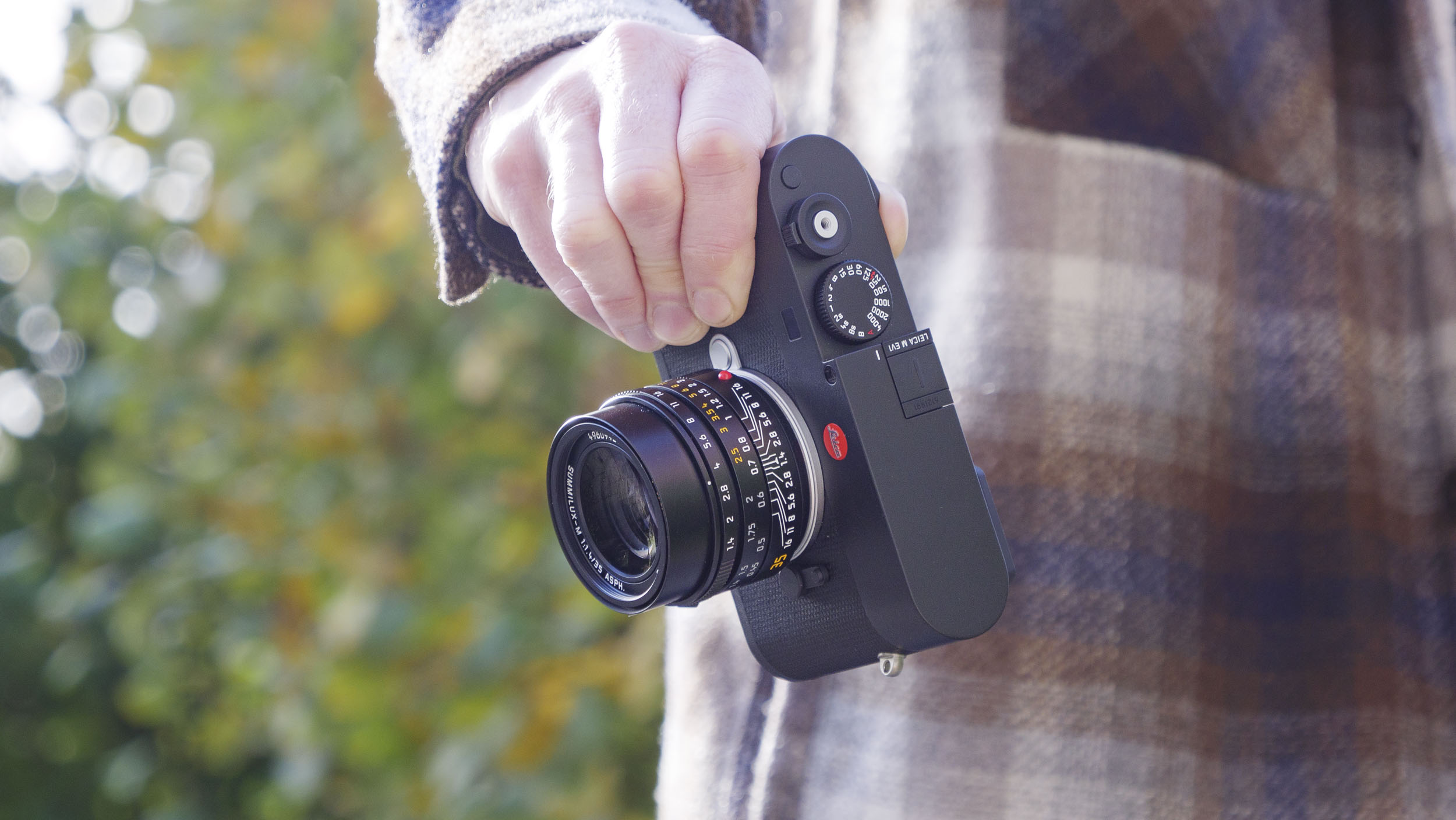
The M EV1’s compact and discreet rangefinder-style design makes it an excellent choice for reportage photography.
Leica M EV1: Price and Release Date
- The body only costs $8,995 / £6,840 / AU$13,990.
- An optional leatherette hand grip is available for $460 / £340.
- The camera was released on October 23, 2025.
The Leica M EV1 is positioned between the Leica M11 and Leica Q3 in terms of price, which is logical given that an EVF is less costly to produce than an optical rangefinder. However, the EV1’s price point makes the Q3 / Q3 43 appear to be a better value, especially for those who do not frequently change lenses. The Q3 offers similar core camera capabilities for less, along with additional features and a built-in lens.
With the EV1, the investment is primarily for the flexibility of interchangeable lenses, each of which typically costs thousands of dollars. For a budget of around $14,000 / £12,000 for Leica gear, one might consider acquiring both a Leica Q3 and a Leica Q3 43, which together could match the cost of an EV1 paired with a lens such as the 35mm f/1.4 Summilux.
The M EV1 comes with a black leather strap.
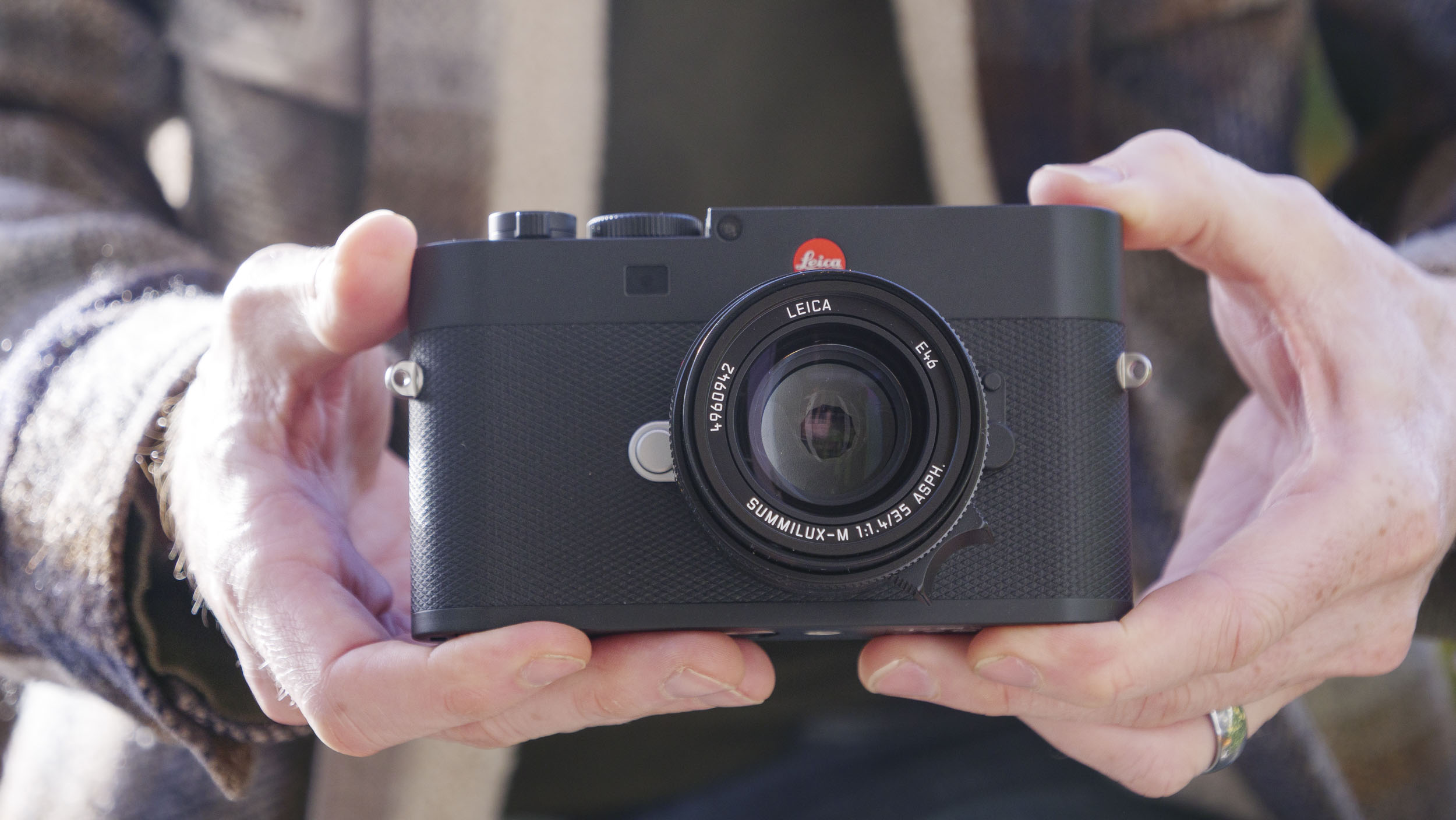
The M EV1 does not include a built-in grip, but an additional leatherette hand grip can be purchased separately.
Leica M EV1: Specifications
- Video: Not applicable
- Photo: 60MP full-frame
- Lens mount: Leica M
- Autofocus: Not applicable – manual focus only
- Screen: 2.95-inch fixed touchscreen, 2.3m-dot
- Viewfinder: 5.76m-dot EVF
- Weight: 17oz / 484g (body, including battery)
- Battery: 244 shots (Leica BP-SCL7)
Leica M EV1: Design
- Compact rangefinder design
- Features a 5.76m-dot EVF instead of an optical rangefinder
- Equipped with a modest 2.95-inch fixed touchscreen
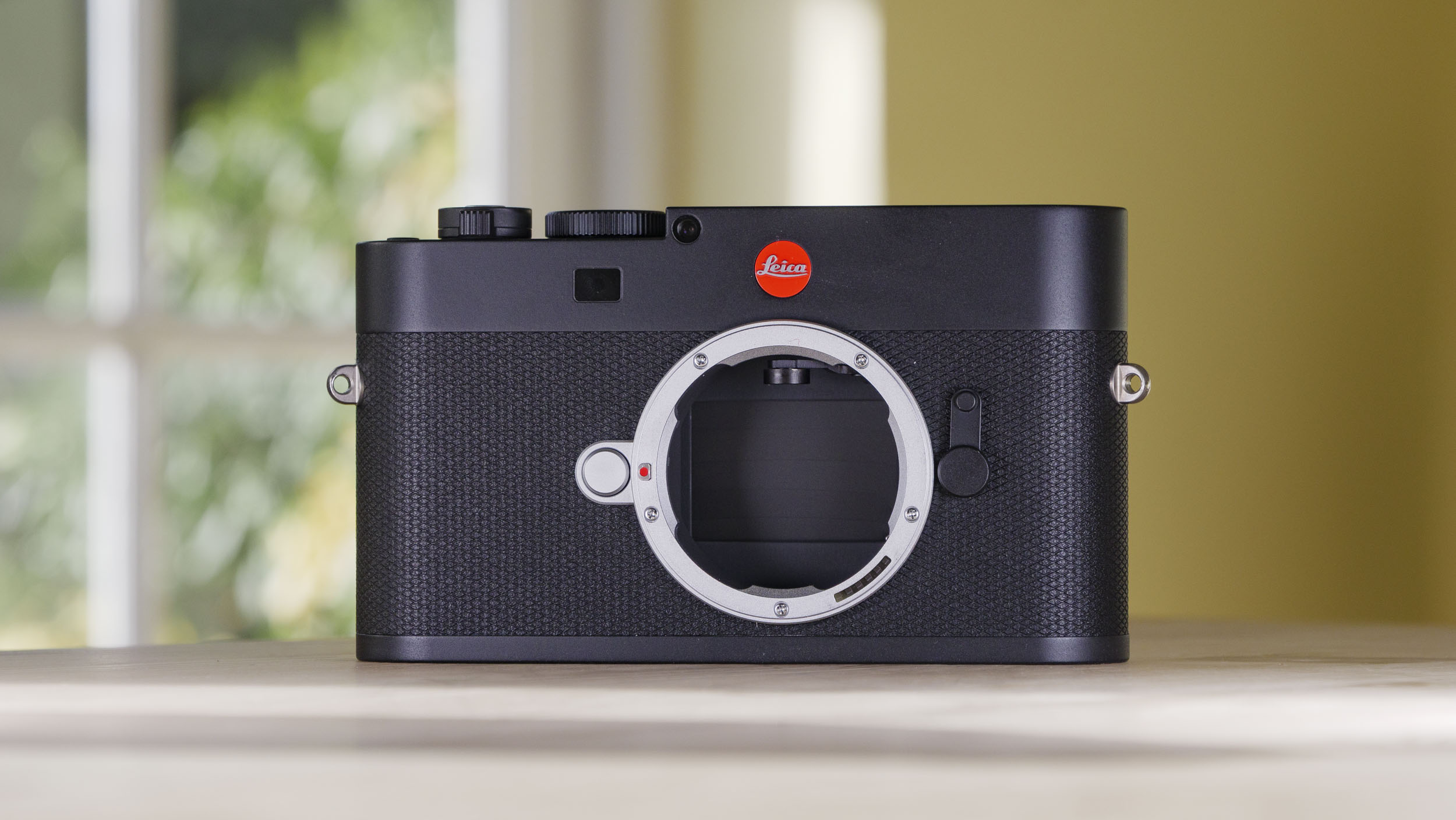
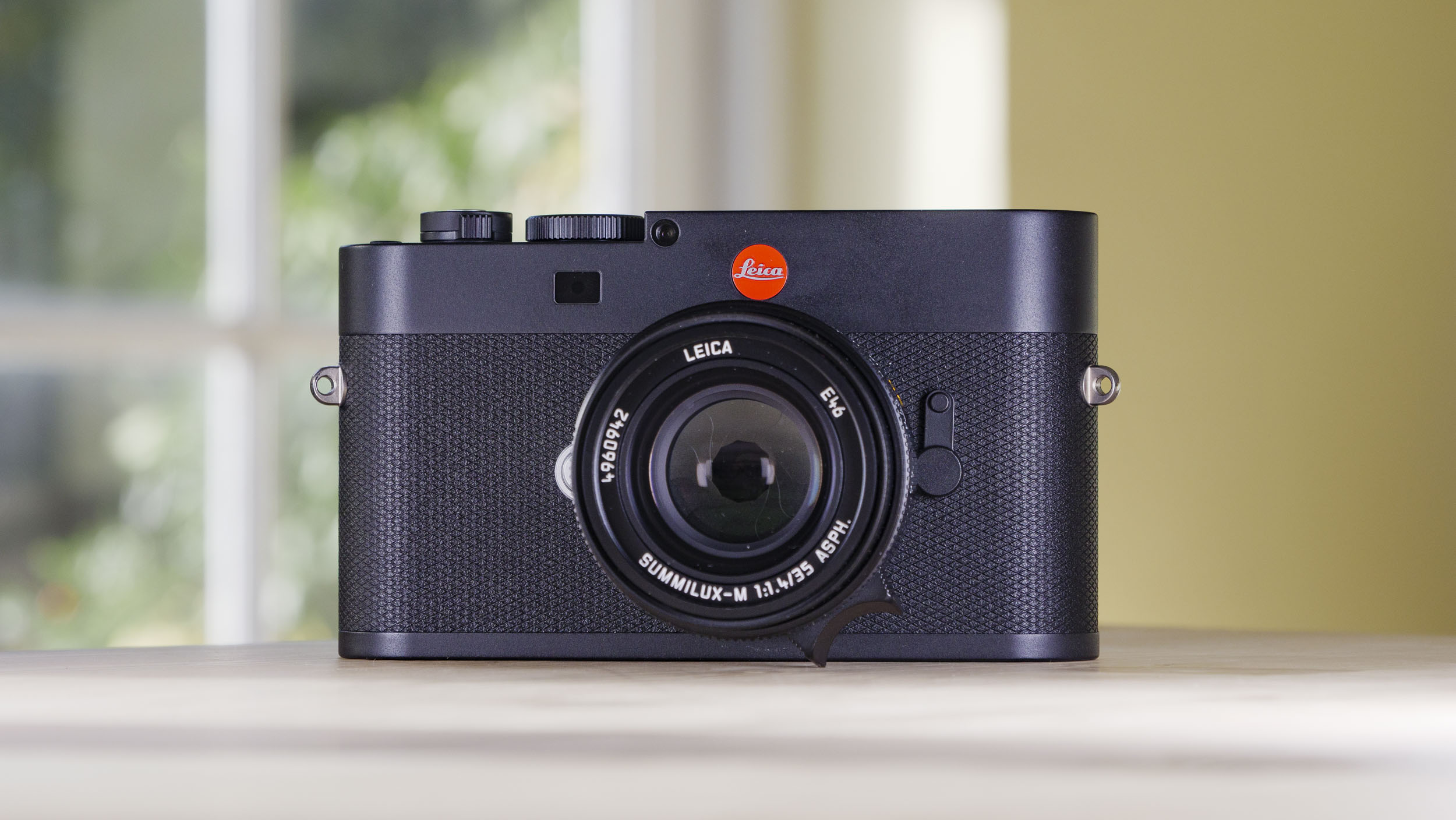
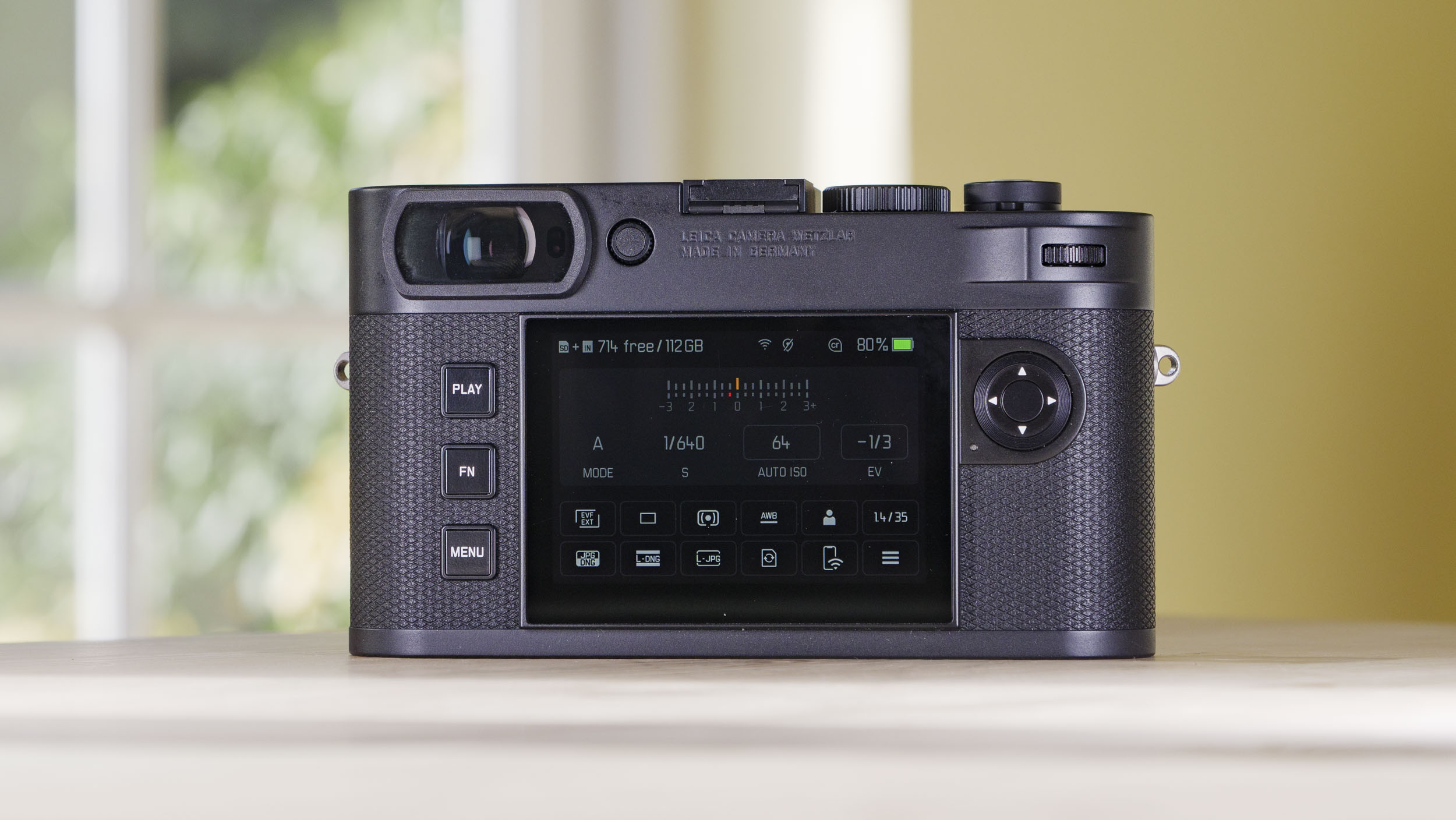
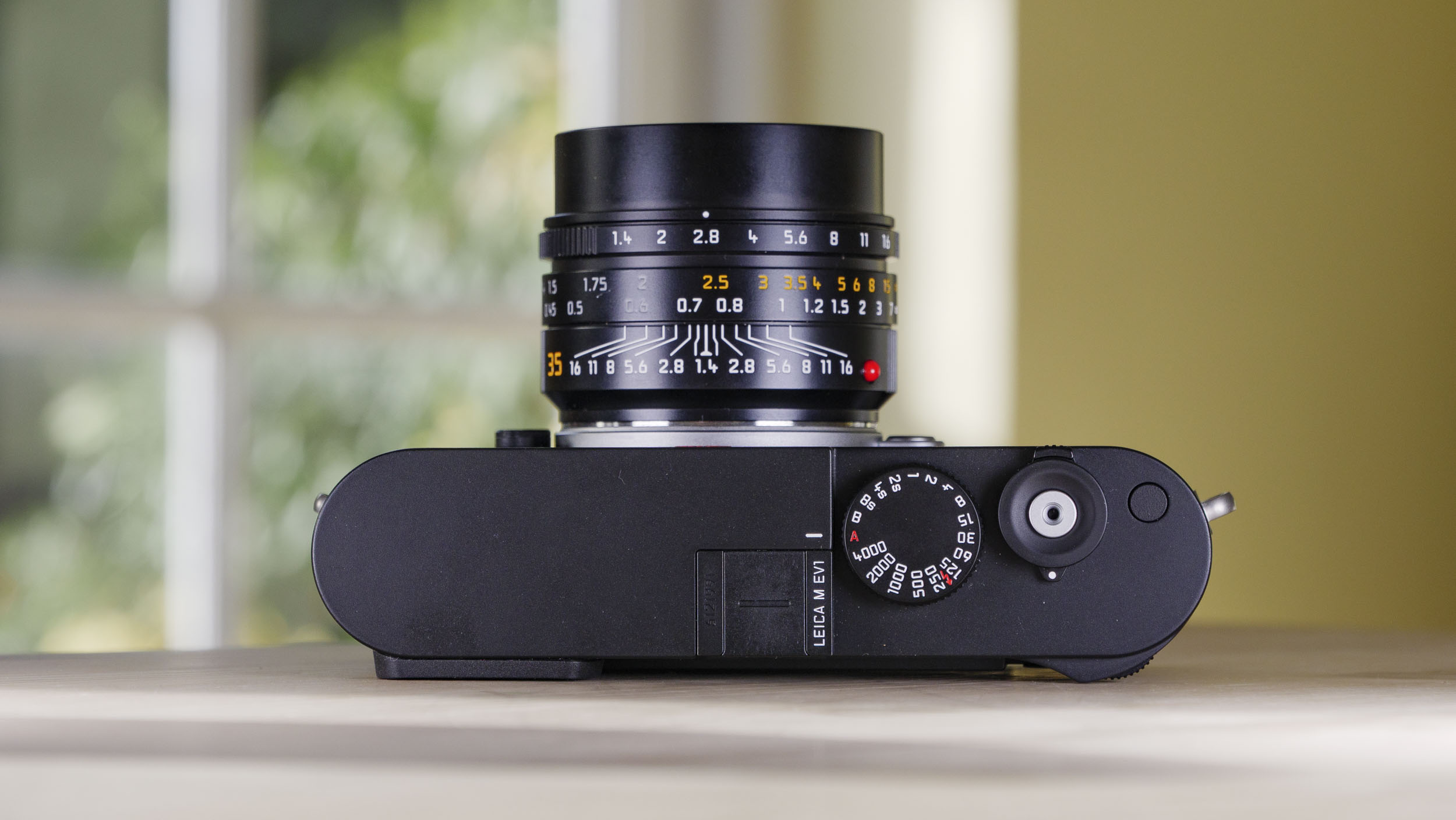
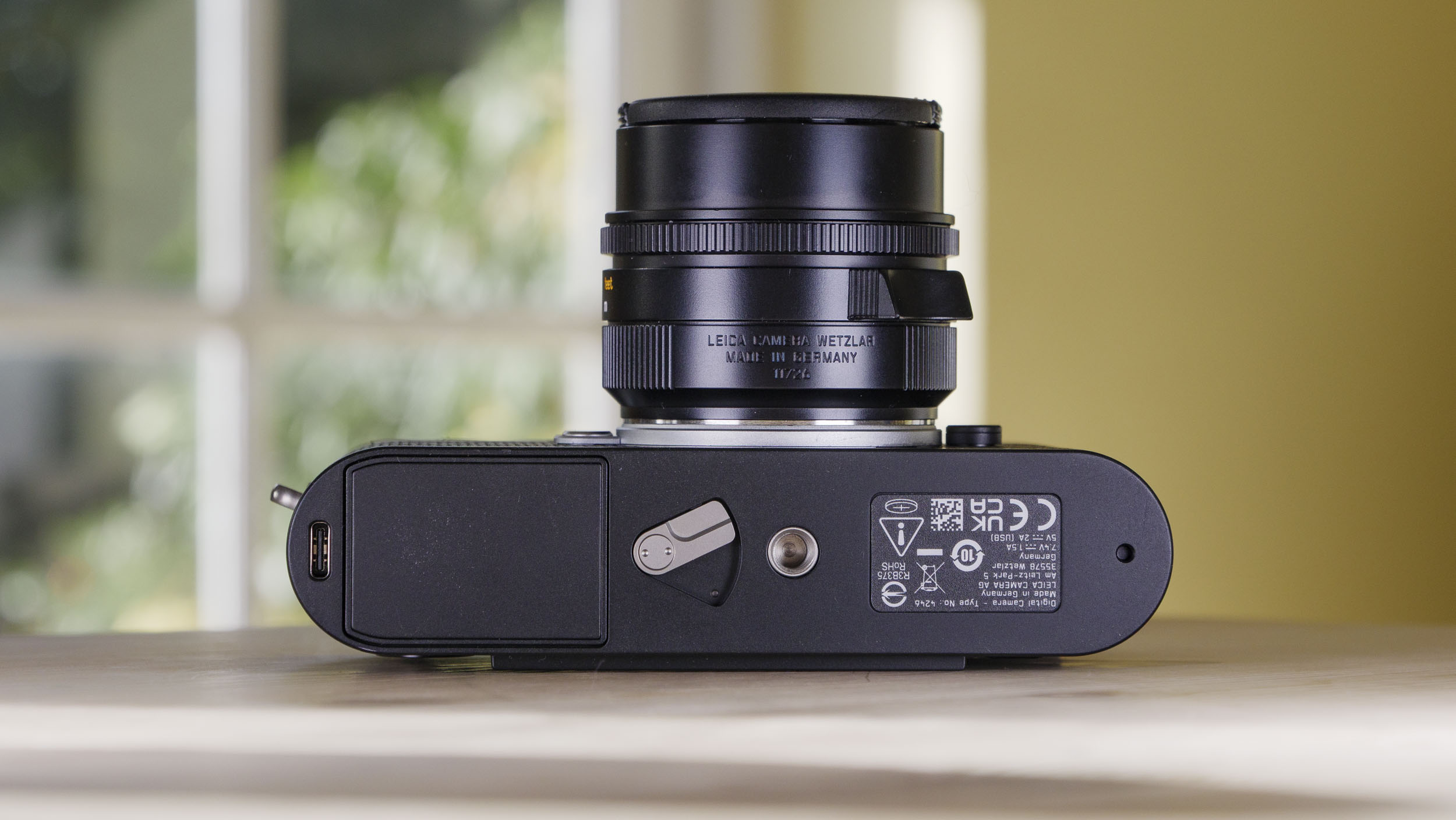
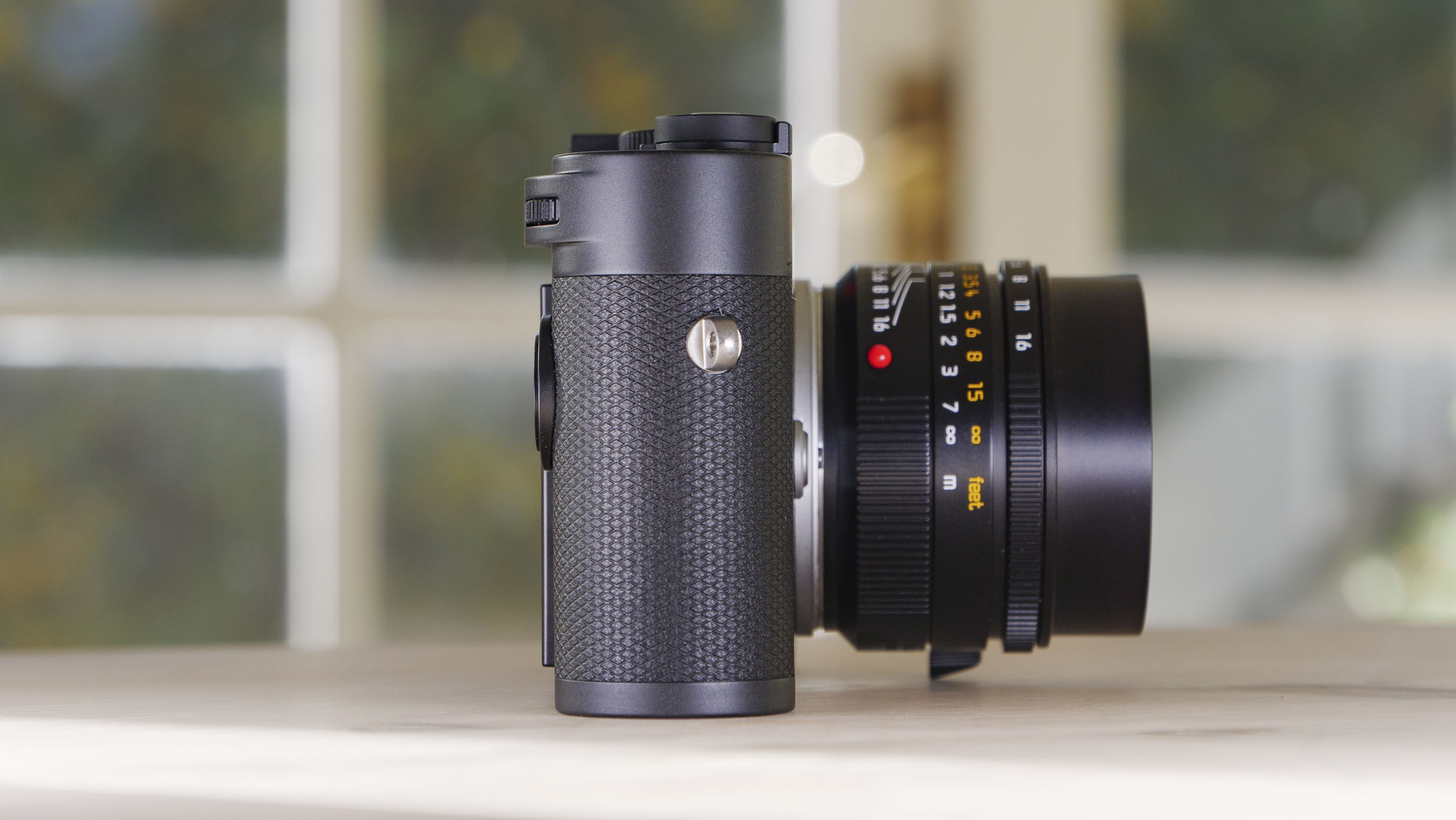
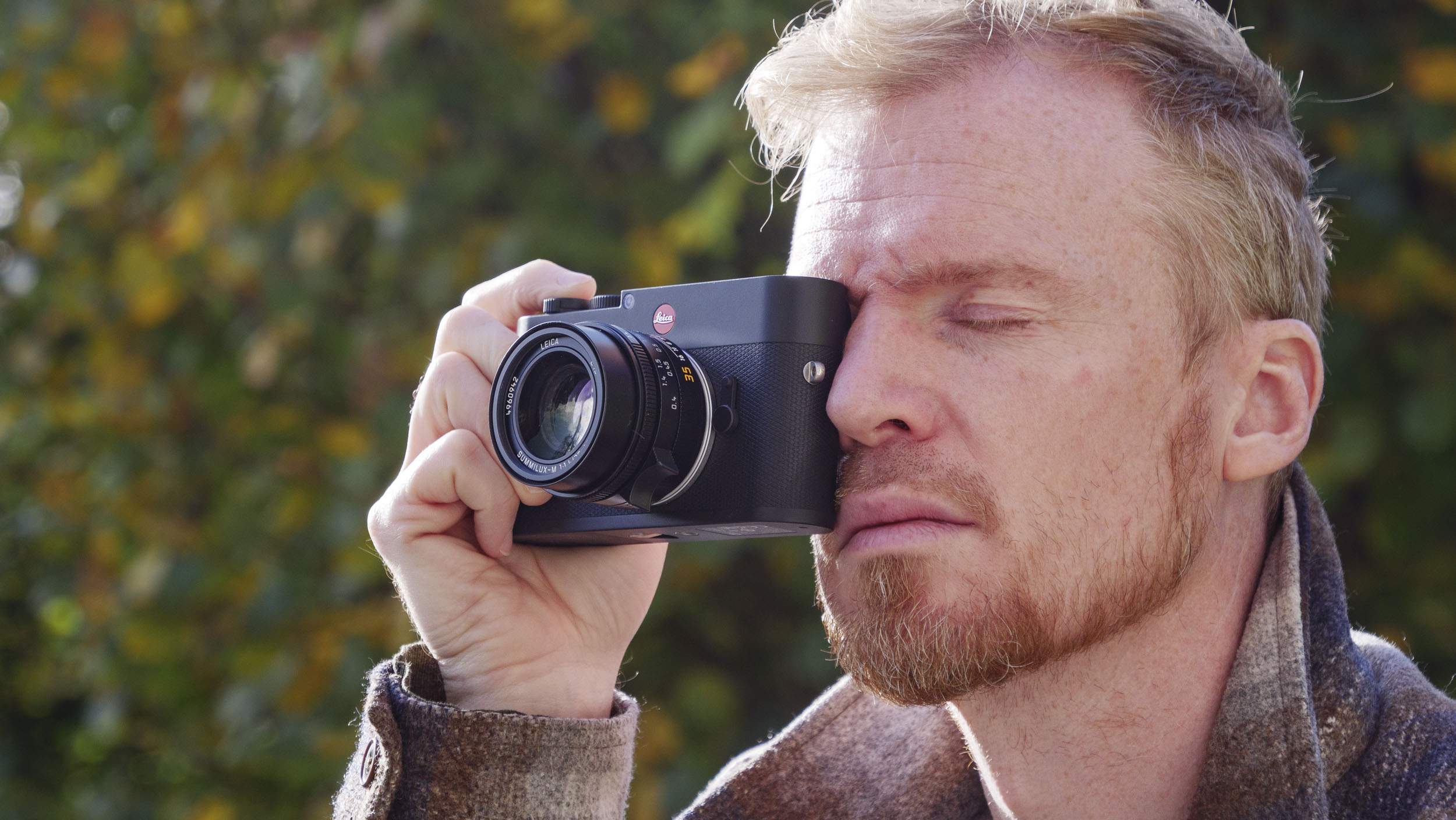
The M EV1’s design prominently features its 5.76m-dot EVF, identical to the one found in the Leica Q3. This EVF is positioned where the traditional rangefinder typically resides, making it easily accessible for right-eye users. When shooting with a Leica 35mm f/1.4 Summilux lens, particularly wide open at f/1.4 with shallow depth of field, achieving sharp manual focus has historically been challenging with Leica M cameras. The M EV1 addresses this.
Focus peaking proves highly beneficial for this manual-focus-only camera, highlighting the sharp edges of the subject in focus. Setting the focus peaking to red generally provides the most visible outline. However, it is important not to rely entirely on focus peaking accuracy, especially with shallow depth of field. Focus magnification offers a closer view, simplifying fine adjustments for precise focusing when time permits. The proportion of in-focus shots achieved with the M EV1 is notably higher than what might be expected with a camera like the M11.

Even with an EVF, a manual focus-only camera demands quick reactions. A mirrorless camera with subject detection autofocus would likely capture such moments more consistently.
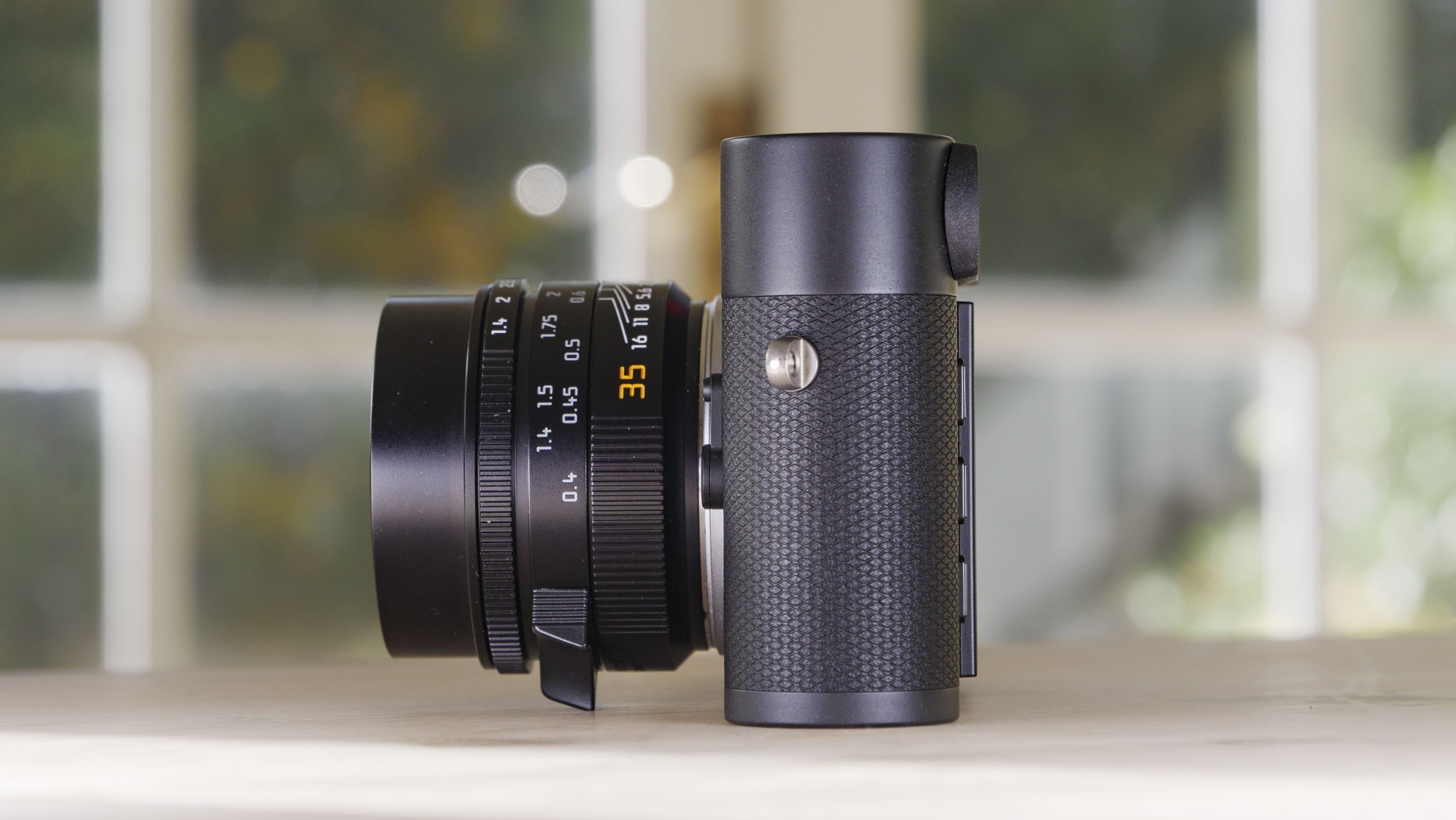
As a rangefinder-style camera, the EV1 is remarkably compact. Its dampened shutter mechanism minimizes vibration and noise, facilitating discreet photography. The 2.95-inch fixed rear screen is somewhat small and less versatile than a movable screen, such as a tilt or vari-angle type. Despite its size, the display’s quality is excellent, with 2.3 million dots providing ample detail, and touch response is smooth. Given the screen’s limited utility compared to a Q3’s tilt screen, users may find themselves relying more on the viewfinder. The viewfinder offers a pleasant experience, and while it may not appeal to traditionalists, the EV1’s digital display enhances practicality for both focusing and composition.
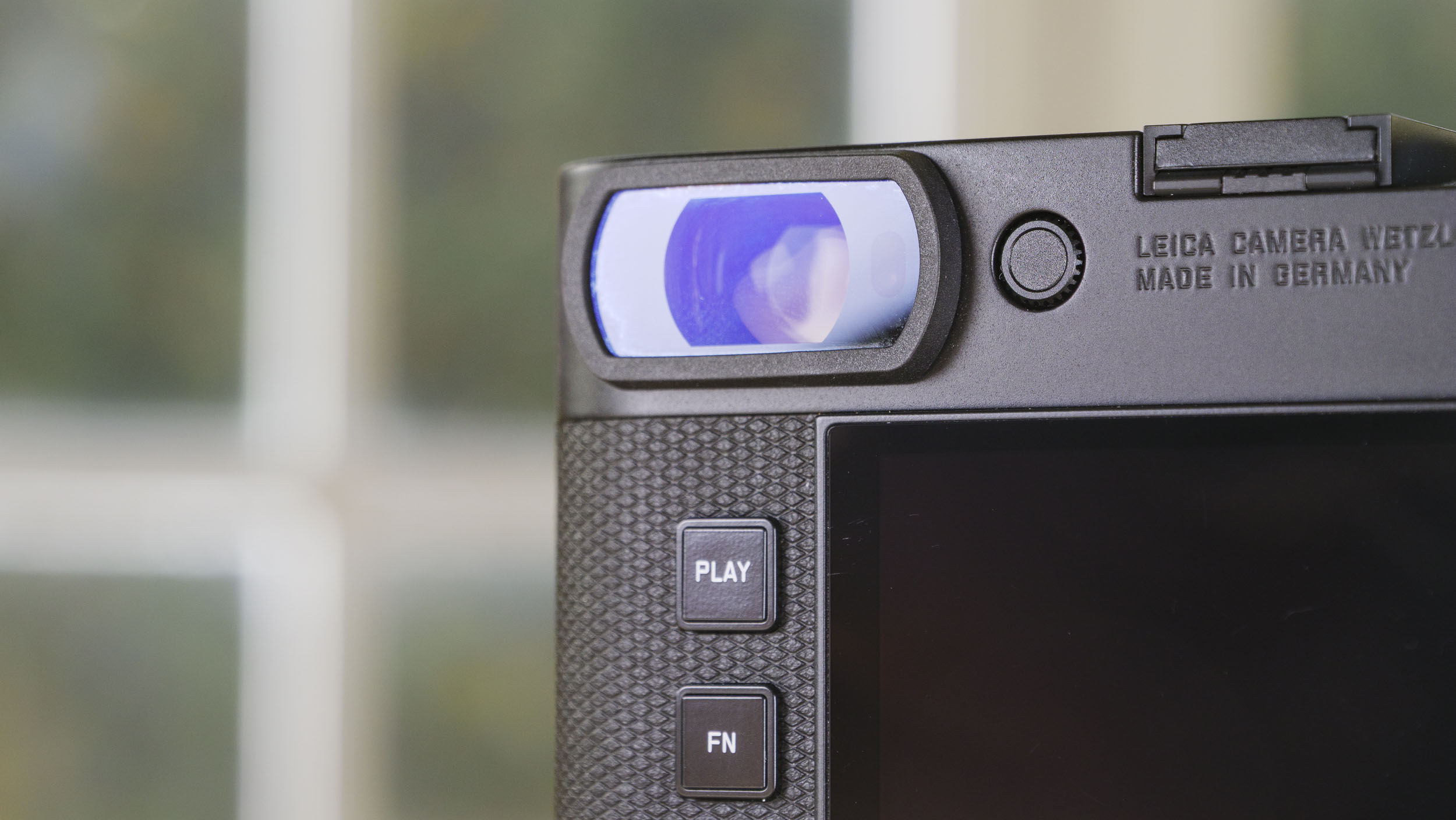
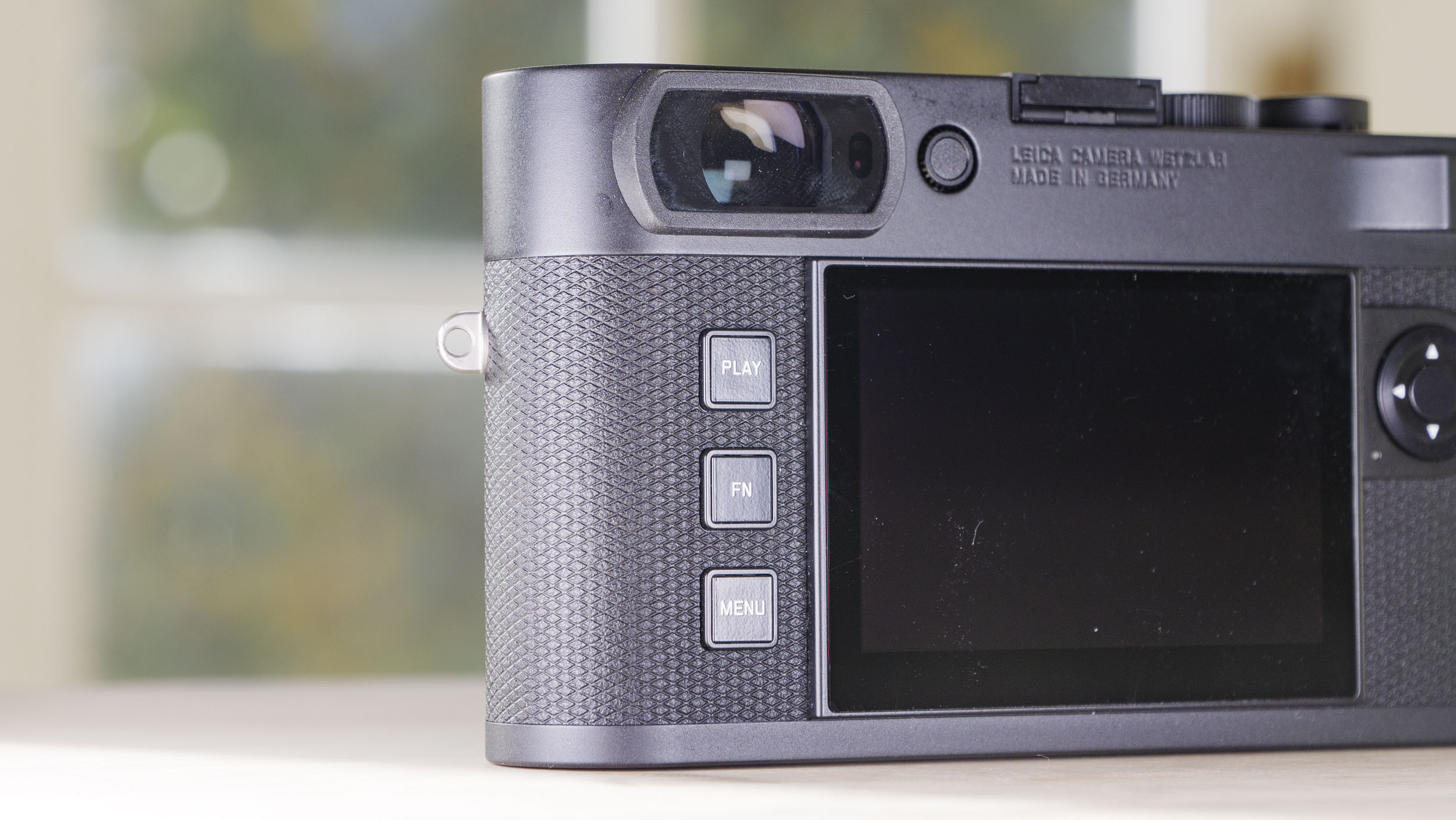
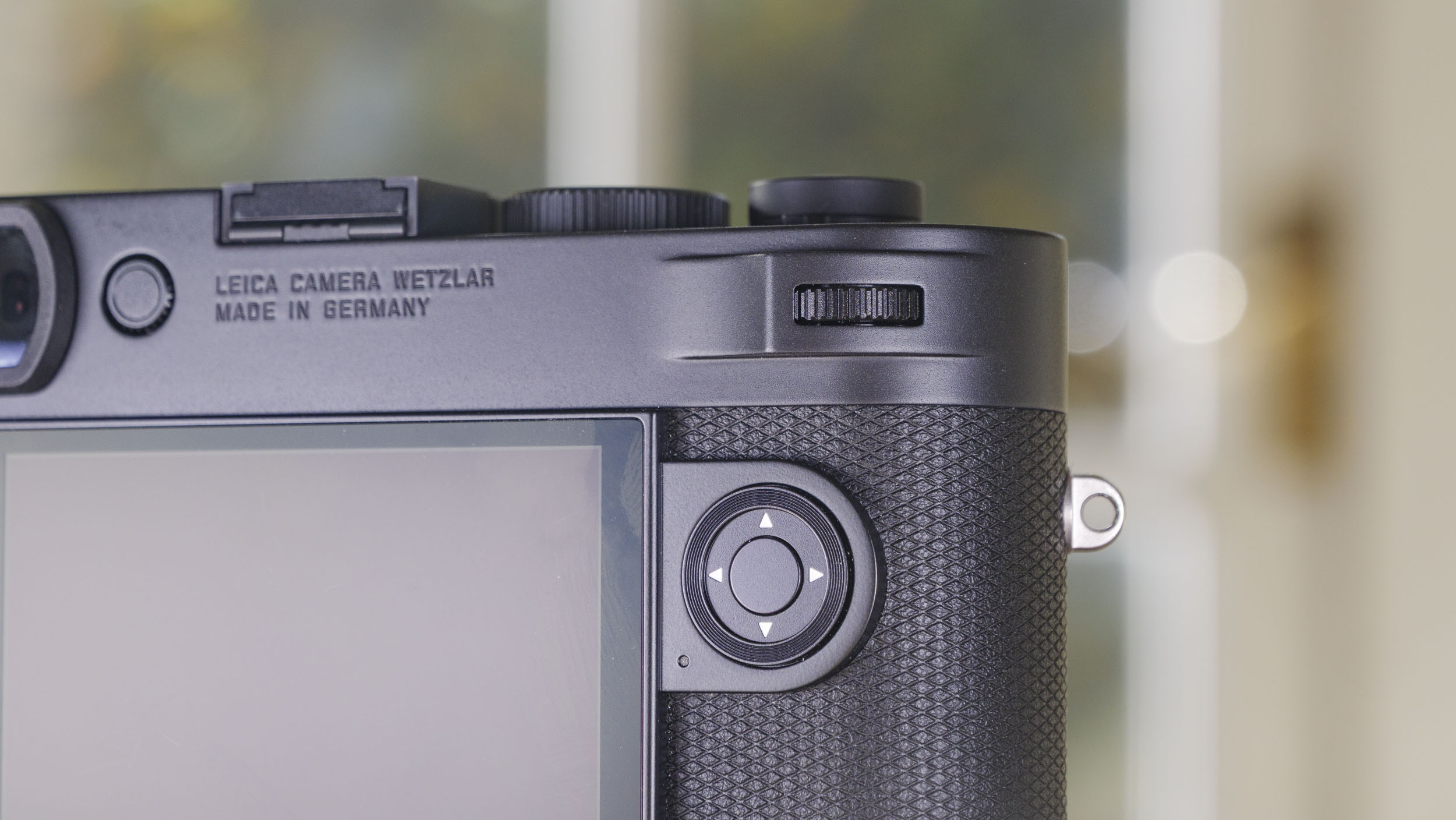
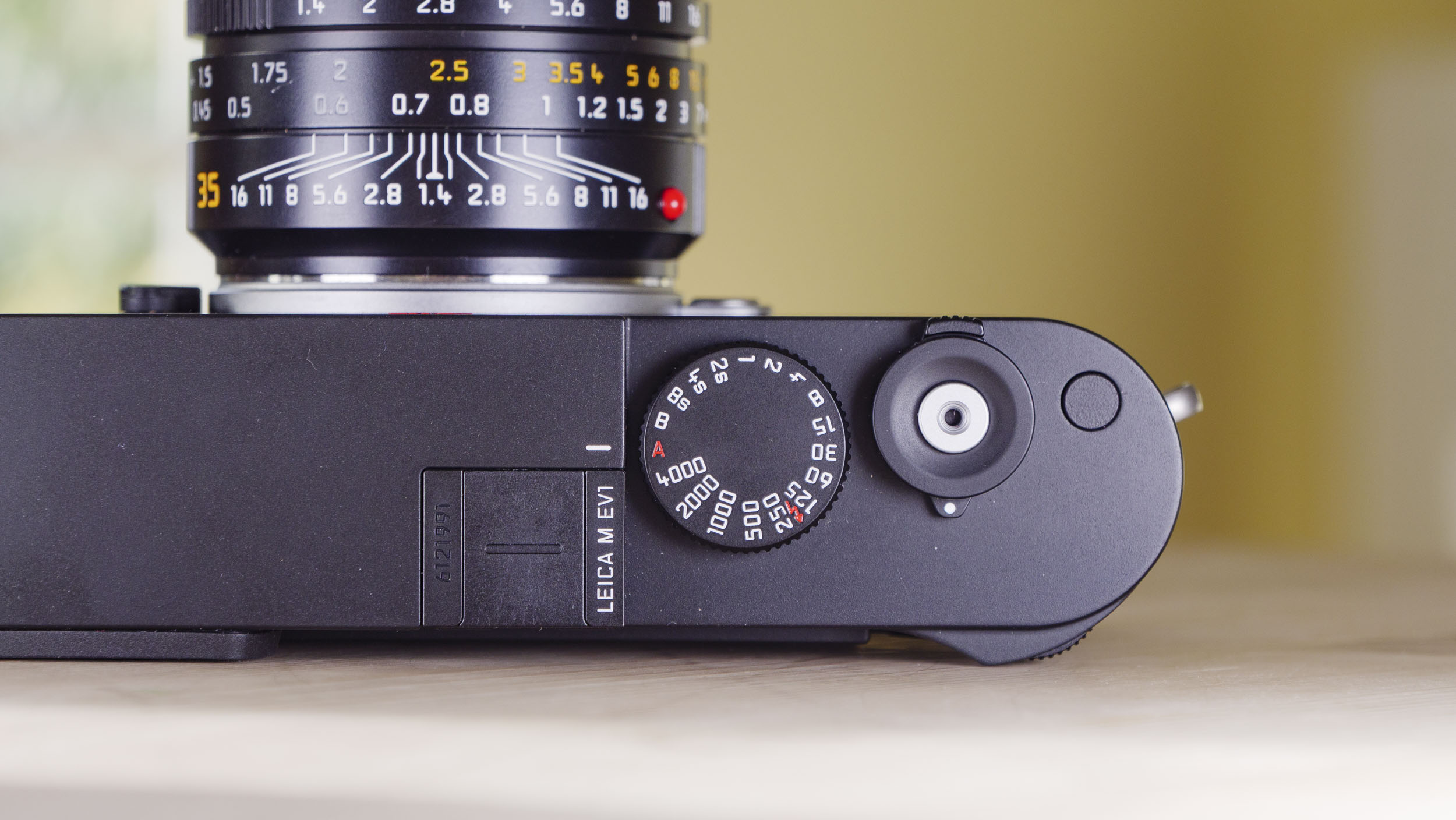
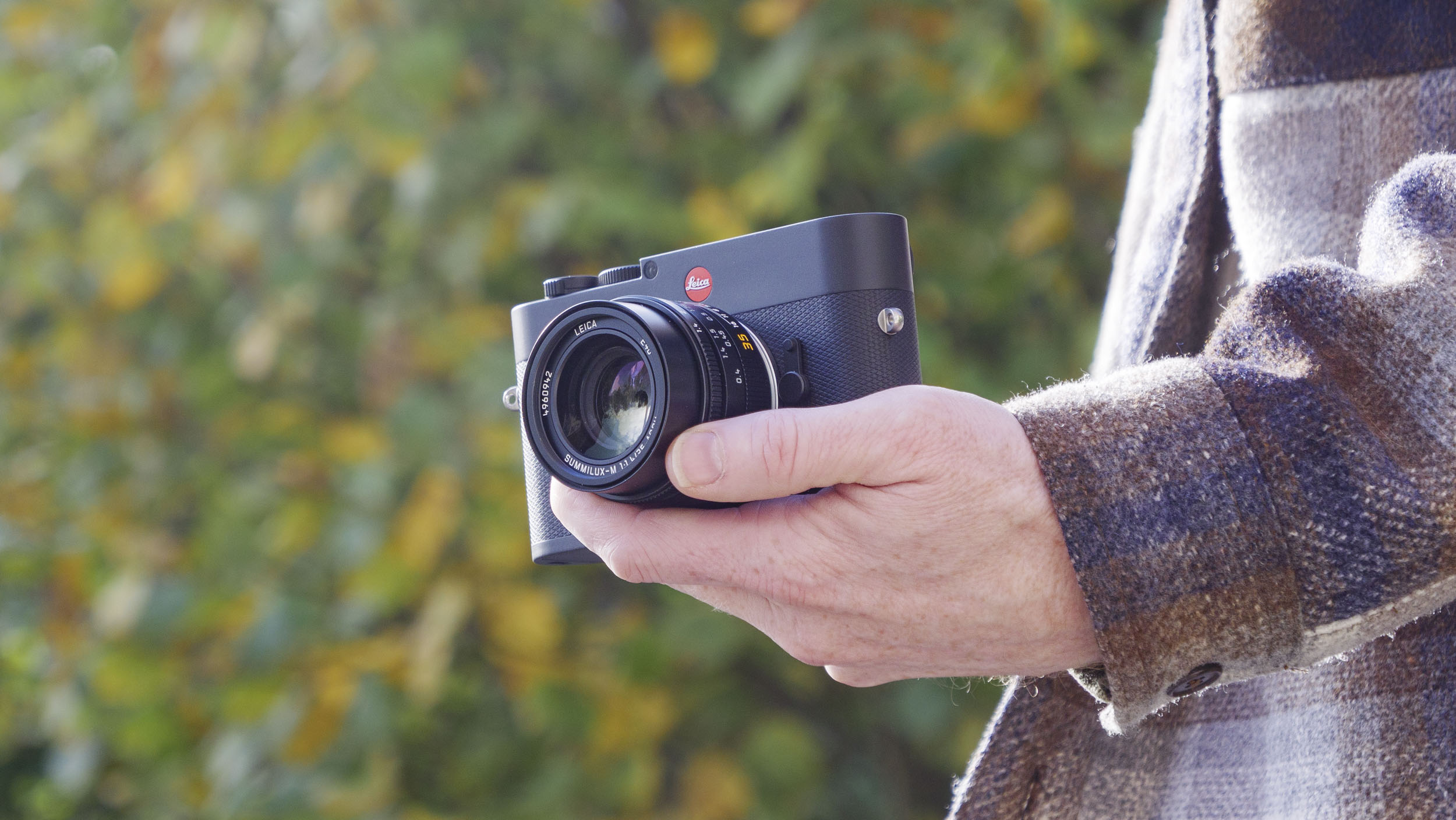
Consistent with other high-end Leica M cameras, the EV1 is manufactured in Germany, featuring a full metal body constructed from aluminum and magnesium, finished with a leatherette covering. This results in a premium and sophisticated piece of equipment. The EV1’s style, profile, and control layout are largely familiar, resembling an M11, with the notable exceptions of the missing ISO dial (a regrettable omission) and the new EVF. The minimalist design of the EV1 provides an enjoyable shooting experience.
Leica M EV1: Performance
- Manual focus only
- Limited battery life
- Includes content credentials
- 4.5fps burst shooting for up to 15 RAW files
The battery life of the M EV1 is relatively modest by current standards, rated for up to 244 shots, using Leica’s BP-SCL7 battery with an 1,800mAh capacity. However, the M EV1 is not designed for high-speed photography or video, where battery drain would be a significant concern. Its intended use encourages a slower, more deliberate photographic approach, allowing a full day of shooting without needing to recharge (via the USB-C port on the camera’s underside).
Burst shooting speeds are a moderate 4.5 frames per second. The 3GB buffer memory allows for capturing 15 full-size raw files or 100 JPEGs at this speed before performance slows, assuming a high-speed UHS-II SD card is used. This camera is not intended for rapid-fire action photography.
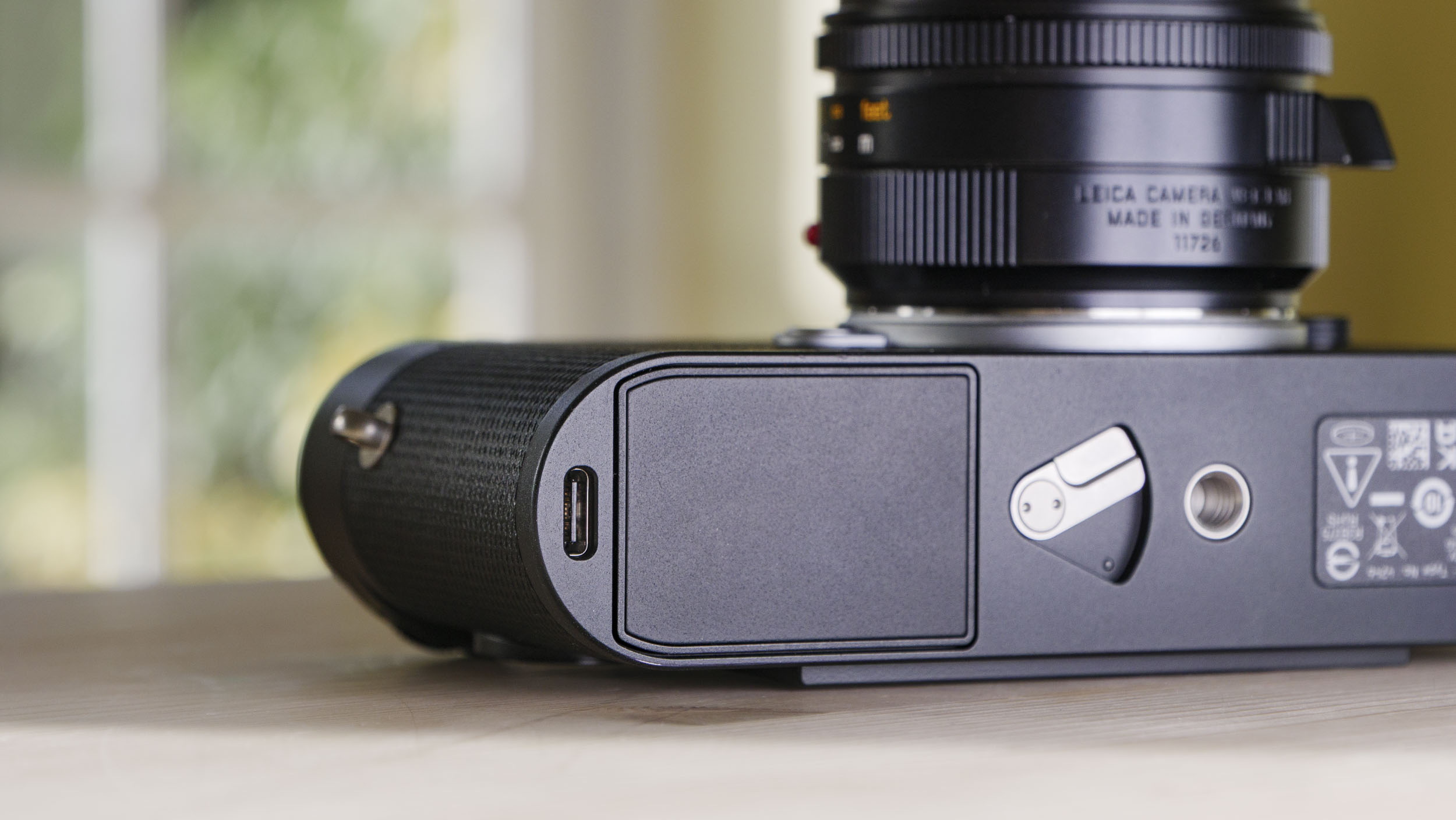
The dual-lock design of the battery door is a notable feature, requiring a lever to unlock and a slight push of the battery to release fully.
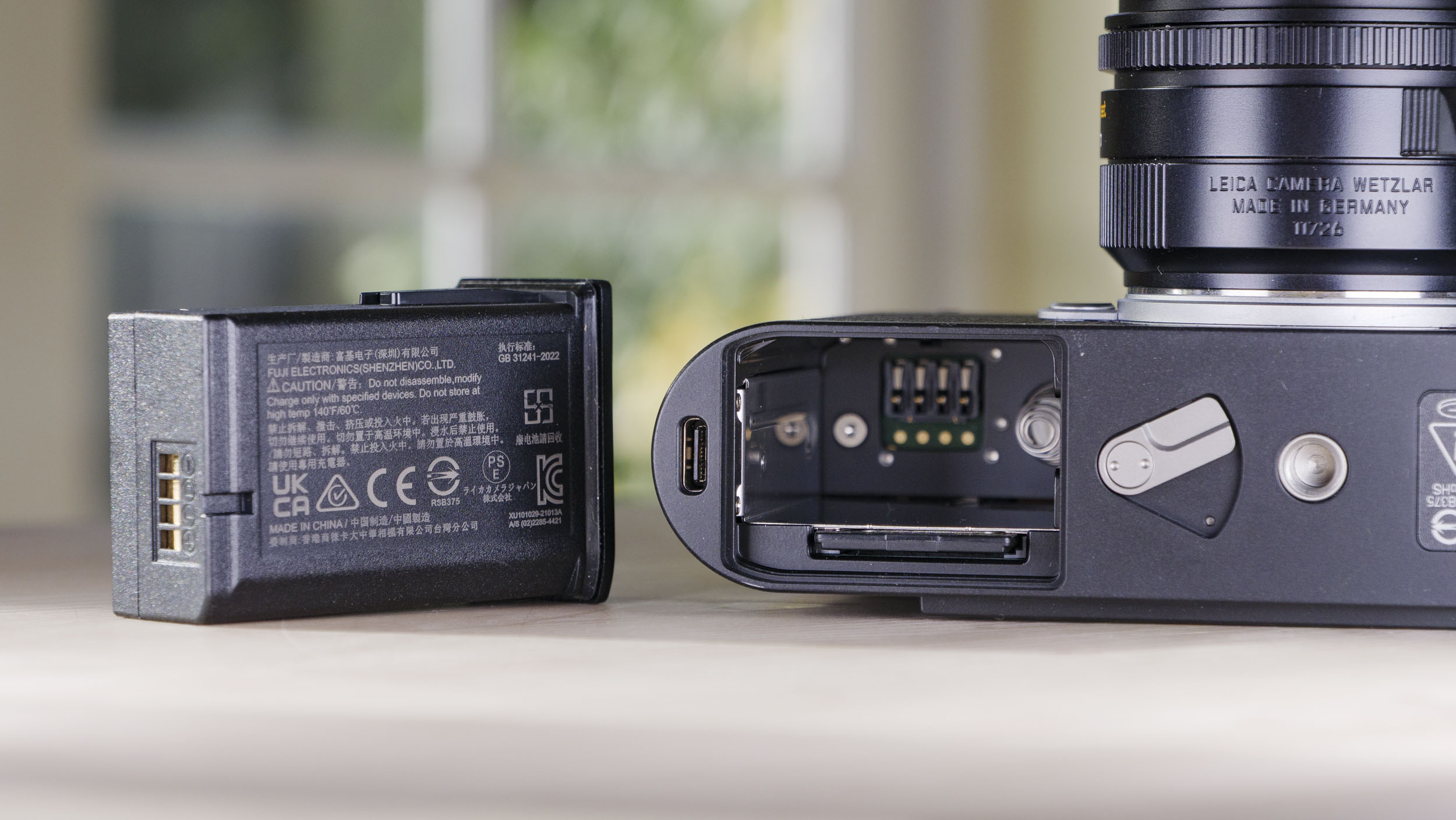
Battery capacity is somewhat low compared to modern standards.
Following the Leica M11-P, the EV1 incorporates content credentials, an industry standard for authenticating the origin of digital images. This system embeds a secure digital label containing metadata such as names, dates, and any edits made to an image. GPS geotagging data can be added to images using the Leica Fotos app, available for Apple and Android devices. The app also facilitates wireless image transfer and remote camera control. The Leica Fotos app generally provides a reliable and user-friendly experience among camera brands’ applications.
Leica M EV1: Image Quality
- Utilizes the same 60MP sensor as the M11 and Q3, offering digital crop modes.
- Features manual focus only.
- Does not support video recording.
For those seeking a full-frame camera capable of producing highly detailed images, the 60MP sensor used in Leica’s current M cameras, including the EV1, and the Sony A7R V, stands out. The EV1 provides two digital crop modes: 1.3x and 1.8x, resulting in reduced resolutions of 36MP and 18MP, respectively. When paired with a 35mm lens, these crops yield perspectives equivalent to 45mm and 63mm lenses.









The ISO sensitivity range spans from ISO 64 to ISO 50,000. Images captured in favorable lighting conditions at the base ISO are notably clean and sharp. Leica employs the widely adopted DNG raw format, offering a 14-bit output and a limited selection of color profiles. Users often prefer the standard profile and perform subsequent color edits to raw files.










Adhering to the Leica M philosophy, the EV1 does not offer video recording capabilities. For video functionality within the Leica ecosystem, the Leica Q series is the appropriate choice. Integrating video recording into an M-mount camera, alongside an EVF, could have enhanced the M EV1’s versatility without compromising Leica’s brand identity. Ultimately, assuming precise focusing and the use of high-quality Leica M-mount lenses, the photographic output is exceptional.
