


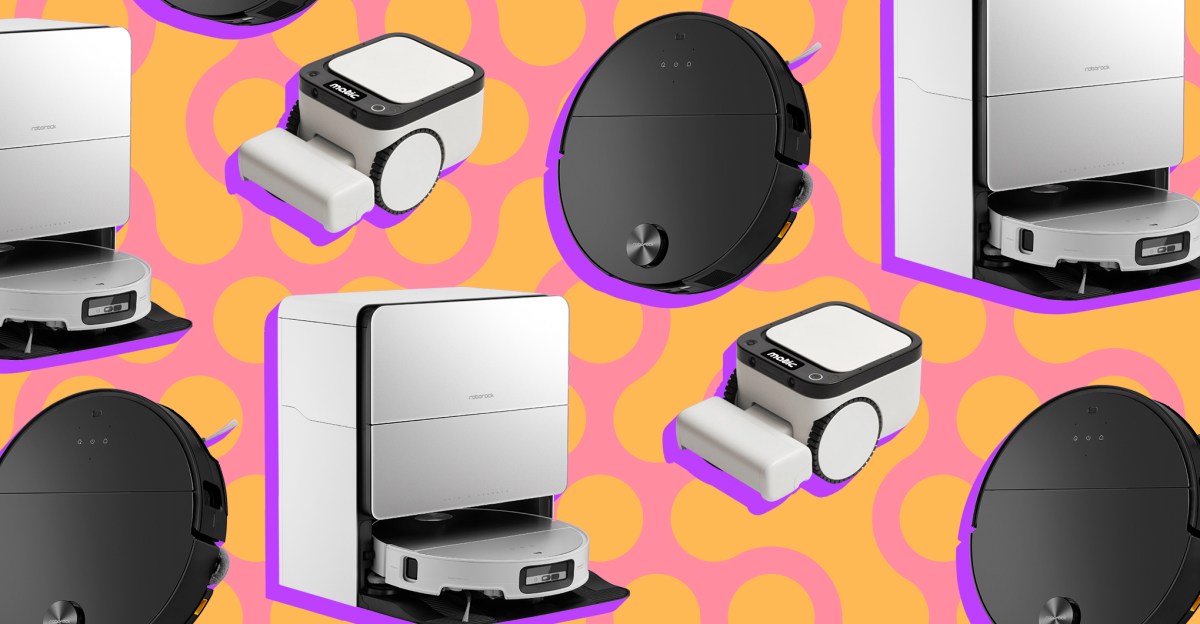
Featured Products


Matic
Roborock Saros 10
$1300 at Amazon$1300 at Best Buy

Tapo RV30 Max Plus
$200 at Amazon$200 at TP-Link (with code WEEKLY50OFFRV)

Dreame X50 Ultra
$1000 at Amazon$900 at Walmart

Deebot X8 Pro Omni
What to Look For in a Robot Vacuum
Cleaning power
It’s not solely about suction power. Testing indicates that the brush is also a significant factor in how well a robot will clean floors. A large rubber roller brush is generally more effective than a small bristle brush at picking up debris and is less prone to hair tangling. Two brushes are often better than one, and a flexible brush housing that can adapt to floor contours is more effective.
Mopping prowess
Most robot vacuums now include some form of mopping, but their effectiveness varies. Effective mopping bots are sought that can remove dried-on stains, such as milk and ketchup, and clean small wet spills without issues. Oscillating, spinning, or vibrating mop pads clean better than bots that merely drag a wet rag. Newer self-cleaning roller mops are even more effective. Auto-carpet sensing is also crucial to prevent accidental mopping of rugs.
Convenience
A robot that can empty its own bin and refill and clean its mopping system offers a more hands-free experience. Multifunctional docks with auto-emptying and mop washing (for mopping bots) are becoming standard. These docks transform the robot’s charging base into a motorized emptying station that suctions dirt from its bin (which can be loud!). This eliminates the need to manually empty the bin after every few runs. Instead, the bag typically needs replacement about once a month. However, these docks are often large. For those who prefer their robot to be out of sight (e.g., under a bed or sofa), a model with a large bin (over 500ml is good) and a small charging base is preferable.
How smart they are
AI-powered obstacle detection is becoming standard on higher-end robots and represents a significant upgrade. This feature helps the robot intelligently detect and avoid clutter (and a potential poop apocalypse if it encounters pet waste). These models use cameras (important to note) to identify objects in their path and onboard processors to decide how to navigate around them. However, not all AI is equally effective, with some systems performing much better than others. The result is that robot vacuums with AI detection are less likely to get stuck, increasing the likelihood of returning home to a clean floor rather than a stranded bot.
How they navigate
A robot that maps a house will clean every nook and cranny more thoroughly than one that bumps and rolls around. Mapping also allows users to send the robot to clean specific rooms instead of the entire space and to set virtual walls to restrict the bot from certain areas. These features are crucial for homes with delicate objects or areas that frequently trap robots. Most robots utilize variations of simultaneous localization and mapping (SLAM) technology, such as lidar or vSLAM; some rely solely on camera navigation.
An easy-to-use app
A good app provides easy controls to start and stop the vacuum, scheduling options (including do-not-disturb hours), and robust mapping features. Desirable features include room-specific cleaning and settings (allowing the vacuum to clean only the kitchen, or to mop and vacuum the kitchen while only vacuuming the living room). A common frustration with apps involves maps that are difficult to update or frequently crash, requiring constant rebuilding. Most vacuums now offer voice control, with some providing more in-depth commands, such as instructing a voice assistant to have the robot clean twice under the dining room table.
Good battery life and repairability
Nearly all robot vacuums feature “recharge and resume” functionality, allowing them to return to their dock when low on battery, recharge, and then continue cleaning where they left off. However, a vacuum with at least 120 minutes of runtime (180 minutes is ideal) can clean an entire house in one go. If cleaning takes too long, noisy robots that run constantly may be shut off by annoyed family members. Robot vacuums represent a significant investment, making it important to have access to replacement parts to extend their lifespan and good support in case of serious issues.
In this article
- Best robot vacuum
- Runner-up best robot vacuum
- Best budget robot vacuum
- Best robot vacuum / mop hybrid
- Best robot vacuum / mop for hard floors and carpets
- Best robot vacuum for pet hair on hard floors
- Best robot vacuum for small spaces/apartments
- Other robot vacuums to consider
- What is being tested and what’s coming next
- How robot vacuums are tested
Best robot vacuum
Matic
$1245
The Good
- Excellent mapping and navigation
- Kept floors spotless
- Rarely gets stuck
- Maps and processes data locally
- Mops up large wet spills
- Quiet (55dB)
- Cute design, no big dock
The Bad
- Proprietary, expensive bags
- Can’t get under low furniture
- Baseboard cleaning is spotty
- Can’t mop and vac simultaneously
Multifunctional dock: No, charging only / Mapping: Yes, camera-based / AI-powered obstacle detection: Yes / Suction power: 3,000Pa / Remote check-in: No / Brush style: Single rubber / Mop style: Roller / Mop washing: Yes / Mop lift: Yes / Edge cleaning: Yes, mop extension / Works with: No smart home integrations
The Matic represents a complete rethinking of the robot vacuum and is a top contender. It features excellent camera-based SLAM navigation, superb obstacle avoidance, rarely gets stuck, and operates very quietly. This combination means that it completes its cleaning tasks 99 percent of the time.
These attributes make it a top pick because, despite advancements in navigation — from AI-powered computer vision to arms that pick up clutter — traditional disc-shaped bots are still prone to getting stuck. For a robot vacuum that consistently gets the job done, the Matic is highly recommended.
 Instead of a multifunctional dock, Matic carries a large 1 liter dust and dirty water bag and 600ml water tank around with it.
It kept floors and carpets spotless; its large rubber roller brush and suction system performed exceptionally well in most tests, and its superb mopping cleaned up wet spills and targeted dried stains. However, some aspects of its cleaning prowess are not as strong as those of flagship bots from Roborock and Dreame. Its height prevents it from getting under low furniture or cleaning baseboards as closely (though its large wheels can handle almost every transition). It is also very slow to finish a job, as it vacuums first, then returns to mop with its self-cleaning roller mop. It operates very quietly, allowing it to run easily while occupants are home.
Matic can operate fully without a Wi-Fi connection, a significant advantage over competitors, and all data, including home maps, is stored locally on the robot. However, it currently lacks smart home integrations. At $1,245, it is expensive, especially since it does not include a multifunction dock (instead, it carries its disposable bin bags and water tank on the bot). But this also means avoiding a large dock in the living space.
The compromises Matic makes to provide an overall better experience are considered worthwhile — it is akin to the iPhone of the robot vacuum world.
Runner-up best robot vacuum


Roborock Saros 10
$1300
The Good
- Excellent vacuuming
- Superb ‘sonic’ mopping
- Good navigation
- Automatic mop removal
- Dock design much improved
- Retractable lidar tower gets under low furniture
The Bad
- Expensive
- Large and bulky bot
- Edge cleaning not as good as others
$1300 at Amazon$1300 at Best Buy$1300 at Roborock
Multifunction dock: Yes / Mapping: Yes, lidar / AI-powered obstacle detection: Yes / Suction power: 22,000Pa / Remote check-in: Yes / Brush style: Single rubber bristle hybrid / Mop style: Flat pad / Mop washing: Yes / Mop lift: Yes, 18mm, plus automatic removal / Edge cleaning: Yes, mop extension / Works with: Amazon Alexa, Google Home, Siri Shortcuts, Matter (including Apple Home)
If Matic’s compromises are not suitable, Roborock’s Saros 10 is an excellent alternative. As an upgrade to a previous top pick for the best overall robot vacuum, the S8 MaxV Ultra, the Saros 10 is similar to the Saros Z70, but without the robotic arm and high price tag.
A combination vacuum and mop, the Saros 10 utilizes Roborock’s unique sonic mopping system, which has been highly regarded since its introduction on the S7. Its siblings, the Saros 10R and Saros Z70, employ spinning mop pads, but the 10’s flat pad mopping combined with vibration is often preferred for its effectiveness and reduced likelihood of getting caught on items like rug tassels. The 10 can also automatically remove its mopping pad before cleaning carpet, a valuable feature first seen on Dreame vacuums and now on all three Saros models.
 The Saros 10 features a retractable lidar tower and superb navigation.
The Saros 10 navigated very well, moving smoothly, dodging obstacles, and avoiding common robot traps due to its ability to lift itself up 10mm and cross thresholds of up to 4cm. Its retractable lidar tower allows it to clean under furniture as low as 8cm.
The bot’s 22,000Pa suction and new single Duo Divide brush performed excellently in dried oatmeal and Cheerio tests, picking up all fine debris. It also excelled at removing pet hair from thick, high-pile rugs. After months of testing, no hair was found tangled in the brush.
In a landscape of complex, buggy mobile apps, Roborock’s is user-friendly and offers numerous features and customization options for extensive cleaning control. The Saros 10 also includes a built-in voice assistant, making tasks like cleaning up spills as simple as saying, “Rocky, clean here.” While Dreame and Ecovacs also offer this, Roborock’s assistant was found to be the most responsive.
Best budget robot vacuum
Tapo RV30 Max Plus
$200
The Good
- Cheap, even with the auto-empty dock
- A dual mop and dustbin means no swapping
- Room-specific cleaning
- Carpet boost
The Bad
- Short battery life
- Slow to recharge
- Docking can be spotty
- Basic obstacle detection
$200 at Amazon$200 at TP-Link (with code WEEKLY50OFFRV)
Multifunction dock: No, auto-empty only / Mapping: Yes, lidar / AI-powered obstacle detection: No / Suction power: 5,300Pa / Remote check-in: No / Brush style: Single rubber bristle hybrid / Mop Style: Flat pad with tank / Mop washing: No / Mop lift: No / Works with: Amazon Alexa, Google Home, Siri Shortcuts, Matter
This capable robot vacuum and mop offers key features typically found only on vacuums more than twice its price: lidar mapping, room-specific cleaning, multiple suction and water levels, smart lidar-based navigation, and an auto-empty dock. With brands like Ecovacs and Roborock, users often pay double for the convenience of not having to empty the bot’s bin.
 The Tapo RV30 Max Plus includes a compact auto-empty charging dock.
The Tapo RV30 performed excellently in navigating a home, cleaning room perimeters, and then using a mesh grid for interior cleaning. Pre-cleaning is necessary before it runs, as it lacks AI-powered obstacle detection, meaning cables and socks can cause issues.
Its 5,200Pa suction power is impressive for a bot at this price point, and it effectively picked up Cheerios and dry oatmeal on hard flooring. It left some finer dust and debris, as its single bristle/rubber brush is not exceptionally effective. Its performance on carpet was less impressive. However, the app allows setting it to clean a room three times per job, which generally results in picking up all visible debris.
Mopping performance was better than average for a mop without pressure or oscillation. It features a wide pad and a large 300ml tank (which also integrates a 300ml dustbin), ensuring sufficient water application for a good surface clean. There is no carpet sensing, so users must designate carpeted areas in the app to prevent mopping them. Its small, 2,600mAh battery required recharging to clean an entire 800-square-foot downstairs area. For approximately $80 less, the RV30 can be purchased without the auto-empty dock.
Read a roundup of the best budget robot vacuums for more on the Tapo and other options.
Best robot vacuum / mop hybrid
Deebot X8 Pro Omni
$749
The Good
- Self-cleaning roller mop
- Extendable mop
- Excellent obstacle avoidance
- Smaller, sleeker dock
The Bad
- Limited mop lift
- Heavy, struggles with transitions
- Single roller brush
$749 at Amazon$750 at Ecovacs$749 at Best Buy
Multifunctional dock: Yes / Mapping: Yes, lidar / AI-powered obstacle detection: Yes / Suction power: 18,000Pa / Brush style: Single rubber/bristle / Mop style: Roller / Mop washing: Yes / Mop lift: Yes, 10mm / Edge cleaning: Yes, mop extension / Works with: Amazon Alexa, Google Home, Siri Shortcuts, Matter (including Apple Home)
Ecovacs’ Deebot X8 Pro Omni is considered the best roller mopping bot tested, and at $1,099, it is one of the least expensive flagship models — Dreame’s roller mops start at $1,600, and Narwal’s Flow is $1,500.
The X8 performed excellently on milk, OJ, and dried ketchup tests, absorbing small spills in one or two passes. It covered floors evenly, without leaving streaks or gaps, unlike spinning mop pads. Its edge cleaning is superior to the Matic’s, as it extends its mop to clean right up against baseboards when encountered.
Like the Matic, its self-cleaning brush system prevented the bot from smearing spills, but its dock offers the option of auto-dispensing cleaning solution, whereas it must be added manually to the Matic’s water tank.
 The ozmo roller mop can extend outwards.
As a vacuum, it excelled in Cheerio and dried oatmeal tests and handled most rugs. Its relatively small, single-rubber-roller brush is less effective than Roborock’s duo-divide brush. The newer X9 addresses these issues with a redesigned roller brush and a new suction system called BLAST (Boosted Large-Airflow Suction Technology), but the improvement is not considered significant enough to justify the extra cost over this model.
With lidar and a 3D camera for mapping and very good obstacle detection, the X8 easily navigated fake dog turds and cables. Its multifunction dock is sleek and attractive, especially compared to the bulky design of the newer X11.
The downside of most roller mop bots is their size and weight: the X8 weighs a substantial 12 pounds. Despite its ability to lift itself to clear thresholds, the X8 is not as agile as smaller, lighter robot vacuums and is more prone to getting stuck under chair legs. It can only lift its mop 10mm, which is insufficient for very fluffy rugs. The X8 has carpet sensors, allowing it to automatically avoid, pass over, or vacuum carpets. Its best carpet feature is the option to vacuum carpets first, then mop all other areas.
Read a roundup of the best robot vacuums and mops for more on the X8 and other options.
Best robot vacuum / mop for hard floors and carpets
Dreame X50 Ultra
$900
The Good
- Excellent mopping and vacuuming
- Can climb over high transitions
- Spinning mopping pads extend under cabinets
- Automatic mop removal
- Dual rubber roller brushes
- Retractable lidar tower
The Bad
- Expensive
- Navigation can be funky
- App can be flaky
- Large and bulky
$1000 at Amazon$900 at Walmart$900 at Dreame (with code X50UXM)
Multifunction dock: Yes / Mapping: Yes, lidar / AI-powered obstacle detection: Yes / Suction power: 20,000Pa / Remote check-in: Yes / Brush style: Single, rubber / Mop style: dual spinning / Mop lift: Yes, 20mm, plus automatic removal / Mop washing: Yes / Edge cleaning: mop extension / Works with: Amazon Alexa, Google Home, Siri Shortcuts
The Dreame X50 Ultra is a significant upgrade to a previous favorite mopping bot for hard floors, the X40 Ultra. The main enhancement is the addition of a “motorized swing arm” that functions like a leg, enabling it to maneuver over higher thresholds (up to 6cm) thanks to a new leg-style mechanism. This allows it to access more spaces – such as moving from a bedroom into a bathroom, and more easily tackling obstacles like high-pile rugs.
It also boasts higher suction power and a much-improved brush system that utilizes dual rubber rollers. It performed excellently in oatmeal-on-carpet tests, picking up every last flake.
 The Dreame’s wheels can lift up using two “legs” to get over small steps and high transitions between rooms.
The X50 retains the X40’s excellent mopping capabilities, including automatically extending its dual-spinning mop pads and swinging them to clean under cabinets and consoles. Its dual oscillating mop pads are more effective than Roborock’s thin microfiber pad on hard floors; however, for homes with many high-pile rugs with tassels, the Roborock might be a better choice, as the X50’s spinning pads are more prone to getting stuck on rugs.
Like the Roborock, the Dreame can remove and reattach its mop pads, depending on whether it’s vacuuming or mopping, ensuring rugs do not get wet. It also features a retractable lidar tower to help it clean under low furniture. However, Roborock’s app is generally considered better, more stable, and easier to use than Dreame’s, which can sometimes crash and take time to load.
The X50 has good AI-powered obstacle detection, though Roborock’s is slightly superior. Both models can still occasionally be tripped up by pencils and other small items — an issue that rarely occurs with the Matic.
Best robot vacuum for pet hair on hard floors


Narwal Freo Z10
$902
The Good
- Excellent at sucking up hair without getting tangled
- Very good mopping
- Superb edge cleaning
- Dual-sided brushes help get more hair
The Bad
- Obstacle avoidance is spotty (no camera)
- Not as effective on carpet
- Giant dock
- Mopping pads can get stuck on rugs
$902 at Amazon$1000 at Narwal (with code FRZ10)
Multifunctional dock: Yes / Mapping: Yes, lidar / AI-powered obstacle detection: Yes / Suction power: 15,000Pa / Remote check-in: No / Brush style: Single, rubber/bristle / Auto-refill mop: Yes / Mop-lift: Yes, 12mm / Mop washing: Yes / Edge cleaning: Yes, mop extension / Works with: Amazon Alexa, Google Home, Siri Shortcuts
While top-rated models like the Matic and Roborock excel with pet hair on all surfaces, Narwal’s Freo Z10 is a good option for homes with pets and hardwood floors. This bot is specifically designed for households with abundant long hair, making it a cost-effective choice for families and pet owners. Its uniquely shaped, dual-sided brushes sweep long hair directly into the cone-shaped roller brush, funneling it into the vacuum without tangles.
 The Narwal’s unique brush system does a good job at sweeping up hair and funneling it into the vacuum.
The Freo is also an excellent mopping bot, a category in which Narwal has long excelled. Its triangular mopping pads effectively reach corners and crevices and can extend to clean more closely along baseboards, as well as move backward and forward to simulate scrubbing — ideal for muddy paw prints. In a flour test, it mopped up 90 percent of the white mess from the base of blue cabinets, outperforming the Matic and Saros 10.
The downsides include a large dock and a mop lift of only 12mm, which is not ideal for high-pile carpets. Its vacuuming performance is also less effective on carpets. However, the dock does feature a large onboard bag to store collected hair (some Narwal models do not have auto-empty bins).
The bot lacks a camera, so its obstacle detection is not optimal. It dodged socks and shoes, but cables and shoelaces proved problematic, as did fake pet poop. For more accurate obstacle avoidance, which may be necessary if pets have accidents, consider upgrading to the Freo Z10 Ultra, which costs $200 more but includes dual HD cameras for AI-powered detection.
Best robot vacuum for small spaces/apartments


Switchbot K11 Plus
$180
The Good
- Smallest robot vacuum available
- Nice-looking dock
- Good navigation
- Integrates with other SwitchBot products
The Bad
- No obstacle avoidance (no camera)
- Mopping is lacking
$240 at Amazon$180 at SwitchBot (with code NYS55)
Multifunction dock: No, auto-empty only / Mapping: Yes, lidar / AI-powered obstacle detection: No / Suction power: 6,000Pa / Brush style: Single rubber / Mop style: Disposable pad / Auto-refill mop: No / Mop lift: No / Works with: Amazon Alexa, Google Home, Siri Shortcuts, Matter (including Apple Home)
This sub-$400 bot offers a great solution for small apartments, bedrooms, or home offices. Its compact size allows it to easily navigate around chair and desk legs and into tight spaces that most other bots miss.
An upgrade to the K10 Plus, a previous pick for the best robot vacuum for small spaces, its 6,000Pa suction performed well for this price point on both hardwood and carpet in tests. The charging dock accommodates a 4-liter dust bag while remaining under 10 inches tall, shorter than a 500ml water bottle.
 The mini robot uses a rubber roller brush and a single side brush (not pictured).
It lacks AI-powered obstacle avoidance, and the mopping function is more akin to swiffering with a baby wipe than thorough mopping. However, for a small home with a lot of carpet, or for upstairs bedrooms, it is a great option. It is also very quiet and surprisingly quick, and its charging dock features an attractive wooden top that blends better into these rooms than most.
Other robot vacuums to consider
 Dyson’s newest robovac claims to have double the suction power of any other robot vacuum.
- A previous top pick, the $1,799.99 Roborock S8 MaxV Ultra, is an exceptional vacuum cleaner and a very good mop for a very good price. Its dual rubber roller brushes and 10,000Pa suction make it great on carpets; its sonic mopping is excellent on hard floors, and its AI-powered obstacle detection is very good. The Saros 10 is an improvement in every way, but consider this if looking to save money. Read the review.
- A previous pick for best mopping bot, the $899.99 Narwal Freo X Ultra, remains a good choice. Like the Freo Z10, it features spinning triangular mop pads and the ability to swing slightly to get closer to baseboards. Its large charging dock holds two big water tanks but lacks an auto-empty dustbin; instead, Narwal’s disposable onboard bin compresses the dust. There is no loud noise when it returns to the dock, which is a bonus. It lacks a camera, so its obstacle avoidance is spotty. Its anti-tangle brush and 8,200Pa suction performed well on most carpets, but its 12mm mop lift is not effective on plush carpets.
- The $999.99 Dyson 360 Vis Nav is a powerful machine and the best robot vacuum for carpets tested. However, its navigation requires significant improvement. It is worth considering for simple floor plans with extensive carpeting, but the short battery life and absence of an auto-empty dock are major drawbacks. Read hands-on impressions.
What is being tested and what’s coming next
 Robot vacuum testing involves all members of a household.
- Eufy’s $1,399.99 Omni E28 is a self-emptying, self-refilling, and self-washing robot vacuum with a roller mop that can re-address tough stains if needed. The charging dock also includes a built-in deep cleaner that sprays water to tackle stains before sucking the mess into a separate wastewater tank.
- The Ecovacs X11 OmniCyclone is a $1,499.99 bagless robot vacuum mop with a multifunction dock, a roller mop, and a powerful 19,500Pa of suction power, alongside Ecovacs’ new BLAST tech designed to improve debris removal. The mop can extend up to 15mm to reach corners. It can also tackle transitions better than the X8 and X9, thanks to “mechanical climbing levers.”
- The Narwal Flow ($1,499.99) features the company’s first roller mop, which can also extend. It uses a multifunction dock for emptying the bin and refilling the water, and has a deep carpet boost mode.
- The Eureka J15 Max Ultra ($1,199) is an upgrade to the J15 Pro Ultra ($999.99). A robot vacuum and mop, it can accurately spot liquids and automatically rotate its body to tackle wet spills with its dual spinning mopping pads, while avoiding getting its vacuum duct wet. This is a capability few mopping vacuums possess.
- The Switchbot S20 ($799.99) is the second generation of a previous pick for the best mopping vacuum, the Switchbot S10. It adds an extendable roller mop/side brush, 15,000Pa of suction power, and the option of a multifunction dock if the split dock design of the S10 is not preferred.
- SharkNinja’s PowerDetect NeverTouch Pro 2-in-1 robot vacuum mop ($999.99) can lift itself up to 20mm to get over rugs and transitions. Its multifunction dock also does not require bags.
- The Roborock Q10 S5 Plus ($549.99) has an impressive 10,000Pa of suction power for a budget bot and uses Roborock’s sonic mop system, vibrating 3,000 times per minute to scrub the floors. It comes with a 2.7-liter self-emptying base that can hold up to 70 days’ worth of debris, or it can be purchased without for less.
- The Dyson Spot+Scrub Ai Robot is its first combination robot vacuum and mop. It uses a roller mop, lidar navigation, and Dyson’s first multifunctional dock. Pricing or release date are not yet available. Read hands-on impressions.
- DJI’s first robot vacuum, the Romo, comes in three configurations, with the flagship model being the transparent Romo P for €1,899 (around $2,200). Then there’s the Romo A for €1,599 (around $1,700), and the more affordable Romo S, at €1,299 (around $1,500). They are currently only available in Europe. All three have multifunction docks and use wide-angle dual-transmitter solid-state lidar for navigation — the same tech found in DJI’s flagship drones — along with a pair of fish-eye vision sensors for obstacle detection.
- The $1,599.99 Dreame Aqua10 Ultra Roller Complete features a roller-style mopping system that continuously cleans itself in real time. Its companion model, the Aqua10 Ultra Track Complete, adds hot-water mopping and automatically adds cleaning solution as it moves about, eliminating the need for manual refills.
- The $1,999.99 Dreame Matrix 10 Ultra comes with a multi-mop switching multifunction dock that automatically swaps between nylon scrub pads, sponge pads, and thermal mop pads based on the cleaning area. Its three-solution compartment also holds separate cleaners for tackling pet odors, wood floors, and general messes, which the robovac dispenses autonomously depending on the situation.
- Roborock’s Saros Rover, recognized as one of the best smart home gadgets at CES 2026, is the world’s first robot vacuum capable of climbing — and cleaning — stairs, thanks to a set of articulating legs. The robot moves in a smooth, frog-like manner, taking just under three minutes to climb a five-step staircase. It can navigate slopes, hop between steps, and quickly change direction; however, Roborock has not yet shared pricing or a release date.
- Roborock also introduced the Saros 20 and Saros 20 Sonic at CES, both featuring an upgraded chassis that automatically adjusts the robot’s height to better handle different carpet types. Each model can climb over thresholds up to 3.3 inches tall, but the upgraded model features an improved sonic mop that extends into baseboards and offers customizable water flow and vibration settings. Both robot vacuums are slated to arrive later this year, though Roborock has yet to share pricing details.
- The recently introduced Qrevo Curv 2 Flo, is the company’s first robovac to feature a self-cleaning roller mop. It boasts AI-powered dirt detection, 20,000Pa of suction power, and Matter support, as well as a multifunctional dock that cleans the mop and auto-empties the bin. It will retail for $999 when it launches on January 19th.
- The recently introduced Narwal Flow 2, the successor to the edge-mopping Flow, also made its debut at CES. It can detect dropped valuables like phones and keys, avoid them while cleaning, and alert users via an app with a photo and their location. It also offers new cleaning modes tailored for pets and children, including a deep-clean setting for areas where pets spend the most time and the ability to automatically switch to a quieter cleaning mode when approaching a crib. Additional upgrades include up to 30,000Pa of suction power — up from 22,000Pa — and 158°F hot-water mopping. The Flow 2 is slated to launch in April, though pricing has not been announced yet.
- Anker’s forthcoming Eufy S2 is a robot vacuum and mop hybrid that stands out for its built-in “aromatherapy system,” designed to leave a home smelling fresh as it cleans. Other highlights include a self-cleaning roller mop, powerful 30,000Pa suction, and AI-powered obstacle detection.
- Ecovacs just announced the Deebot X12 OmniCyclone, the successor to the X11, which can pretreat stains and includes a smart cover to keep carpets dry. The company also debuted the midrange T90 Pro Omni, a successor to the T80 Omni that allows the robot to recharge whenever it returns to the base to clean itself. Pricing and release details for both models have not been shared yet.
How Robot Vacuums Are Tested

Alongside everyday use, robot vacuums undergo a rigorous series of specific tests. Object detection and avoidance are tested with phone chargers, socks, a pencil, and fake pet poop. Debris like Cheerios or popcorn is used to determine if they recognize and vacuum it rather than avoid it. They are run over oatmeal and flour to assess their ability to pick up fine debris and are challenged with both thick and low-pile carpets. Their handling of rug tassels, high pile living room rugs, skinny chair legs, and room transitions is monitored.
For mopping, tests are conducted on hardwood and tile floors with dried milk, fresh OJ, and ketchup. The speed at which they fill their bin / auto-empty dock, their water usage efficiency, and how well they clean their mop pads are monitored. Schedules are set, voice assistants are integrated, and advanced app features are explored.
Navigation is evaluated by running them on multiple floors of a home, assessing how well they map and how easy the maps are to edit and use. Advanced features, such as home security camera capabilities, AI cleaning programs, and automatic mop removal, are also tested.
Robot vacuum FAQ
Does suction power matter in robot vacuums?
Suction power is measured in pascals (Pa), and while most vacuums offer between 5,000 and 8,000, robots with 18,000 and even 22,000Pa are now appearing. Higher suction power will do a better job getting fine dust and debris off floors, but it is important that it is paired with effective brushes. The real key to a clean floor with a robot vacuum is consistency. Running it daily is recommended; it will not keep up as well if it only runs once a week. For hands-free cleaning everywhere, budgeting for one per floor or being prepared to move it around is advisable. Extra charging bases can also be purchased, and most models can map multiple floors.
Do all robot vacuums work with voice control?
Almost every Wi-Fi-connected robot vacuum works with Alexa or Google smart speakers for voice control. However, some are limited to stop, start, pause, and perhaps suction level, whereas others can be instructed to clean specific areas. Here’s how to set up a bot with Alexa voice control or Google Home voice control. A couple of manufacturers work with Siri Shortcuts, allowing Apple’s Siri voice assistant to command the bot. Robot vacuums are now part of Matter, meaning more opportunities for smart home integration and native Siri voice control for robot vacuums. Additionally, several manufacturers have started including an onboard voice assistant, including Ecovacs, Dreame, and Roborock.
Which robot vacuums will work with Matter?
Matter is a newer smart home standard that allows connected gadgets to work with any smart home platform, including Apple Home, Amazon Alexa, Google Home, and Samsung SmartThings. When connected to a smart home platform through Matter, users should be able to control basic robot actions, including start / stop, changing cleaning modes, cleaning specific areas, and receiving alerts directly in the app, eliminating the need for the manufacturer’s app for these functions. Samsung SmartThings and Amazon both support robot vacuums in Matter; Apple added it to iOS 18.4, and Google has announced upcoming support. As of January 2026, the following robot vacuums support Matter: /Ecovacs X8 Pro Omni / Ecovacs Deebot X2 Combo / Ecovacs X9 / Ecovacs X11 / SwitchBot S20 / SwitchBot S10 / SwitchBot K10 Pro Plus / SwitchBot K10 Plus / SwitchBot K11 Plus / Roborock Saros 10 and 10R / Roborock Saros Z70 /Roborock S8 MaxV Ultra / Tapo RV30 Max Plus.
