


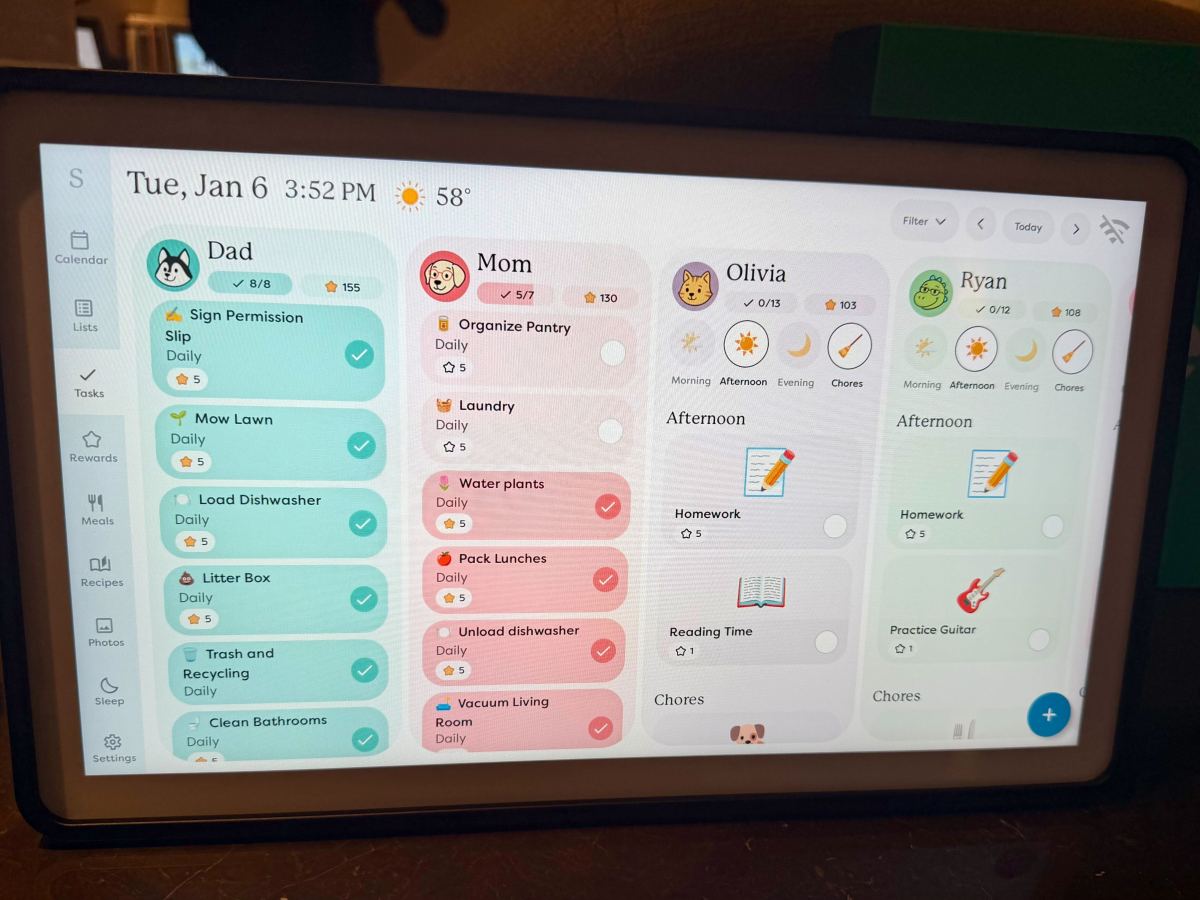
Skylight, initially known for digital picture frames, has evolved its focus to assist families with organization through shared calendars, lists, and meal planning features.
The company unveiled its newest product, the Skylight Calendar 2, at CES 2026. This version features a more streamlined design, positioned between the original 15-inch calendar and the larger 27-inch Calendar Max. Users can customize the frame with various colors to complement their home’s interior.
The core appeal of the device lies not in its display, but in its advanced software and AI functionalities. Its central calendar feature integrates schedules from various family calendars, including Google Calendar, iCal, Microsoft, and sports applications like TeamSnap.
Schedules are color-coded for easy viewing. The calendar can also incorporate information from emails containing key dates or flyers from children’s backpacks. An AI feature allows users to photograph paper documents, and the calendar automatically updates with the new events.
 Image Credits:Sarah Perez
Skylight aims to alleviate common family challenges, such as managing grocery lists, setting appointment reminders, planning meals, and discovering recipes. Additionally, it can function as a digital photo frame when not actively being used for organization.
The application features an intuitive design with clear readability, vibrant colors, and visual cues, making it accessible even for young children. For example, children can mark off chores by recognizing images, even if they are not yet able to read.

The meal planning feature is highly valued, allowing users to simply note meal ideas or to find recipes and generate corresponding shopping lists. Skylight can automatically create ingredient lists or integrate them directly with the Instacart app.
An innovative AI function enables users to photograph the contents of their refrigerator to receive recipe suggestions based on available ingredients.
The demand for such an organizational system is evident among consumers. Skylight, a self-funded and profitable company since its inception, currently serves over 1.3 million families with its digital calendars, a number expected to grow with the release of the new design.
