


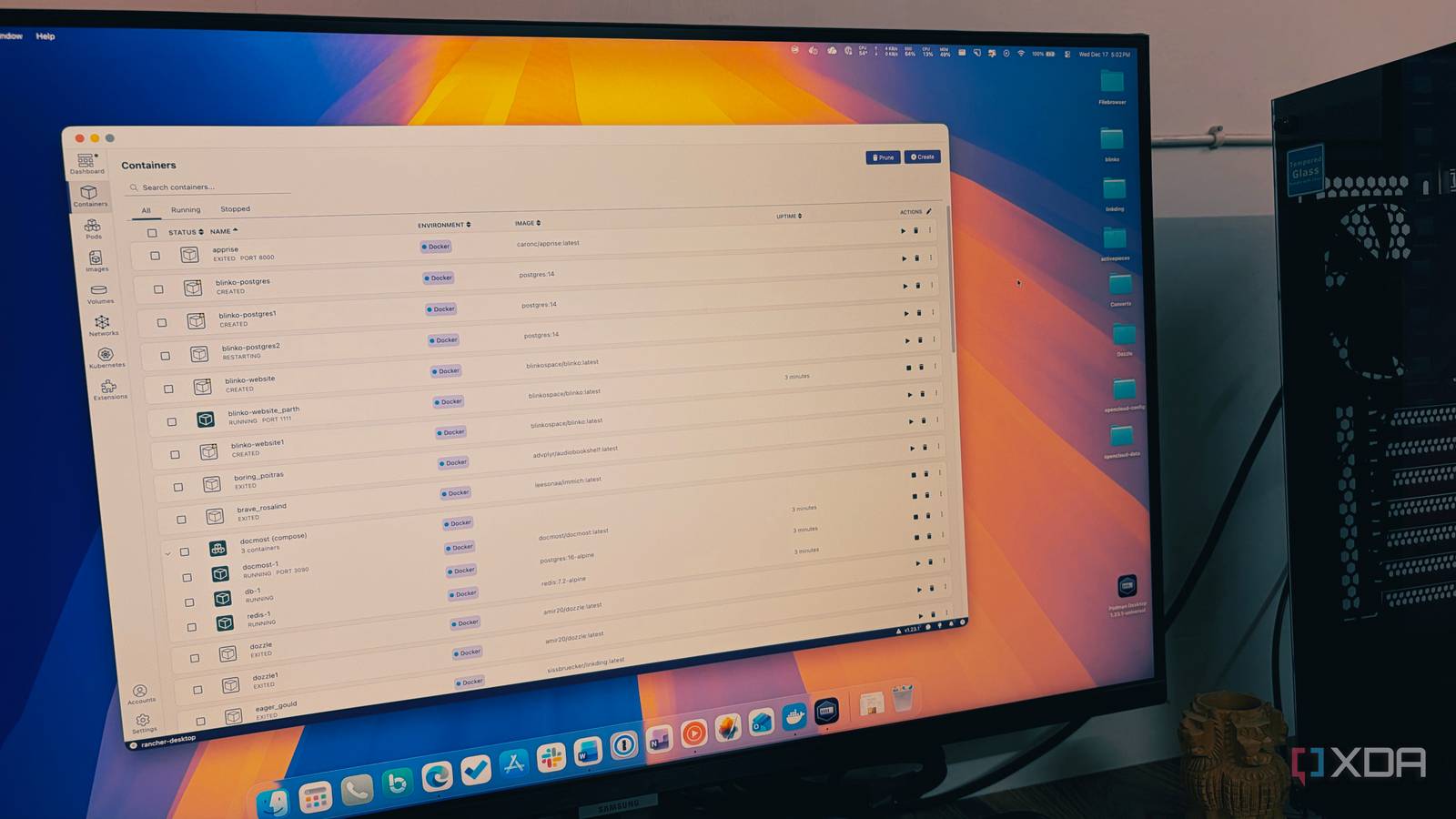
Docker Desktop has long been a standard for container management, but its significant resource consumption has led many to explore alternatives such as Portainer. While Portainer offers robust fleet management capabilities, a daemonless and rootless container engine like Podman presents a superior solution, outperforming both previous options.
Here are the top reasons why Podman is a superior choice for any developer looking to run containers efficiently and securely.
The container manager struggles
It takes the hit on resources
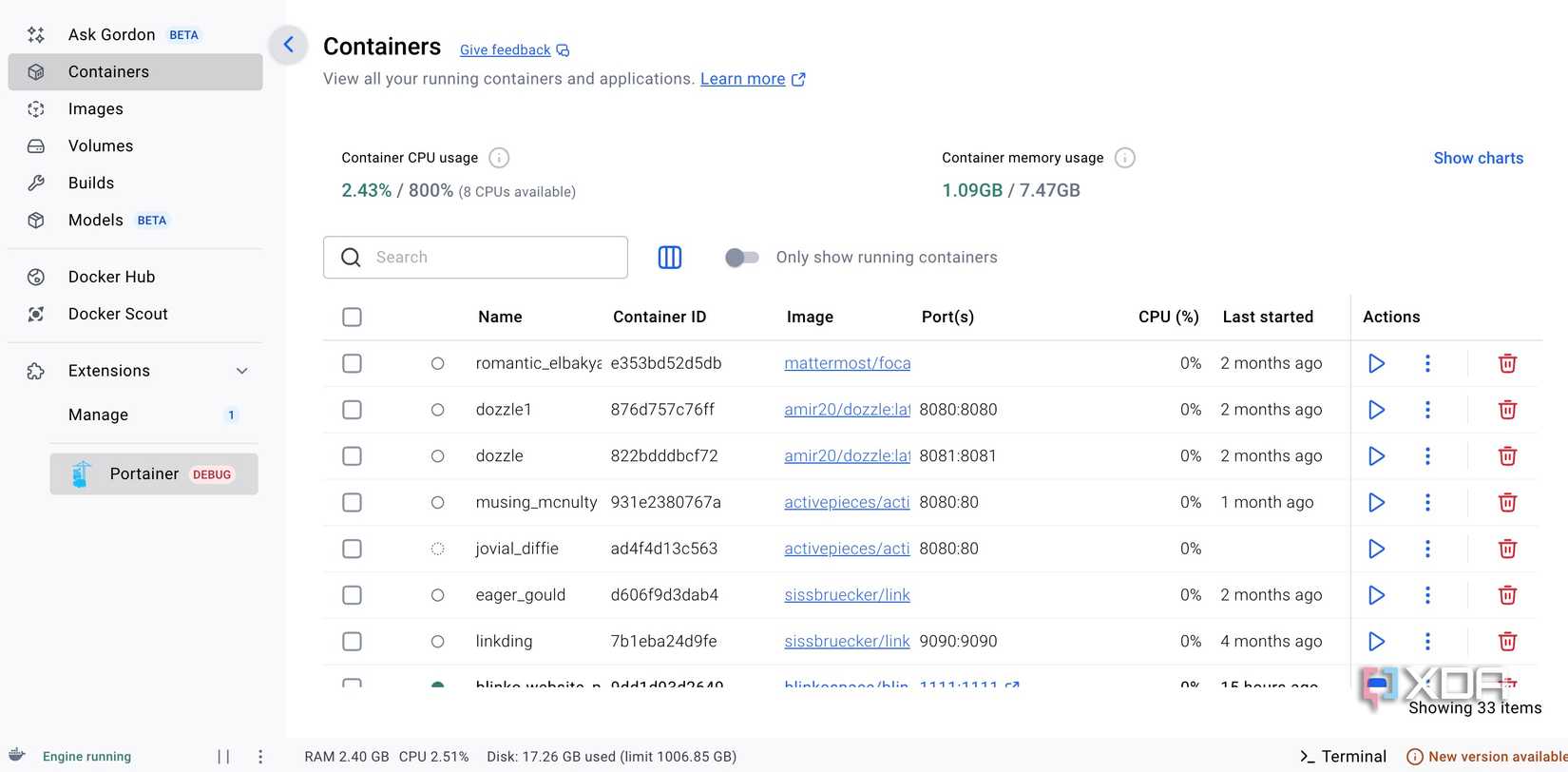
Initially, Docker Desktop offered a convenient way to manage containers on Mac and Windows. However, its resource demands quickly became apparent, often consuming significant RAM and system resources. This created a feeling of being constrained by a resource-intensive ecosystem.
Exploring alternatives led to Portainer, a powerful tool that simplifies volume and stack management. Yet, it was discovered that Portainer still relied on the Docker Daemon, meaning the underlying architectural issue of resource consumption remained unaddressed.
The continuous search for a solution revealed the persistence of the same core problems. The realization emerged that a better daemon management tool was not the answer; rather, eliminating the daemon altogether was necessary. This led to the adoption of Podman.
Core architectural advantage
The major win
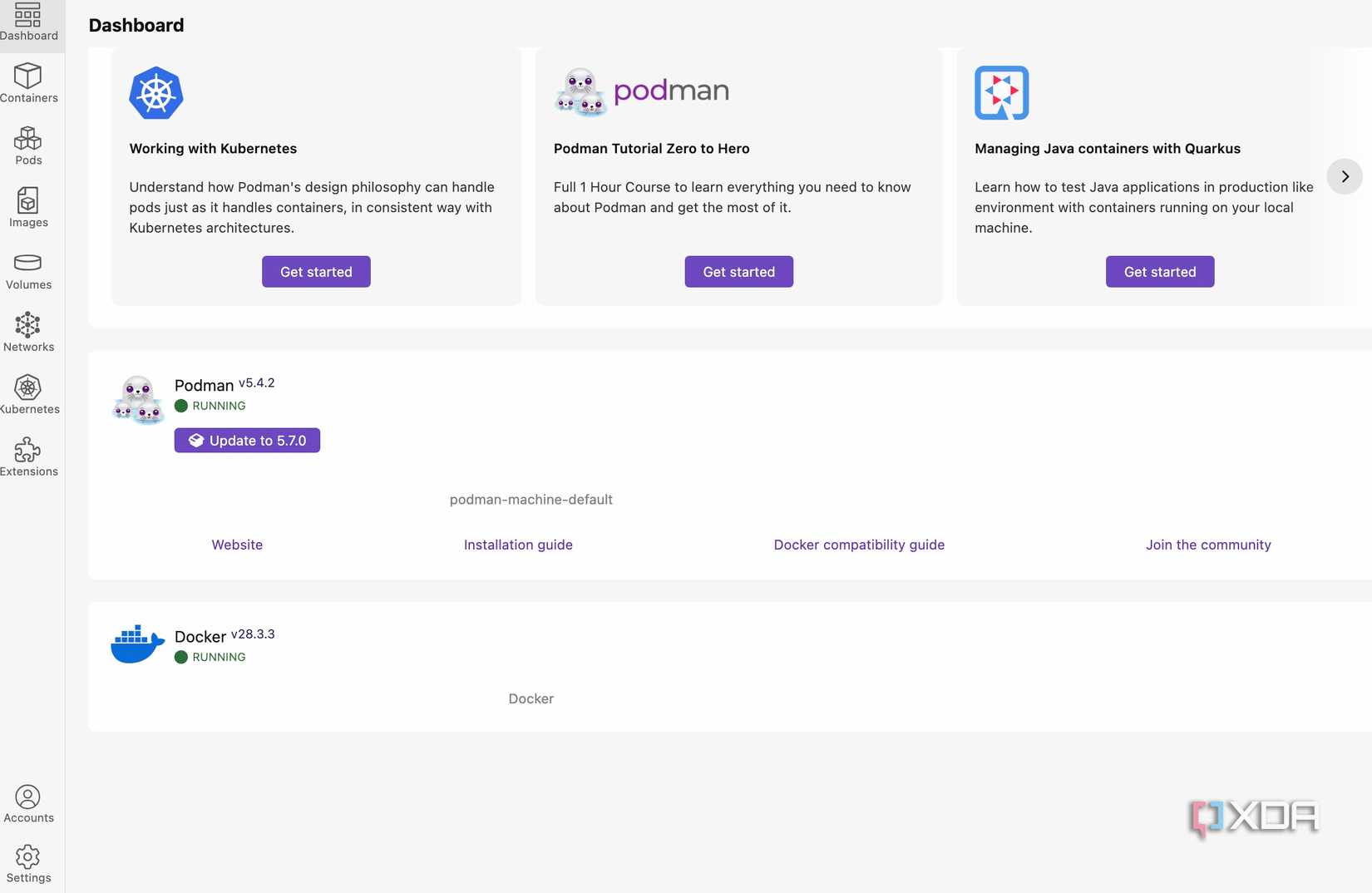
For an extended period, the Docker Daemon (dockerd) was widely accepted as fundamental for container operations, with the assumption that a substantial, persistent background process was always required.
The impact of this architectural choice on system performance was not fully understood until Podman’s approach was observed. In Docker’s model, the daemon plays a central, critical role.
A crash in this single process can bring down all associated containers. Frequent restarts of Docker Desktop were often necessary to restore development environments due to daemon issues.
Transitioning to Podman revealed a refreshing architectural design. Podman operates without a daemon; containers are launched directly as processes.
A noticeable benefit after switching was the reduction in system noise, as laptop fans operated less frequently. Since Podman does not require a persistent background service, it consumes resources only when a container is actively performing tasks.
Adopting a daemonless architecture not only enhanced system stability but also integrated containerization more seamlessly into the operating system. Ultimately, the most effective method for managing a daemon proved to be its complete absence.
Running legacy Docker containers
Avoid any extra efforts
The decision to adopt Podman was primarily met with concerns not about the technology itself, but about existing projects. Numerous Dockerfiles and intricate docker-compose stacks had been developed over many months.
The prospect of re-coding existing projects for a new tool was undesirable. However, it was quickly discovered that Podman is compatible with images originally built for Docker.
Both tools adhere to OCI (Open Container Initiative) standards, ensuring compatibility. Existing local images and those pulled from Docker Hub functioned seamlessly with Podman.
Legacy work did not need to be abandoned; instead, it found a more suitable environment. The transition to Podman allowed existing containers to operate on a platform better suited for current development practices, without requiring a complete overhaul.
Security advantages
A crucial point
Running new images from the internet often raised security concerns due to Docker’s requirement for root privileges. This effectively granted a background daemon, and any containers it managed, extensive system access.
The discovery of rootless containers in Podman provided significant reassurance. With Podman, containers operate under the user’s own account, confining potential attackers to the same permissions as a standard user, even in a compromised scenario.
A notable feature of Podman is its design to emulate Kubernetes functionality. It allows for grouping containers into ‘Pods,’ mirroring Kubernetes’s approach to container orchestration.
Adopting Podman facilitates a more structured approach to container deployment, aligning with practices common in modern tech environments.
Simple, faster, free
While transitioning from Docker Desktop to Portainer offered improved management, moving to Podman represents a significant upgrade. Podman provides not only an alternative for running containers but also a more secure, resource-efficient, and Linux-native environment.
For those seeking to reduce system noise and optimize CPU usage, Podman offers a compelling solution. This transition is more than just a tool switch; it is an investment in future-proofing development workflows.
