


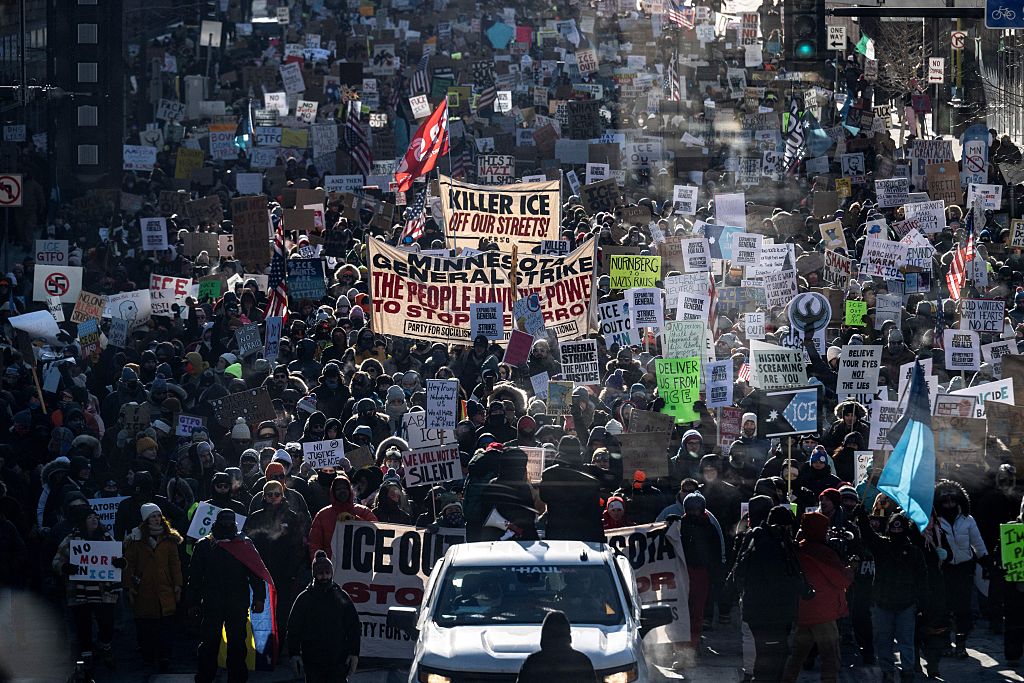
Minneapolis’s tech sector is significantly impacted by intensified U.S. immigration enforcement, which has resulted in fatalities, including at least two U.S. citizens.
Several Minneapolis-based founders and investors have paused much of their professional activities to concentrate on community support. Their efforts include volunteering at churches and assisting with food provisions, forming part of a broad grassroots movement involving advocacy, donations, protests, and mutual emotional support.
Scott Burns, a local investor, noted a shared sense of fatigue and reaction among various professionals, including teachers and tech workers. He has increased his church involvement to help package and deliver food to residents hesitant to leave their homes, likening the community response to that following a natural disaster.
Burns and other tech industry figures in Minneapolis described the immigration raids as highly disruptive, highlighting the city’s unity over recent weeks in response to escalating violence from U.S. Immigration and Customs Enforcement.
The pervasive presence of ICE agents, often plainclothed and equipped with military-grade weapons, makes focusing on company building challenging. Federal agents have been observed searching public transport, workplaces, and areas outside homes and in parking lots. They have been
.
A Black founder, who chose anonymity to safeguard his staff, reported carrying his passport constantly. Despite being a U.S. citizen, he has witnessed people of color across the city being profiled and apprehended by ICE and border patrol agents.
The founder emphasized the difficulty of the situation, stating that focusing on work and managing his team through these circumstances has been a significant challenge.
The founder recounted a phone meeting where a colleague abruptly went silent, explaining that she was observing ICE agents detaining someone in her neighborhood, which was also his mother’s neighborhood.
This incident prompted the founder to immediately call his mother to confirm she had her passport.
 Protesters clash with law enforcement after a federal agent shot and killed a man on Jan. 24. the second federal-involved shooting in the city this month, deepening tensions over enforcement operations in Minneapolis, United States, on January 24, 2026.Image Credits:Arthur Maiorella/Anadolu / Getty Images
A community, disturbed
Efraín Torres, a Latino founder, works remotely, acutely aware of the immigration raids occurring in his neighborhood. He noted the unmistakable sounds of car horns and protestor whistles signaling alerts, and the subsequent appearance of signs indicating a neighbor’s apprehension by ICE.
Officials conduct “citizen checks,” requiring individuals to prove their immigration status, a practice the Supreme Court previously affirmed could be done based on factors like race or accent. Torres mentioned these checks occur even during routine activities, such as snow-blowing, and that his personal encounters with ICE lead him to maintain a low profile.
Torres expressed concern about the arbitrary nature of these encounters, stating that the difference between safety and becoming a victim of assault could be a mere chance meeting. He also noted that he knows individuals who have been followed by ICE, a phenomenon reported by others in conjunction with raids.
Immigration raids have intensified nationwide under the Trump administration, with a particularly significant deployment in the Twin Cities. Over 3,000 federal agents have been sent to Minnesota as part of “Operation Metro Surge.” Senator Amy Klobuchar of Minnesota has stated that ICE and border patrol agents now outnumber local police in Minneapolis by nearly 3 to 1.
Minnesota hosts one of the largest Somali immigrant populations, a group previously targeted by the administration. This targeting extends to U.S. Representative Ilhan Omar, who has publicly disagreed with President Trump. The state’s Democratic Governor, Tim Walz, and Minneapolis Mayor Jacob Frey, also a Democrat, have similarly faced presidential criticism, as has the mayor of Minneapolis.
The increased immigration enforcement aligns with President Trump’s pledge to reduce illegal immigration. However, some suggest that the administration has specifically targeted cities and states that did not support him politically. Since Trump assumed office last January, over 2,000 individuals have been arrested by ICE in Minnesota.
An anonymous Black investor described the situation as difficult. Despite being a U.S. citizen with deep roots in the country, he carries his passport for safety, even when residing just outside the city.
This investor noted the presence of agents in rural Minnesota, indicating that enforcement extends beyond urban areas, describing the period as “a strange time.”
 A demonstrator holding a sign that reads “Stop Minnesota Massacre” while joining a protest. Protesters gathered to demand the removal of Immigration and Customs Enforcement (ICE) from the capital and to call for federal accountability. The demonstrations follow the recent deaths of two Minnesota residents, Renee Nicole Good and Alex Pretti during separate encounters with immigration agents in Minneapolis.Image Credits:LightRocket / Getty Images
Individuals are actively assisting others. For instance, the investor mentioned works with immigrant college founders, providing them with food to minimize their need to visit grocery stores. Like many others interviewed, he also prioritizes working from home when feasible.
Mary Grove, another local investor, characterized the current situation as “a tense and difficult time.”
Investor Reed Robinson, who has provided financial aid to community members, noted that some founders with children have established a volunteer network for childcare at schools or daycares. He explained that ICE frequently detains daycare staff and often violates laws and court orders.
Robinson described the immigration operation as unnecessary, intrusive, and a violation of rights.
A prevalent sentiment among many, similar to Robinson’s, is underlying anger beneath the surface of unease and fear.
Investors and founders acknowledge that the emotional strain impedes business development. Torres, for instance, implemented a no-ride-sharing-app policy for his company after some engineers, holding H-1B visas (which the Trump administration has also attacked), reported being followed by immigration officials.
Torres described these encounters as involving “three to four armed men in tactical outfits” and mentioned that he and his wife have considered leaving the state due to the widespread trauma inflicted by these actions.
Grassroots efforts prevail as corporate leaders disappoint
The Minneapolis tech scene, though relatively small with companies raising over $1 billion in recent years, includes notable entities like fintech Sezzle, clean water company Rorra, and medtech Reema. Robinson highlighted the region’s strong history of innovation, asserting that progress will continue despite the current challenges.
Minneapolis and St. Paul, collectively known as the Twin Cities, host the headquarters of major American corporations like Target, Optum, Best Buy, UnitedHealthGroup, and General Mills. Some founders and investors have criticized the leadership of these large companies for their ambiguous reactions to the urban unrest, especially given that many of their own employees are detained.
A startup investor expressed dissatisfaction, stating that there has been no adequate response from corporate leaders.
Following the death of ICU nurse Alex Pretti by ICE agents, sixty state executives signed a statement urging “immediate de-escalation of tensions.” Additionally, major companies in the state have collectively contributed millions in grants via the Minneapolis Foundation to support businesses affected by the immigration operation.
 Protesters hold a vigil for Alex Pretti, the man fatally shot by federal immigration enforcement the previous day in Minneapolis, United States, on January 25, 2026.Image Credits:Anadolu / Getty Images
Many founders and investors, however, consider these corporate actions insufficient when compared to grassroots efforts. A recent CNBC poll revealed that one-third of surveyed executives remained silent, deeming public statements irrelevant to their business. Additionally, 18% feared “backlash from the Trump administration,” and 9% were still formulating a response.
Local investor Tim Herby expressed profound disappointment in the perceived lack of courage from community institutions, describing the preceding two months as heart-wrenching.
Investor Mary Grove confirmed that her team regularly connects with community members and portfolio companies to monitor their well-being. She noted that individuals are assisting each other with rent, and restaurants are providing free meals. Minnestar, a local tech nonprofit, plans to host a community event to foster discussion and determine future actions.
A Black investor observed the irony of police now standing with community members in
, a stark contrast to protests against law enforcement following George Floyd’s murder just a few years prior, highlighting a significant shift in daily life.
Another Black founder mentioned that some of his white friends now drive him for safety within the city. He recounted an instance in a restaurant where live TV updates reported another ICE shooting, causing the mood to become somber and underscoring the pervasive impact of these raids on daily life.
The founder concluded by noting that he recently saw a friend who had not left his home since New Year’s, illustrating the profound fear and isolation experienced by some residents.
