


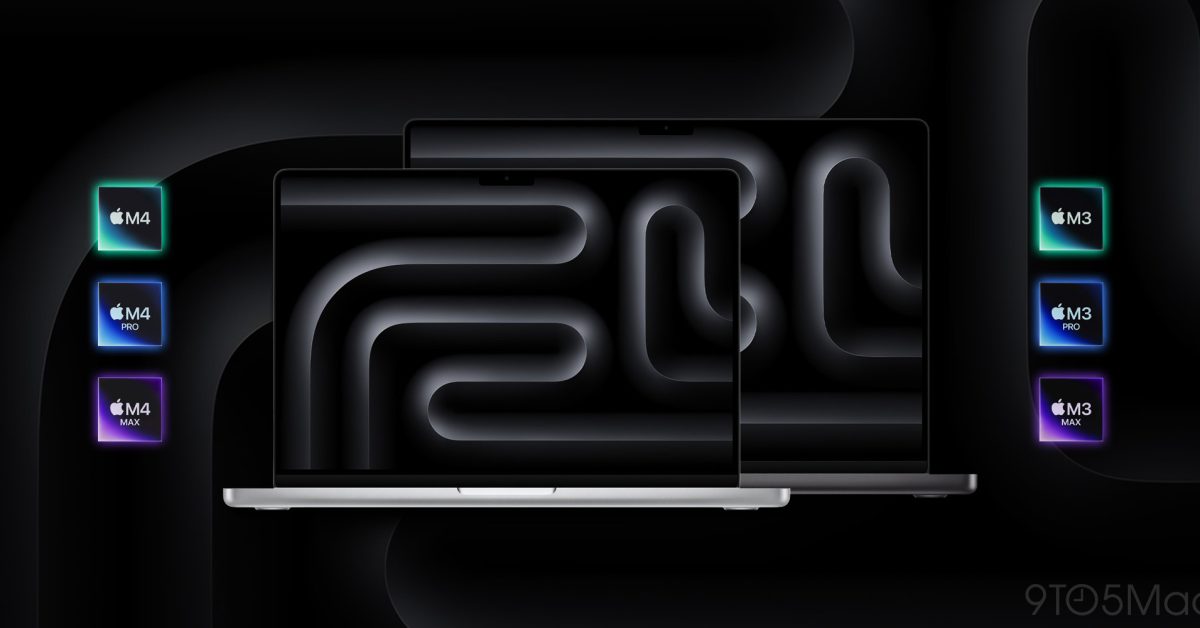

Apple’s continuous innovation in silicon brings forth new generations of its custom chips, with the M4 succeeding the M3. For users considering a new MacBook Pro, understanding the distinctions between these two powerful processors is crucial.
Performance Upgrades: CPU and GPU
The M4 chip introduces notable enhancements over its M3 predecessor. In terms of CPU performance, the M4 typically offers faster processing speeds, both in single-core and multi-core tasks. This translates to quicker compilation times, more responsive application usage, and smoother multitasking for demanding professional applications.
Graphics performance also sees an uplift with the M4. While the M3 already delivered impressive GPU capabilities, the M4 often features an improved graphics architecture, potentially offering better ray tracing performance and overall faster rendering for video editing, 3D modeling, and gaming.
Neural Engine and AI Capabilities
A significant focus for the M4 chip is its enhanced Neural Engine. This dedicated hardware for machine learning and artificial intelligence tasks sees a substantial boost in performance compared to the M3. Applications leveraging AI, such as advanced photo and video editing features, voice processing, and intelligent automation, will experience faster and more efficient operation on M4-powered machines.
Power Efficiency and Battery Life
Despite the performance gains, Apple’s chip design often prioritizes power efficiency. The M4 chip continues this trend, potentially offering similar or even improved battery life under various workloads compared to the M3, thanks to architectural refinements and optimized power management.
Who Should Upgrade?
For users with an M3 MacBook Pro, the decision to upgrade to an M4 model depends on specific needs. Those engaged in highly demanding professional workflows, especially in AI/ML, 3D rendering, or complex video production, may find the performance improvements of the M4 to be a worthwhile investment. For general productivity and less intensive creative tasks, the M3 remains a very capable chip.
