


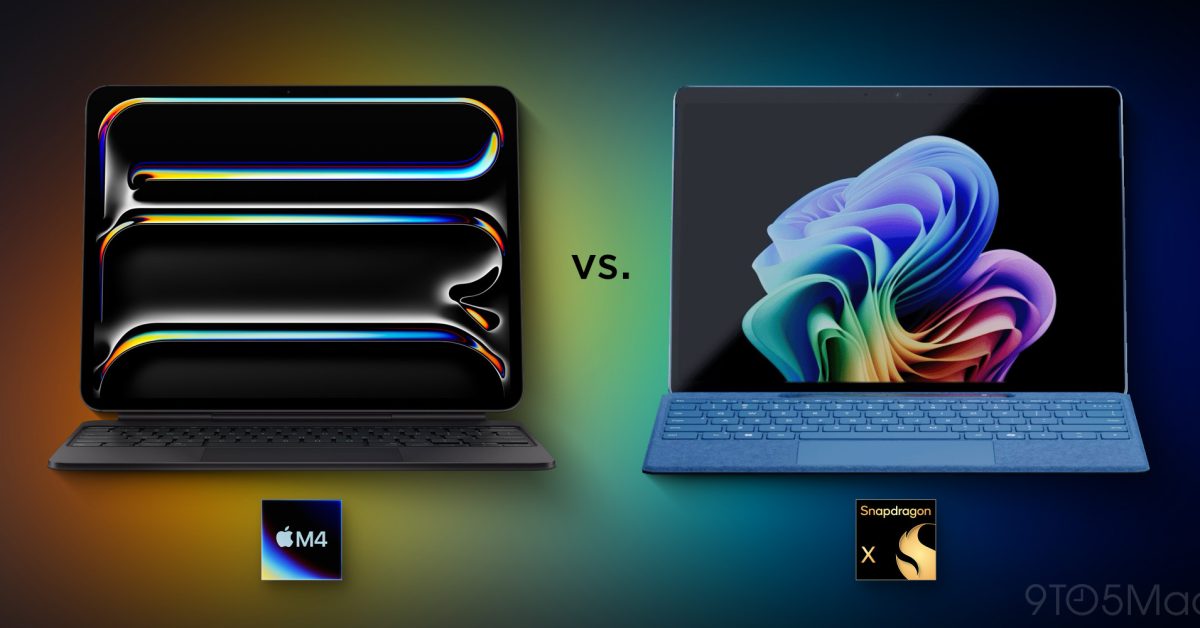
The landscape of portable computing continues to evolve, with two prominent devices vying for attention: Apple’s latest M4 iPad Pro and Microsoft’s Surface Pro. Both aim to bridge the gap between tablets and laptops, offering powerful performance in a versatile form factor. This comparison delves into their key features, helping users understand which device might best suit their needs.

Performance and Processing Power
At the heart of the M4 iPad Pro is Apple’s groundbreaking M4 chip, delivering exceptional speed and efficiency. This silicon is engineered for demanding tasks, from professional video editing to advanced AI workloads, offering a significant leap in performance over previous generations. In contrast, the Microsoft Surface Pro typically offers configurations with Intel Core processors (or more recently, Qualcomm Snapdragon X Elite for ARM-based models), providing robust performance for Windows applications. While both devices are capable, the M4 chip often demonstrates superior raw processing power and graphics capabilities, especially for optimized applications.
Design and Display Technology
The M4 iPad Pro boasts an incredibly thin and light design, featuring a stunning Ultra Retina XDR display with tandem OLED technology. This display offers unparalleled brightness, contrast, and color accuracy, making it ideal for creative professionals. The Surface Pro maintains its signature kickstand design, offering flexibility in how it can be used. Its display is also high-resolution, though it typically uses LCD technology, which, while excellent, may not match the M4 iPad Pro’s OLED panel for pure visual fidelity. Both devices support high refresh rates for smooth scrolling and responsiveness.
Operating System Experience
A fundamental difference lies in their operating systems. The M4 iPad Pro runs iPadOS, a mobile-first operating system designed for touch and stylus input, offering a vast ecosystem of apps optimized for tablets. While iPadOS has gained significant multitasking capabilities, it still operates within a more constrained environment compared to a traditional desktop OS. The Surface Pro, on the other hand, runs full Windows, providing access to the entire library of Windows applications and offering a familiar desktop experience. This makes the Surface Pro a more direct laptop replacement for users who rely on specific desktop software.
Accessories and Ecosystem
Both devices are complemented by a range of accessories that enhance their functionality. The M4 iPad Pro pairs with the redesigned Magic Keyboard, which features a larger trackpad and function row, transforming the iPad into a more laptop-like device. The Apple Pencil Pro offers advanced haptic feedback and new gestures for artists and note-takers. For the Surface Pro, the Type Cover provides a keyboard and trackpad experience, while the Surface Pen offers precise input. The choice of accessories often comes down to personal preference and workflow, with both ecosystems offering premium options.
Portability and Battery Life
In terms of portability, the M4 iPad Pro’s extremely thin and light profile gives it an edge, making it exceptionally easy to carry. Battery life on the M4 iPad Pro is generally excellent, often providing all-day usage for typical tasks. The Surface Pro, while still portable, is slightly thicker and heavier, especially with the Type Cover attached. Battery performance on the Surface Pro can vary more significantly depending on the processor configuration and usage, but modern iterations aim for competitive endurance.
Pricing and Value Proposition
Both the M4 iPad Pro and Microsoft Surface Pro represent significant investments. Pricing can vary widely based on storage, RAM, and processor configurations, as well as the inclusion of essential accessories like keyboards and styluses. The M4 iPad Pro often starts at a higher base price, and its accessories are sold separately. The Surface Pro also has various configurations, and while some bundles exist, accessories typically add to the overall cost. The value proposition for each device depends heavily on the user’s primary use case: creative work and a streamlined tablet experience for the iPad Pro, or full desktop versatility and legacy software support for the Surface Pro.
Conclusion
Choosing between the M4 iPad Pro and the Microsoft Surface Pro ultimately depends on individual priorities. The M4 iPad Pro excels as a premium tablet with unparalleled display technology and raw processing power, ideal for creative professionals and those who prefer a touch-first interface. The Surface Pro, with its full Windows operating system, offers greater flexibility for traditional desktop workflows and a more direct laptop replacement experience. Both devices are powerful, but their distinct approaches to mobile computing cater to different user needs and preferences.
