


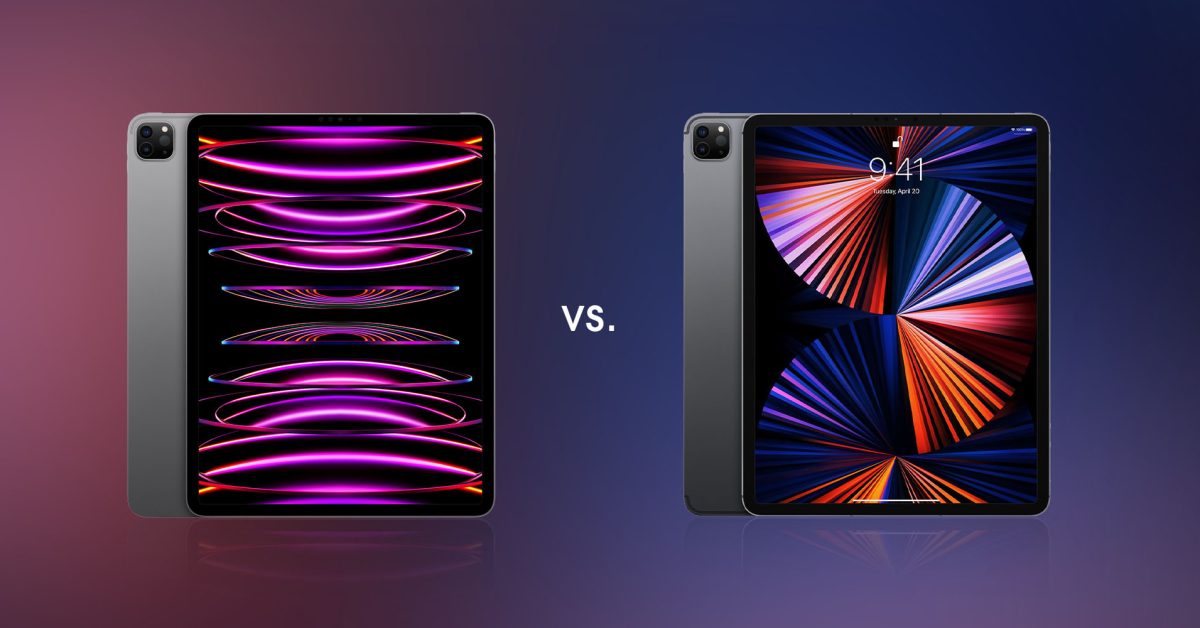
When considering an Apple iPad Pro, potential buyers often weigh the differences between recent generations. The M2 iPad Pro, launched in October 2022, and the M1 iPad Pro, introduced in April 2021, both represent high-end tablet technology. While the M1 model remains a formidable device, the M2 iteration provides several key upgrades that might influence a purchasing decision.

Core Specifications Overview
Many fundamental aspects of the iPad Pro design and display technology remained consistent between the M1 and M2 generations. Both the 12.9-inch and 11-inch models feature impressive Liquid Retina XDR (mini-LED) and Liquid Retina displays, respectively. These screens support ProMotion technology for adaptive refresh rates, True Tone for ambient light adjustment, and P3 wide color for vibrant visuals. Brightness levels are also identical, with the 11-inch offering 600 nits and the 12.9-inch reaching 1000 nits sustained brightness, peaking at 1600 nits for HDR content.
Storage options and RAM configurations also mirror each other across both generations. Users can choose from 128GB, 256GB, 512GB, 1TB, or 2TB of internal storage. RAM is set at 8GB for models up to 512GB and 16GB for 1TB and 2TB variants.
Performance and Chipset
The most significant upgrade in the M2 iPad Pro is its namesake M2 chip. This processor features an 8-core CPU, delivering up to 15% faster performance compared to the M1 chip. The M2 also boasts a 10-core GPU, which provides a substantial 35% increase in graphics performance over the M1’s 8-core GPU. Furthermore, the Neural Engine in the M2 chip is 40% faster, enhancing machine learning tasks. Memory bandwidth also sees an improvement, jumping from 68GB/s in the M1 to 100GB/s in the M2, contributing to overall system responsiveness.
Camera Capabilities
The camera systems on both M1 and M2 iPad Pro models are largely identical. Both feature a 12MP Wide camera and a 10MP Ultra Wide camera on the rear, alongside a 12MP Ultra Wide front camera with Center Stage functionality. The primary distinction lies in video recording capabilities. The M2 iPad Pro introduces support for ProRes video capture, allowing professional-grade video recording at up to 4K resolution at 30 frames per second on models with 256GB storage or more. The 128GB model supports ProRes at 1080p at 30 fps. This feature is not available on the M1 iPad Pro.
Connectivity and Unique Features
Connectivity received notable enhancements with the M2 iPad Pro. It supports Wi-Fi 6E, offering faster wireless speeds and improved performance in congested network environments compared to the M1’s Wi-Fi 6. Bluetooth also saw an upgrade from version 5.0 on the M1 to 5.3 on the M2, providing more reliable and efficient connections with compatible accessories. Both models support 5G cellular connectivity (sub-6 GHz and mmWave).
A unique feature exclusive to the M2 iPad Pro is Apple Pencil Hover. This technology allows the Apple Pencil 2 to be detected up to 12mm above the display, enabling users to preview marks, tools, and interactions before touching the screen. This can be particularly beneficial for artists, designers, and anyone requiring precise control.
Battery Life and Pricing
Battery life remains consistent across both generations, offering up to 10 hours of web browsing or video playback on a single charge. At launch, the M2 iPad Pro started at $799 for the 11-inch model and $1099 for the 12.9-inch model. While the M1 iPad Pro had similar launch prices, it is now often available at discounted rates, presenting a potentially better value for some consumers.
Should You Upgrade or Choose the M2?
For most users, the M1 iPad Pro continues to offer exceptional performance for everyday tasks, productivity, and even demanding creative applications. The M2’s performance gains are most noticeable in highly intensive workflows such as advanced video editing with ProRes, complex 3D rendering, or heavy multitasking scenarios. The Apple Pencil Hover feature is a compelling addition for specific creative professionals who can leverage its precision benefits.
If an M1 iPad Pro is currently owned, an upgrade to the M2 model is likely unnecessary unless specific M2-exclusive features like ProRes video capture or Apple Pencil Hover are critical for professional work. For those purchasing a new iPad Pro, the M1 model offers significant value, especially if found at a reduced price. The M2 is recommended for users who require the absolute latest performance, future-proofing, or the specialized capabilities it introduces.
