


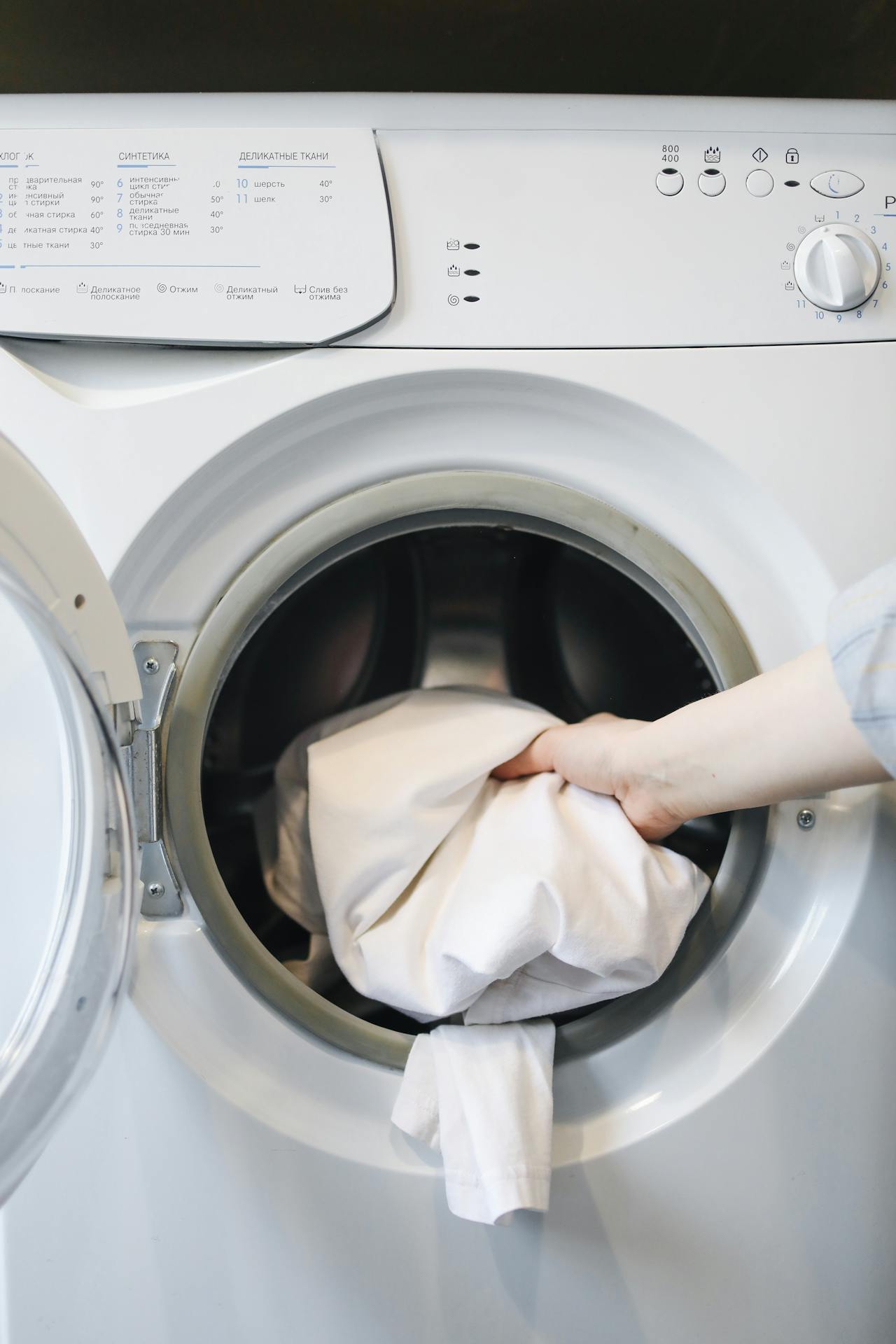
In the near future, laundry care is poised to become a key indicator of how households integrate sustainability, sensory aesthetics, and daily routines.
Laundry’s New Role in the Designed Home
By 2026, laundry will move beyond its traditional utilitarian role in domestic life. What was once purely functional is evolving into a category where advanced chemistry offers responsible solutions without compromising fabric care, fragrance quality, or user convenience.
This transformation reflects a wider trend in residential design. As homes are designed with greater intention, fewer aspects are considered purely functional. The detailed attention previously given to kitchens and bathrooms is now extending to laundry rooms and fabric care products. Brands like Laundry Sauce, for instance, are contributing to a new understanding of performance and luxury in daily routines.
Market data supports this trend. The worldwide market for eco-friendly laundry detergents is anticipated to increase from approximately $45.3 billion in 2025 to over $66 billion by 2033. Similarly, the scented laundry detergent sector is projected to grow from about $3.45 billion in 2024 to nearly $5.7 billion by 2033. These growth patterns collectively indicate a fundamental redefinition of what “clean” signifies.
Clean, increasingly, is not just hygienic. It is responsible. It is sensory. It is intentional.
Three Forces Redefining Luxury Laundry in 2026
Eco-Conscious Chemistry Becomes the Baseline
Sustainability is no longer a premium feature. It is the foundation upon which luxury home care is built.
Consumers now anticipate detergents that offer high performance alongside reduced environmental impact. This expectation has driven rapid innovation in areas such as bio-based surfactants, enzyme-powered cold-water formulations, concentrated product formats, and packaging designed to minimize waste.
The hallmark of the luxury segment is not merely the inclusion of these features, but their seamless integration. By 2026, environmental responsibility will be a given. The distinction among brands will lie in how effortlessly they weave this responsibility into the everyday user experience.
Fragrance Steps Into the Spotlight
Fragrance has emerged as the most expressive aspect of contemporary laundry care. Generic “clean” scents have given way to sophisticated, perfumer-style compositions crafted to linger on fabrics.
These fragrances are designed not to conceal odors or be overtly noticeable, but rather to bond with textiles and release gradually. This allows clothing, linens, and towels to subtly carry scent through daily activities and over time, transforming laundry into an ambient layer of fragrance that accompanies a home’s residents.
The concept of fragrance on fabric is shifting towards an effortless, lived-in experience rather than something overtly applied.
By 2026, scented laundry is anticipated to transition from an experimental concept to an essential element, akin to candles and diffusers in its ability to shape atmosphere, yet offering a more subtle and personal presence.
Laundry as a Designed Ritual
Perhaps the most telling shift is how laundry itself is being practiced.
In a world of increasing fragmentation, individuals often seek moments of order and tranquility. Laundry has unexpectedly become a ritual that provides repetition, structure, and sensory satisfaction through intentional choices in scent, fabric care, folding, and storage.
This transformation into a ritual aligns with wider wellness and design philosophies that prioritize intention over mere efficiency. Laundry is evolving beyond a simple chore; it is becoming a process for resetting the home environment.
The laundry process is increasingly seen as a ritual that connects various aspects of the home, from sustainability and scent to daily life.
This perspective is projected to gain broader acceptance by 2026, especially among consumers who perceive their homes as extensions of personal values rather than solely functional areas.
Why 2026 Is the Inflection Point
Several forces converge to make 2026 a defining year for luxury laundry.
Consumer expectations have evolved, with sustainability and fragrance now playing a significant role in purchasing decisions, alongside traditional performance metrics. Scientific advancements in formulations have enabled the simultaneous delivery of effective cleaning, lasting scent, and environmentally responsible chemistry. Culturally, daily routines are being re-envisioned as opportunities for care, not just obligations.
Concurrently, both the eco-friendly and scented detergent markets continue to expand, opening avenues for premium brands that combine environmental responsibility with sensory appeal. These combined dynamics are elevating laundry from a mere background function to a significant design consideration.
How Forward-Looking Brands Are Responding
Leading brands in this evolving landscape are adopting all three core principles: responsible chemistry, sophisticated fragrance, and product systems that support ritualized use. Laundry Sauce, for example, illustrates this strategy by presenting laundry care as a sensory and values-driven experience, moving beyond a simple commodity.
The emergence of such brands signifies a broader re-evaluation of the home-care hierarchy. Laundry is no longer a peripheral topic in discussions about sustainability or fragrance; it is becoming central.
As this category develops, successful brands will be those that offer coherence—products that clean efficiently, feature well-considered scents, and resonate with the desired atmosphere of a home.
Laundry care will transcend definitions limited to stain removal or freshness. Its value will be assessed by its contribution to a home’s ambiance, its reflection of personal style, and its alignment with environmental principles.
Luxury, in this context, is not about excess. It is about intention. How something works. How it smells. And how it makes a home feel when no one is looking.
The laundry room, once purely utilitarian, is becoming one of the most expressive spaces in the modern home.
