


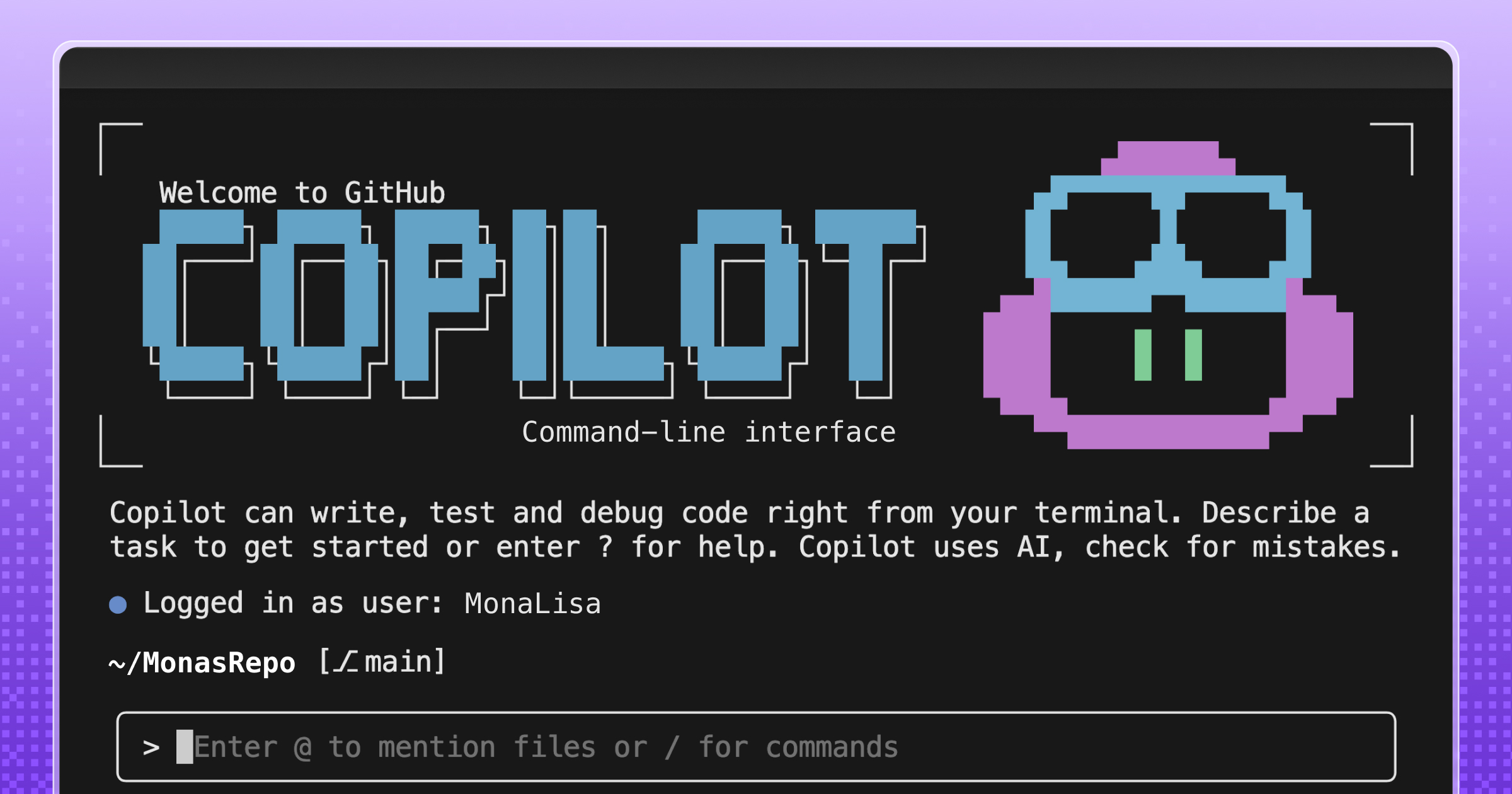
The GitHub Copilot CLI introduces an engaging animated ASCII banner, transforming the command-line interface experience. This article delves into the engineering process behind converting a high-fidelity video into a dynamic, character-based animation suitable for terminal display.
The Vision for an Animated Banner
The goal was to create a visually appealing and informative banner that would greet users of the GitHub Copilot CLI. Instead of a static image, the team aimed for a fluid animation that could convey the tool’s capabilities in an engaging way, pushing the boundaries of what’s typically expected in a terminal environment.
Challenges of Terminal Animation
Displaying complex animations in a text-based terminal presents unique hurdles. Terminals are designed for characters, not pixels, and lack native support for video playback or rich graphics. Key challenges included:
- Converting pixel-based video frames into character-based representations.
- Maintaining visual fidelity and readability with a limited character set.
- Ensuring smooth playback across various terminal emulators and operating systems.
- Optimizing performance to avoid lag or excessive resource consumption.
From Video to ASCII: The Technical Workflow
The process began with a source video, which needed to be meticulously transformed into a sequence of ASCII art frames. This multi-step conversion involved several key stages:
1. Video Frame Extraction
The initial step involved extracting individual frames from the source MP4 video. Tools like ffmpeg were instrumental in converting the video into a series of static image files, typically PNGs, at a specified frame rate.
2. Image Processing and Grayscale Conversion
Each extracted image frame underwent further processing. This included resizing the images to a resolution appropriate for terminal display, considering the typical character grid. Crucially, images were converted to grayscale, as color information would be lost or heavily simplified when mapping to ASCII characters. Color reduction techniques were also applied to simplify the palette.
3. Mapping Pixels to ASCII Characters
The core of the animation involved mapping the grayscale values of each pixel to a corresponding ASCII character. A “shading ramp” or character set, ranging from dense characters (e.g., ‘#’, ‘@’) for darker pixels to sparse characters (e.g., ‘.’, ‘ ‘) for lighter pixels, was used. The choice of characters significantly impacts the visual outcome and perceived detail.
4. Terminal Rendering and Aspect Ratio Correction
Terminals typically use monospace fonts, meaning each character occupies the same width. However, the aspect ratio of characters in a terminal (often taller than they are wide) differs from standard image pixels. This required careful aspect ratio correction during the conversion process to prevent the animation from appearing stretched or distorted. The rendering engine also had to handle dynamic terminal resizing, adjusting the ASCII art to fit the available character grid.
Implementation Details: Go and Ffmpeg
The animation pipeline leveraged a combination of established tools and custom code. ffmpeg proved invaluable for its robust video processing capabilities, handling frame extraction and initial image manipulations. A custom program, primarily written in Go, was developed to manage the image-to-ASCII conversion, character mapping, and real-time terminal rendering. Go’s performance characteristics and concurrency features made it well-suited for this task, allowing for efficient processing and smooth animation playback.
Optimizing for Performance and User Experience
Performance was a critical consideration. The system was designed to minimize CPU usage and ensure a responsive user experience. Techniques included:
- Pre-processing frames to reduce real-time computation.
- Efficient character buffer management for terminal output.
- Adaptive rendering based on terminal capabilities and size.
The result is an animated ASCII banner that not only enhances the GitHub Copilot CLI’s aesthetic but also showcases innovative engineering in terminal-based user interfaces.
