


Verdict
The Dreame Aqua10 Ultra excels at floor cleaning. Its vacuuming performance is superb, even on heavily soiled mid-pile carpets, and its mopping capabilities are highly effective. Key features include the automatic raising of the side brush for dry spills to prevent scattering, lifting all brushes during mopping, and covering the roller mop when transitioning to carpeted areas. The dust bag also undergoes a drying process after each vacuuming session. However, the device’s battery usage and navigation could be more efficient, and the companion application would benefit from simplification.
Pros
- Superb vacuuming and mopping
- Very good edge cleaning
- Roller mop includes its own cover
- Brushes automatically raise when needed
- Features a retractable LiDAR turret
- Capable of tackling relatively high thresholds
Cons
- Battery usage could be improved
- Companion app requires streamlining
- Small onboard dust bin
- High price point
Dreame Aqua10 Ultra: Overview
Robot vacuum cleaner innovation continues to advance rapidly, with models like the Dreame Matrix10 Ultra and Ecovacs Deebot X11 OmniCyclone showcasing significant progress. While the Dreame Aqua10 Ultra may not introduce entirely new concepts, it features an impressive 30,000Pa suction power and unique functionalities. These include brushes that lift when mopping and a mop that covers itself when moving over carpets. Notably, this model is Dreame’s first robot vacuum to incorporate a roller mop.
Beyond its innovative features, the Dreame Aqua10 Ultra truly excels in its primary function: floor cleaning. Its carpet vacuuming performance surpasses many competitors, including the Ecovacs Deebot X8 Pro Omni, delivering superior results on carpets.
While a 30,000Pa suction rating is high, it doesn’t always guarantee 100% hair pickup on very dirty carpets. However, this model achieves approximately 98% to 99% pickup, which is significantly better than many other robot vacuums. Edge cleaning on carpets is less impressive, a common limitation for most side brushes that lack the stiffness to effectively dislodge embedded debris along room edges. Even premium stick vacuums like the Dyson V15s Detect Submarine can struggle with carpet edge cleaning without specialized tools.
For hard floors, the Aqua10 Ultra achieves 100% pickup of visible dirt and debris. The side brush lifts when detecting excessive dirt, preventing scattering of larger particles. The roller mop provides excellent stain removal, even for old and deep-seated marks. A beneficial feature is the dust bag drying after each cleaning cycle, which allows the robot to safely handle small wet areas, though it is not recommended for large spills.
The robot exhibits excellent mobility with quiet wheels, although the brush-raising mechanism is audible, and the sound of the robot settling after crossing a threshold can be jarring. Despite initial setup challenges, its navigation proved efficient. However, it occasionally cleans the same spot repeatedly without excessive dirt, which impacts battery life.
Battery consumption is also affected by the suction activating immediately upon leaving the dock, consuming power before cleaning begins. Tests showed a 1% to 2% battery drop before starting a task, which might not be an issue for smaller homes but could prevent it from completing larger spaces in one charge.
The companion app, while visually appealing, requires a learning curve. Locating specific settings, such as carpet-cleaning options, can be challenging even for experienced users. While not a critical flaw, streamlining the app would enhance usability, especially given the Aqua10 Ultra’s premium price point. Roborock’s app is noted as a closer example of an ideal interface.
Price & Availability
- List price: $1,599 / £1,299 / AU$2,999
- Released date: November 2025
- Available in most major markets, including the US, UK and Australia
Priced at $1,599 / £1,299 / AU$2,999, the Dreame Aqua10 Ultra is positioned as a premium robot vacuum. While it is less expensive than the mop-swapping Dreame Matrix10 Ultra ($1,999.99 / £1,399 / AU$3,499), it remains a flagship model with features that justify its cost. However, consumers primarily seeking effective floor cleaning might find more affordable options without significant compromise.
For example, the Ecovacs Deebot X8 Pro Omni offers excellent cleaning performance, though its app could be improved, and is available for $1,099 / £1,099 / AU$2,499 at full price. Robot vacuums frequently go on sale, with the Deebot often found for around $800 / £800 / AU$1,500 or less. The Aqua10 Ultra is also likely to see similar discounts, but its initial price is considerable.
The Ecovacs Deebot X11 OmniCyclone, priced at $1,499 / £1,199 / AU$2,999, introduces advanced technologies like fast charging and an AI assistant, and eliminates the need for replaceable dust bags, potentially offering better value for larger homes.
Dreame is known for its high pricing strategy; for instance, the X50 Ultra Complete, which uses traditional mop pads and lacks some of the Aqua10 Ultra’s advanced features, is listed at $1,699 / £1,299 / AU$2,999.
Specifications
- Max suction: 30,000Pa
- Robot dimensions (W x H): 35cm x 120cm (LDS raised) / 35cm x 9.75cm (LDS lowered)
- Robot weight: 5.8kg
- Dock dimensions (H x D x L): 50.5cm x 44cm x 42cm
- Dock weight: 11.1kg
- Robot bin volume: 220ml
- Dust bag capacity: up to 3.2L
- Dock water-tank volume: 4L clean / 3.5L dirty
- Mop type: Roller
- Battery capacity: 6,400mAh
- Robot max clearance: 4.2cm single step / 8cm double step
- Navigation: Retractable LiDAR
- Dock type: Charge, dust emptying, roller hot-water washing, roller drying, auto-dispensing one of two detergents
Design
- First Dreame robot vacuum to feature a roller mop
- Equipped with step-vaulting feet and a retractable navigation turret
- Features a boxy, elegant dock design with a dual-detergent dispenser drawer
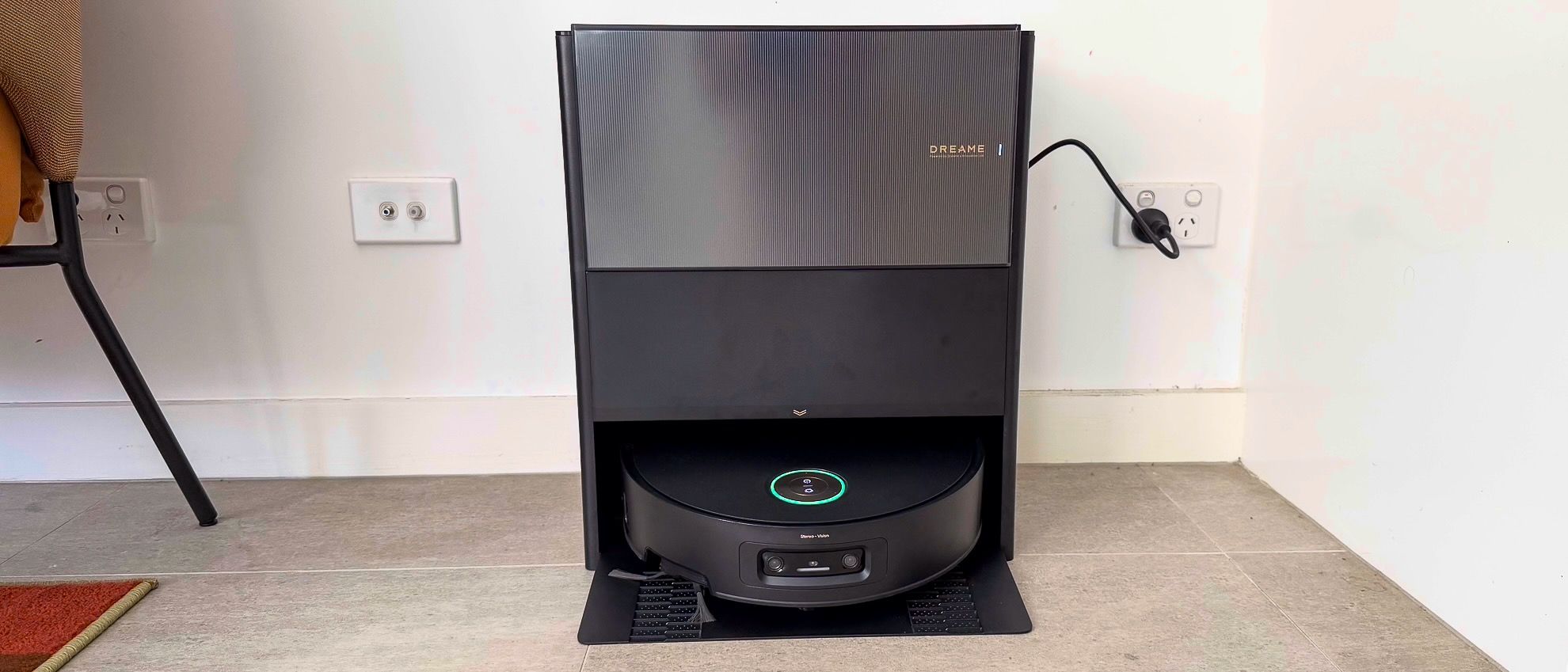
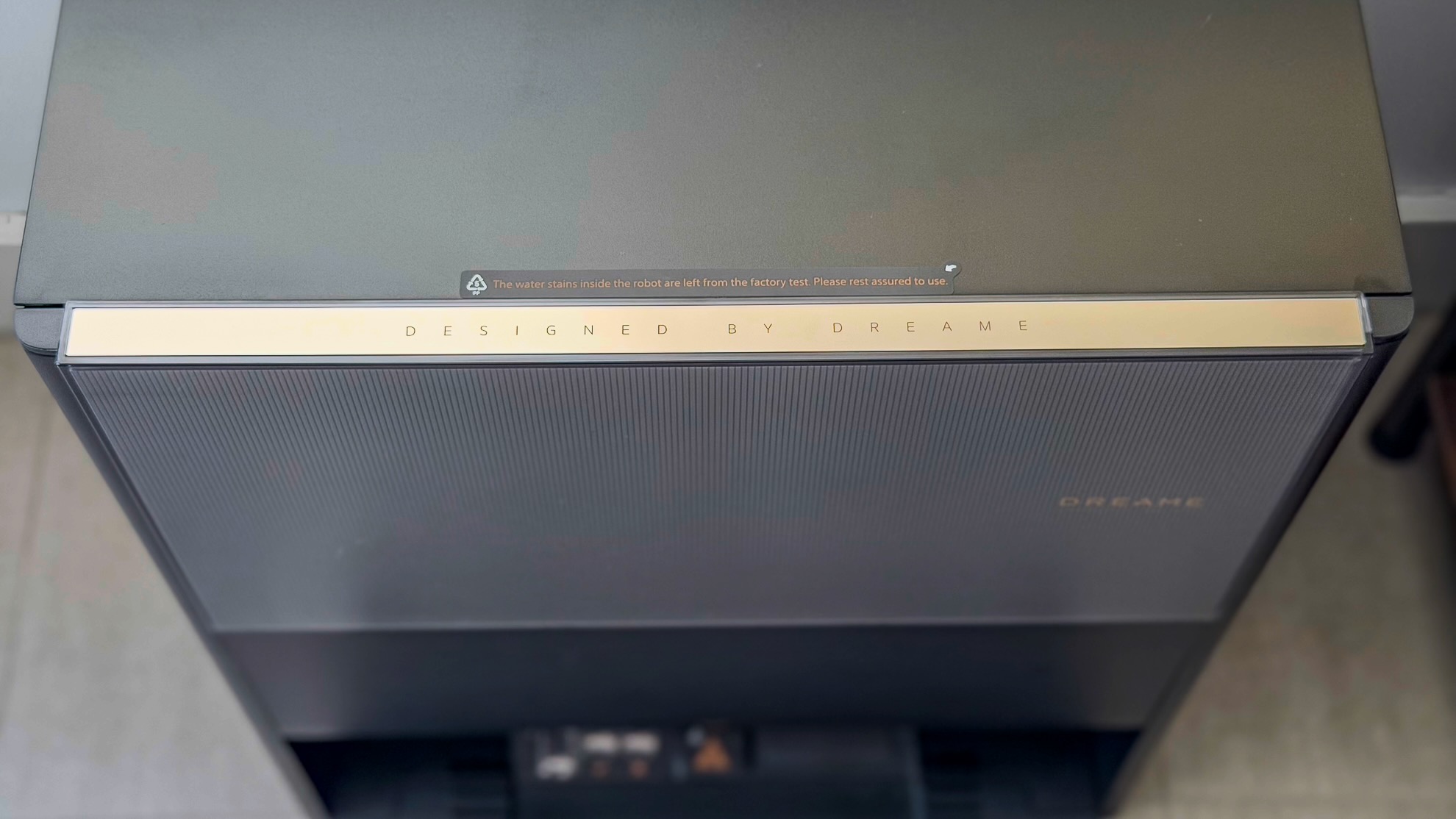
Upon unboxing, the Dreame Aqua10 Ultra’s dock presents a striking resemblance to a large Marshall speaker, characterized by its boxy shape and black finish. This aesthetic choice contributes to a classic, premium look, with clean lines and metallic accents. Even the green light around the robot’s main control button during charging adds to its sophisticated appearance.
Beyond its visual appeal, the design incorporates several thoughtful elements. These include soft rubber washers for easy removal of the dock cover, a dual detergent dispenser drawer, and a retractable navigation puck on the robot’s top. A cleaning brush is also included for maintaining the wash tray, which can also be used for the dirty-water tank.
Robot Design
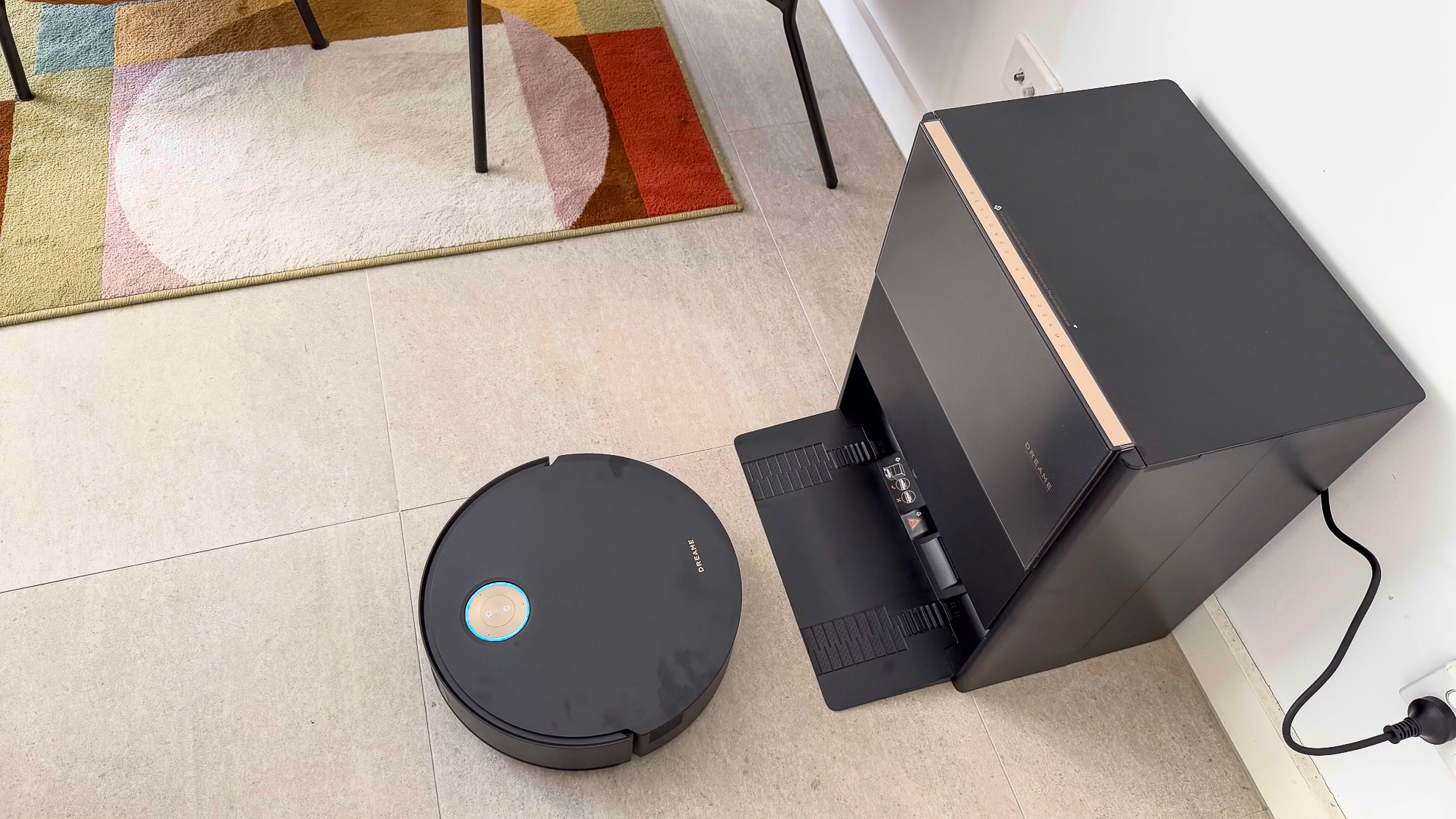
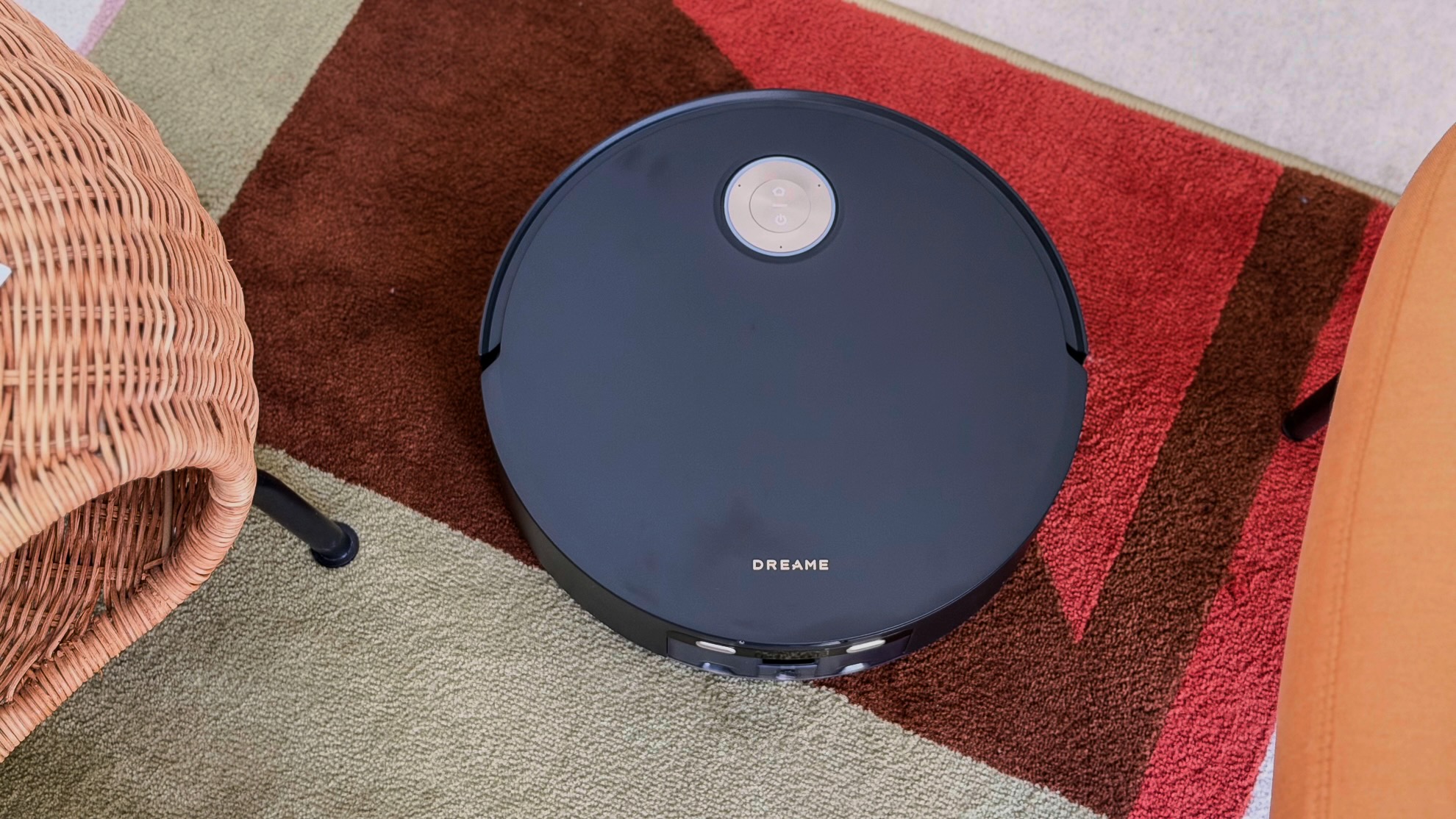
The Aqua10 Ultra maintains the standard round robot form factor, distinguishing itself from competitors with a sleek design, particularly in its black variant, enhanced by a retracting navigation puck. When docked, the puck remains lowered, displaying a green light when moving or charging, and unlit when fully charged and in standby.
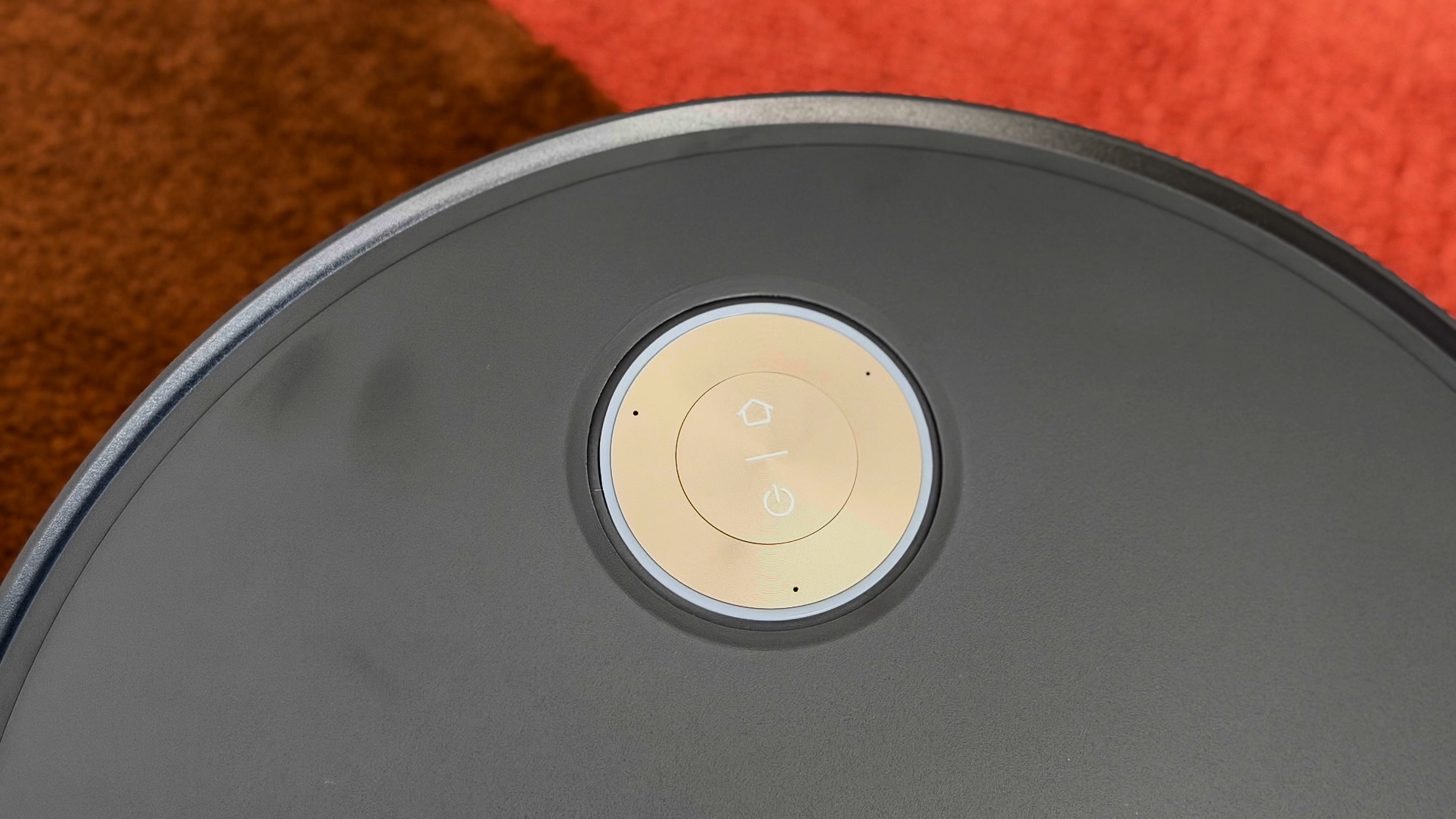
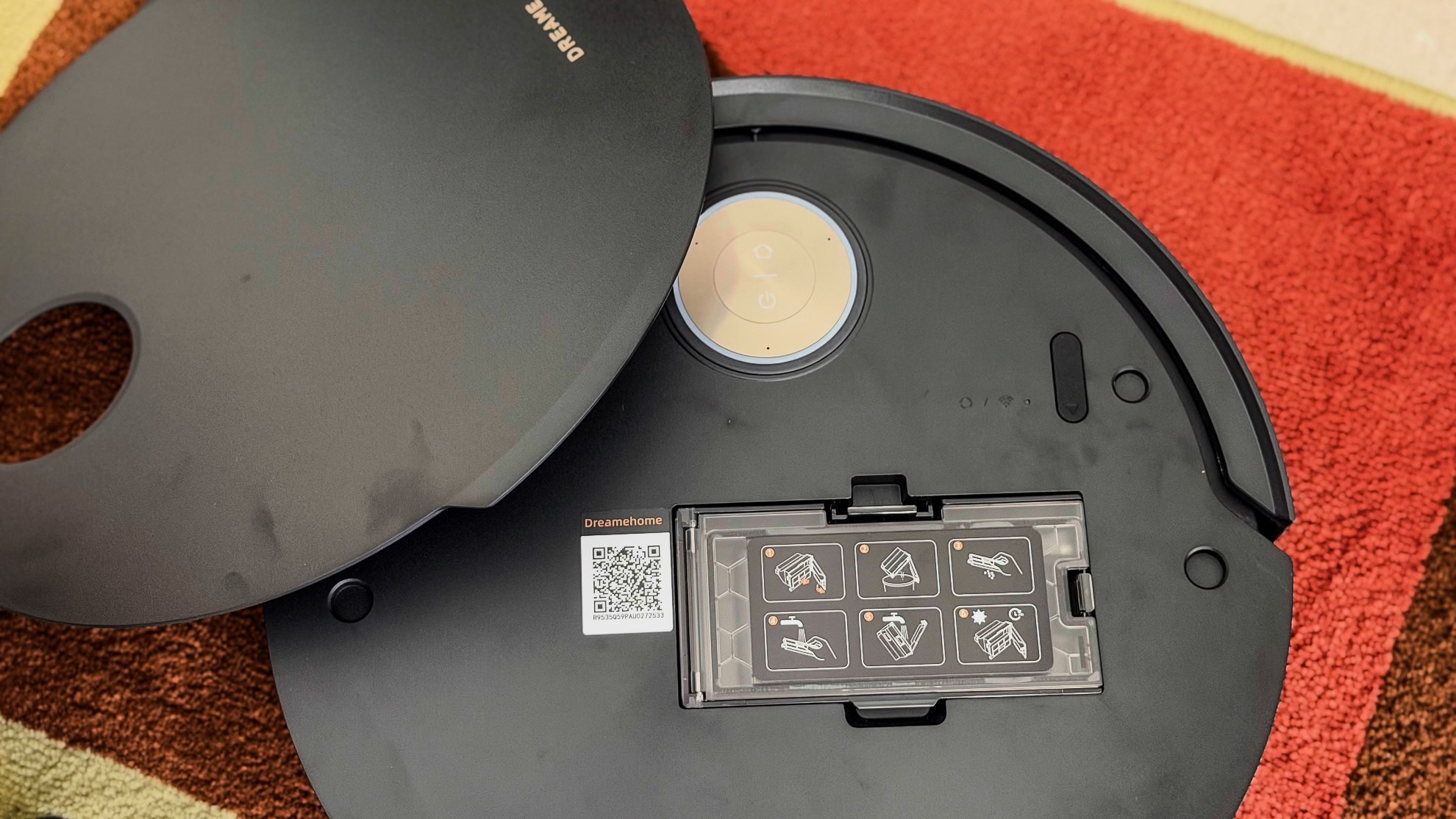
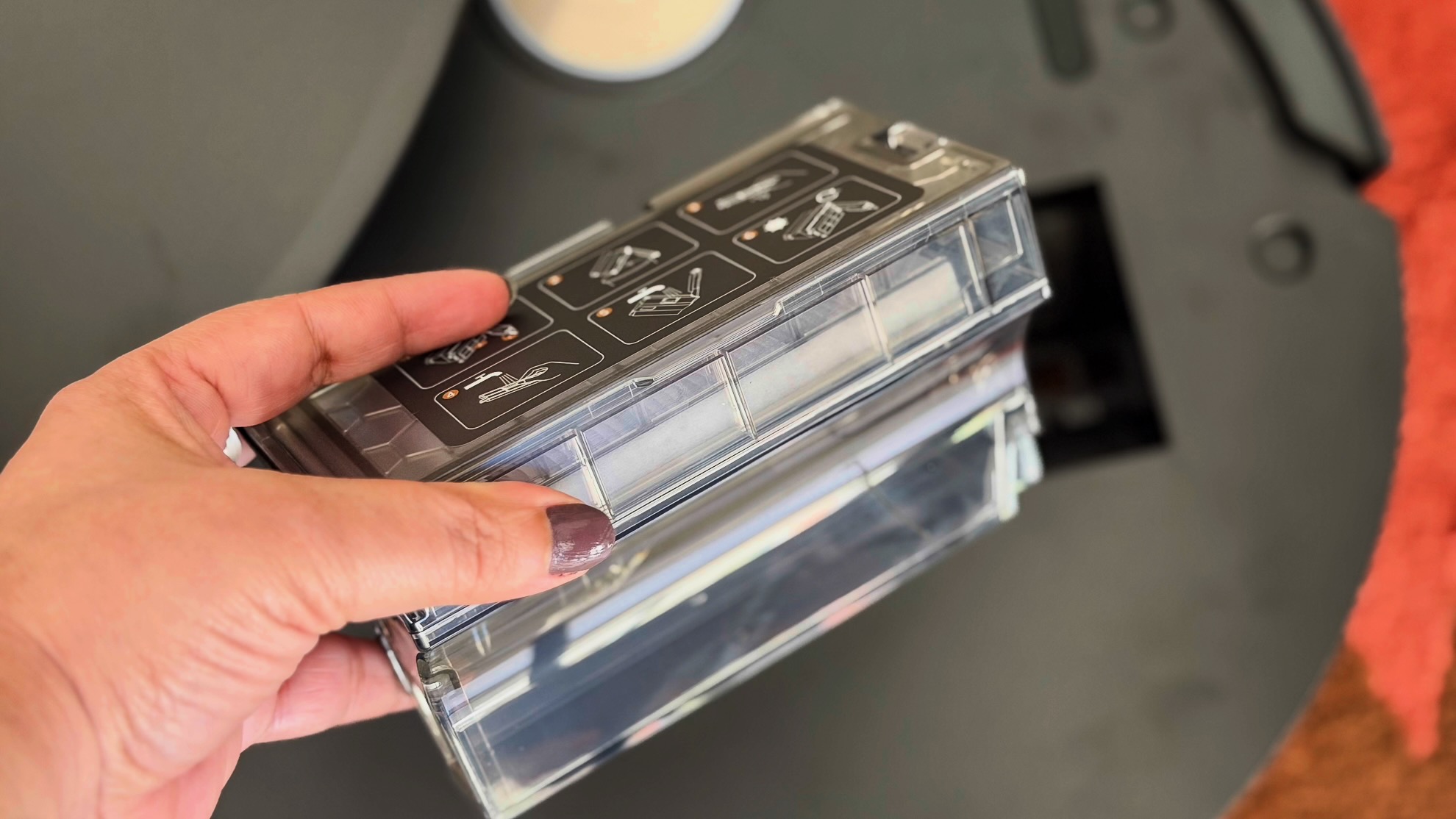
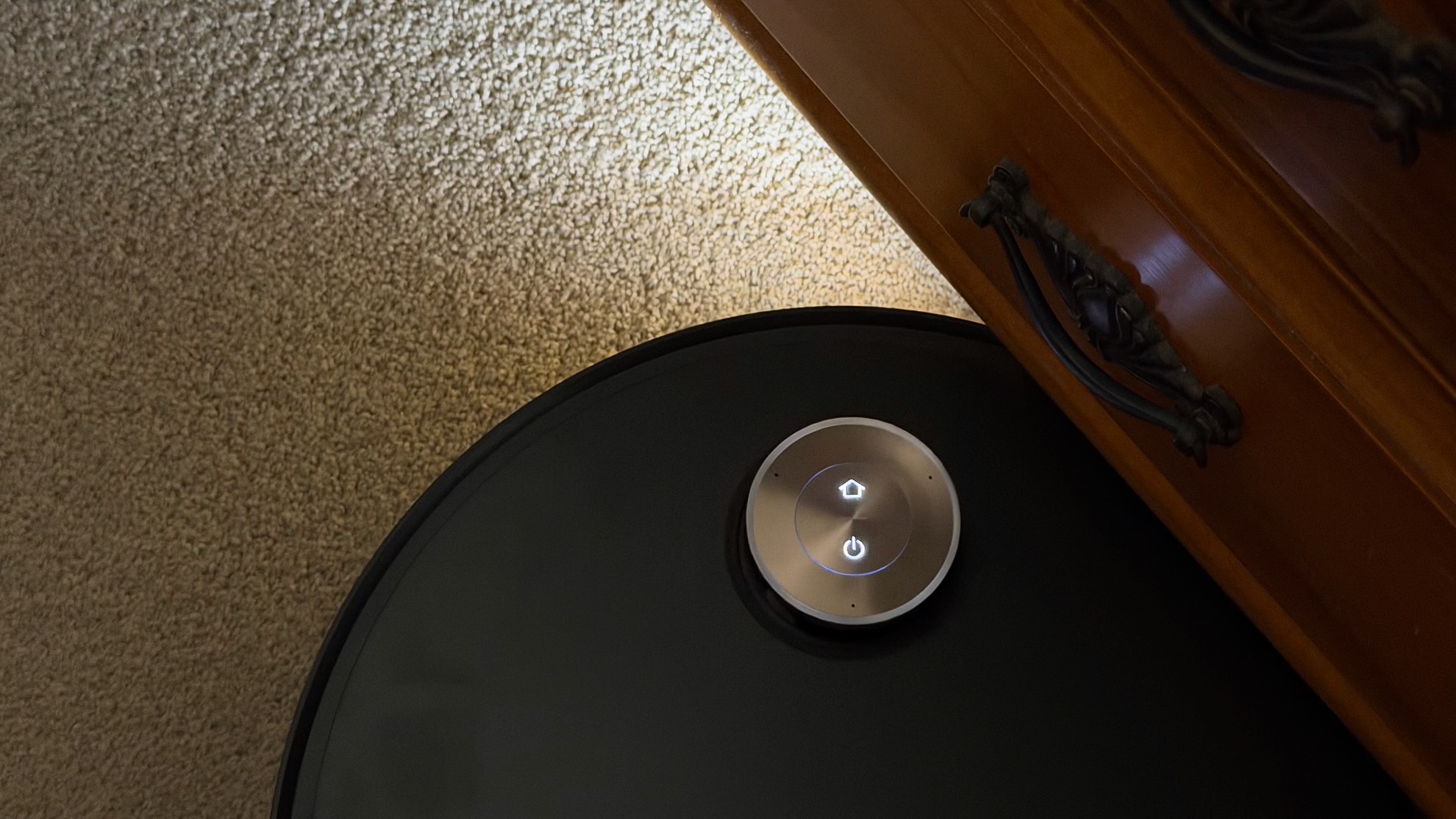
The puck’s brass-colored top houses the main controls, appearing as a single button split into two functions: power on/off and return to dock. Beneath a removable lid surrounding the puck, a dust box is located. At 220ml, this bin is notably smaller than those found in many competing models, potentially requiring more frequent emptying in homes with pets.
The lid also reveals the Wi-Fi indicator light and a QR code for app setup. Users should note that the robot’s surface is prone to fingerprint smudges.
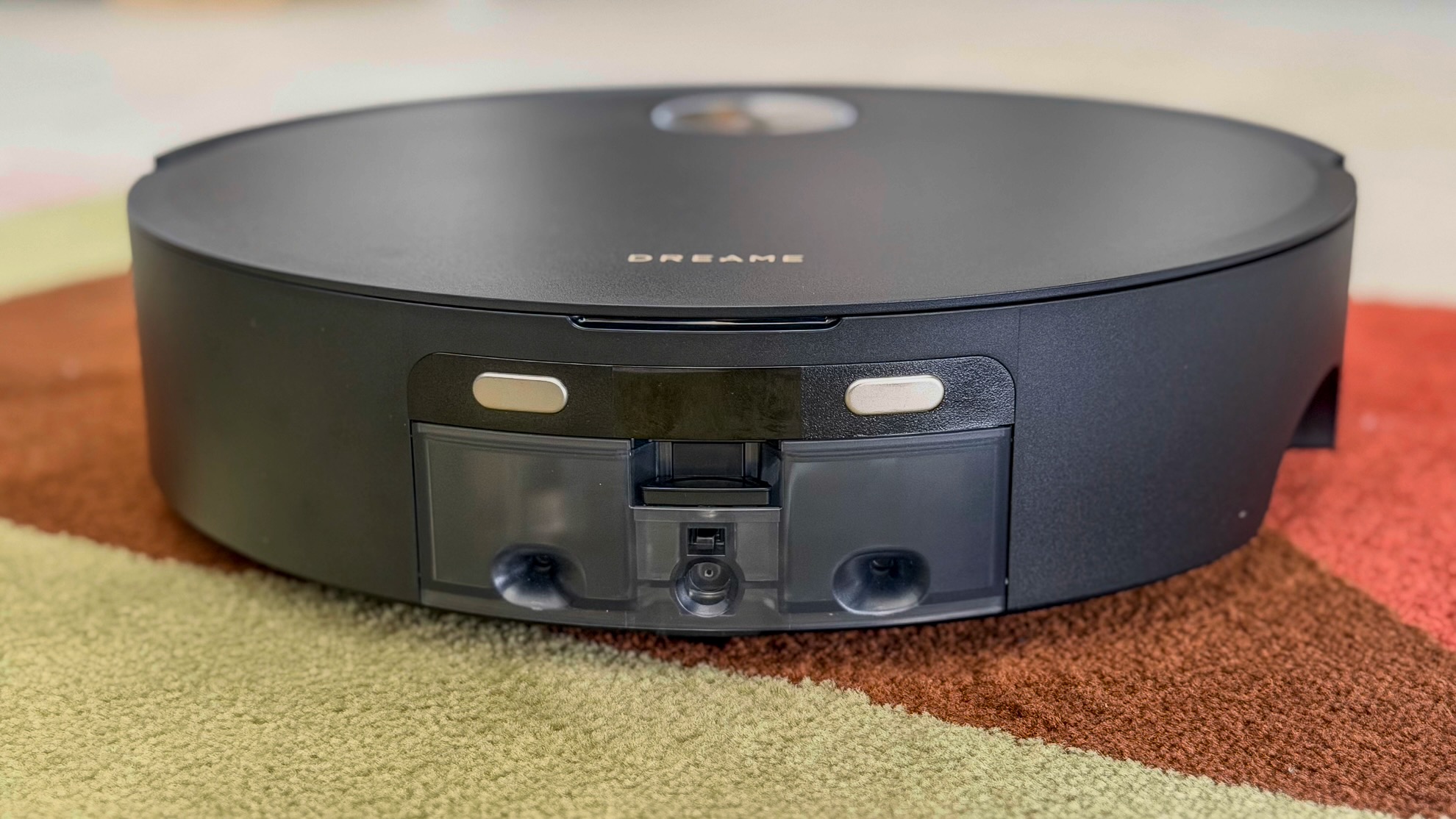
The robot’s front features a camera window with two HD AI cameras, which Dreame states capture a 3D image of its surroundings. A side sensor window is also visible near the bumper.
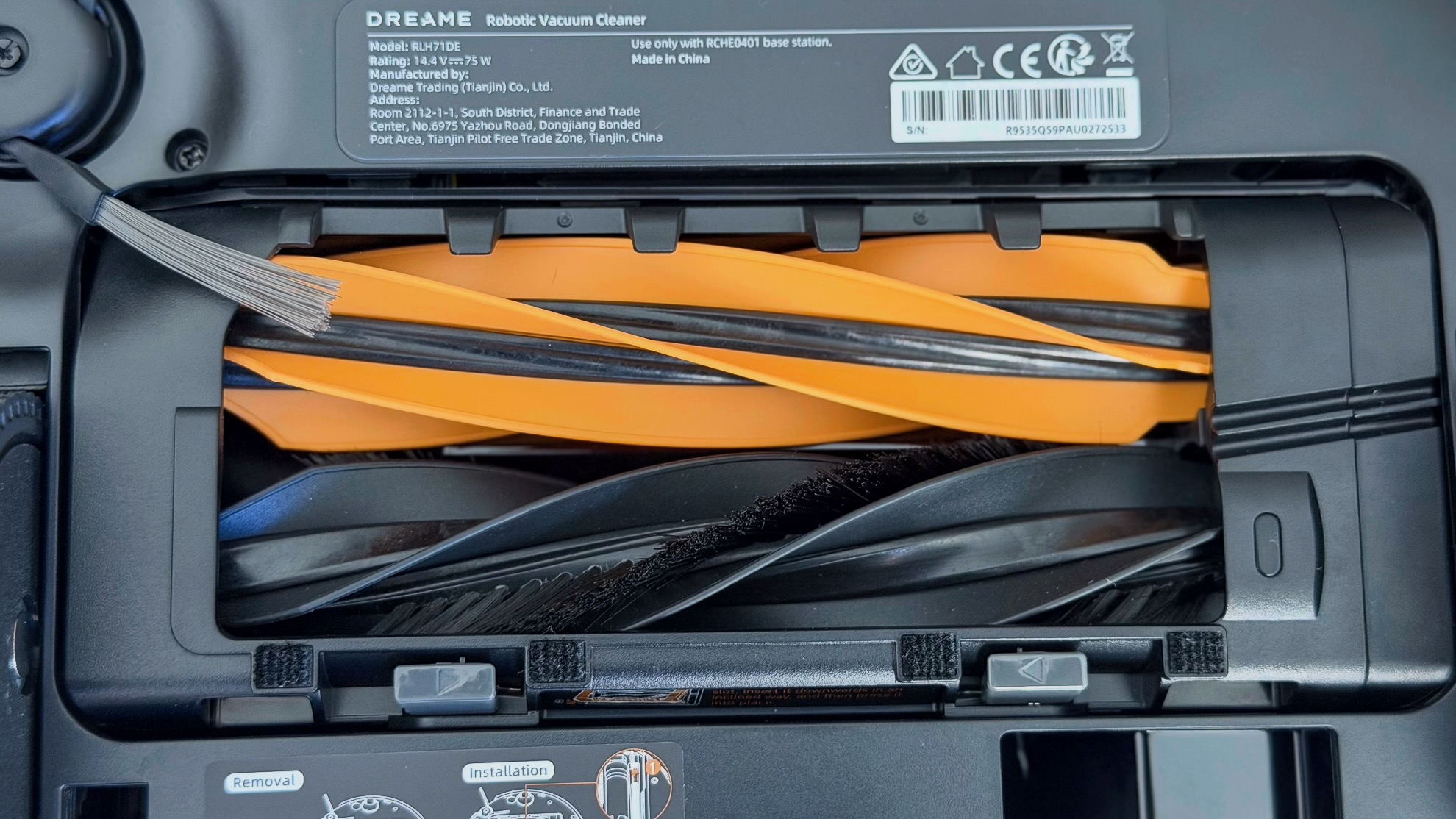
The undercarriage highlights the Aqua10 Ultra’s unique aspects. Firstly, it employs a dual-brush system designed for effective cleaning on both carpets and hard floors, minimizing hair tangles.
Secondly, as Dreame’s first robot vacuum with a roller mop, it introduces innovations in this area. The roller is made of slightly bristlier fibers than typical fluff or microfibre, enabling it to “scrub” into cracks and grouting on hard floors. A fluffer mechanism spins in the opposite direction to the roller, ensuring the fibers remain effective.
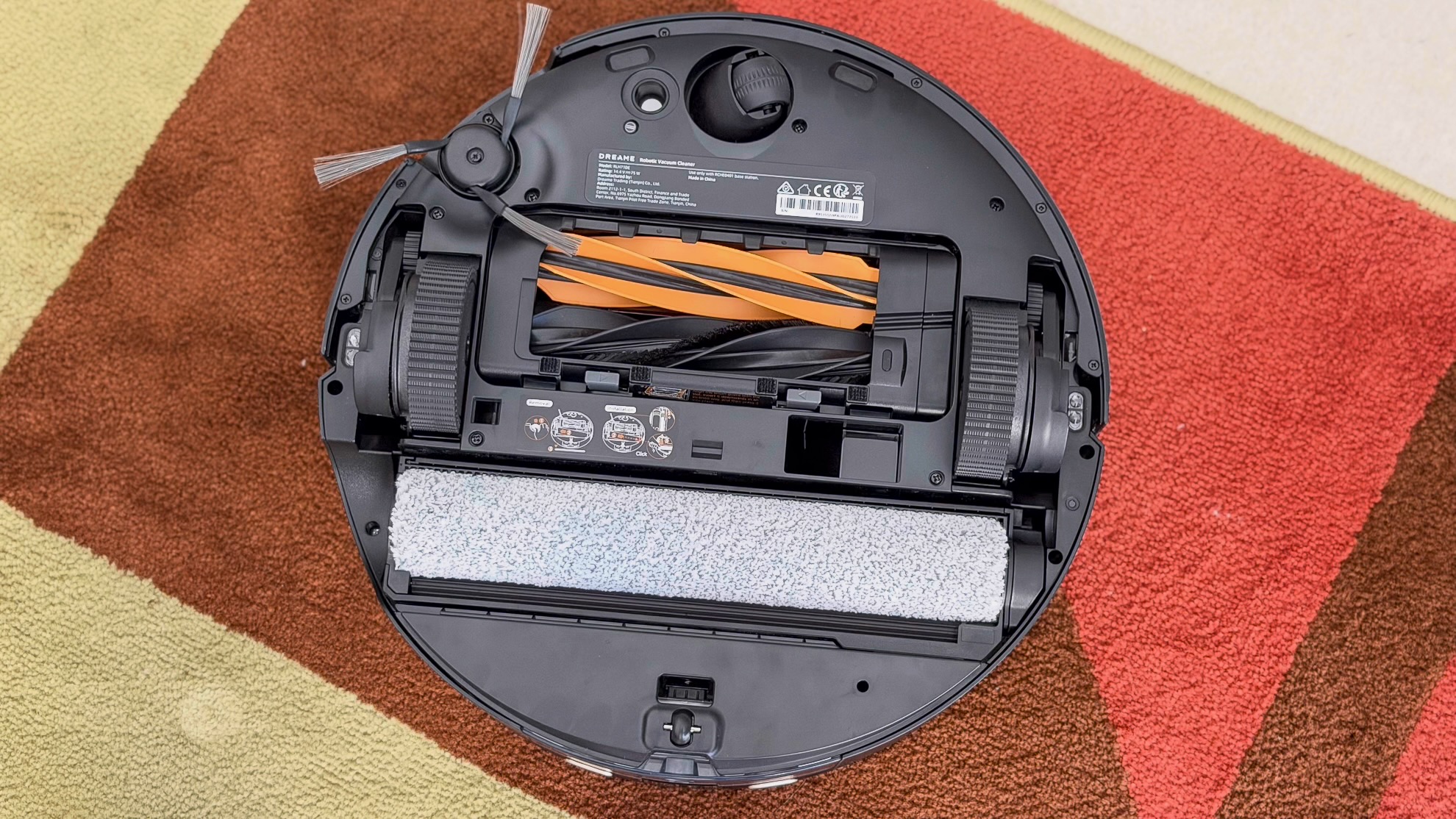
A significant feature is the roller’s automatic cover, which engages when the robot detects a carpet. This mechanism prevents dampness on carpets, a common issue with other robot vacuums. While the cover’s engagement is not visually apparent during operation, carpets consistently remain dry. The roller also extends for edge cleaning, though it shares the common limitation of missing corners.
The Aqua10, like its X50 Ultra and Matrix10 Ultra counterparts, incorporates the ProLeap system, allowing it to navigate shallow steps. It can climb 4cm in a single step and an additional 4cm in a second step, aiding in crossing higher thresholds. During setup, the app offers options for the robot to use one “foot” at a time or raise both feet to roll over obstacles.
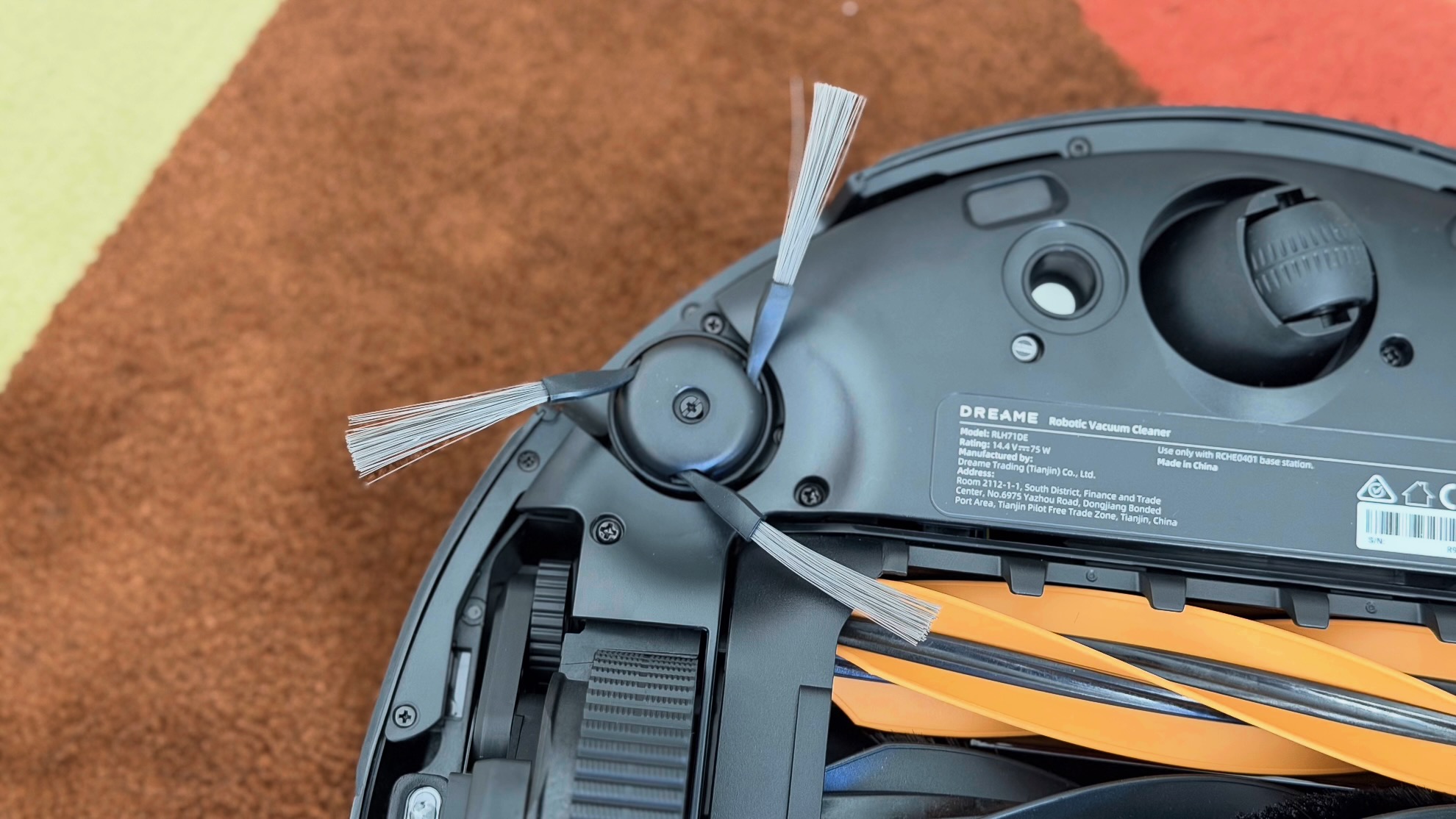
A common observation across robot vacuums is the side brush’s struggle to effectively push dirt on carpets due to less stiff bristles, despite performing well on hard floors. This applies to the Aqua10 Ultra as well; stiffer bristles would enhance carpet edge cleaning. This is more of a suggestion for future iterations rather than a direct complaint.
Dock Design
The base station of the Aqua10 Ultra, available in black (with a white model also pictured), boasts a commendable design. Its sharp corners and clean lines evoke a mid-Century architectural aesthetic, reminiscent of Marshall speakers. This design is highly regarded.
The base station’s components demonstrate thoughtful engineering. For instance, the front cover, which conceals the dust bag and detergent dispenser, fits securely with a rubber washer yet removes and reattaches smoothly, avoiding the harsh clicks or excessive effort sometimes required with other models.
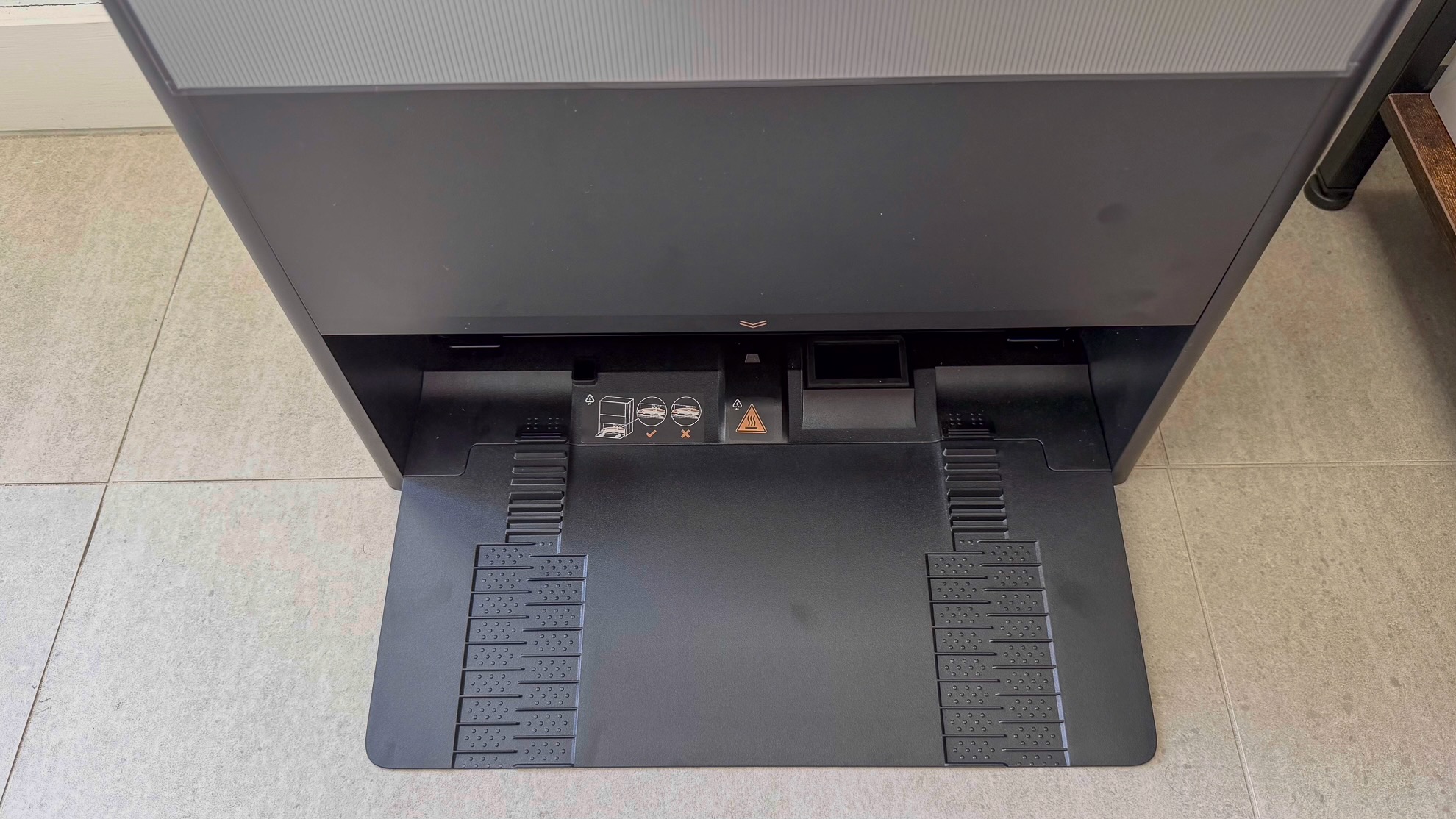
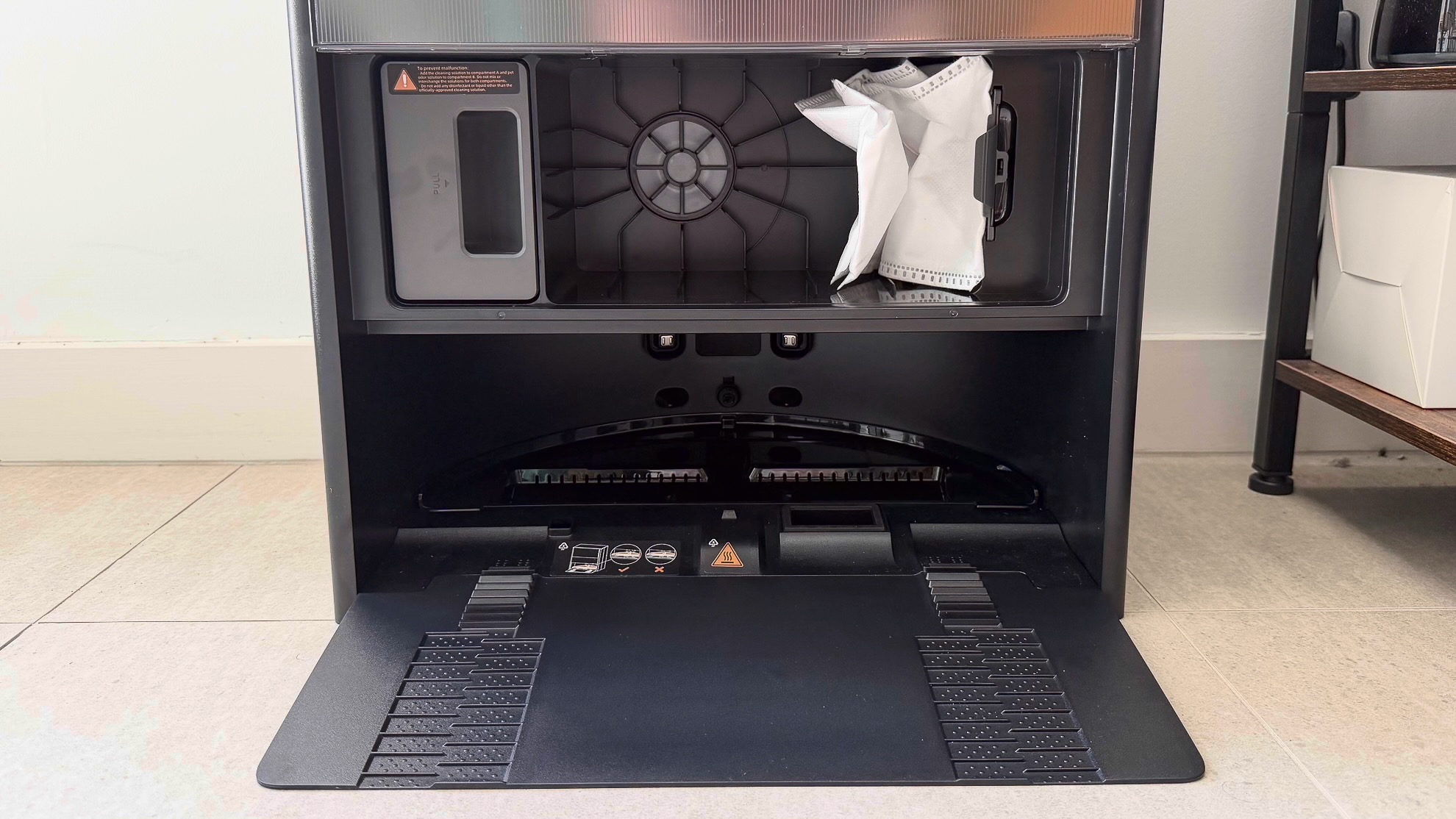
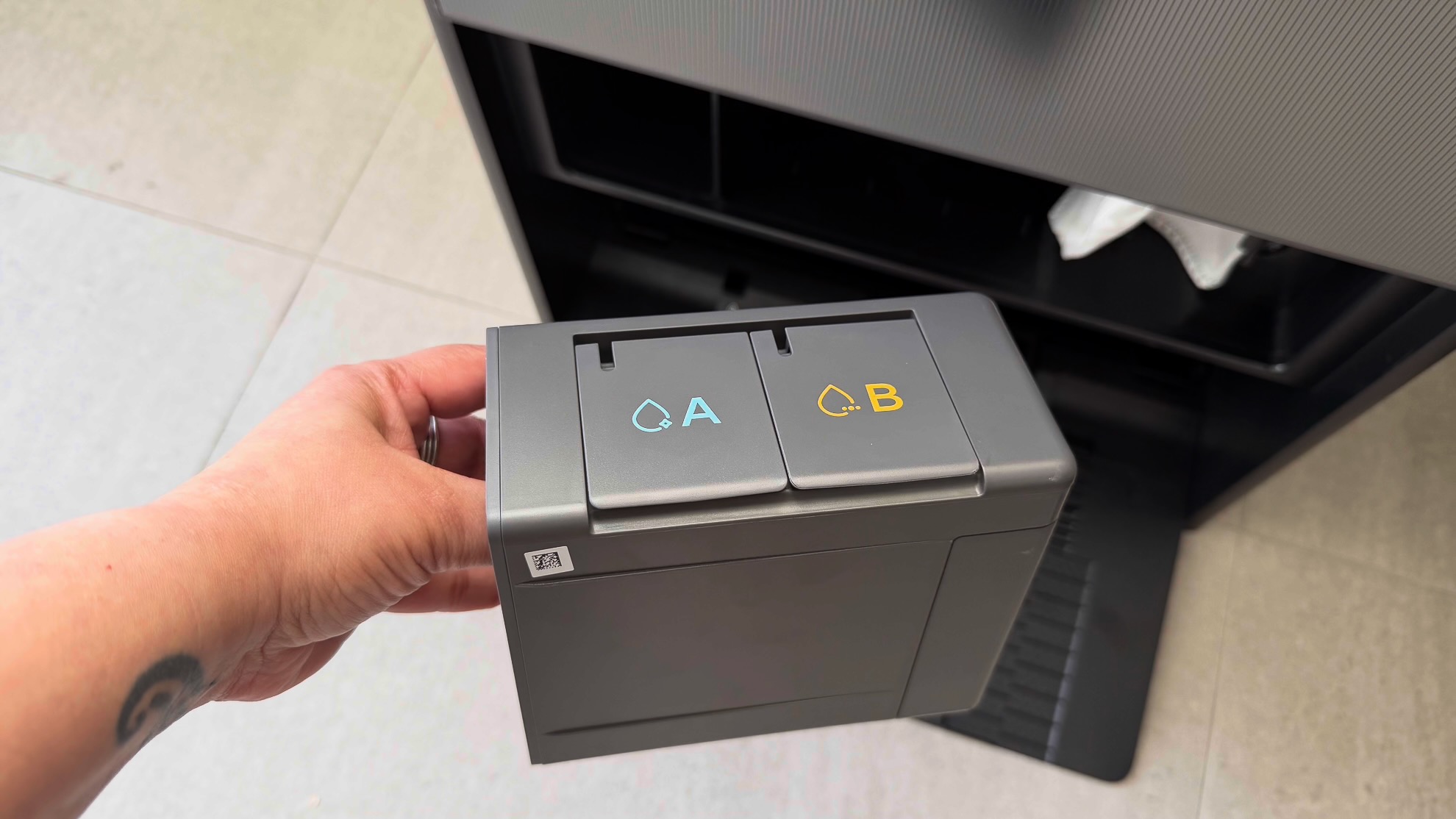
The dual detergent dispenser features two slots for different solutions (a bottle of detergent and pet odor neutralizer are included, color-coded for identification), allowing for varied detergent use. However, the grip for removing the dispenser is designed for right-handed users, potentially requiring a slight wrist twist for left-handed individuals.
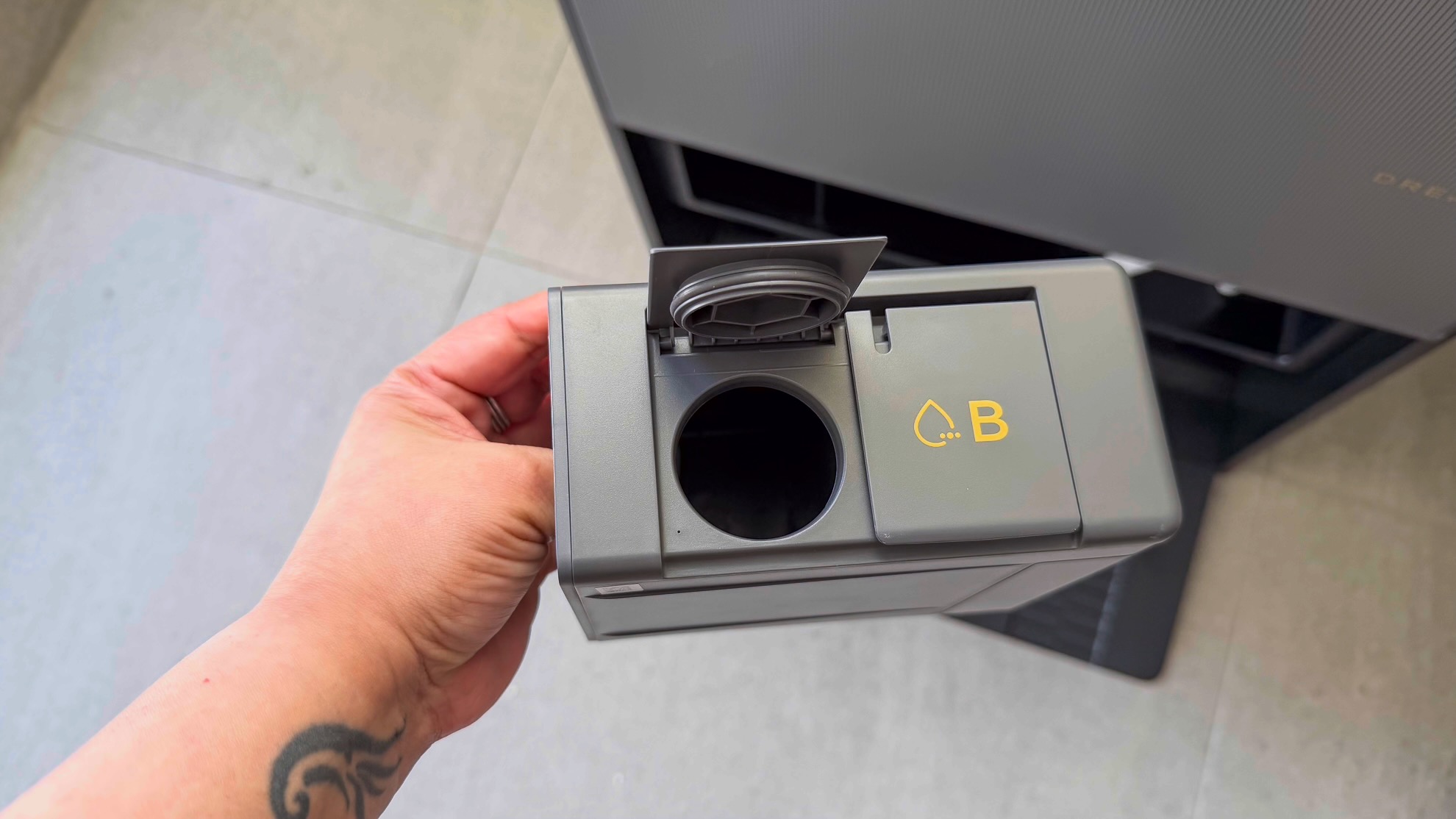
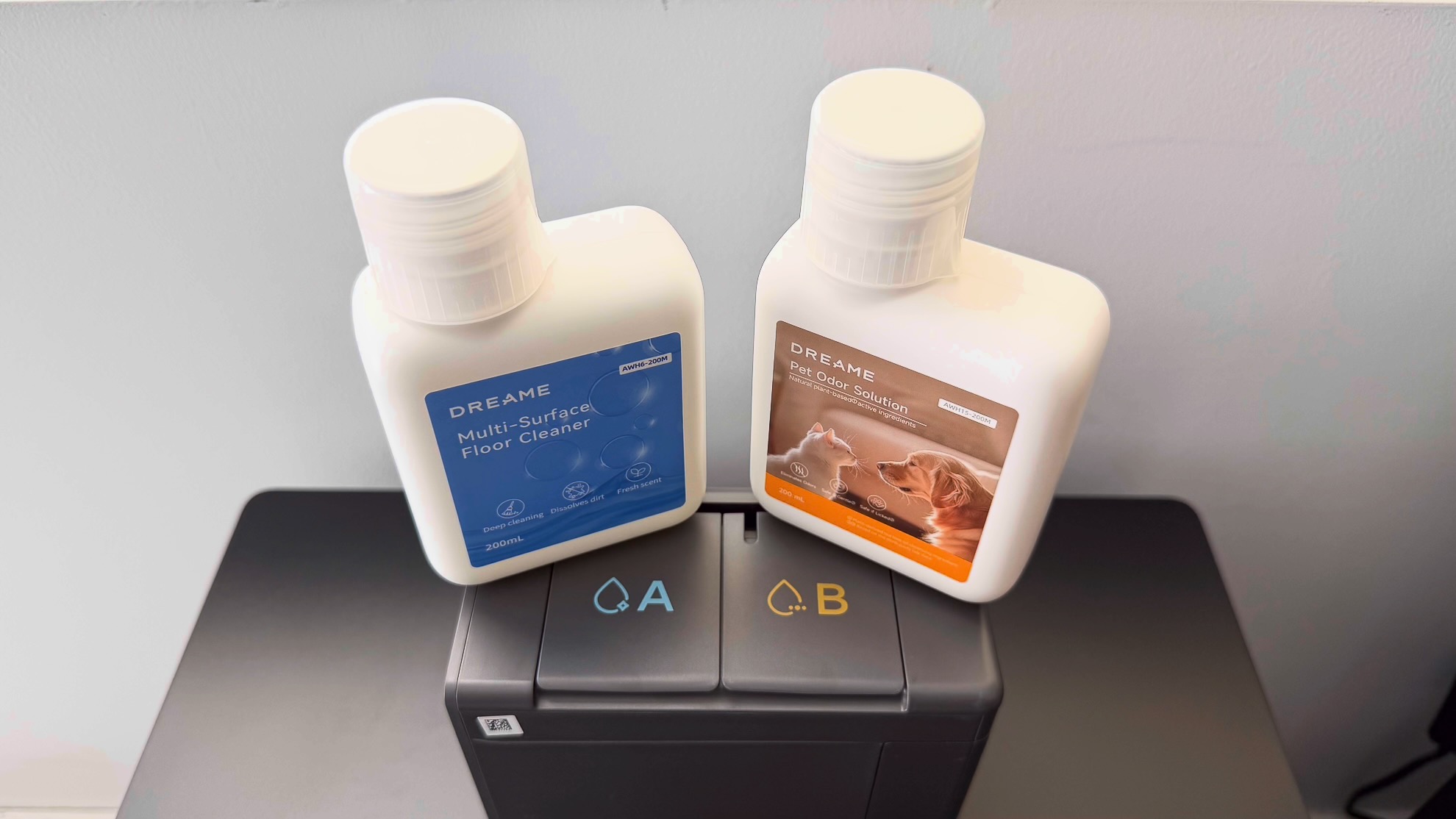
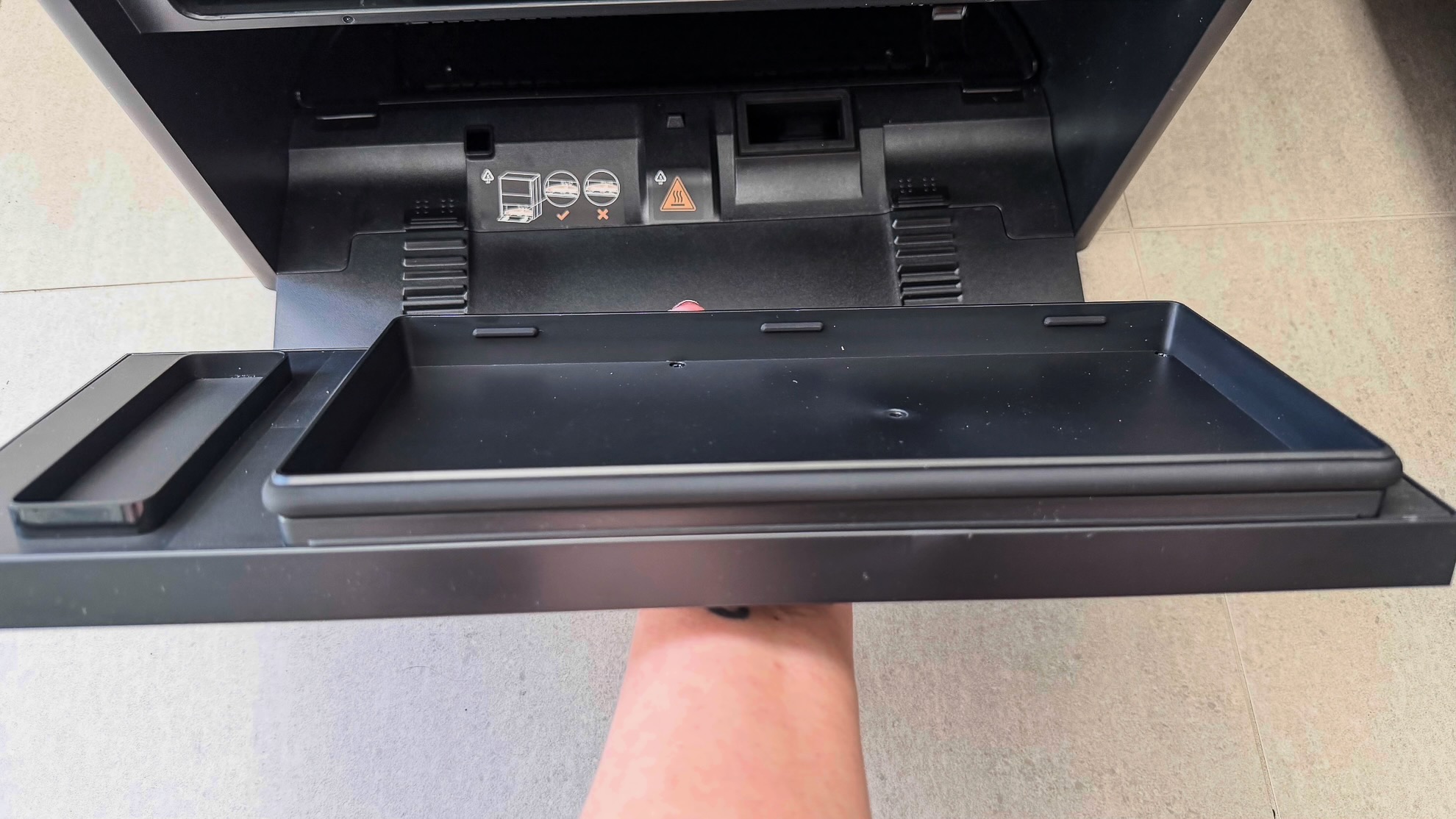
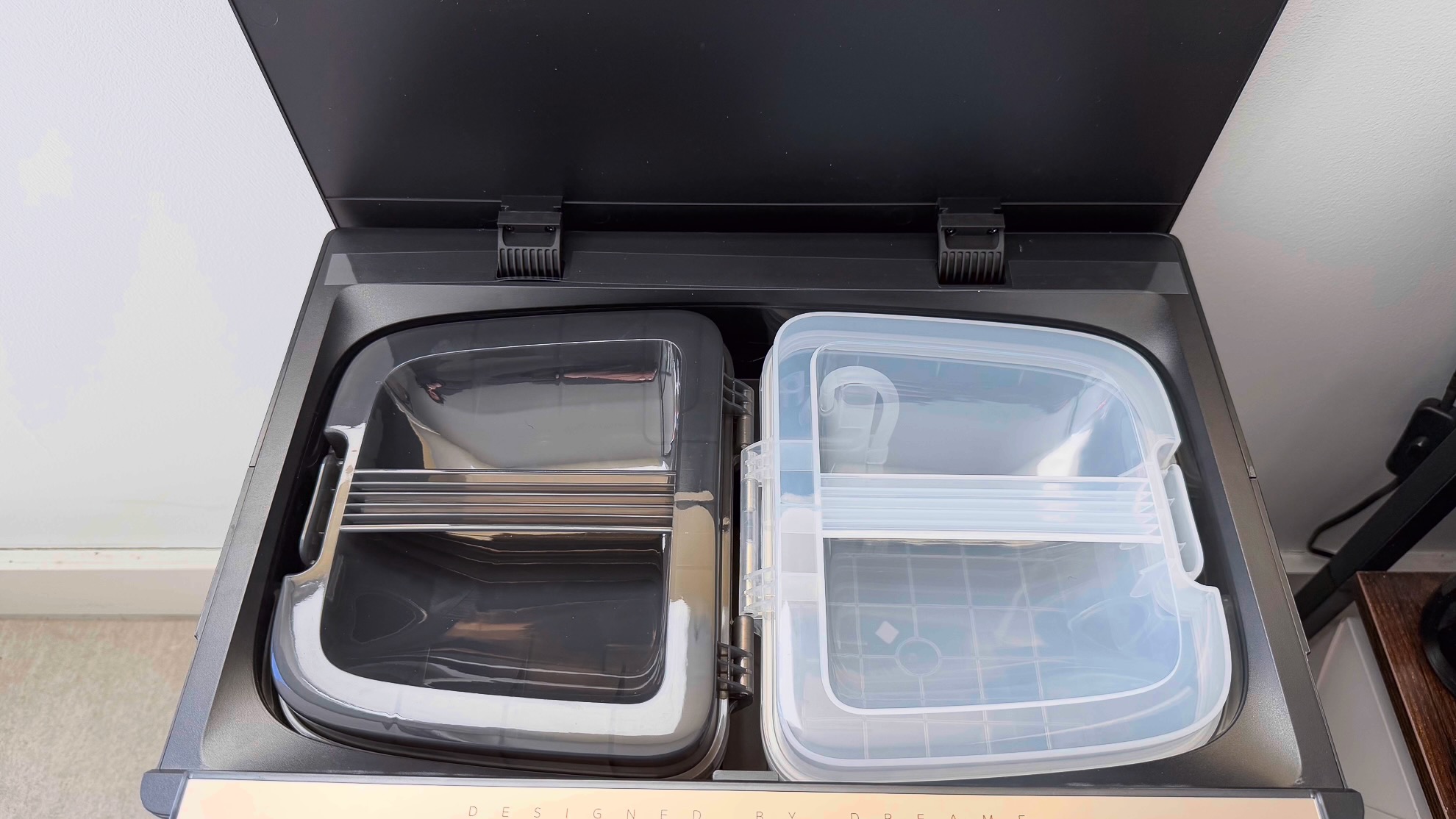
Above the dispenser slot is a covered hatch for the two water tanks, with the robot’s housing located below. The wash tray inside is removable for cleaning, and a brush is provided for this purpose. This brush also proves useful for scrubbing the dirty-water tank.
Conveniently, the rear of the base station includes a finger niche for easier relocation and features cable management, a detail often absent in other robot vacuums.
Performance
- Offers arguably the best vacuuming and mopping performance among robot vacuums
- Features 100ºC/212ºF roller mop washing
- Navigation and battery life are generally good, but could be improved
Connecting the Aqua10 Ultra to a phone and setting it up for mapping was quick. Before map creation, the robot was allowed to fully charge while familiarizing with the app.
Mapping a 40sqm/430sq ft one-bedroom apartment with mixed flooring (carpet in the bedroom, two types of tile elsewhere) took no more than seven minutes. The map was largely accurate, with some merging and dividing of rooms done to define the open-plan space.
A notable aspect of the initial mapping was the robot’s silent operation. Unlike other models where wheel sounds are audible, the Aqua10 Ultra moved silently, indicating smooth and well-lubricated wheels, particularly on tiles.
Initial use presented some challenges; the robot initially refused single-room cleaning tasks, repeatedly displaying a “destination not found” error, even after a full reset and remapping. However, after performing a full-home clean (referred to as “global cleaning” in the Dreame app), custom routines and single-room cleans functioned correctly.
Vacuuming Tests
Dreame advertises an industry-leading suction power of 30,000Pa. While this number is impressive, actual vacuuming effectiveness depends on multiple factors, including internal airflow. Nevertheless, the Aqua10 Ultra delivers strong performance.
The robot’s vacuuming capabilities are highly impressive. During tests with significant hair embedded in carpet fibers, the Intense setting (with a Max suction option also available) performed exceptionally well. For hard floors, the Standard setting is sufficient for routine cleaning, though Intense is recommended for dirtier areas.
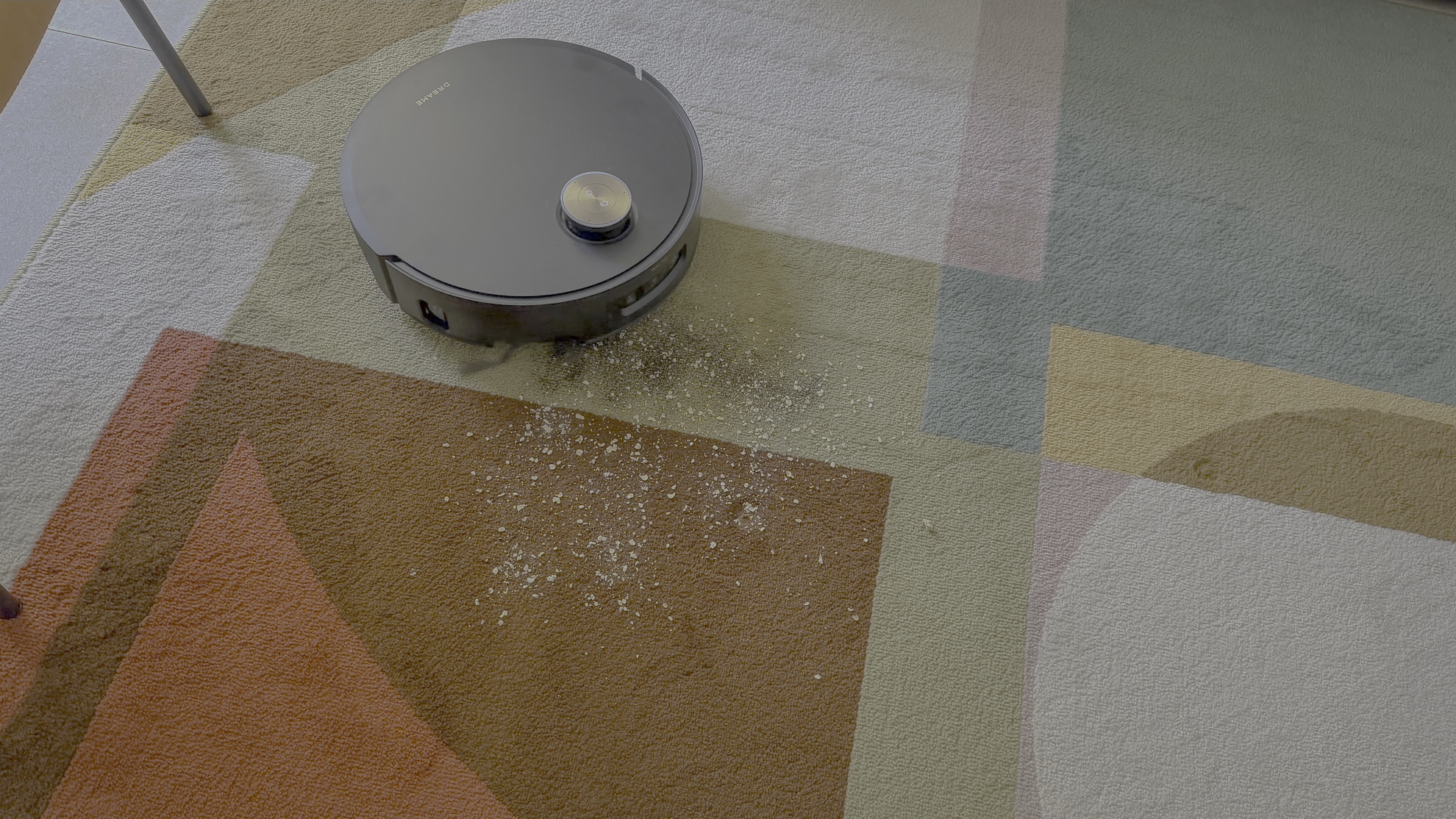
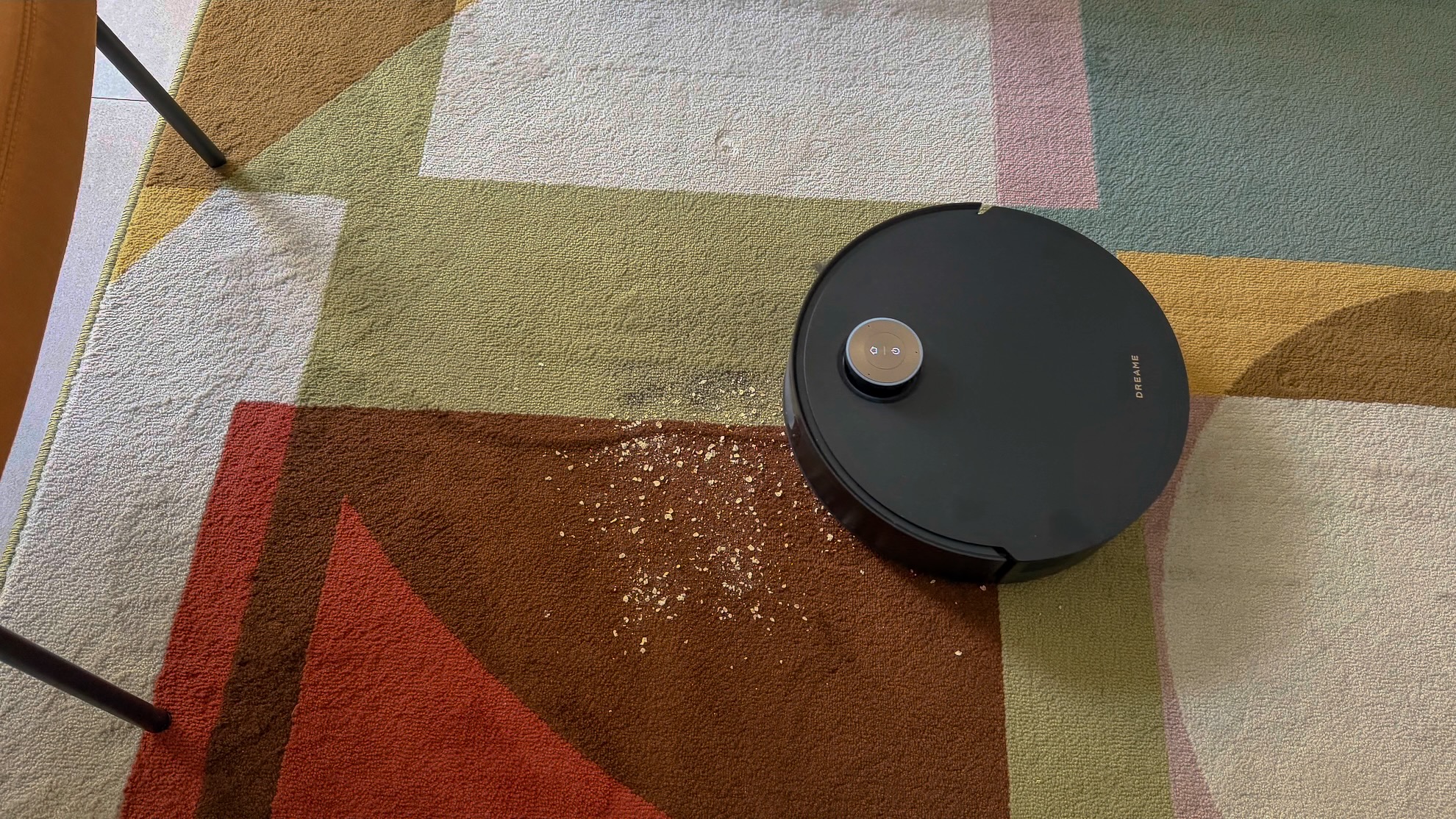
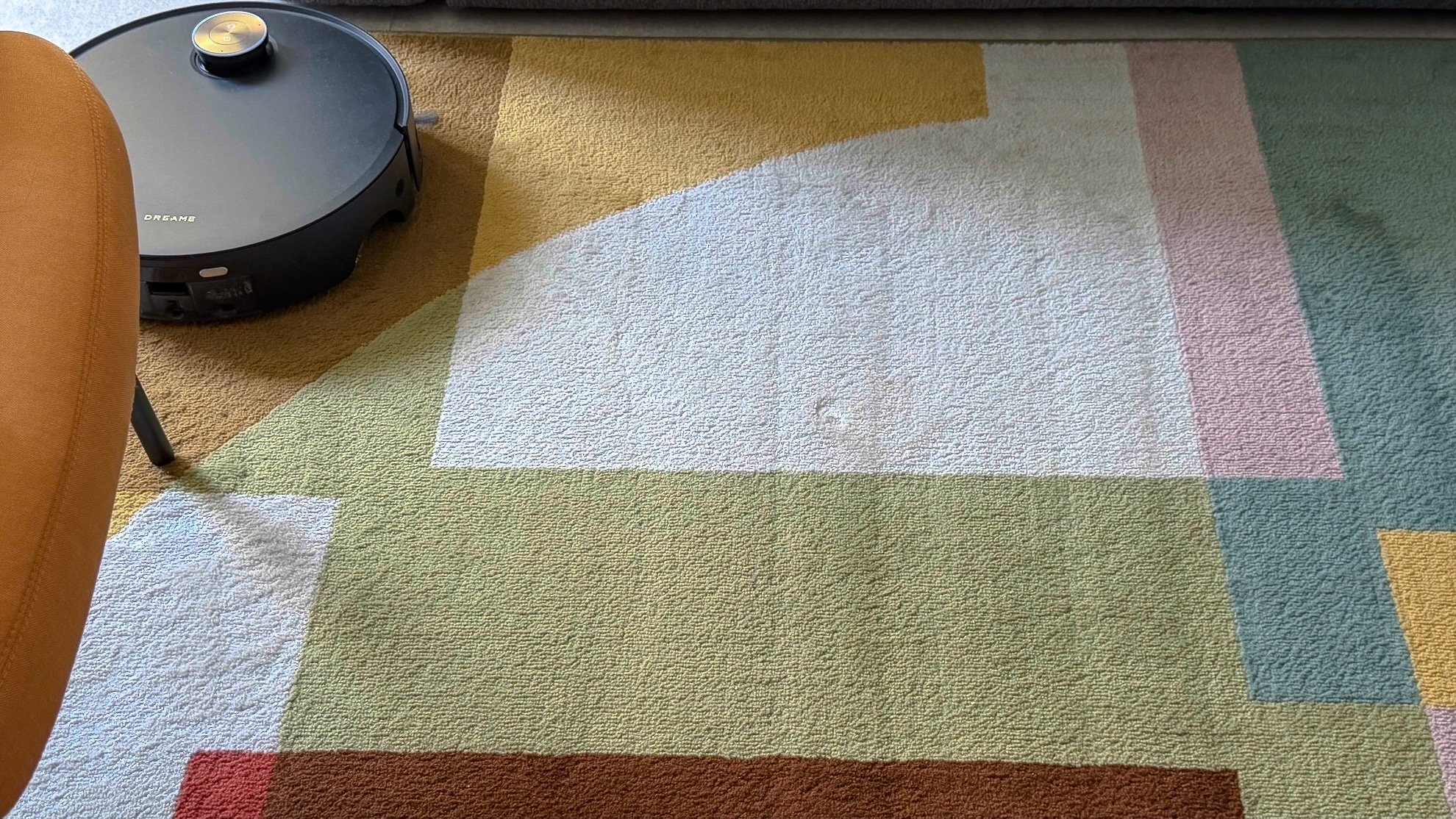
The Aqua10 Ultra demonstrated a rare ability to extract dirt from grout. A test involving sprinkling tea into kitchen tile gaps resulted in no visible residue after cleaning on the Intense suction setting, a task many other premium models struggle with.
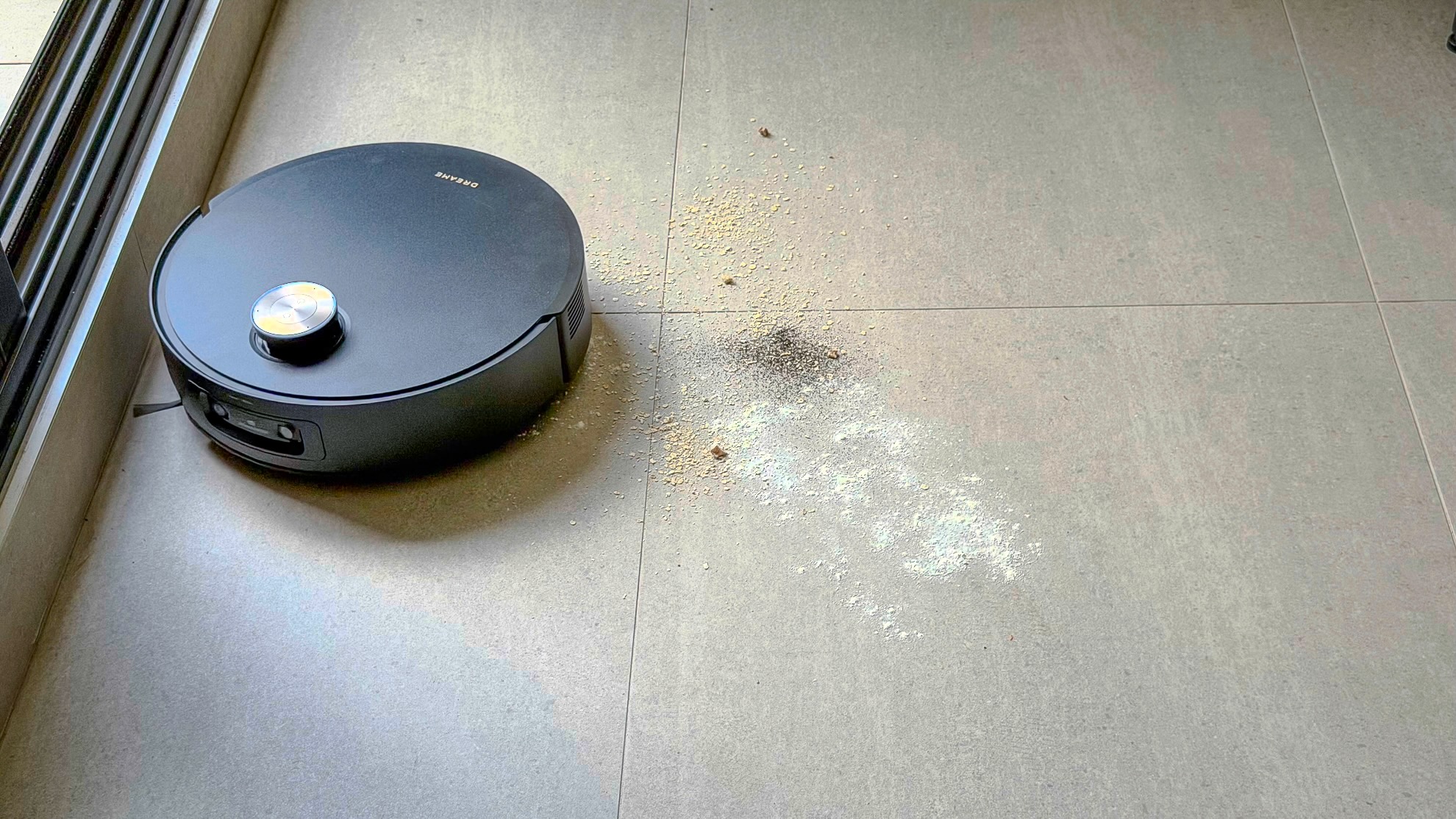
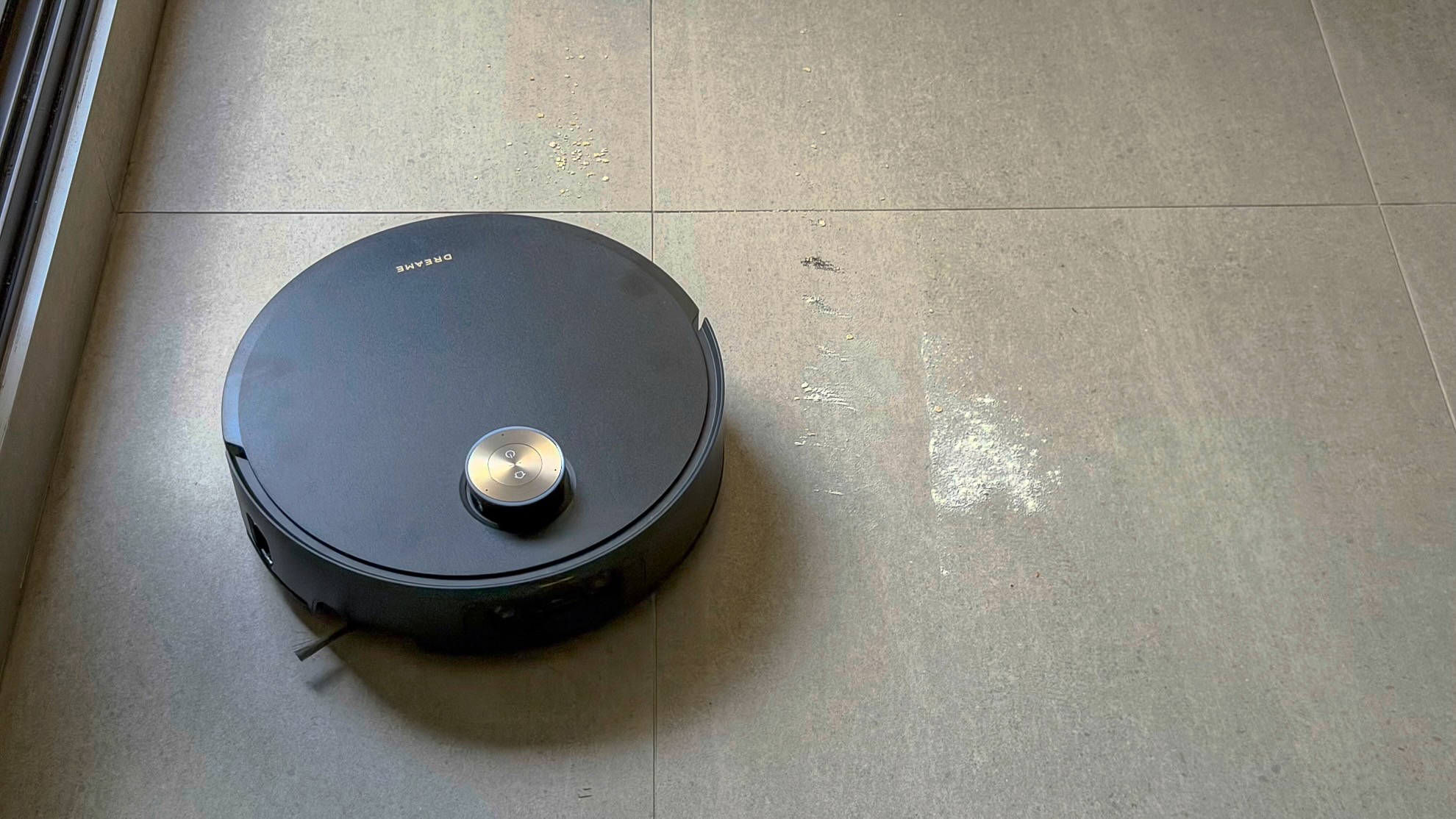
Another commendable vacuuming feature is the automatic raising of the side brush. This occurs when the robot detects heavily soiled areas with larger debris (e.g., oats), preventing scattering and ensuring 100% pickup across the area.
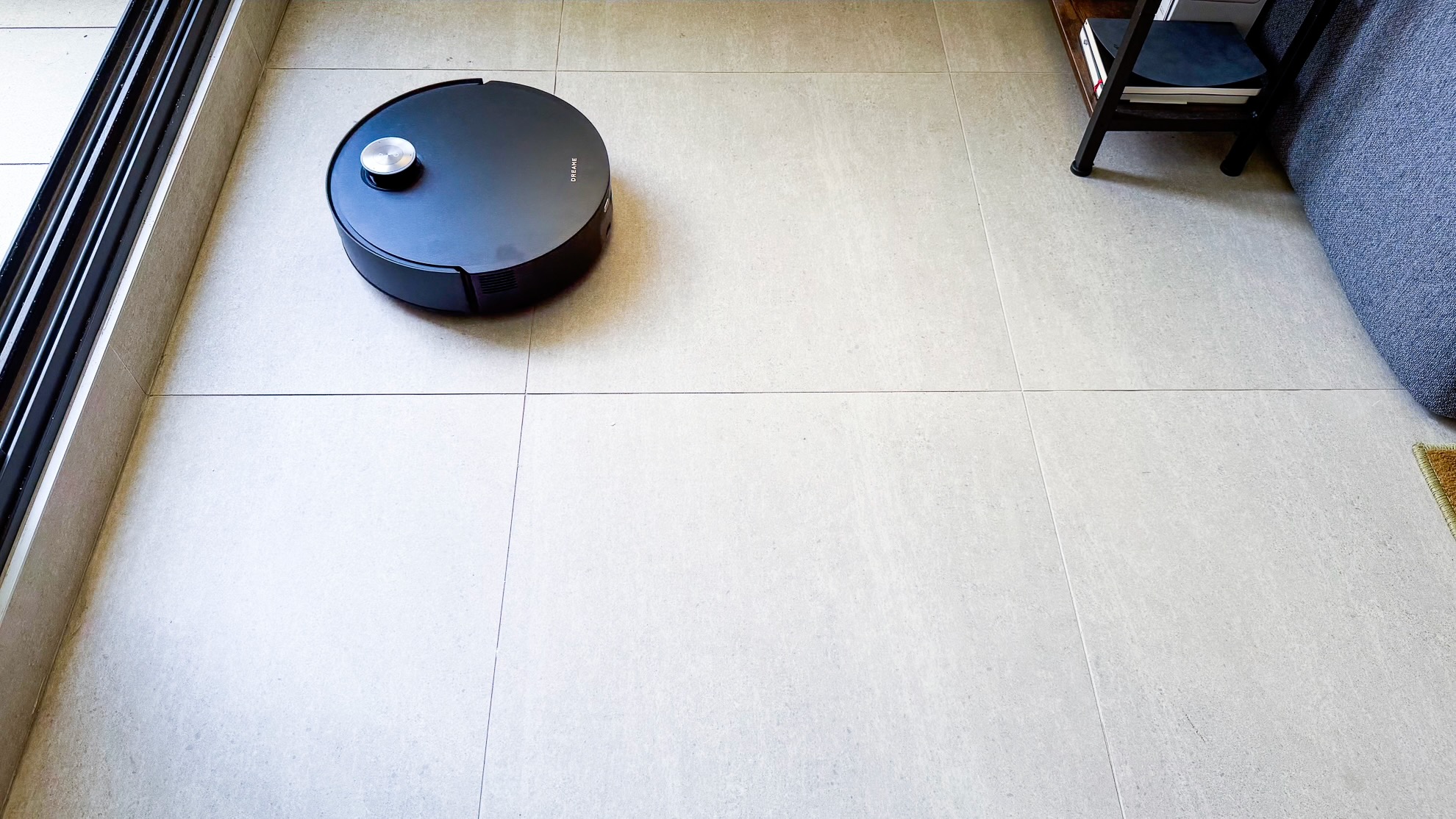
Max suction power was utilized when cleaning a bedroom carpet that had accumulated dust and hair over three weeks, achieving approximately 98% pickup. Edge cleaning on carpets remained a weak point, a common issue across robot vacuums due to side brush bristles not being stiff enough to dislodge embedded debris along room edges towards the central brushes.
The lowest suction setting (Quiet) was less effective and is likely only suitable for daily cleaning in homes without pets or children.
Mopping Tests
The Aqua10 Ultra appears primarily designed for mopping, a task it performs exceptionally well. The roller is continuously washed with fresh water during operation, and users can select from two pressure levels. While both options are available, Normal pressure is generally suitable for regular cleaning, with Light pressure being adequate for relatively clean floors.
With high water levels (level 27) adjusted for the test space’s tiles, the Aqua10 Ultra effectively removed most dried stains, including dusty footprints and dried tea spills. It also successfully cleaned an unidentified caked-in stain near a living room rug that previous robot vacuums could not remove.
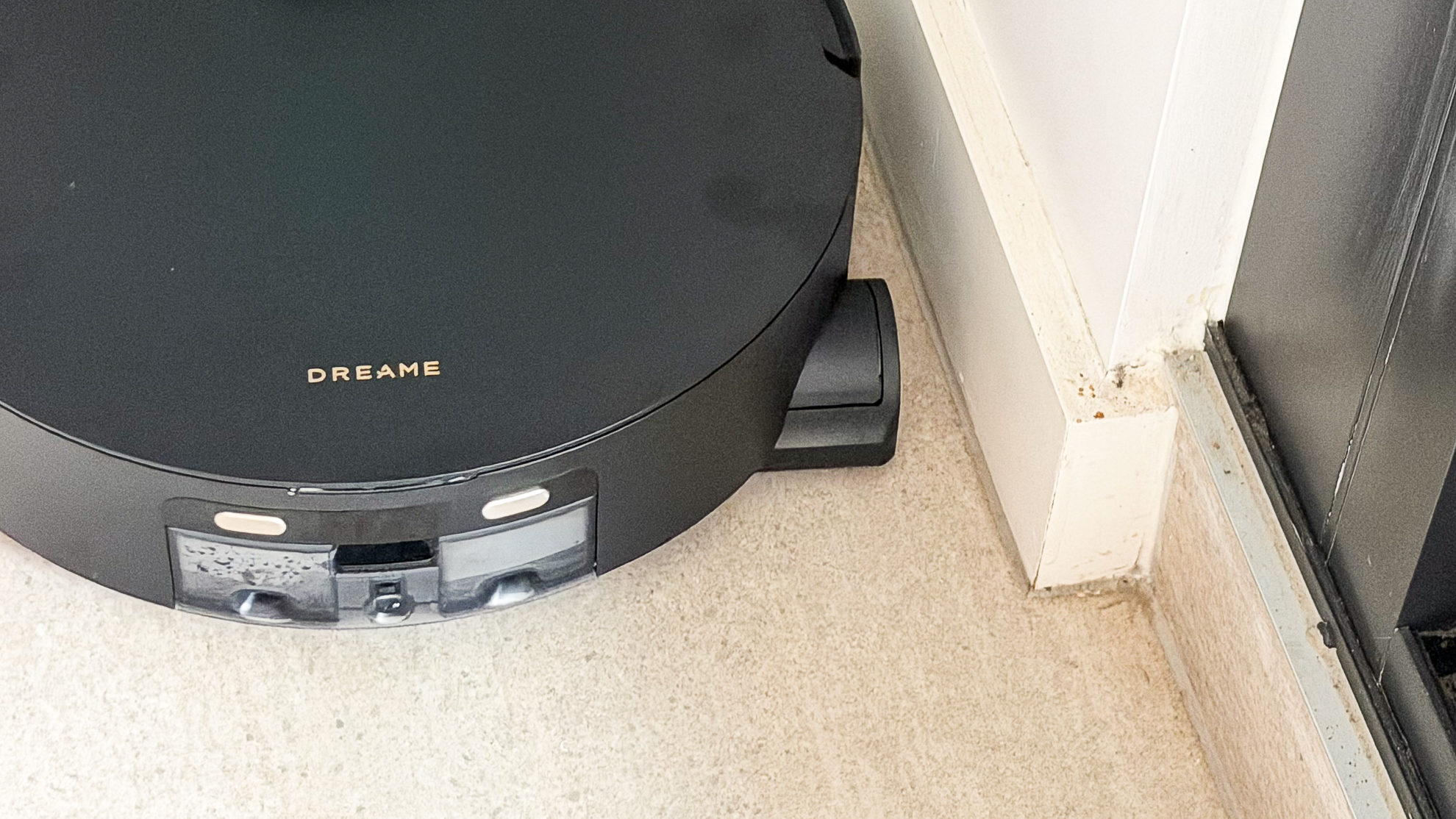
For the first time during robot vacuum testing, sending the Aqua10 Ultra to clean a small wet spill felt comfortable, thanks to Dreame’s assurance that the central and side brushes would be raised. Small water spills were handled without issue, and any moisture entering the onboard dust box and bag is mitigated by the dock’s dust bag drying feature after each vacuum or mop-after-vacuum session.
While effective for small spills like a few drops of water or milk, caution is still advised for larger wet spills due to potential concerns for the onboard dust box filter.
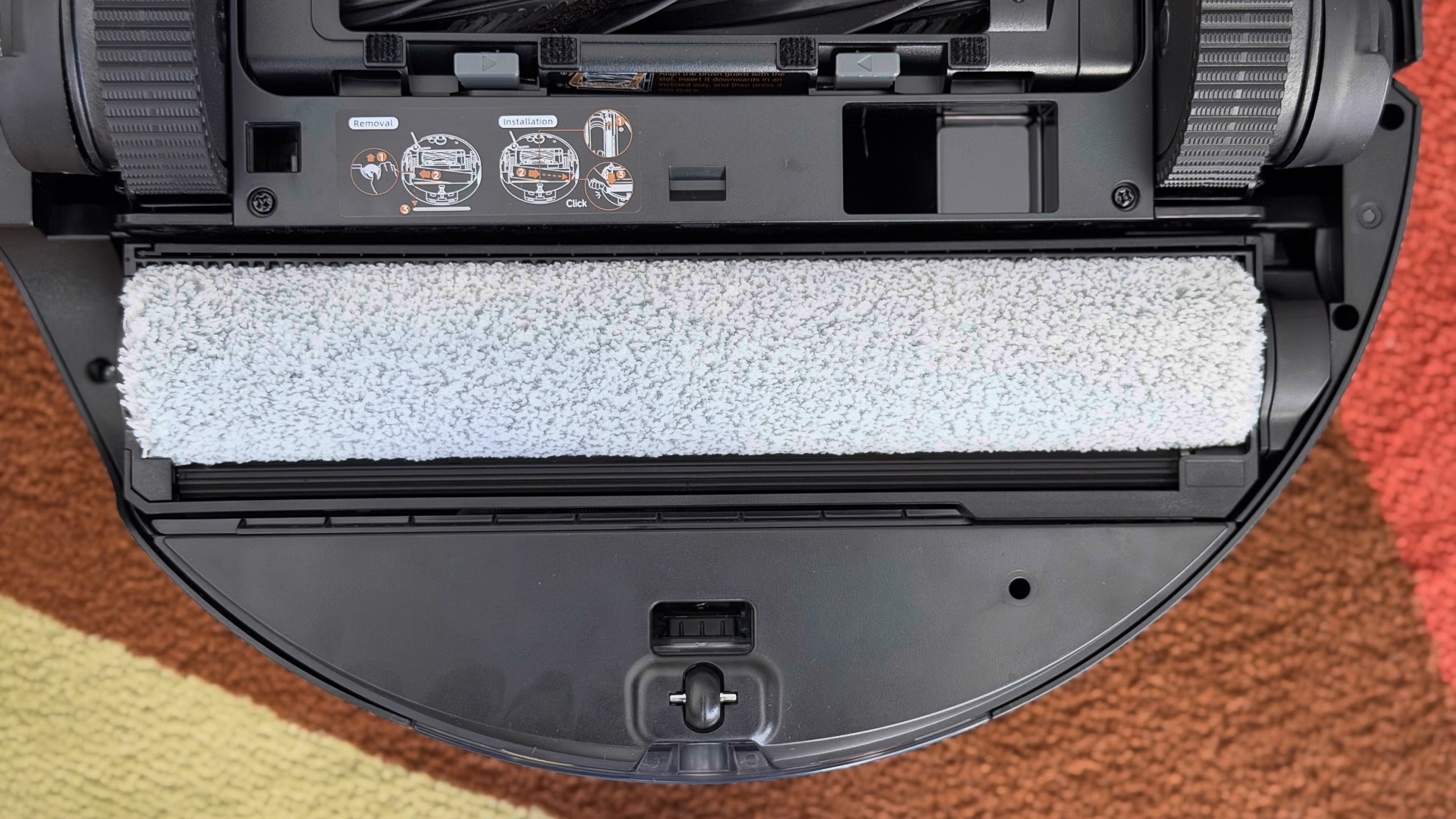
For homes with mixed flooring, users can configure the robot’s mopping behavior: avoid carpets altogether, raise the roller mop, or cross without cleaning. With the Aqua10 Ultra set to mop-raise, the roller’s automatic cover engages upon detecting carpet, preventing damp patches. This engagement is not visible, but carpets consistently remain dry, even at edges and corners where other robots might be slow to lift mops.
Mopping can be performed with detergents, and a starter bottle is included. While Dreame does not mandate proprietary cleaners, using the brand’s recommended solutions is advisable to prevent damage and maintain warranty validity.
Dock Performance
A key feature of the dock is its dust-bag drying capability, which can be activated in the app’s Dock Settings. When enabled, the dock uses warm air to dry the dust bag after every cleaning session. This prevents odor buildup and microbial growth if moisture is collected during vacuuming small spills.
Additionally, the Aqua10 Ultra’s dock thoroughly cleans the roller at 100ºC / 212ºF, providing sterilization that eliminates odors and stains, preparing the roller for its next use. This feature is optional; users without pets can opt for warm water cleaning and occasional sterilization. Standard hot-air drying ensures the roller is dry between uses.
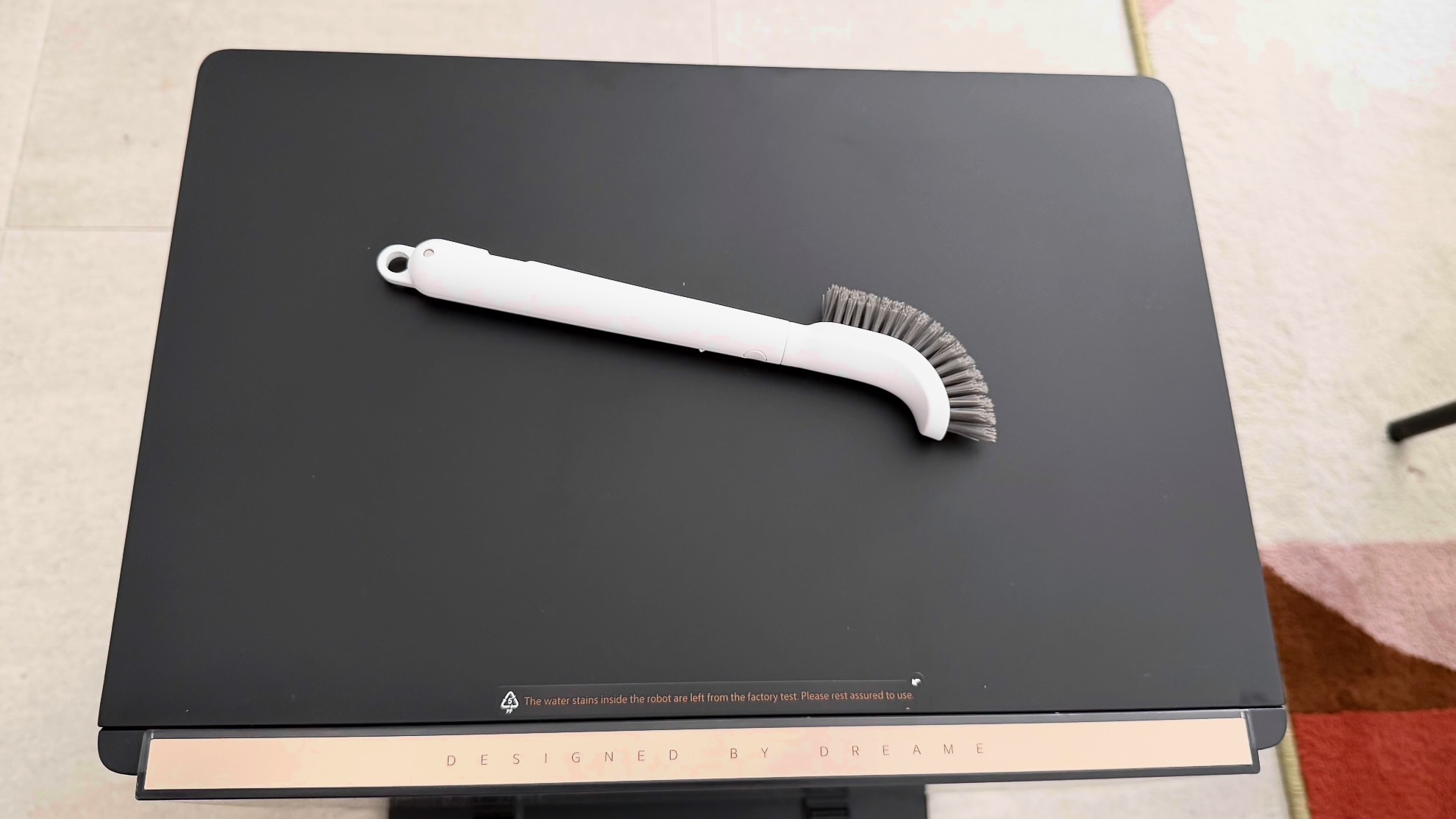
Initial observations suggested high water consumption, but subsequent mopping runs demonstrated efficient water usage, eliminating the need for constant clean-water tank refills. Regular cleaning of the dirty-water tank is essential to prevent unpleasant odors, though the tank’s tight lid and an additional internal lid help contain smells.
The Aqua10 Ultra dock also facilitates thorough cleaning of the wash tray. Initiated via the app, clean water is dispensed over the washboard, and excess moisture is removed from the roller. The robot then exits the dock, allowing users to scrub the tray with the provided brush. After cleaning, selecting “finished” in the app prompts the dock to dry the tray once the robot is re-docked.
Overall, the dock’s functionality complements the robot’s cleaning performance effectively.
Obstacle Avoidance & Navigation
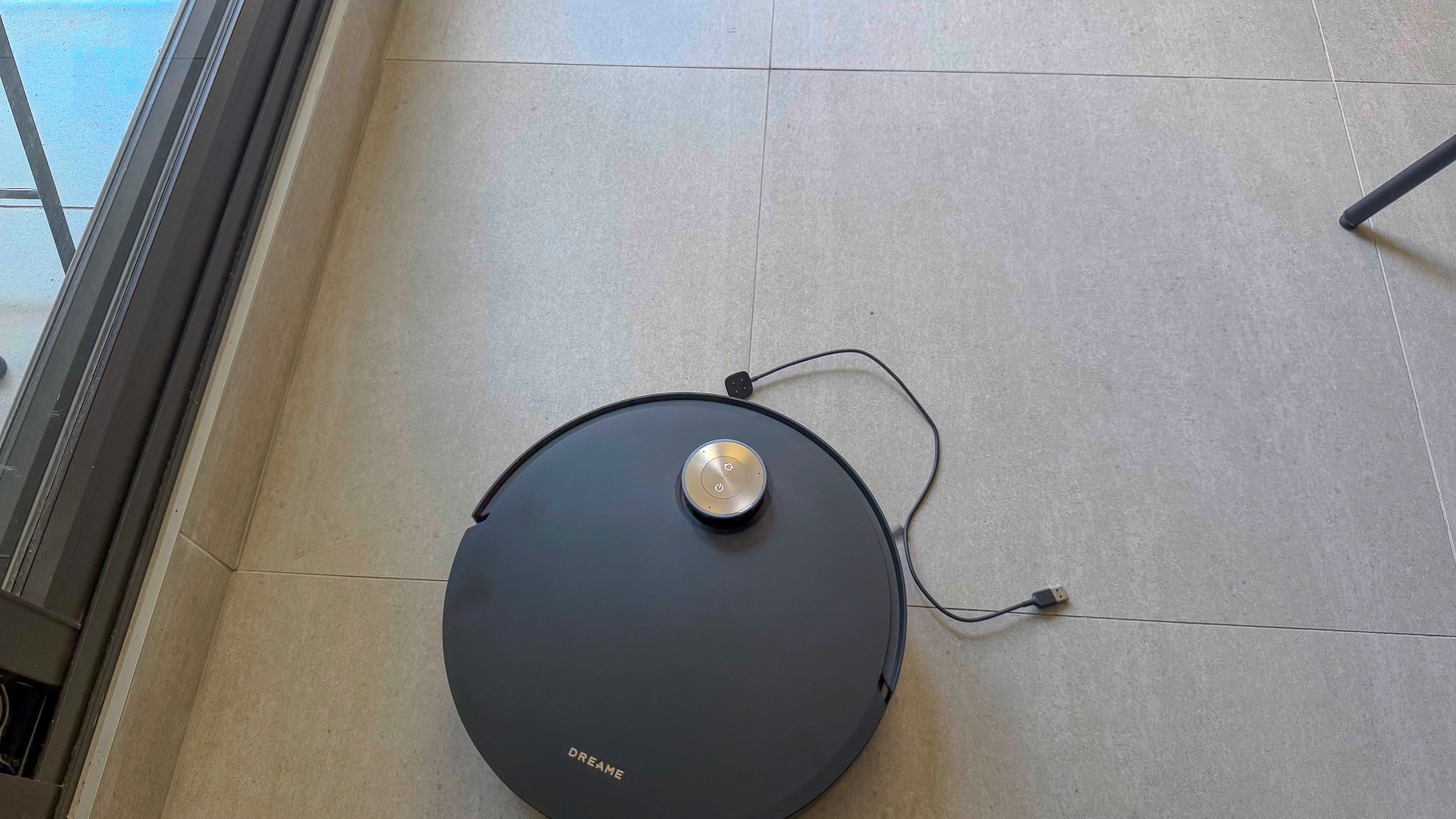
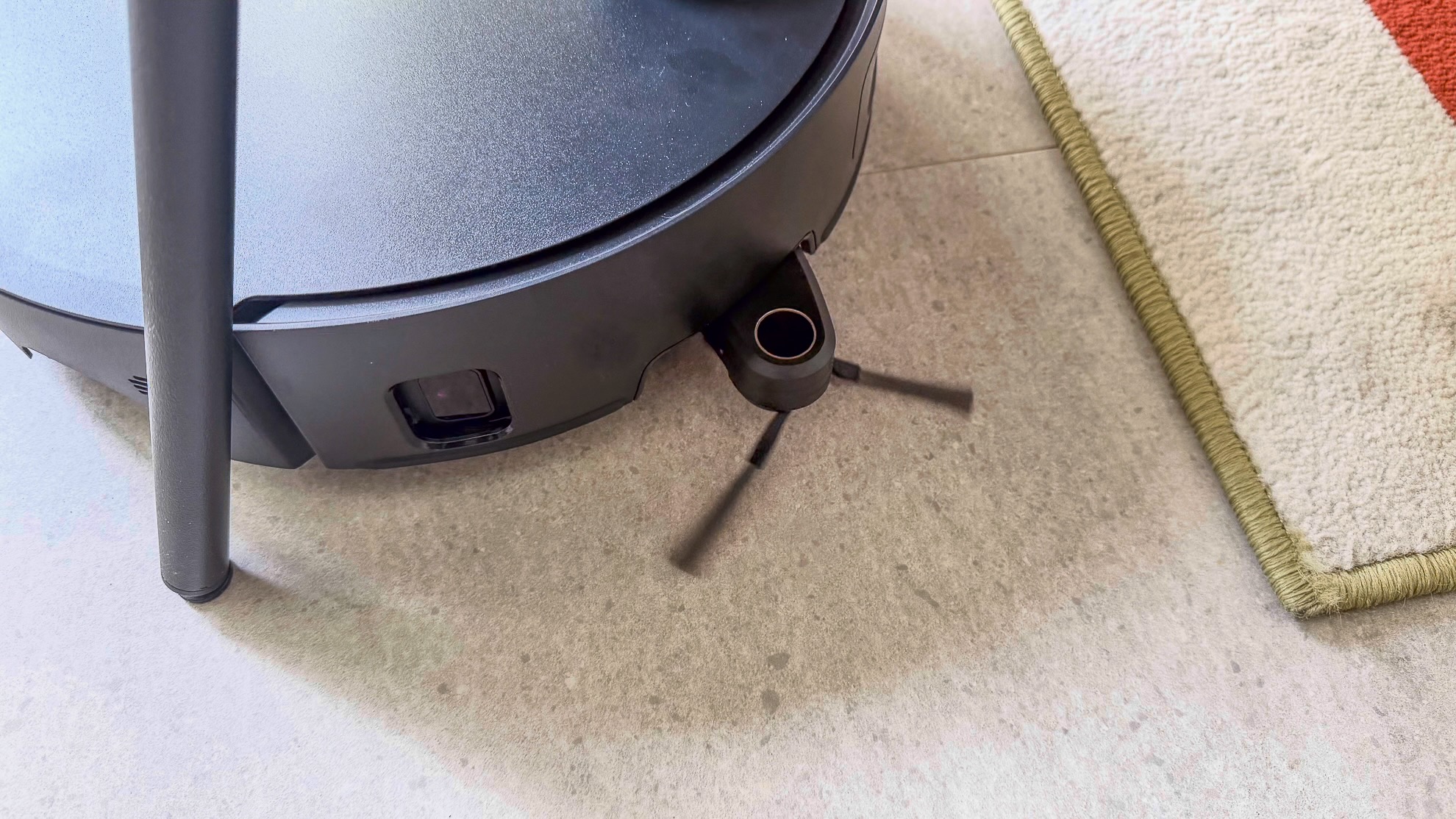
The Dreame Aqua10 Ultra not only cleans effectively but also boasts excellent obstacle avoidance. Unlike many robot vacuums that entangle thin charging cables, the Aqua10 Ultra’s sensors detect cables, allowing it to clean alongside them without rolling over them, as shown in images.
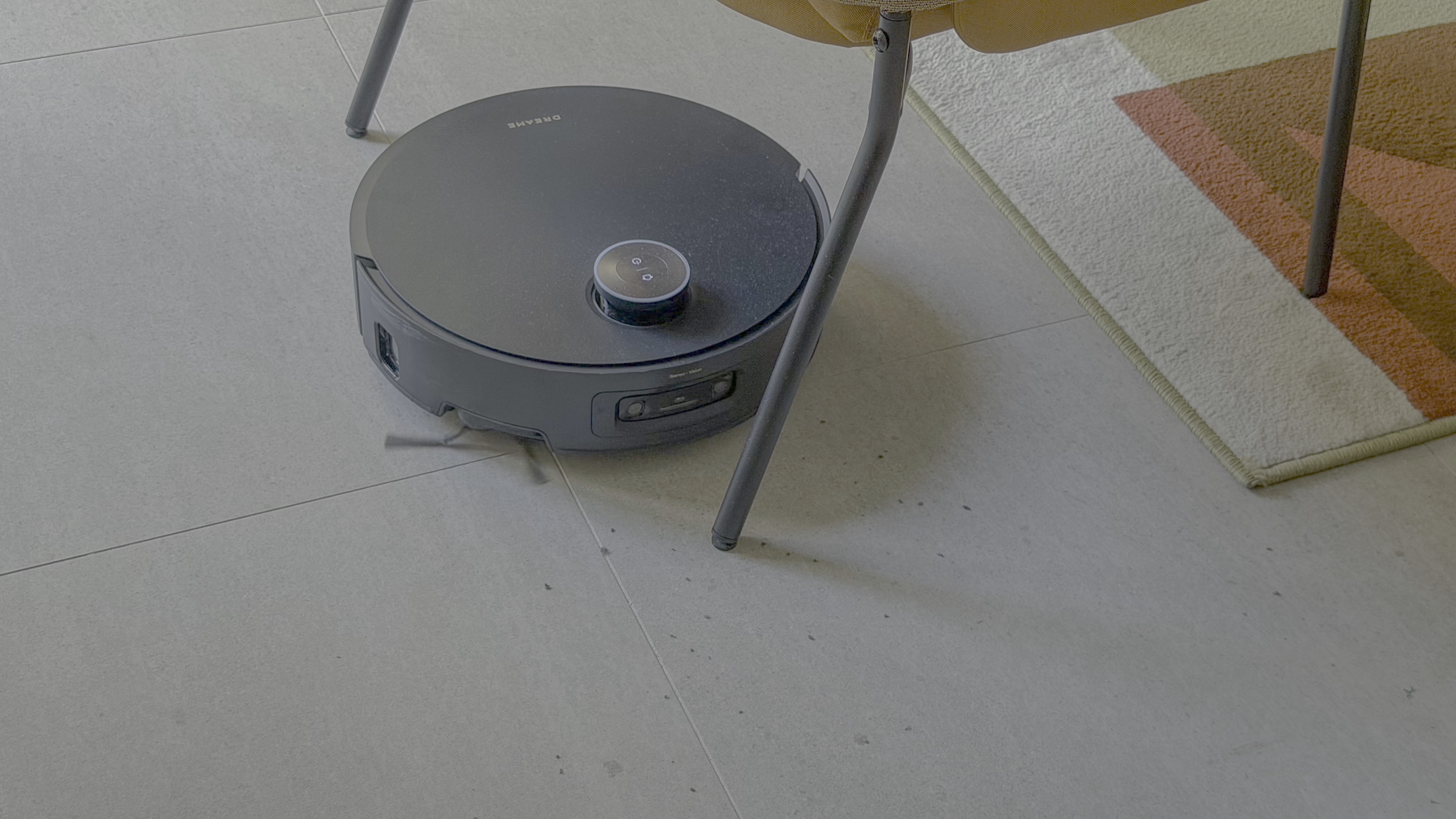
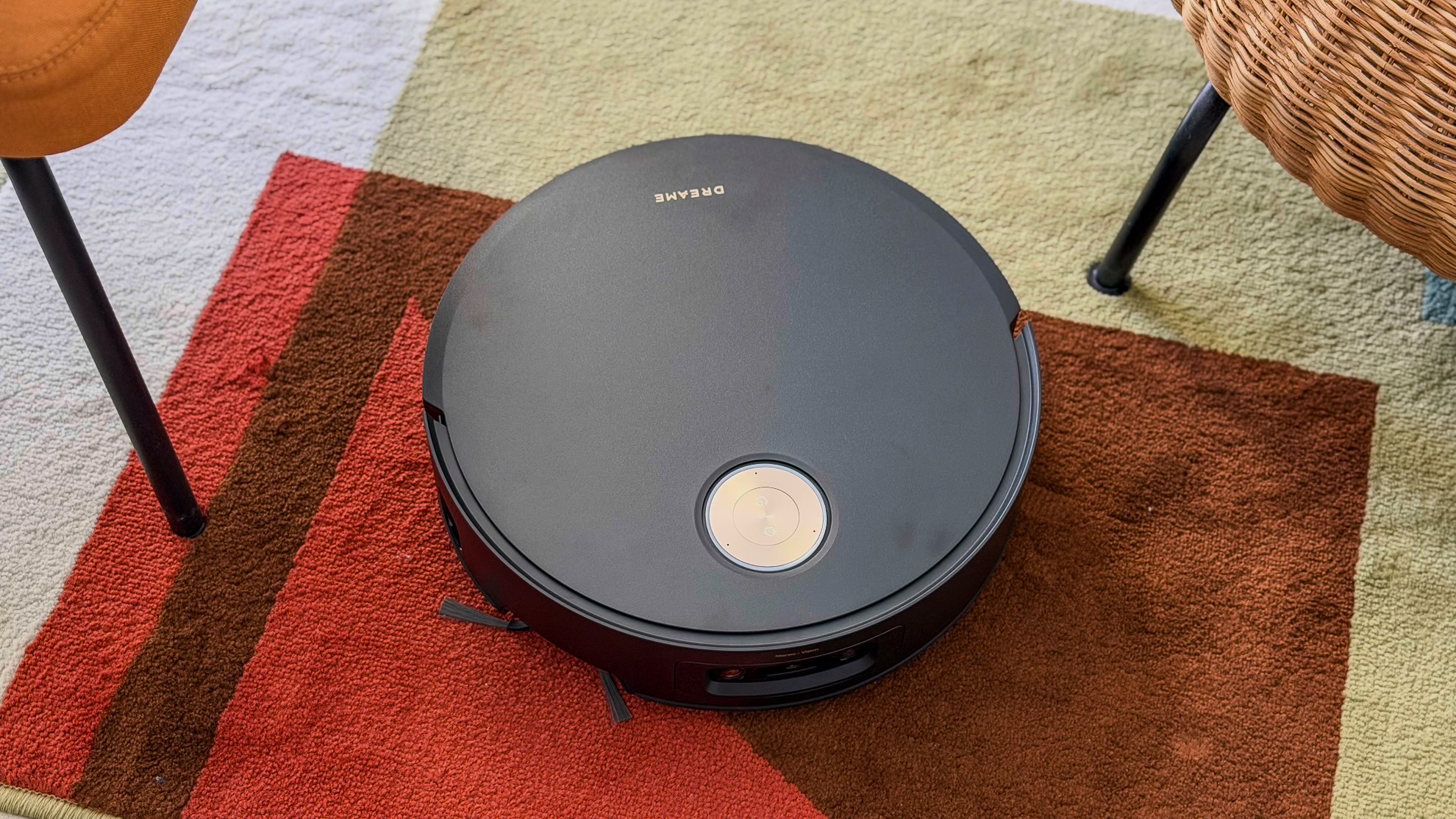
In a challenging living room area with a narrow hard floor section bordered by a wall, carpet, couch, and slim-legged chair, the Aqua10 Ultra navigated around chair legs proficiently. It consistently cleaned the hard floor strip without the mop contacting the rug.
However, the robot’s automatic 4cm raising mechanism can be inconsistent. Even with thresholds marked in the app, the Aqua10 Ultra sometimes failed to register them, attempting to navigate as a low-rise obstacle rather than rising over it. When it did rise automatically, the action was noticeable.
Overall navigation is strong, though initial setup presented issues where the robot could not “find the designated area” for single-room cleaning, even after resets and remapping. This problem resolved after a full-house (“global”) clean, after which single-room or zone cleaning worked correctly.
Battery Life
Equipped with a 6,400mAh battery, a common capacity, the Aqua10 Ultra theoretically offers over 200 minutes of cleaning. In practice, this duration is unlikely to be achieved by most users who do not operate it on the lowest settings.
Initial tests showed inefficient battery use, with a significant drain from full to 40% after 30 minutes of Intense vacuuming. This improved to 62% for the same duration with continued use. Depending on the custom cleaning routine, an average one-bedroom home might be cleaned on a single charge. However, larger homes will likely require recharging during a full-house clean, especially with mixed flooring where suction automatically increases on carpets.
A minor improvement Dreame could implement is delaying suction activation until the robot reaches its starting point. Tests consistently showed a minimum of 1% battery drain before cleaning commenced. While seemingly small, this adds up with frequent dust box emptying during a single session. Unlike the Ecovacs Deebot X11 OmniCyclone, it lacks fast charging to quickly top up during mop washing.
App and Voice Control
- The app features a nice design, but some settings are unclear
- Custom routines have certain limitations
- Voice control is straightforward but offers limited functionality
The Dreame companion app is generally appealing, rivaled perhaps only by Roborock’s. However, initial navigation can be challenging, as finding the mapping option required some exploration. Once discovered, map creation was accurate and editing was straightforward.
A notable feature in the editing process is the ability to manually add thresholds, a capability not commonly found in other robot vacuum apps. However, this feature did not always function as expected, with the robot sometimes failing to recognize the need to raise itself. While the map intelligently assigns room names during creation, these are not always accurate.
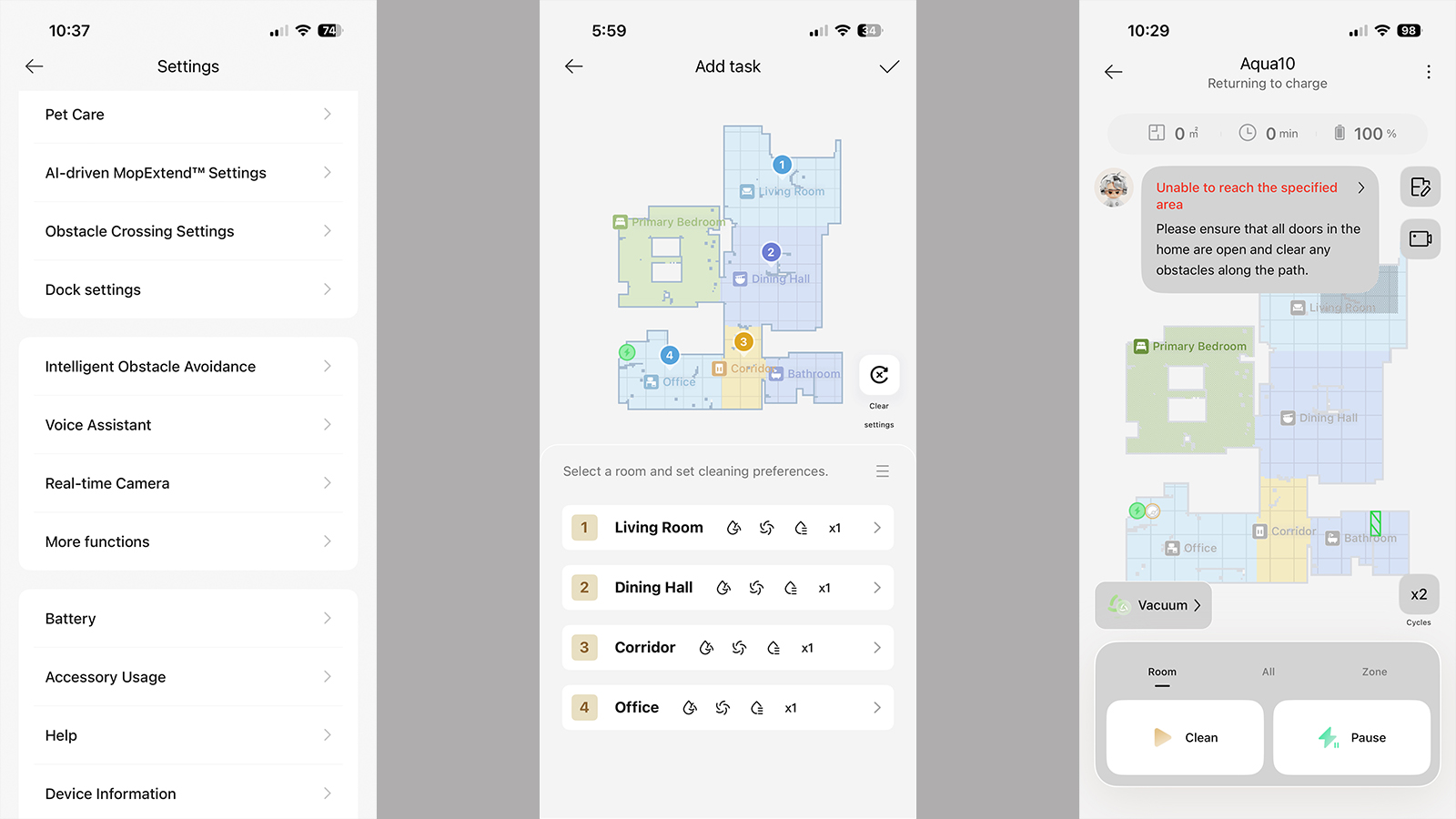
Dreame provides extensive control over cleaning routines, allowing users to adjust parameters like suction strength and mop water flow rates on a per-room basis. Scheduling, remote control, and notifications enhance cleaning convenience. The app offers comprehensive control over the “intelligent” automatic mode, termed CleanGenius, allowing users to select their own suction and water levels, unlike other brands that rely on machine learning for automatic settings.
Setting up custom Shortcut routines, such as “Bedroom Clean” or “Daily Clean,” proved somewhat intricate. It was necessary to ensure all changes were saved and confirmed with tick icons, or they would not be applied. In contrast, Roborock and Ecovacs offer simpler custom routine setup processes.
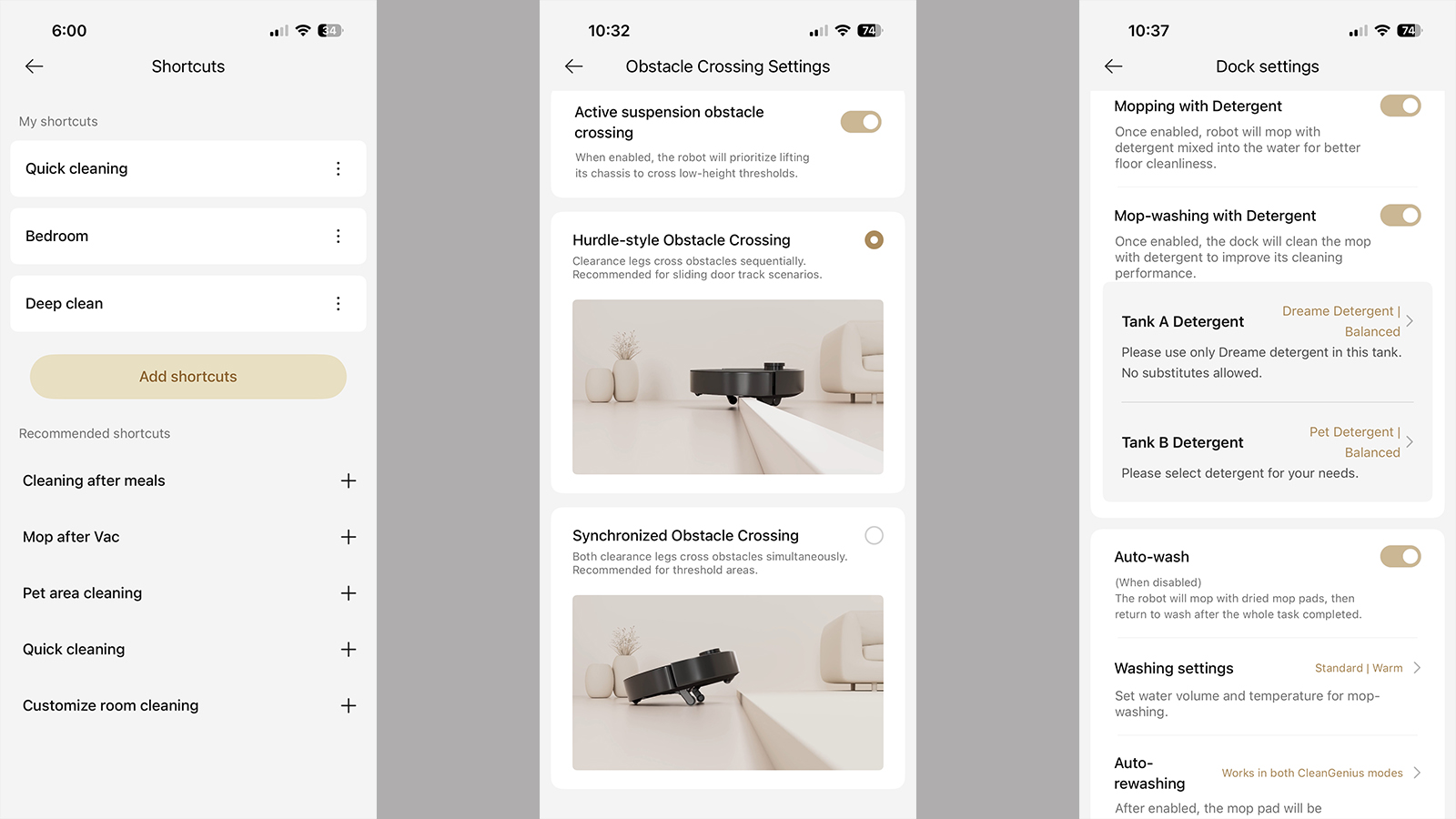
An issue encountered was the default setting for carpets to be “avoided” during vacuuming, which was not clearly indicated in the app, even when selecting to vacuum carpets first. These minor details, if addressed, could significantly streamline the app’s usability.
The Dreame app also exhibits a slight delay in responsiveness compared to some other brands, with a few seconds of lag between selecting a clean and the robot departing the dock.
Smart home integration is available with Alexa, Siri, and Google Assistant. The Dreame voice assistant responds quickly when activated, though its commands are limited to functions like starting saved Shortcuts or returning to the dock, providing a convenient hands-free experience. Matter support is also included for future smart home ecosystem integration.
Should You Buy the Dreame Aqua10 Ultra?
Here’s a summary of considerations for the Dreame Aqua10 Ultra:
- Value: High competition exists, with similarly priced models offering cutting-edge technology. (Score: 3.5 / 5)
- Design: The Aqua10 Ultra features clean lines and a sleek robot, presenting a classic yet modern aesthetic. (Score: 5 / 5)
- Performance: It offers arguably the best cleaning performance among robot vacuums, though battery usage may not be ideal for large homes. (Score: 4.5 / 5)
- App Control: The app is well-designed with comprehensive features, but it has a somewhat steep learning curve. (Score: 4 / 5)
Buy it if…
You have rigorous cleaning requirements
The Aqua10 Ultra delivers excellent vacuuming and mopping. It is particularly effective for homes with pets, though its small onboard bin may require frequent emptying.
You live in a home with many obstacles
The robot’s obstacle avoidance is highly reliable, ensuring it navigates around items like children’s toys, pets, or charging cables without entanglement or collision.
You are concerned about odors
With intense hot-water washing for the roller and regular dust-bag drying, the Aqua10 Ultra effectively prevents bacterial or fungal growth and associated odors. Regular cleaning of the dirty-water tank is still recommended.
Don’t buy it if…
Budget is a primary concern
The Aqua10 Ultra is an expensive device. While discounts may make it more accessible, cheaper alternatives will always exist. However, at a reduced price, it is highly competitive against many rivals.
You do not require extensive features
If your home is small or lacks pets, many of the Aqua10 Ultra’s advanced features might be unnecessary, allowing for significant cost savings with a simpler model.
You live in a home with wall-to-wall carpets
For homes without hard floors, a mopping robot is redundant. Additionally, robot vacuums generally struggle with effective edge cleaning on wall-to-wall carpets, leaving room edges less clean.
Also Consider
Ecovacs Deebot X8 Pro Omni
This Deebot, despite lacking some Dreame features, offers excellent cleaning, including effective edge cleaning. It is also more affordable at full price and frequently discounted. Read the Ecovacs Deebot X8 Pro Omni review to learn more.
Roborock Saros 10R
Described as a “perfect hybrid robot vacuum cleaner even for the most cluttered of homes,” the Saros 10R features improved navigation and a low profile for accessing hard-to-reach areas. It operates quietly, provides excellent vacuuming and mopping, and is considered highly proficient. Read the in-depth Roborock Saros 10R review for more details.
How the Dreame Aqua10 Ultra Was Tested
The Aqua10 Ultra was used for five weeks, operating on mixed flooring an average of twice weekly, with some days involving up to four cleaning cycles for specific tests.
Initial navigation issues, where the robot could not reach its designated area, were resolved after a full-home cleaning. The test environment was a small one-bedroom apartment with carpet in the bedroom and tiles throughout the rest of the space.
Significant time was spent understanding the app. Once configured, operating the Aqua10 Ultra was straightforward. Various cleaning modes were performed, including full-home cleans, custom routines, single-room cleans, and zone cleaning. The robot’s ProLeap system for clearing thresholds was tested using a shower divider.
The provided detergent and odor neutralizer in the dock were also utilized.
The Aqua10 Ultra underwent standard vacuuming and mopping tests, using materials like oats and tea for vacuuming, and chutney for mopping. A standard obstacle avoidance test was conducted, with particular attention paid to its handling of cables, as Dreame highlights this as a strong point.
The Aqua10 Ultra successfully passed all tests, with any noted complaints being minor.
Learn more about how robot vacuums are tested.
