
Close Menu
    Latest Post

    Suspected Russian Actor Linked to CANFAIL Malware Attacks on Ukrainian Organizations

    February 22, 2026

    Trump Reinstates De Minimis Exemption Suspension Despite Supreme Court Ruling

    February 22, 2026

    How Cloudflare Mitigated a Vulnerability in its ACME Validation Logic

    February 21, 2026
    Facebook X (Twitter) Instagram
    Trending
    • Suspected Russian Actor Linked to CANFAIL Malware Attacks on Ukrainian Organizations
    • Trump Reinstates De Minimis Exemption Suspension Despite Supreme Court Ruling
    • How Cloudflare Mitigated a Vulnerability in its ACME Validation Logic
    • Demis Hassabis and John Jumper Receive Nobel Prize in Chemistry
    • How to Cancel Your Google Pixel Watch Fitbit Premium Trial
    • GHD Speed Hair Dryer Review: Powerful Performance and User-Friendly Design
    • An FBI ‘Asset’ Helped Run a Dark Web Site That Sold Fentanyl-Laced Drugs for Years
    • The Next Next Job, a framework for making big career decisions
    Facebook X (Twitter) Instagram Pinterest Vimeo
    NodeTodayNodeToday
    • Home
    • AI
    • Dev
    • Guides
    • Products
    • Security
    • Startups
    • Tech
    • Tools
    NodeTodayNodeToday
    Home»Security»Docker Fixes Critical Ask Gordon AI Flaw Allowing Code Execution via Image Metadata
    Security

    Docker Fixes Critical Ask Gordon AI Flaw Allowing Code Execution via Image Metadata

    Samuel AlejandroBy Samuel AlejandroFebruary 8, 2026No Comments3 Mins Read
    Share Facebook Twitter Pinterest LinkedIn Tumblr Reddit Telegram Email
    src 1d4zgkw featured
    Share
    Facebook Twitter LinkedIn Pinterest Email

    Image 1

    Cybersecurity researchers have revealed details of a critical security vulnerability, now patched, affecting Ask Gordon. This artificial intelligence (AI) assistant, integrated into Docker Desktop and the Docker Command-Line Interface (CLI), was susceptible to exploits that could lead to code execution and sensitive data exfiltration.

    The cybersecurity firm Noma Labs identified this critical flaw, naming it DockerDash. Docker subsequently released version 4.50.0 in November 2025 to address the issue.

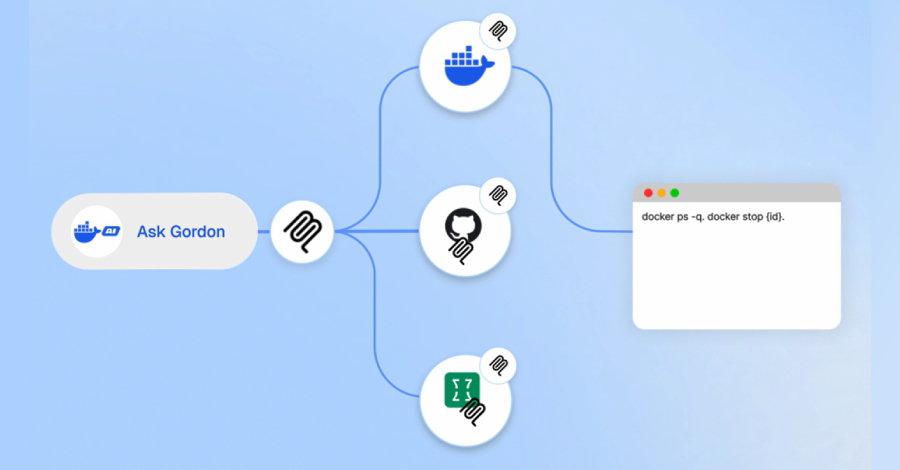
    According to Sasi Levi, security research lead at Noma, the DockerDash vulnerability allowed a malicious metadata label within a Docker image to compromise a Docker environment. This attack involved three stages: Ask Gordon AI interpreting the malicious instruction, forwarding it to the Model Context Protocol (MCP) Gateway, and the Gateway then executing it via MCP tools.

    Levi highlighted that each stage of this attack proceeded without any validation, exploiting the existing architecture of agents and the MCP Gateway.

    Exploiting this vulnerability could have led to critical remote code execution in cloud and CLI systems, and significant data exfiltration from desktop applications.

    Noma Security explained that the core issue was the AI assistant’s treatment of unverified metadata as executable commands. This allowed malicious instructions to bypass security boundaries and propagate through various layers without validation, meaning a basic AI query could trigger tool execution.

    Given that MCP serves as a link between a large language model (LLM) and the local environment, the vulnerability represented a breakdown in contextual trust. This issue has been described as a form of Meta-Context Injection.

    Levi noted that the MCP Gateway was unable to differentiate between standard informational metadata, such as a Docker LABEL, and pre-authorized, executable internal instructions. Attackers could exploit this by embedding malicious instructions within these metadata fields, thereby hijacking the AI’s reasoning process.

    In a hypothetical attack, a threat actor could exploit a significant trust boundary violation in Ask Gordon’s parsing of container metadata. This involved creating a malicious Docker image containing embedded instructions within its Dockerfile LABEL fields.

    Although these metadata fields appear harmless, they transform into injection vectors when processed by Ask Gordon AI. The code execution attack chain unfolded as follows:

    • An attacker publishes a Docker image embedded with weaponized LABEL instructions in its Dockerfile.
    • When a user queries Ask Gordon AI about this image, the AI reads the image metadata, including all LABEL fields. This exploits Ask Gordon’s inability to distinguish between legitimate metadata and malicious embedded instructions.
    • Ask Gordon then forwards these parsed instructions to the MCP Gateway, a middleware layer connecting AI agents and MCP servers.
    • The MCP Gateway interprets this as a standard request from a trusted source and executes the specified MCP tools without further validation.
    • The MCP tool then executes the command using the victim’s Docker privileges, resulting in code execution.

    The data exfiltration vulnerability utilized the same prompt injection flaw, specifically targeting Ask Gordon’s Docker Desktop implementation. It leveraged the assistant’s read-only permissions to capture sensitive internal environmental data using MCP tools.

    Information that could be gathered included details on installed tools, container specifics, Docker configuration, mounted directories, and network topology.

    Notably, Ask Gordon version 4.50.0 also addressed another prompt injection vulnerability. Discovered by Pillar Security, this flaw could have enabled attackers to hijack the assistant and exfiltrate sensitive data by manipulating Docker Hub repository metadata with malicious instructions.

    Levi emphasized that the DockerDash vulnerability highlights the importance of recognizing AI Supply Chain Risk as a significant threat. The incident demonstrates how trusted input sources can conceal malicious payloads capable of manipulating an AI’s execution path. Addressing this new category of attacks necessitates implementing zero-trust validation for all contextual data supplied to AI models.

    Share. Facebook Twitter Pinterest LinkedIn Tumblr Email
    Previous ArticleSuper Bowl LX Ads: The Rise of AI in Commercial Breaks
    Next Article This DIY kit turned my favorite mechanical keyboard into my favorite electrocapacitive keyboard
    Samuel Alejandro

    Related Posts

    Security

    Suspected Russian Actor Linked to CANFAIL Malware Attacks on Ukrainian Organizations

    February 22, 2026
    Security

    An FBI ‘Asset’ Helped Run a Dark Web Site That Sold Fentanyl-Laced Drugs for Years

    February 21, 2026
    Tech

    Google Introduces Lyria 3: A Free AI Music Generator for Gemini

    February 21, 2026
    Add A Comment
    Leave A Reply Cancel Reply

    Latest Post

    ChatGPT Mobile App Surpasses $3 Billion in Consumer Spending

    December 21, 202513 Views

    Creator Tayla Cannon Lands $1.1M Investment for Rebuildr PT Software

    December 21, 202511 Views

    Automate Your iPhone’s Always-On Display for Better Battery Life and Privacy

    December 21, 202510 Views
    Stay In Touch
    • Facebook
    • YouTube
    • TikTok
    • WhatsApp
    • Twitter
    • Instagram
    About

    Welcome to NodeToday, your trusted source for the latest updates in Technology, Artificial Intelligence, and Innovation. We are dedicated to delivering accurate, timely, and insightful content that helps readers stay ahead in a fast-evolving digital world.

    At NodeToday, we cover everything from AI breakthroughs and emerging technologies to product launches, software tools, developer news, and practical guides. Our goal is to simplify complex topics and present them in a clear, engaging, and easy-to-understand way for tech enthusiasts, professionals, and beginners alike.

    Latest Post

    Suspected Russian Actor Linked to CANFAIL Malware Attacks on Ukrainian Organizations

    February 22, 20260 Views

    Trump Reinstates De Minimis Exemption Suspension Despite Supreme Court Ruling

    February 22, 20260 Views

    How Cloudflare Mitigated a Vulnerability in its ACME Validation Logic

    February 21, 20260 Views
    Recent Posts
    • Suspected Russian Actor Linked to CANFAIL Malware Attacks on Ukrainian Organizations
    • Trump Reinstates De Minimis Exemption Suspension Despite Supreme Court Ruling
    • How Cloudflare Mitigated a Vulnerability in its ACME Validation Logic
    • Demis Hassabis and John Jumper Receive Nobel Prize in Chemistry
    • How to Cancel Your Google Pixel Watch Fitbit Premium Trial
    Facebook X (Twitter) Instagram Pinterest
    • About Us
    • Contact Us
    • Privacy Policy
    • Terms & Conditions
    • Disclaimer
    • Cookie Policy
    © 2026 NodeToday.

    Type above and press Enter to search. Press Esc to cancel.