




Robot vacuums have significantly evolved over the past eight years, with recent flagship models demonstrating remarkable advancements compared to earlier, less sophisticated designs.
DJI introduced its first robotic vacuums in Europe in October, with the high-end Romo P model undergoing testing. This model, currently without a US release date, features a self-cleaning base station and a mopping function, boasting specifications impressive enough to catch the attention of experts like Jen Tuohy.
While some are true robot vacuum experts, many users might be considering upgrading from an entry-level model to a multifunctional unit like the Romo P.
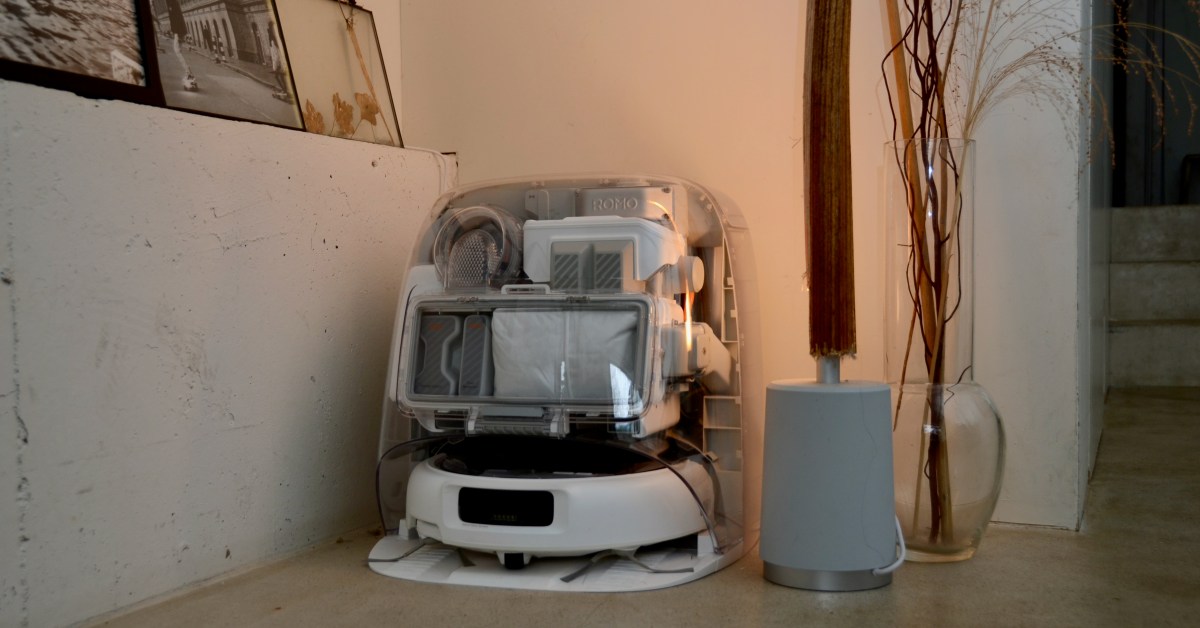
The performance of DJI’s premier robot vacuum is impressive. However, the high price point of over $2,000 for the DJI Romo P, despite its appealing transparent design, raises questions about its overall value.
A security vulnerability was observed
A significant concern arises from a recently exploited security vulnerability that allowed unauthorized access to owners’ homes. While DJI claims to have patched this specific issue, and testing suggests this is accurate, other vulnerabilities may persist. This represents a serious oversight for a company already under scrutiny from the US government regarding security and data privacy.
Details of the remote access vulnerability, witnessed by a colleague, are available in a separate report. The Romo’s evaluation assumes the primary vulnerability has been resolved, but concerns remain regarding potential future exploits on this device, which includes a cloud-connected camera and microphone.
Living with a robot that raises trust issues regarding security is problematic.


DJI Romo robot vacuum
The Good
- Great for transparency nerds
- Kept floors spotless
- Excellent obstacle avoidance and navigation
- Nearly autonomous cleaning
The Bad
- Lingering security concern
- Very expensive
- Failed to clean semi-dried ketchup
- Can struggle with deep carpets
- Big and noisy, like all base stations
The initial impression of the device is its considerable size.
Its size is comparable to a mini-fridge, making it a conspicuous presence in smaller living spaces. While the transparent base station is designed for display, this aesthetic preference may not be universally shared within a household.
The base station offers a significant enhancement over basic robot vacuum charging docks. It provides automatic charging, dust bin emptying, water tank management (draining and refilling), and self-cleaning/drying of mopping pads, which helps prevent odors and mold. While these operations can be noisy, and manual refilling of fresh water and emptying of dirty water are still required, the overall maintenance is considerably reduced compared to simpler models, leading to a largely autonomous daily cleaning experience.
 It mops and vacuums. The spinning brush on top left and the mopping pad on the lower left stretch into corners, edges, and gaps.
 The transparency still looks great after two months of testing.
 This door folds down on the front of the base station for access to the cleaning cartridges and dust bag.
  It has a few lights that flash briefly when cleaning but nothing too annoying.
DJI’s robot vacuum utilizes advanced sensors, similar to those found in its drones, including dual fisheye vision sensors and wide-angle LiDARs, which enabled rapid room mapping. The device accurately identified a large rug, avoiding mopping it while cleaning surrounding concrete. However, a rug change required manual map editing due to incorrect identification. Subsequent adjustments for custom room-specific cleaning routines became more manageable with increased familiarity with the DJI app.
The DJI Romo demonstrates excellent cleaning capabilities, surpassing older models like the Deebot N97, and includes a convenient mopping function. Its design, featuring an extendable brush and mop pad on the right side, allows for superior cleaning in corners and along edges. To prevent cross-contamination, the spinning mop pads or roller brushes automatically lift during operation.
The Romo offers flexible cleaning modes, allowing for vacuuming followed by mopping, or simultaneous operation for quicker tasks. It can also function solely as a vacuum or a mop. The accompanying app simplifies the creation of scheduled or immediate cleaning tasks, such as “quick vac,” “kitchen mop,” “daily cleaning,” and “deep cleaning.” Users can clean specific zones and adjust parameters like suction power, water usage, and the number of passes, providing a level of granular control now typical for high-end robot vacuums.


 1/16The Romo vac manages to transition from the concrete to this rug, but it can be tentative as it hunts for just the right place to make the climb.
Tests with oatmeal on polished concrete showed varying effectiveness: five flakes remained in standard suction, one in max mode, and none in “turbo” mode. For heavily trafficked areas, maximum suction or multiple passes are generally required to ensure a grit-free floor, especially in homes with pets and frequent outdoor activity.
On deep-pile rugs, three oatmeal flakes persisted even after three passes in max turbo mode, indicating that an upright vacuum might offer superior performance in such conditions. The Romo’s effectiveness on rugs might improve with the bristle brush, though this was not tested due to an incident with a pet. The Romo effectively manages long hair, collecting it between its duo-divide brushes, a feature also seen in more affordable alternatives like Roborock’s Qrevo Curv series.
The Romo features a specialized degrease mode that applies cleaning solution directly to the mop pads, targeting grease and cooking stains. This mode appears effective, as it deterred a dog from licking the floor near the stove. Upon returning to its base station, the robot vacuum’s pads are washed at approximately 60 degrees Celsius (140F).

 Romo failed to clean up this semi-dried ketchup even after three passes, but it did leave the floor shiny and not slippery.
Despite using degrease mode with maximum water, the vacuum struggled to remove semi-dried ketchup, requiring manual effort. It performed better with a small milk spill, though it initially appeared to avoid it, likely due to its programming to bypass pet waste.
Modern robot vacuums, including the Romo, employ methodical cleaning patterns, which enhance efficiency and battery life compared to older, random navigation models. DJI highlights the Romo’s millimeter-level obstacle-sensing technology, which generally performs well but is not entirely flawless.
 The app is well done and mostly intuitive. With remote video enabled, you get snapshots of obstacles that interfered with cleaning.
The Romo effectively avoided larger obstacles such as socks, shoes, and pet toys, but struggled with smaller items like coins and buttons. It successfully navigated around thin playing cards when there was sufficient contrast with the floor; otherwise, it would run over them. A small USB cable was consistently avoided on concrete, yet repeatedly run over on a rug, though cleaning was still completed.
The DJI robot vacuum occasionally misidentifies non-obstacles, such as a flush water-sealed power outlet or a slightly raised rug corner. Its traction is insufficient for plush bedroom rugs, and thin bathroom throw rugs must be removed to prevent them from being bunched up. Additionally, the device appears to struggle with reflective aluminum dog bowls, often pushing them rather than avoiding them.
Crucially, the Romo reliably avoids stairs and successfully navigates a 7.5cm (3 inch) floor gap for a sliding pocket door, an area where other models like the Deebot would typically become stuck.
While the DJI Romo is generally quiet for a robot vacuum, its base station generates a sudden 63dB noise burst during dust collection, which can be startling. As a combined vacuum and mop, it also performs a jet-wash and drying cycle for its pads upon return, a process that takes several hours and produces a constant 35dB at one meter. This prolonged, low-level noise can be fatiguing, suggesting nighttime operation for drying is preferable. The robot vacuum itself operates at a relatively quiet 53dB at standard intensity, increasing to 63dB at maximum suction, which is comparable to or slightly louder than some competitors.
Initially, the remote monitoring features, including real-time map updates and obstacle snapshots from the vacuum’s camera, were appreciated. The ability to communicate with a pet via the Romo’s camera and microphone was engaging. However, the realization that unauthorized parties could potentially access these video streams, despite a PIN protection and an audible “remote video is starting” announcement, raised significant privacy concerns.
 The remote video option provides a wide angle view of the household. I had fun chatting with my dog, but thinking hackers could watch my kids has freaked me out.
The decision to introduce a robot with cloud-connected cameras, a microphone, and vision sensors into a home involves personal privacy and security considerations. Despite differing views on entities like the US government’s stance on DJI, the remote video function on the Romo was disabled, and its camera covered, during the latter part of testing due to these concerns.
After more than 50 test runs and cleaning 820 square meters, the transparent vacuum and its base maintained a near-new appearance. On only two occasions did an obstruction, such as a scarf or blanket, halt cleaning, triggering a phone alert with an image of the issue.
The base station’s water tanks required refilling or emptying three times over 26 hours of operation, while the 2.4L dustbag remained unfull. Although disposing of wastewater can be unpleasant, the base station itself remained odor-free. Its self-cleaning function uses high-pressure jets to remove debris, though DJI advises a manual inspection every three months.


 1/14The self-cleaning dock looks pretty good after two months of use, but you can see gunk starting to build up in the back. DJI recommends giving it a manual scrub every three months.
The convenience of a robot that reliably vacuums and mops with minimal intervention, a significant improvement over budget models, is undeniable. The Romo represents a strong first entry for DJI, akin to their initial e-bike offering. While multipurpose base stations are appealing, DJI’s pricing and past security lapses provide compelling reasons to consider alternative brands.
The premium Romo P model, priced at €1,899 (approximately $2,250), offers a highly capable, nearly autonomous cleaning experience. However, this investment could alternatively cover a human housekeeper for an hour weekly over two years, providing more comprehensive services. The €1,299 (around $1,500) Romo S, while lacking the transparent design and some advanced features, presents a more cost-effective option.
It is worth noting that numerous competent robot vacuums from brands like Roborock and Ecovacs are available in the $500 to $800 range, offering comparable cleaning performance to the DJI Romo, with top-tier models not exceeding $1,300. For instance, the Roborock Qrevo Curvx provides a very similar experience at just $899.
Alternatively, a more budget-friendly $200 “bump-and-run” robot vacuum might suffice, albeit with greater manual involvement, avoiding the security concerns associated with more advanced, connected devices.
Photography by Thomas Ricker / The Verge
