


CES 2026 concluded in Las Vegas, with the consumer tech industry departing after several days of announcements. Major players like Nvidia, Sony, and AMD, alongside numerous startups, showcased new products at the Unveiled event and throughout the exhibition.
For the third consecutive year, Artificial Intelligence dominated company discussions. While traditional hardware innovations and unique gadgets remained present, physical AI emerged as a key theme, succeeding agentic AI from the previous year. Robotics also received significant attention, with demonstrations and showcases across the event.
Key announcements from CES are summarized below.
CES 2026 Highlights and Lowlights
For an audio or video summary, the latest Equity podcast episode provides detailed insights into the show. The full episode is available below on YouTube.
Nvidia reveals AI model for autonomous vehicles, showcases Rubin architecture
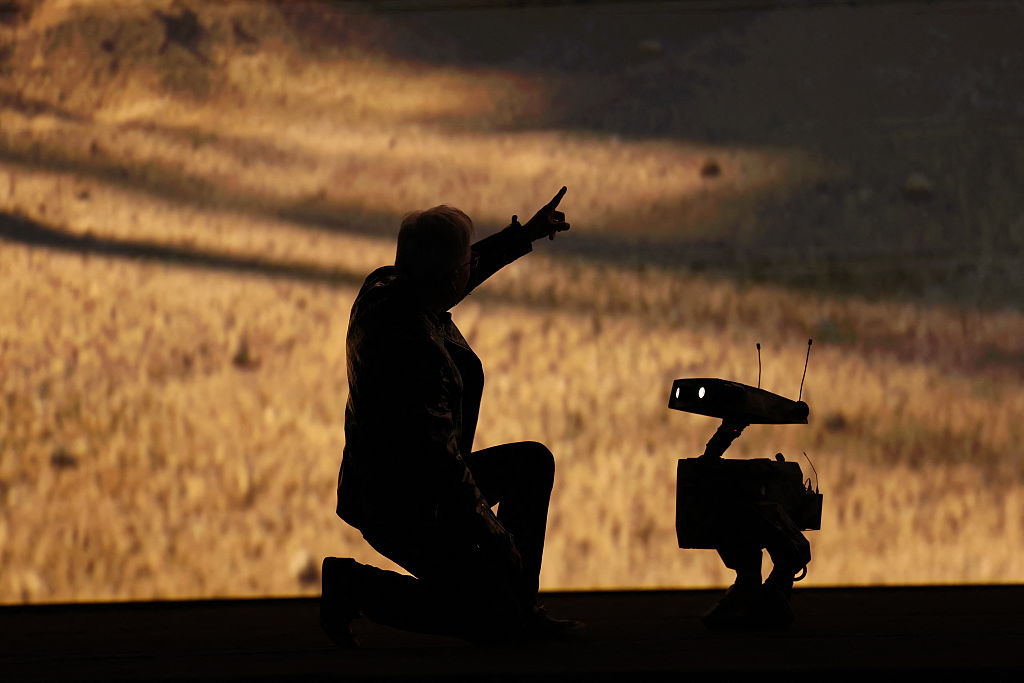
Nvidia CEO Jensen Huang presented at CES, celebrating the company’s AI achievements, outlining plans for 2026, and interacting with robots.
The Rubin computing architecture, designed for growing AI computational demands, is scheduled to replace Blackwell architecture in the latter half of this year. It offers speed and storage enhancements, with further details on its distinctions available via the provided link.
Nvidia also advanced its goal of integrating AI into the physical world, presenting its Alpamayo family of open source AI models and tools for autonomous vehicles launching this year. This strategy aligns with the company’s wider ambition to establish its infrastructure as the standard for generalist robots.
AMD’s keynote highlights new processors and partnerships
AMD Chair and CEO Lisa Su opened CES with a keynote, featuring collaborations with figures like OpenAI president Greg Brockman, AI pioneer Fei-Fei Li, and Luma AI CEO Amit Jain.
In addition to partner showcases, AMD outlined its strategy to broaden AI accessibility in personal computers with its Ryzen AI 400 Series processors.
The standout oddities of CES
After the main announcements and product showcases, attention shifted to some of the more unusual reveals at CES. A list of noteworthy and peculiar technologies was compiled.
Highlights from CES breakout sessions
Beyond hardware showcases, CES featured numerous industry panels and speakers. Notable highlights included Palmer Luckey advocating for retro aesthetics, discussions on why the “learn once, work forever” era may be over, previews of the Silicon Valley series “The Audacity,” the expansion of Roku’s $3 streaming service, and Jason Calacanis offering a $25,000 bounty on an authentic Theranos device.
Ford’s AI assistant debuts
Ford introduced an AI assistant, set to launch in its app before a planned 2027 vehicle integration. Hosted by Google Cloud and built with off-the-shelf LLMs, specific details regarding the driver experience with the assistant remained limited.
Caterpillar, Nvidia partner on automated construction equipment
In a move to extend AI’s influence into the physical domain, Caterpillar and Nvidia unveiled a pilot program, “Cat AI Assistant,” demonstrated at CES. This system, intended for Caterpillar’s excavator vehicles, is part of a broader initiative utilizing Nvidia’s Omniverse simulation for construction project planning and execution.
Hands-on with Clicks Communicator

Clicks Technology introduced its debut phone, the $499 Communicator, a notable reveal at the show. It features a physical keyboard reminiscent of BlackBerry devices, along with an optional $79 slide-out physical keyboard compatible with other devices.
The Communicator made a positive initial impression.
“The phone felt good to hold — not too heavy or light, and was easy to grip. The company settled on the device’s final form after dozens of 3D-printed shapes. The winning design for the phone features a contoured back that makes it easy to pick up and hold.
“The device’s screen is also somewhat elevated off the body, and its chin is curved up to create a recess that protects the keys when you place it face down.”
LG’s home robot CLOiD makes a sluggish first impression

LG dedicated a significant portion of its CES presentation to robotics, prominently featuring its home robot, CLOiD. The robot’s performance beyond the press conference stage garnered specific observations.
“Unfortunately, at the presentation, CLOiD didn’t do a whole lot. The bot very gingerly took a shirt out of a basket and place it into a dryer. It also picked up a croissant and (again, very gingerly) placed it into an oven. In addition to the live performance from the bot, the presentation was intercut with highly produced videos of the bot in a number of hypothetical scenarios where it might prove useful to potential users.”
eufyMake UV printer is an Etsy maker’s dream
UV printers, traditionally costly and industrial, print directly onto objects. But the eufyMake E1 is set to launch for $2,299 later this year, which aims to make bulk printing on things like mugs, water bottles, and phone cases a bit more attainable for individuals.
A new way to find and purchase office space
MyCommuters offers an innovative approach to office space selection, assisting companies in finding locations that benefit both the business and its employees. The platform aggregates various datasets to analyze commute times, expenses, and other factors, pinpointing optimal office sites rather than merely available properties.
Skylight Calendar 2 Revealed

This family planning tool was noted for its calendar and organizational features, as well as its AI capabilities. It can synchronize calendars from various sources, generate new to-dos from messages or photos, provide appointment reminders, and more.
Boston Dynamics and Google partner on Atlas robots
Hyundai’s press conference highlighted its robotics collaborations with Boston Dynamics. It was disclosed that the companies are partnering with Google’s AI research lab to train and operate existing Atlas robots, alongside a new version of the humanoid robot demonstrated at the event.
Amazon expands Alexa, Ring’s footprints even further
Amazon’s AI-focused Alexa+ update received significant attention at CES. The company launched Alexa.com for Early Access customers to access the chatbot via web browsers, alongside a redesigned bot-centric app. Additionally, Amazon revamped Fire TV and introduced new Artline TVs, both integrating Alexa+.
For Ring, numerous announcements included fire alerts to an app store for third-party camera integration, and more.
Razer joins the AI deluge with Project AVA and Motoko
Historically, Razer has showcased unconventional hardware at CES, including three-screen laptops, haptic gaming cushions, and a mask that resulted in a federal fine. This year, two notable announcements were Project Motoko, designed to offer smart glasses functionality without the physical glasses.
Additionally, Project AVA introduces an AI companion avatar for desktops.
Lego Smart Bricks mark the company’s first CES appearance
Lego made its debut at CES with a private showcase of its Smart Play System. This system features interactive bricks, tiles, and Minifigures that produce sounds, with the initial sets themed around Star Wars.
