



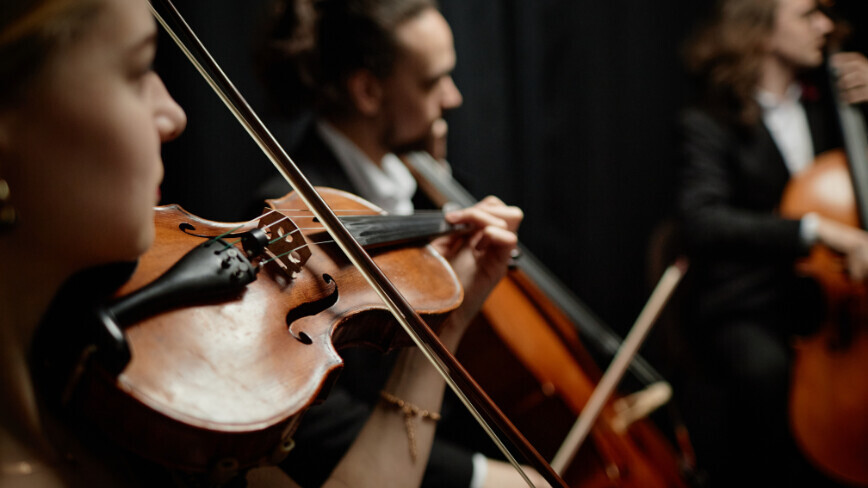
In October 2021, the Beethoven Orchestra Bonn performed the first movement of Beethoven’s unfinished 10th symphony, which had been completed with the assistance of artificial intelligence.
A collaborative team of computer scientists, music historians, musicologists, and composers developed the ‘Beethoven AI’. This AI was designed to analyze Beethoven’s musical style and life, utilizing sketches he left for the 10th symphony, alongside works from other influential composers like Johann Sebastian Bach. The goal was to generate compositions that mirrored what Beethoven himself might have created.
Beethoven AI, similar to other AI composition programs, generates music in a manner akin to how ChatGPT produces text. It employs machine learning and algorithms to analyze musical data and patterns, then uses generative models to produce music based on provided prompts.
Consequently, the AI tool was trained by experts and given all necessary information to comprehend, contextualize, and ultimately create something that Beethoven himself could have written.
This achievement prompts a significant question that gains increasing relevance: as technology becomes more capable of initiating creative endeavors, what aspects of the classical music world remain uniquely human?
Can AI truly replicate the sensitivity and humanity required to compose, interpret, convey emotions, or communicate a composer’s intended message?
Classical Music Evolution
Historically, classical music occupied a specialized niche. Its origins are often traced back to sacred music traditions, evolving as a successor to choral music.
Initially, only the most privileged individuals, those from noble backgrounds or families with musical connections, could dedicate their lives to studying an instrument or composition. Similarly, only the aristocracy had the opportunity to enjoy such performances.
Over time, through globalization and the widespread dissemination of information, classical music has expanded, allowing millions globally to appreciate it.
Digital platforms such as Spotify and YouTube now provide broad audiences with access to a vast array of historical compositions and recordings, effectively democratizing classical music.
Concurrently, social media enables both traditional and innovative artists to present their interpretations, whether a classical performance of Paganini’s Campanella or a modern, trap-influenced version of Vivaldi’s The Four Seasons.
Technology and AI in the Classical Music industry
The integration of modern technologies has offered the classical music industry new avenues to maintain relevance in a rapidly changing world.
For instance, the Berlin Philharmonic Orchestra introduced a digital concert hall, a streaming platform providing on-demand access to numerous recordings and content. Likewise, the Philharmonia Orchestra employs Virtual Reality to craft an immersive experience, allowing audiences to virtually join the orchestra onstage among the musicians.
However, these new technologies also present challenges and raise concerns regarding the future of human creativity across creative industries, including classical music.
AyseDeniz Gokcin, a Turkish pianist, utilizes AI to arrange pieces by iconic composers, adapting them to contemporary trends or imagining what these composers might have produced if alive today. This practice potentially risks overshadowing contemporary composers striving to establish their unique artistic voices.
AI: Ally and Threat
From AI-completed symphonies to immersive orchestral experiences and personalized modern interpretations of classic works, technology clearly offers advantages to the classical music industry.
A study titled ‘Music Composition with AI’ by the World Journal of Advanced Research and Reviews (WJARR) highlights how AI technologies can enhance efficiency and accessibility, preserve and improve historical pieces, and open new possibilities for innovation in performance and education.
Nevertheless, AI also poses challenges to the role of human artistry, prompting concerns about a potential lack of emotional depth, ethical and legal issues, and the livelihoods of current musicians and composers.
AI can serve as a powerful tool and collaborator for those who choose to integrate it as an extension of human creativity, using it to explore new forms of expression.
Conversely, those who perceive AI as a threat might view it as a digital instrument that cannot replicate the human touch, given its reliance on artists to create, reproduce, and generate outputs.
Ultimately, it is up to creators and audiences to make informed decisions about how new technologies are utilized, ensuring the preservation of humanity within a rapidly evolving world.
