


Verdict
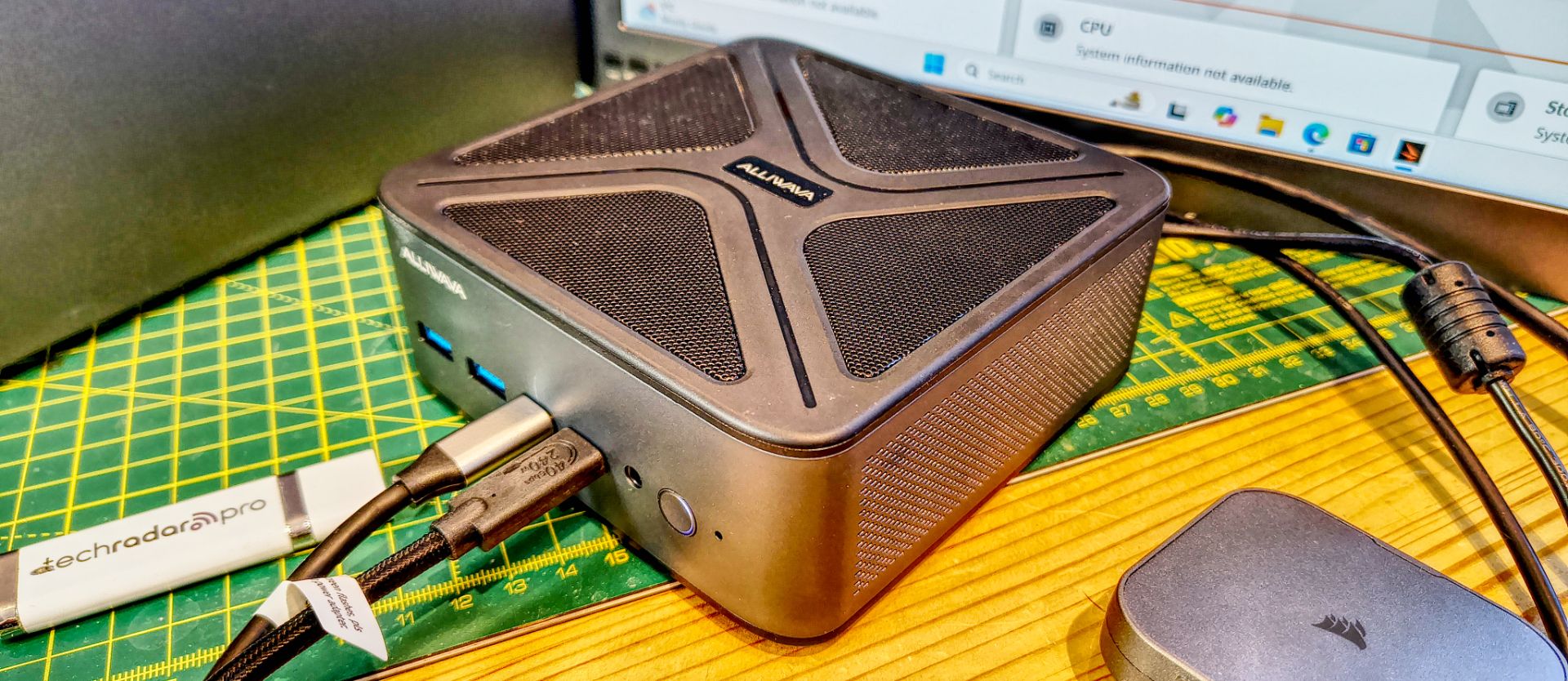
A better mini PC than the U58, the GH8 delivers decent performance and expansion in a small VESA-mountable enclosure. However, it only has one USB-C port, and none of the USB ports are correctly labelled.
Pros
- Affordable
- Easy internal access
- Second M.2 slot
- Dual 2.5GbE LAN ports
Cons
- Many ports aren’t labelled
- Only one USB4 port
- 1TB NVMe is Gen3 in a Gen 4 slot
30-second Review
The previous Alliwava machine, the U58, was based on solid but slightly older Ryzen Zen 3 silicon, but the GH8 uses more recent AMD technology.
This mini system utilizes the AMD Ryzen 9 8945HS, a Zen 4 architecture chip released by AMD with other Hawk Point generation chips in late 2023. This specific chip was the top of the mobile 8000 series, capable of clock boosting to 5.2GHz.
The GH8 comes with two 16GB DDR5-5600 memory sticks, totaling 32GB, and can be upgraded to 128GB with larger modules. Default storage is a 1TB NVMe, which can be upgraded to a 4TB module. A second slot allows for up to 8TB, or potentially more, of internal storage.
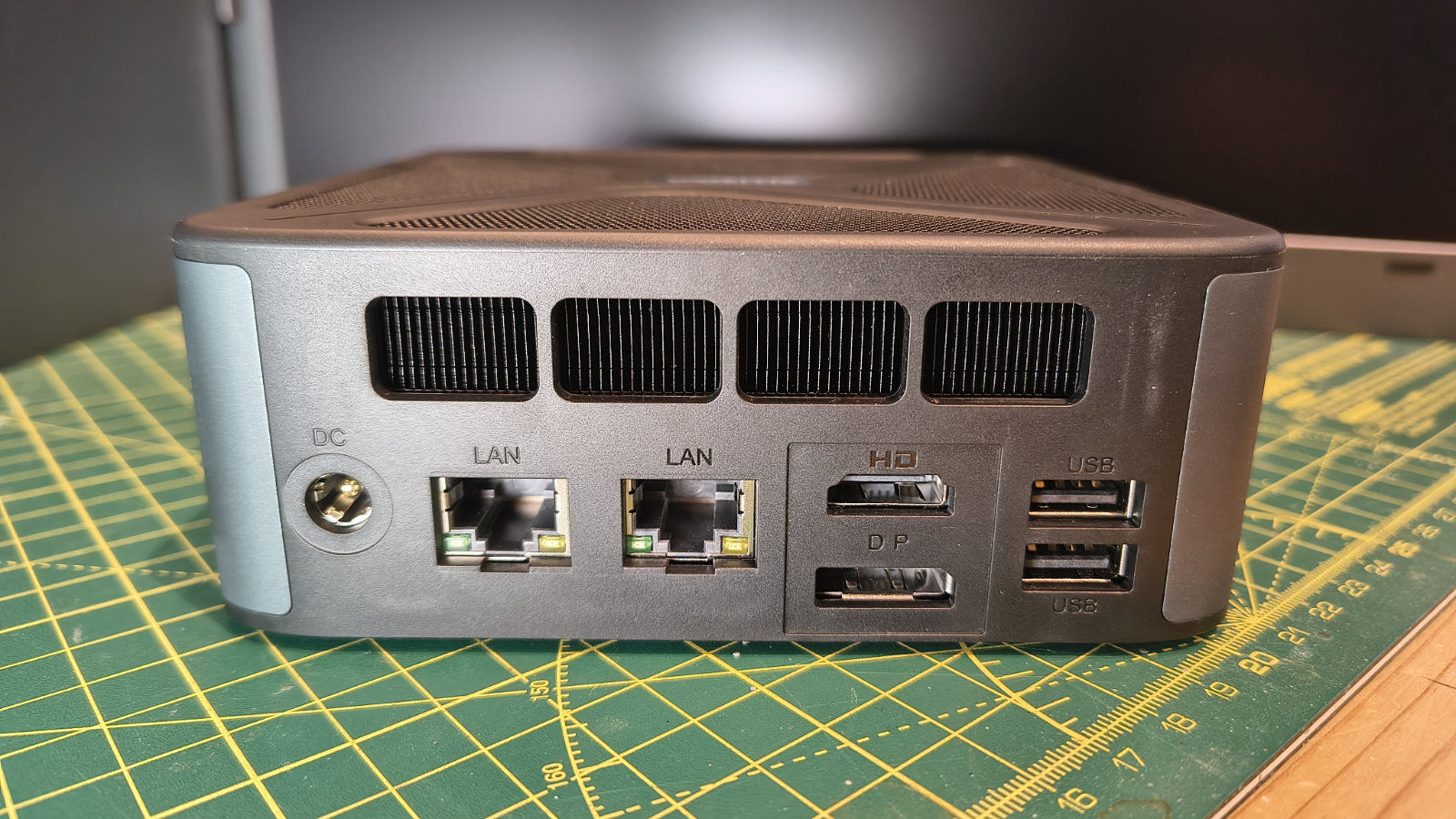
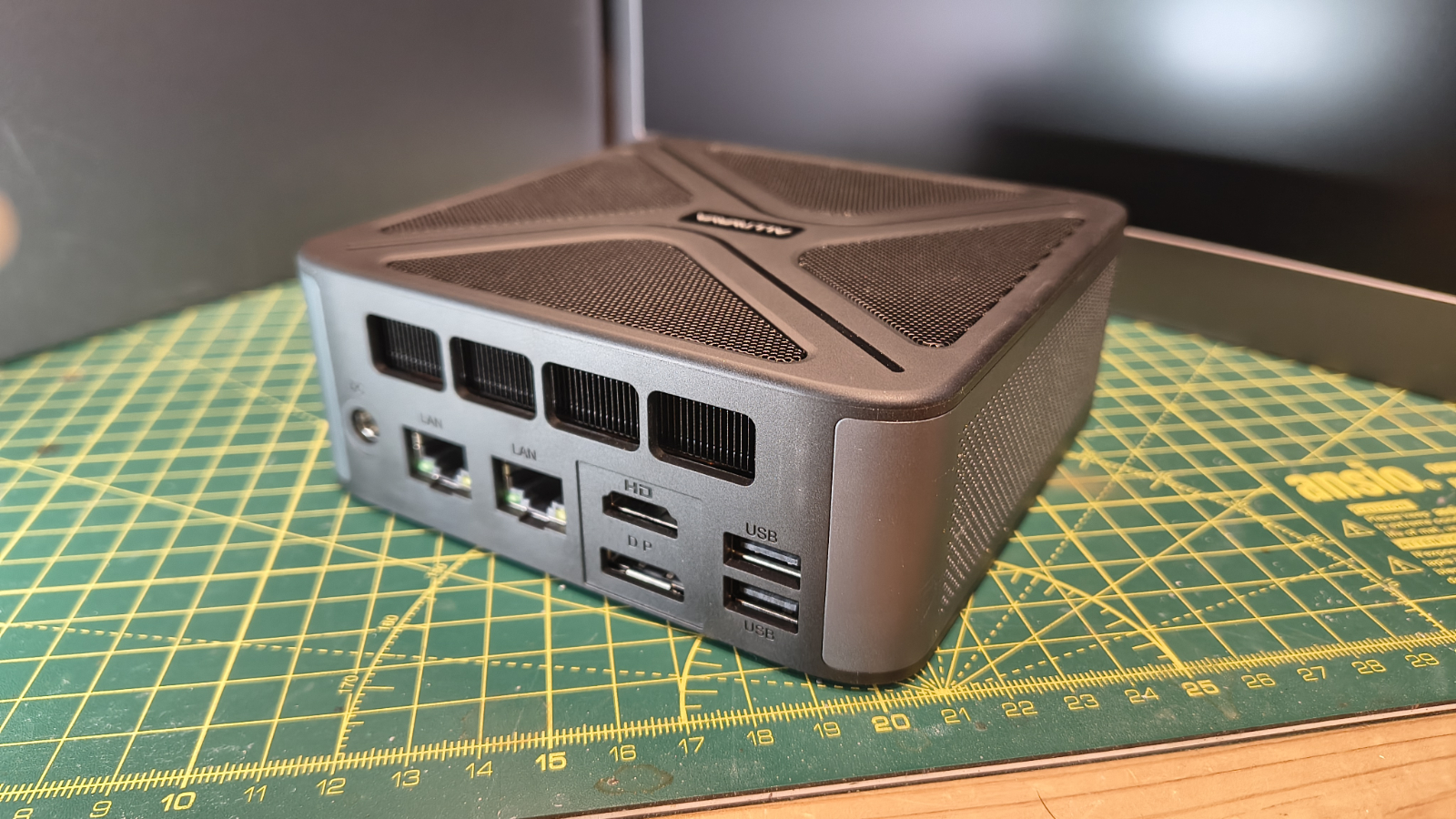
Port selection is flexible, featuring USB4, USB 3.2, and USB 2.0 ports, along with dual video outputs (HDMI and DisplayPort) and dual 2.5GbE LAN ports. These ports make the GH8 more adaptable and significantly more powerful than the U58.
A connectivity limitation is the lack of Oculink support for external GPUs. While AMD has released more powerful platforms like Hawk Point refresh and new Strix Point, Krackan Point, Strix Halo, and Fire Range with Zen 5 or Zen 5c architectures, machines based on these are considerably more expensive, targeting creative and power users.
The GH8’s platform strikes a good balance between cheaper options, such as the 58U, and the high-end Zen 5 product lines. Users requiring more power or USB4 connectivity will find an improved experience over less expensive NUCs, and the pricing remains competitive.
The GH8 may not feature the breakout technologies to be included in top mini PC round-ups, but it presents an appealing option for those seeking a versatile NUC adaptable to various applications.
Price and Availability
The Alliwava GH8 is available starting from approximately $900/£680/€770. It can be purchased directly from Alliwava and through online retailers.
Currently, two SKUs of the GH8 are available: one with 32GB of RAM and 1TB of storage, and another with 64GB of RAM and 1TB of storage. Both are available directly from the Alliwava website. However, the 64GB model was not available at the time of writing, simplifying the pricing structure.
The standard price is $898.33 in the USA, £679 in the UK, and €766.84 in the EU. Based on current exchange rates, the UK price is slightly higher, while the EU price is comparable to the US.
The AMD Ryzen 9 8945HS processor used in this system is also found in other mini PCs, such as the Geekom A8, which offers similar specifications for $859 on Amazon in the USA, and £899 in the UK. The Minisforum UM890 Pro, with comparable specs, sells for $899.90 in the US and £739 in the UK via Amazon. A more affordable option is the GMKtec K11, priced at $739.99 in the USA and £629.96 in the UK on Amazon.
These comparisons suggest the GH8 offers competitive pricing, with the GMKtec K11 potentially offering better value in the UK. Some alternatives, like the K11 and Miniforum UM890 Pro, include dual USB4 ports and Oculink, while the Geekom A8 provides USB4 Elite Connectivity. Unless these specific technologies are required, the GH8’s pricing remains competitive, though European customers might find better value in the GMKtec K11 in certain aspects.
Specifications
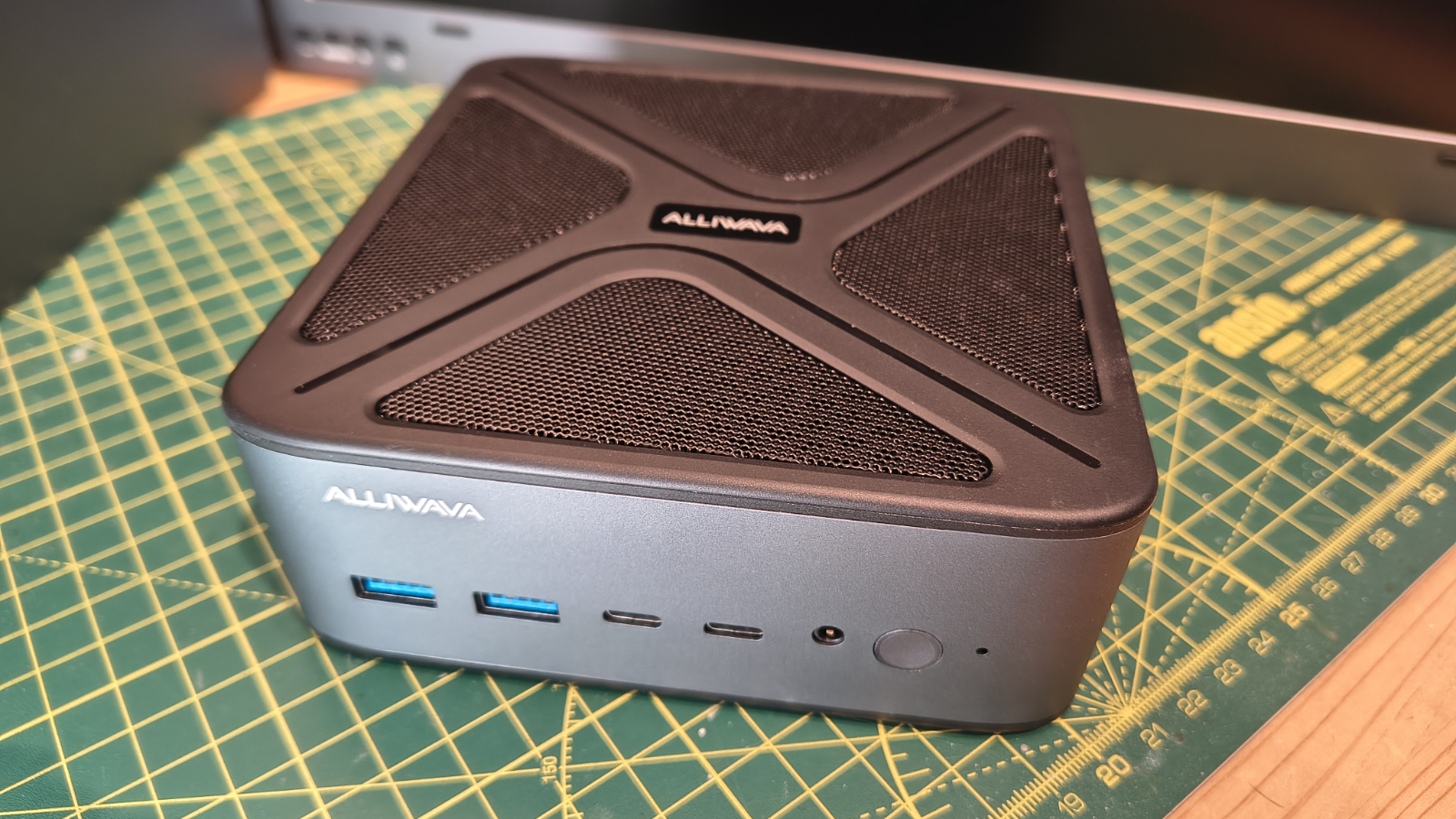
The Alliwava GH8 features the AMD Ryzen 9 8945HS processor (8C/16T, up to 5.2GHz) and an AMD Radeon 780M GPU (up to 2.8 GHz). It comes with 32GB DDR5-5600 RAM (2x16GB), expandable to 128GB. Storage includes a 1TB M.2 2280 PCIe Gen 4 SSD, with an additional M.2 NVMe expansion slot. Connectivity options include one USB4 Type-C, two USB 3.2 Gen 2 Type-A, two USB 2.0, one HDMI 2.1, one DisplayPort 1.4, and a 3.5mm Audio jack. Networking is handled by dual 2.5GbE ports, WiFi 6E, and Bluetooth 5.2. The system runs on Windows 11 Pro (pre-installed), with a base power consumption of 35-54W, powered by a 19V 6.32A 120W PSU. Its dimensions are 130 x 127.5 x 52 mm.
Design
The GH8 features a basic but functional design, similar to the U58. It has a plastic case reinforced with a metal band, and plastic top and bottom panels. The construction is adequate, though it might not withstand significant impacts.
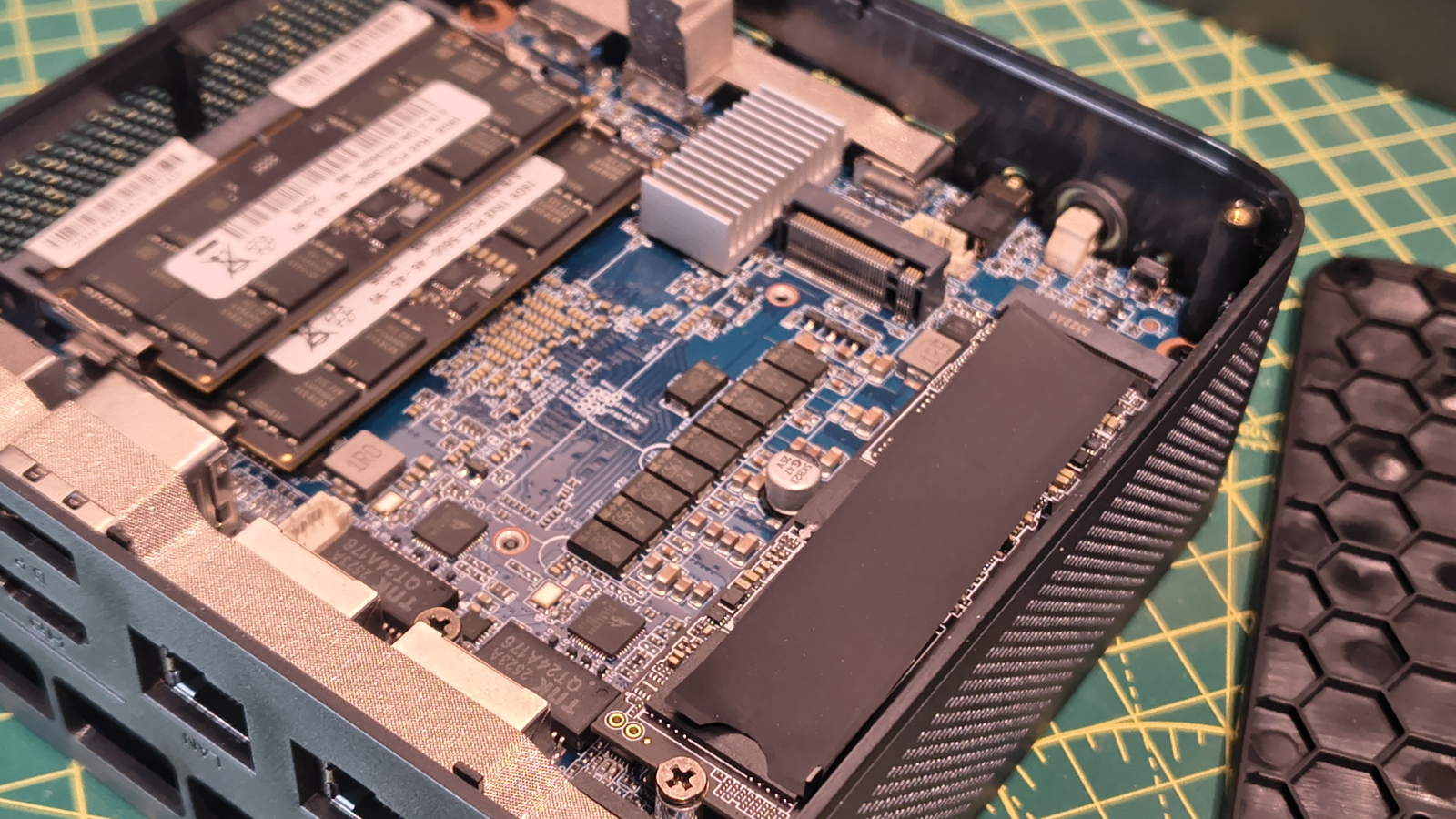
The base includes threaded inserts for VESA mounting, supporting both 100 VESA and 80 VESA standards, making it compatible with most monitors. Internal access is straightforward, with four screws securing the bottom panel, allowing easy access to memory and storage components.
Alliwava’s promotional material states the GH8 supports up to 128GB of DDR5 RAM, though 64GB modules are not widely available. However, 48GB modules can be used in the two slots to achieve 96GB of memory. The reviewed SKU included a 1TB Gen 3 M.2 NVMe module, with an additional 2280 slot available, a feature absent in the U58.
Both M.2 slots are likely PCIe Gen 4, allowing for faster and larger capacity modules. The presence of two M.2 slots simplifies system cloning. While the GH8’s design and construction are not groundbreaking, it addresses some shortcomings of the U58, even if not all.

Hardware
The Alliwava GH8 is powered by the AMD Ryzen 9 8945HS processor. Unlike Intel processors that vary core/thread counts across Core 5, 7, and 9, all Hawk Point (8040 series) Ryzen 7 or 9 chips share the same core and thread count. The distinction between Ryzen 7 and 9 processors lies in their base, turbo, and GPU clocks.
The Ryzen 9 8945HS, at the top of the Hawk Point (8040) series, offers a 4GHz base clock, boosting up to 5.2GHz, and a 2.8GHz GPU clock. Its AI capability is 39 TOPS, with 16 TOPS contributed by the integrated AMD Ryzen AI NPU chip, which is consistent across all AI-supporting Hawk Point processors, including Ryzen 5 models.
This silicon provides twenty PCIe 4.0 lanes, offering ample bandwidth for peripherals. The memory channels support both DDR5-5600 and LPDDR5x-7500. The GH8 uses DDR5-5600, which has less bandwidth but the advantage of socketed, rather than surface-mounted, memory.
The AMD Ryzen 9 8945HS natively supports two USB4 ports, USB 3.2 Gen 2, and four USB 2.0 ports. However, the GH8’s specifications list only one USB4 port and two USB 2.0 ports. This suggests a potential downgrade of a USB4 port to a USB 3.2 port, which is an unusual choice.
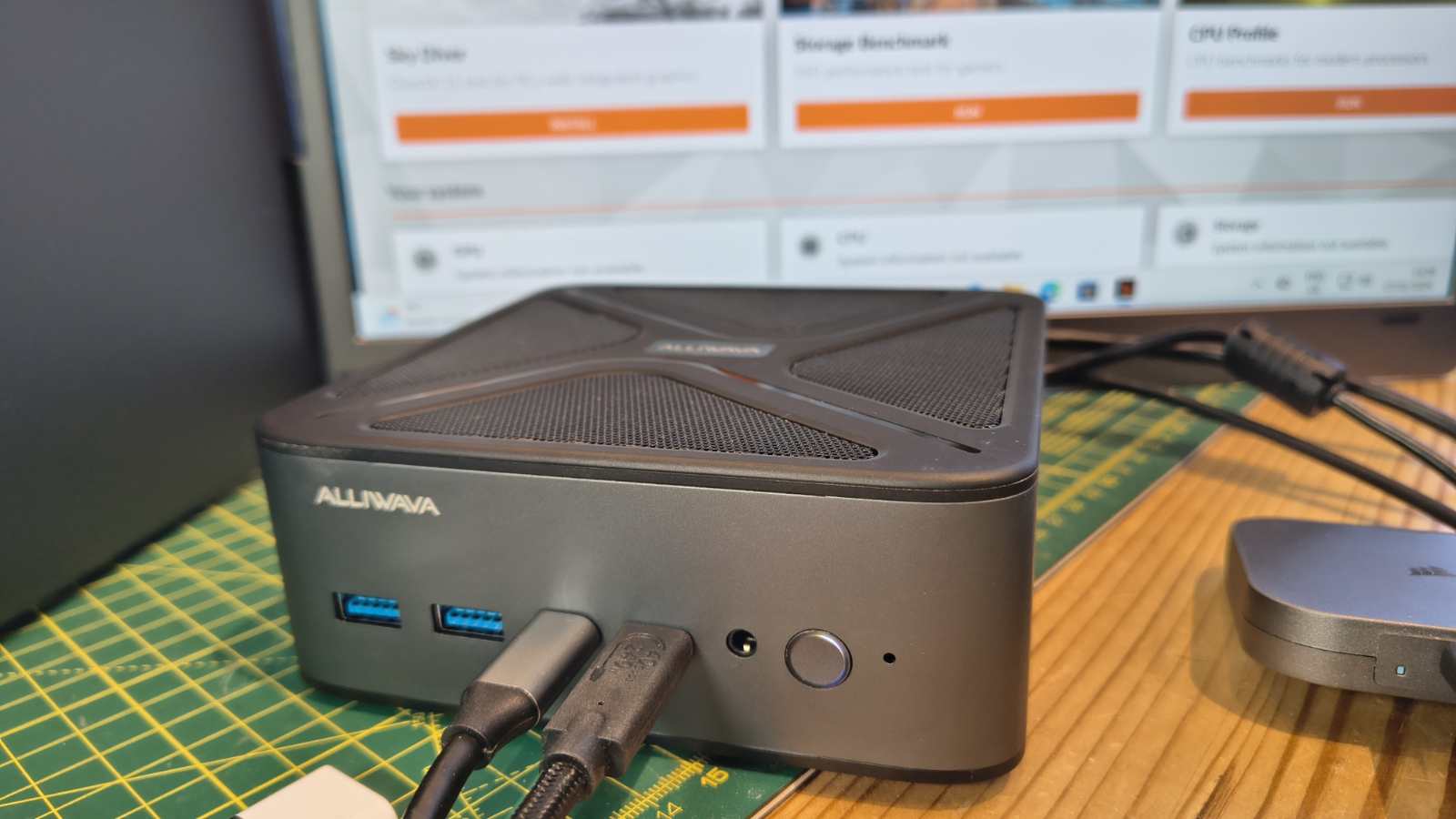
A notable issue, similar to the U58, is the lack of proper port labels on the GH8. The two USB Type-C ports on the front are physically identical but function differently: the left port is USB4, while the right is only USB 3.2 Gen 2. The reason for this discrepancy, especially when the processor supports two USB4 ports by default, is unclear.
Another curious decision is the inclusion of a PCI Gen 3 M.2 drive, despite the system having Gen 4 M.2 slots. When tested with an external Corsair EX400U USB4 SSD, the external drive outperformed the internal drive in both read and write speeds, indicating that booting from the EX400U would be faster.
This choice appears to limit the GH8’s potential without a clear benefit, possibly related to power considerations. Similar to the U58, this Alliwava mini PC exhibits a few technically questionable decisions, though fewer in number.
A significant improvement over the U58 is the Radeon 780M GPU, which offers substantially better performance than the older Vega 8, being at least twice as fast in graphics benchmarks, though only marginally quicker than the prior 680M. While not transforming the GH8 into a dedicated gaming or CAD system, it provides a marked improvement over many integrated graphics solutions, even if newer Radeon 8060S GPUs have surpassed it.
Using the USB Type-C DisplayPort Alternate mode, the system can support up to four monitors: two via the USB-C ports and one each from the HDMI and DisplayPort outputs.
Aside from the confusing USB-C port configuration and the absence of port labels, the hardware in this mini PC is generally capable and should deliver a satisfactory user experience.
Performance
The AMD Ryzen 9 8945HS platform allows for configurable power ratings, which can impact performance. The GH8 defaults to 45W, but for testing, it was set to the maximum of 54W. This adjustment resulted in minor performance improvements in some benchmarks without significantly increasing fan noise. The BIOS also supports overclocking, which was not attempted during testing. The 45W setting yields nearly identical results, with less than a 5% overall variation.
For comparison, the recently reviewed Alliwava U58, featuring an older Ryzen chip and DDR4 memory, was used. The GH8, at more than double the price for similar memory and storage capacity, offers significantly better processor and GPU performance, which the U58 cannot match. If cost were the primary factor, the U58 might offer better value, but it lacks the raw power of the GH8.
The U58 did slightly outperform the GH8 in the CrystalMark test for the NVMe drive. This is attributed to the GH8 using a Gen 3 drive in a Gen 4 slot. To confirm the Gen 4 capability, a Kioxia Exceria Plus 1TB Gen 4 drive was installed in the second M.2 slot, achieving its maximum sequential read speed of over 5,000 MB/s, proving the boot drive’s slower performance was due to its specification, not the slot itself.
From the perspective of the Windows Experience Index, there is little difference between these systems, which likely reflects the tool’s limitations rather than actual performance. The PCMark test shows a greater, though still modest, difference.
Users with demanding applications that benefit from enhanced performance will appreciate the GH8. However, for basic tasks like office applications and web browsing, the performance difference might not be noticeable.
Comparing with other mini PCs, the GH8 delivers good benchmark scores, but some machines, such as the Chuwi AuBox and Maxtang FP750 (both using AMD Ryzen 7 8745HS/8845HS), and even the GMKtec K6 (AMD Ryzen 7 7840HS), have shown better results. Therefore, while the GH8 performs well, it is not exceptionally unique in its class.
Final Verdict
The GH8 is an improvement over the U58, though it retains some characteristic issues seen in Alliwava hardware. These include not fully implementing inherent features and a casual approach to correctly labeling ports.
The GH8 has fewer feature oversights, but the lack of clear port labeling is still a problem, especially with two physically identical USB-C ports having different specifications.
Many other mini PCs built on the same AMD Ryzen 9 8945HS platform typically include two USB 4.0 ports and sufficient PCIe lanes for an Oculink port, features absent in the GH8.
A positive aspect is the inclusion of an additional M.2 slot, even if the system ships with a Gen 3 NVMe drive when both M.2 slots are Gen 4 capable. To maximize hardware potential, investing in a Gen 4 drive and cloning the system to it would be beneficial.
This suggestion, however, slightly undermines one of the GH8’s main selling points: its affordable price. The cost difference between a Gen 3 and Gen 4 drive might be minimal for a system builder, but it could add an extra $100 for the end-user to achieve optimal performance.
Despite these points, the GH8 remains a highly affordable NUC, offering solid performance out of the box, capable of handling office applications and more demanding tasks.
Should You Buy the Alliwava GH8?
If you want a medium-cost NUC Not super-cheap but still affordable, the GH8 has a specification that users who need a touch more performance would appreciate. With a single USB4 port, it can be used effectively with a docking station, and the graphics performance is a notch up from entry-level integrated GPUs.
If you need a flexible NUC Compared to some NUC designs, this one is reasonably flexible. With two 2.5GbE LAN ports, it could be used as a hardware firewall, a media server, or in a dozen other contexts. The power and performance of this platform allow it to drive up to four monitors for promotional graphics, and it has more than enough power for typical office tasks.
Don’t buy it if…
You want ultimate performance. Those wanting the most powerful mini systems need to look at machines that use the AMD Ryzen AI platforms, the best of which is the AMD Ryzen AI Max+ 395, with 16 cores and 32 threads. These offer dramatically more power, fast memory technology and AI performance. But these features come at a higher price.
Also Consider
The GMKtec NucBox K11 mini PC utilizes the same platform as the GH8 but includes additional features like Oculink. It performed better in testing, partly due to its use of a Gen 4 SSD instead of a Gen 3. While slightly more expensive than the GH8, it offers a marginally better-specced NUC for the price.
