




A new feature is under development to present direct results within the address bar as a user types. This aims to allow users to bypass traditional search results pages and quickly reach the desired website or information.
Most major browsers currently offer “search suggestions.” This functionality provides real-time search recommendations from the user’s selected search engine while typing in the address bar.
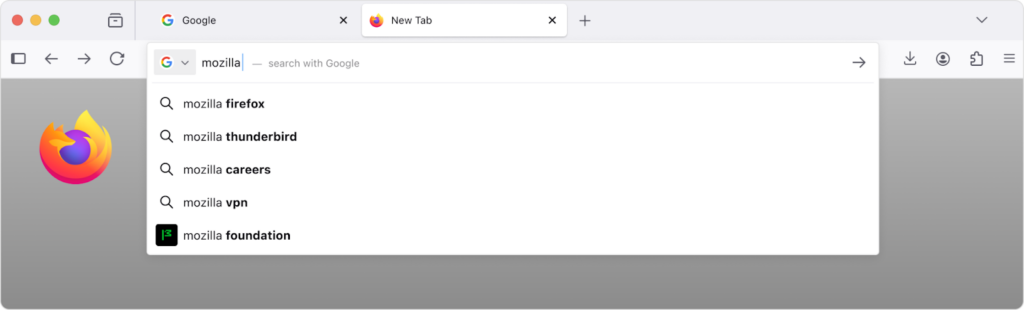
While helpful, these suggestions typically direct users to a search engine results page, which may not be the ultimate destination or information sought. This approach benefits the search provider more than the user.
For instance, although flight status summaries on a search results page are useful, displaying this information directly in the address bar would offer greater convenience:
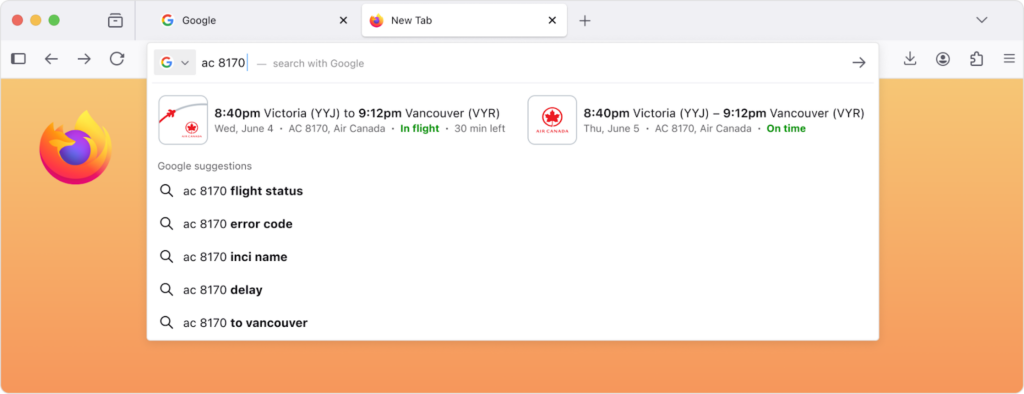
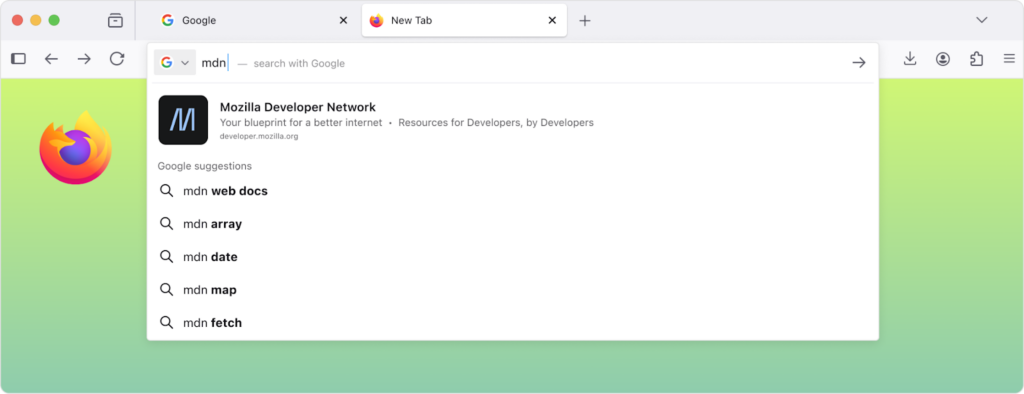
Similarly, users often search for websites when the precise URL is unknown or forgotten. The goal is to eliminate the need for an intermediate search.
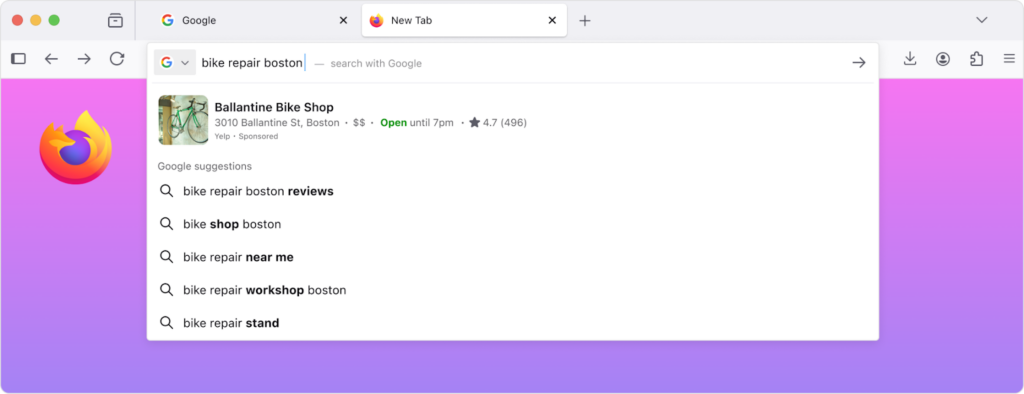
Another frequent scenario involves searching for recommendations, where Firefox can present highly relevant results sourced from various online platforms:
Currently, browser address bars primarily serve as a gateway to search engines. While search engines are valuable, a single, centralized source for all online discovery does not align with the desired functioning of the web. Firefox maintains its independence, and its address bar reflects this principle.
This concept was explored years ago but not released, due to stringent privacy standards. No design was deemed satisfactory if it involved sending raw queries directly. Although queries are already sent to search engines, Firefox operates on the principle that even its developers should not be able to ascertain user online activity. Unlike many search engines, there is no desire to know individual search patterns, and the aim is to allow global verification that such knowledge is unattainable.
The necessary technical architecture is now in place to meet these standards. When Firefox requests suggestions, it encrypts the query using Oblivious HTTP, a newly developed protocol. The encrypted request is routed through a relay operated by Fastly, which can identify the IP address but not the query text. The text is visible to Mozilla, but not its origin. This allows for direct result delivery or retrieval from a specialized search service. Consequently, no single entity can link a user’s input to their identity.

Firefox will maintain traditional search suggestions for all queries, introducing direct results only when there is high confidence in their relevance to user intent. Similar to search engines, some results might be sponsored to support Firefox, but only if they are highly pertinent, and neither the browser developer nor the sponsor will know the recipient. This approach is anticipated to benefit users and potentially foster a more balanced web by enabling direct collaboration with independent sites, rather than solely relying on search engines for web discovery.
Implementing this at scale presents challenges, requiring significant capacity to manage query volume and servers located near users to prevent noticeable latency. To ensure a smooth experience, the rollout will commence in the United States, with expansion to other regions considered after evaluating performance and user feedback. The feature remains under development and testing, with a gradual rollout planned over the next year.
An experimental version was previously released, which users could activate in settings, alongside a limited set of locally-matched suggestions in certain areas. However, the experimental version lacked sufficient reach to justify further feature development, and the local suggestions suffered from poor relevance and utility due to technical constraints, particularly the size of the local database.
Where this feature is available, it can be disabled by unchecking “Retrieve suggestions as you type” within the “Search” pane of Firefox settings. If this option is not present in a user’s current Firefox version, it can be preemptively disabled by setting browser.urlbar.quicksuggest.online.enabled to false in about:config.
