
Close Menu
    Latest Post

    Verifying 5G Standalone Activation on Your iPhone

    March 1, 2026

    Hands on: the Galaxy S26 and S26 Plus are more of the same for more money

    March 1, 2026

    IronCurtain: A Secure AI Agent Designed to Prevent Rogue Actions

    March 1, 2026
    Facebook X (Twitter) Instagram
    Trending
    • Verifying 5G Standalone Activation on Your iPhone
    • Hands on: the Galaxy S26 and S26 Plus are more of the same for more money
    • IronCurtain: A Secure AI Agent Designed to Prevent Rogue Actions
    • Kwasi Asare’s Entrepreneurial Journey: Risk, Reputation, and Resilience
    • The Rubin Observatory’s alert system sent 800,000 pings on its first night
    • GitHub Actions Now Supports Unzipped Artifact Uploads and Downloads
    • Project Genie: Experimenting with Infinite, Interactive Worlds
    • Text Generation Using Diffusion Models and ROI with LLMs
    Facebook X (Twitter) Instagram Pinterest Vimeo
    NodeTodayNodeToday
    • Home
    • AI
    • Dev
    • Guides
    • Products
    • Security
    • Startups
    • Tech
    • Tools
    NodeTodayNodeToday
    Home»AI»Creating psychological safety in the AI era
    AI

    Creating psychological safety in the AI era

    Samuel AlejandroBy Samuel AlejandroJanuary 5, 2026No Comments3 Mins Read
    Share Facebook Twitter Pinterest LinkedIn Tumblr Reddit Telegram Email
    src 1ahql53 featured
    Share
    Facebook Twitter LinkedIn Pinterest Email

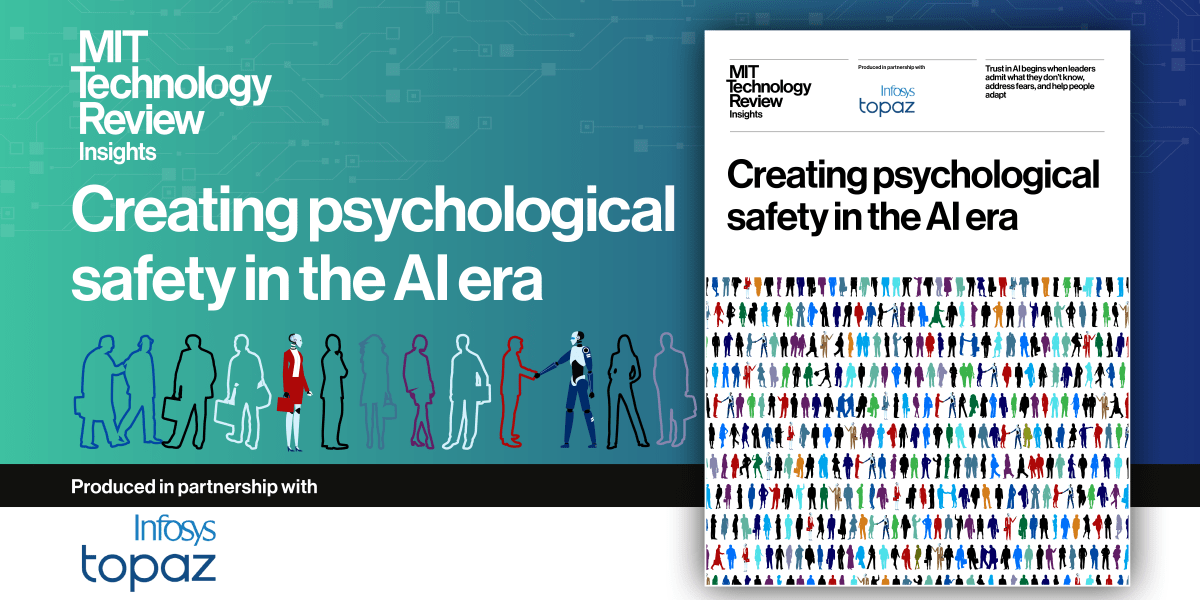
    Implementing enterprise-level AI presents dual challenges: mastering the technology and fostering a company culture that enables employees to fully leverage its benefits. Technical difficulties are substantial, but human factors, such as fear and uncertainty, can be even more impactful, potentially hindering even the most promising AI projects.

    Image 1

    Psychological safety, defined as the ability to express opinions and take calculated risks without fear of professional repercussions, is crucial for successful AI integration. Work environments that prioritize psychological safety allow employees to question assumptions and voice concerns about new technologies without fear of punishment. This is particularly vital when introducing a powerful, emerging technology like AI, which often lacks established best practices.

    Rafee Tarafdar, executive vice president and chief technology officer at Infosys, states that psychological safety is essential in the current AI landscape. He emphasizes that the rapid evolution of AI technology necessitates experimentation, acknowledging that some initiatives will inevitably fail, thus requiring a supportive environment.

    A survey of 500 business leaders by MIT Technology Review Insights aimed to assess the impact of psychological safety on enterprise AI success. The results indicated high self-reported levels of psychological safety, yet also suggested the persistence of fear. Industry experts noted that this discrepancy between stated policy and actual practice might stem from underlying cultural factors that undermine publicly promoted messages of experimentation.

    Establishing psychological safety demands a comprehensive, systems-level strategy, which cannot be achieved solely through human resources initiatives. Organizations must integrate psychological safety deeply into their collaborative workflows and processes.

    Image 2

    Key findings for this report include:

    • Organizations with cultures that encourage experimentation achieve greater success with AI projects. A significant majority of executives surveyed (83%) believe that a company culture prioritizing psychological safety directly enhances the success of AI initiatives. Four out of five leaders concur that organizations promoting such safety are more effective in adopting AI, with 84% noting a link between psychological safety and measurable AI outcomes.
    • Psychological obstacles are emerging as more significant barriers to enterprise AI adoption than technical challenges. While nearly three-quarters (73%) of respondents reported feeling safe to offer honest feedback and express opinions freely in their workplaces, a notable portion (22%) admitted to hesitating to lead an AI project due to concerns about potential blame if it fails.
    • Attaining psychological safety remains an ongoing challenge for many organizations. Less than half of leaders (39%) rated their organization’s current level of psychological safety as ‘very high,’ while another 48% reported a ‘moderate’ degree. This suggests that some enterprises may be pursuing AI adoption on cultural foundations that are not yet fully robust.
    Share. Facebook Twitter Pinterest LinkedIn Tumblr Email
    Previous ArticleExplaining HTML and CSS to a Child: Unexpected Lessons Learned
    Next Article Claude Opus 4.5 Now Generally Available in GitHub Copilot
    Samuel Alejandro

    Related Posts

    AI

    Project Genie: Experimenting with Infinite, Interactive Worlds

    March 1, 2026
    Dev

    Text Generation Using Diffusion Models and ROI with LLMs

    March 1, 2026
    Security

    Enterprise Spotlight: Data Center Modernization

    February 28, 2026
    Add A Comment
    Leave A Reply Cancel Reply

    Latest Post

    ChatGPT Mobile App Surpasses $3 Billion in Consumer Spending

    December 21, 202517 Views

    Automate Your iPhone’s Always-On Display for Better Battery Life and Privacy

    December 21, 202515 Views

    Creator Tayla Cannon Lands $1.1M Investment for Rebuildr PT Software

    December 21, 202514 Views
    Stay In Touch
    • Facebook
    • YouTube
    • TikTok
    • WhatsApp
    • Twitter
    • Instagram
    About

    Welcome to NodeToday, your trusted source for the latest updates in Technology, Artificial Intelligence, and Innovation. We are dedicated to delivering accurate, timely, and insightful content that helps readers stay ahead in a fast-evolving digital world.

    At NodeToday, we cover everything from AI breakthroughs and emerging technologies to product launches, software tools, developer news, and practical guides. Our goal is to simplify complex topics and present them in a clear, engaging, and easy-to-understand way for tech enthusiasts, professionals, and beginners alike.

    Latest Post

    Verifying 5G Standalone Activation on Your iPhone

    March 1, 20264 Views

    Hands on: the Galaxy S26 and S26 Plus are more of the same for more money

    March 1, 20265 Views

    IronCurtain: A Secure AI Agent Designed to Prevent Rogue Actions

    March 1, 20264 Views
    Recent Posts
    • Verifying 5G Standalone Activation on Your iPhone
    • Hands on: the Galaxy S26 and S26 Plus are more of the same for more money
    • IronCurtain: A Secure AI Agent Designed to Prevent Rogue Actions
    • Kwasi Asare’s Entrepreneurial Journey: Risk, Reputation, and Resilience
    • The Rubin Observatory’s alert system sent 800,000 pings on its first night
    Facebook X (Twitter) Instagram Pinterest
    • About Us
    • Contact Us
    • Privacy Policy
    • Terms & Conditions
    • Disclaimer
    • Cookie Policy
    © 2026 NodeToday.

    Type above and press Enter to search. Press Esc to cancel.