
Close Menu
    Latest Post

    Is ChatGPT’s New Shopping Research Solving a Problem, or Creating One?

    January 9, 2026

    How GitHub Engineers Address Platform Challenges

    January 9, 2026

    Key CSS Developments: Conditional View Transitions, Text Effects, and Community Insights

    January 9, 2026
    Facebook X (Twitter) Instagram
    Trending
    • Is ChatGPT’s New Shopping Research Solving a Problem, or Creating One?
    • How GitHub Engineers Address Platform Challenges
    • Key CSS Developments: Conditional View Transitions, Text Effects, and Community Insights
    • As RAM prices skyrocket and Windows 11 flounders, Linux gains native NVIDIA GeForce NOW support — turning the cloud into a sanctuary for priced-out gamers
    • Honor Magic 8 Pro: A Contender in the Flagship Smartphone Arena
    • United States Withdraws from International Cybersecurity Organizations
    • Lego Introduces Tech-Enhanced Smart Bricks Amidst Expert Concerns
    • Build Resilient Generative AI Agents
    Facebook X (Twitter) Instagram Pinterest Vimeo
    NodeTodayNodeToday
    • Home
    • AI
    • Dev
    • Guides
    • Products
    • Security
    • Startups
    • Tech
    • Tools
    NodeTodayNodeToday
    Home»Tools»Enhancing Firefox Security with Snapshot Fuzzing for IPC
    Tools

    Enhancing Firefox Security with Snapshot Fuzzing for IPC

    Samuel AlejandroBy Samuel AlejandroDecember 21, 2025Updated:December 22, 2025No Comments3 Mins Read
    Share Facebook Twitter Pinterest LinkedIn Tumblr Reddit Telegram Email
    src 1dx3bh3 featured
    Share
    Facebook Twitter LinkedIn Pinterest Email

    Firefox’s security model fundamentally relies on process separation. Rather than operating as a single entity, Firefox uses multiple processes, each with distinct privileges, communicating through Inter-Process Communication (IPC). For instance, tasks like loading, processing, and rendering a website occur within an isolated Content Process, which operates under a highly restrictive sandbox. Conversely, critical actions such as file system access are exclusively handled by the Parent Process.

    Executing potentially malicious code with reduced privileges helps to lessen the impact of any code execution vulnerability. To achieve complete control, an attacker must then discover a secondary vulnerability that enables bypassing these privilege limitations, a technique commonly referred to as a “sandbox escape.”

    An attacker typically has two primary methods to achieve a sandbox escape. One approach involves directly attacking the underlying operating system from within a compromised content process. As all processes must interact with the operating system for various functions, an attacker might target vulnerabilities in these interfaces to escalate privileges.

    With changes already implemented in Firefox that significantly restrict the operating system interfaces accessible to low-privilege processes, the second attack vector gains prominence: exploiting vulnerabilities in privileged IPC endpoints. Because low-privilege content processes must communicate with the privileged parent process, the parent necessarily exposes specific interfaces.

    Should these interfaces lack adequate security checks or contain memory safety flaws, a content process could potentially exploit them. This exploitation might allow the process to execute actions with elevated privileges, potentially resulting in a complete takeover of the parent process.

    Fuzzing has historically been a successful method for Mozilla, uncovering various issues, including security vulnerabilities within its codebase. Nevertheless, applying fuzzing to critical IPC interfaces has consistently presented challenges. This difficulty stems mainly from the fact that IPC interfaces cannot be tested in isolation, necessitating a full browser environment for testing. Additionally, improper use of IPC interfaces can trigger browser restarts, introducing significant latency between fuzzing iterations.

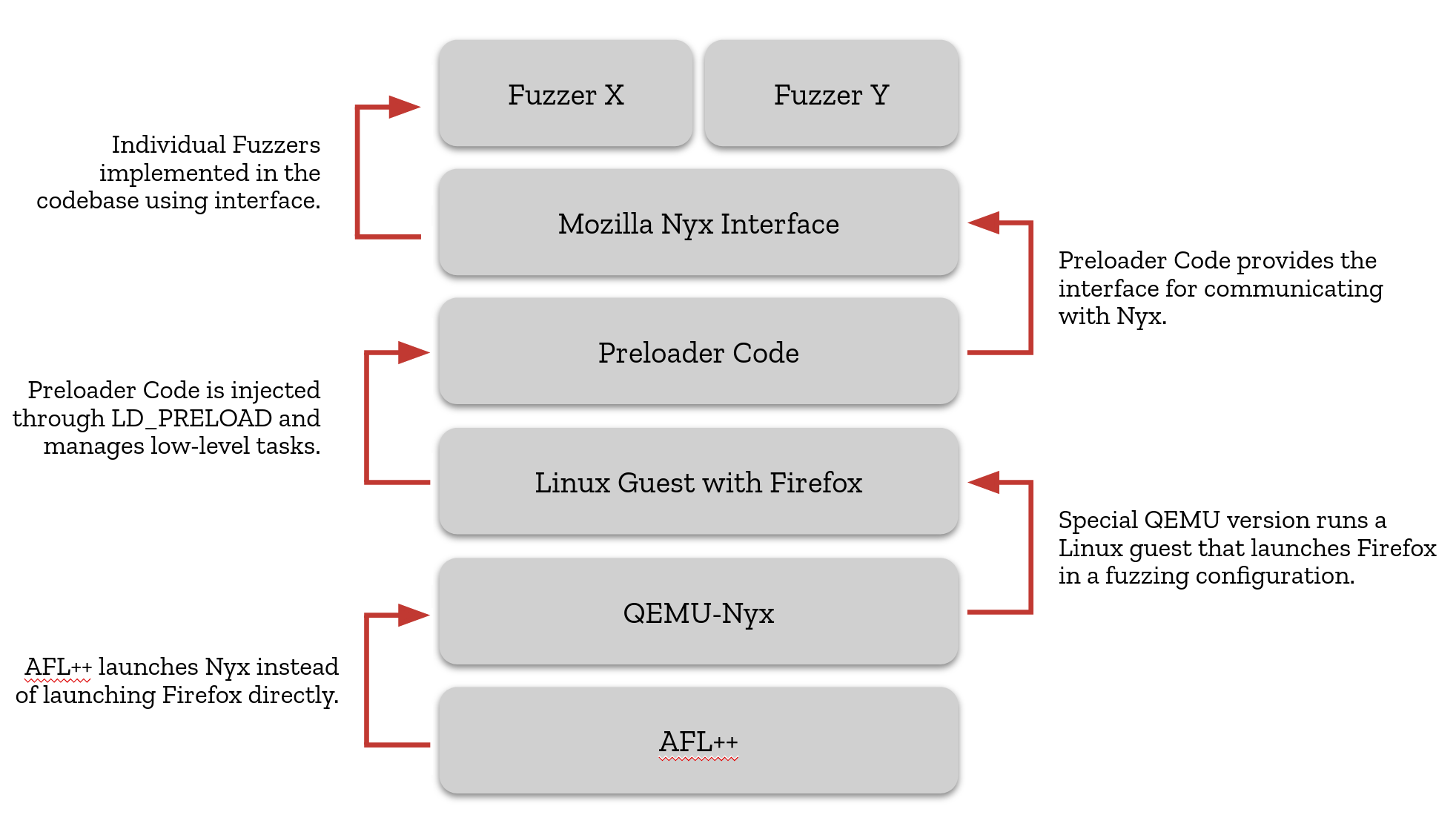
    To address this challenge, collaboration with the research community led to the adoption of a novel method for rewinding application state during fuzzing. Initial successes with this technique emerged in 2021, utilizing an experimental prototype that eventually evolved into the open-source snapshot fuzzing tool named “Nyx”.

    As of 2024, various snapshot fuzzing targets for IPC are now operational in production. Snapshot fuzzing represents a relatively new technology that has gained traction in recent years, and its transition from a theoretical concept to practical application has been a significant achievement.

    This technology has already facilitated the identification and resolution of several potential issues within the IPC layer. Efforts to enhance testing will continue, aiming to deliver the most secure version of Firefox.

    Share. Facebook Twitter Pinterest LinkedIn Tumblr Email
    Previous ArticleFirefox Enhancements: Private Web Translations and Customizable App Icons
    Next Article How AIM taught the internet to chat
    Samuel Alejandro

    Related Posts

    Tools

    How GitHub Engineers Address Platform Challenges

    January 9, 2026
    Tools

    Build Resilient Generative AI Agents

    January 8, 2026
    Tools

    Managing Cloudflare at Enterprise Scale with Infrastructure as Code and Shift-Left Principles

    January 8, 2026
    Add A Comment
    Leave A Reply Cancel Reply

    Latest Post

    ChatGPT Mobile App Surpasses $3 Billion in Consumer Spending

    December 21, 202512 Views

    Automate Your iPhone’s Always-On Display for Better Battery Life and Privacy

    December 21, 202510 Views

    Creator Tayla Cannon Lands $1.1M Investment for Rebuildr PT Software

    December 21, 20259 Views
    Stay In Touch
    • Facebook
    • YouTube
    • TikTok
    • WhatsApp
    • Twitter
    • Instagram
    About

    Welcome to NodeToday, your trusted source for the latest updates in Technology, Artificial Intelligence, and Innovation. We are dedicated to delivering accurate, timely, and insightful content that helps readers stay ahead in a fast-evolving digital world.

    At NodeToday, we cover everything from AI breakthroughs and emerging technologies to product launches, software tools, developer news, and practical guides. Our goal is to simplify complex topics and present them in a clear, engaging, and easy-to-understand way for tech enthusiasts, professionals, and beginners alike.

    Latest Post

    Is ChatGPT’s New Shopping Research Solving a Problem, or Creating One?

    January 9, 20260 Views

    How GitHub Engineers Address Platform Challenges

    January 9, 20260 Views

    Key CSS Developments: Conditional View Transitions, Text Effects, and Community Insights

    January 9, 20260 Views
    Recent Posts
    • Is ChatGPT’s New Shopping Research Solving a Problem, or Creating One?
    • How GitHub Engineers Address Platform Challenges
    • Key CSS Developments: Conditional View Transitions, Text Effects, and Community Insights
    • As RAM prices skyrocket and Windows 11 flounders, Linux gains native NVIDIA GeForce NOW support — turning the cloud into a sanctuary for priced-out gamers
    • Honor Magic 8 Pro: A Contender in the Flagship Smartphone Arena
    Facebook X (Twitter) Instagram Pinterest
    • About Us
    • Contact Us
    • Privacy Policy
    • Terms & Conditions
    • Disclaimer
    • Cookie Policy
    © 2026 NodeToday.

    Type above and press Enter to search. Press Esc to cancel.