
Close Menu
    Latest Post

    Is ChatGPT’s New Shopping Research Solving a Problem, or Creating One?

    January 9, 2026

    How GitHub Engineers Address Platform Challenges

    January 9, 2026

    Key CSS Developments: Conditional View Transitions, Text Effects, and Community Insights

    January 9, 2026
    Facebook X (Twitter) Instagram
    Trending
    • Is ChatGPT’s New Shopping Research Solving a Problem, or Creating One?
    • How GitHub Engineers Address Platform Challenges
    • Key CSS Developments: Conditional View Transitions, Text Effects, and Community Insights
    • As RAM prices skyrocket and Windows 11 flounders, Linux gains native NVIDIA GeForce NOW support — turning the cloud into a sanctuary for priced-out gamers
    • Honor Magic 8 Pro: A Contender in the Flagship Smartphone Arena
    • United States Withdraws from International Cybersecurity Organizations
    • Lego Introduces Tech-Enhanced Smart Bricks Amidst Expert Concerns
    • Build Resilient Generative AI Agents
    Facebook X (Twitter) Instagram Pinterest Vimeo
    NodeTodayNodeToday
    • Home
    • AI
    • Dev
    • Guides
    • Products
    • Security
    • Startups
    • Tech
    • Tools
    NodeTodayNodeToday
    Home»Startups»New mathematical framework reshapes debate over simulation hypothesis
    Startups

    New mathematical framework reshapes debate over simulation hypothesis

    Samuel AlejandroBy Samuel AlejandroDecember 21, 2025Updated:December 22, 2025No Comments3 Mins Read
    Share Facebook Twitter Pinterest LinkedIn Tumblr Reddit Telegram Email
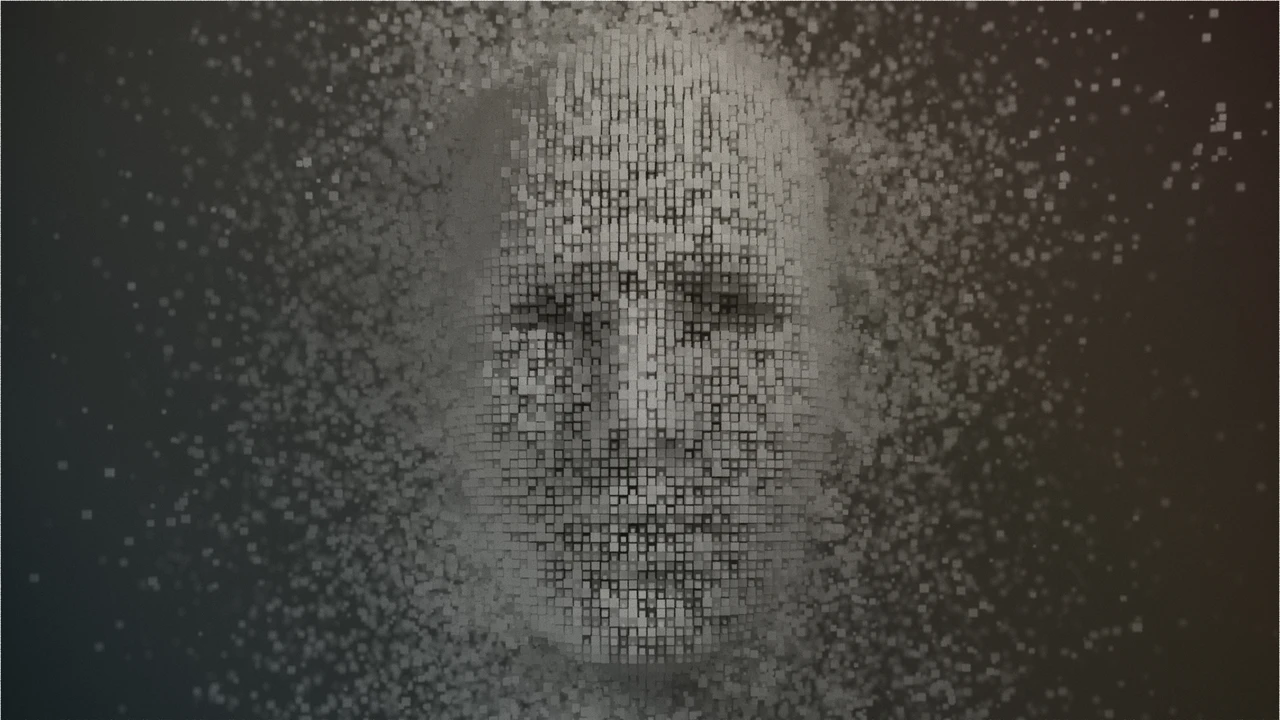
    src h0dxag featured
    Share
    Facebook Twitter LinkedIn Pinterest Email

    The simulation hypothesis, suggesting our universe could be an artificial construct on an advanced computer, has fascinated many. However, discussions often rely on intuition without clear definitions or a formal understanding of what ‘simulation’ truly entails.

    SFI Professor David Wolpert addresses this gap in a new paper published in Journal of Physics: Complexity. Wolpert presents the first mathematically rigorous framework for defining how one universe might simulate another. His analysis reveals that several long-held beliefs about simulations do not hold up under formal scrutiny. The findings suggest a more complex reality than previously imagined, even allowing for a universe capable of simulating another to be perfectly replicated within its own simulation.

    Wolpert states, “This entire debate lacked basic mathematical scaffolding. Once you build that scaffolding, the problem becomes clearer — and far more interesting.”

    His approach involves a fundamental shift: viewing universes not as physical systems with unknown internal mechanisms, but as types of computers. This perspective grounds the model in the physical Church–Turing thesis, which posits that any observable physical process can, in theory, be replicated by a standard computer program. Through this lens, the simulation question transforms into a computational one, with mathematics, rather than speculation, defining the limits of what is possible.

    This computational framing allows Wolpert to apply Kleene’s second recursion theorem, a classic computer science result explaining how a program can generate and execute an exact copy of itself. When this theorem is extended to entire universes, a surprising implication emerges: if one universe can accurately simulate another, there is nothing to prevent the simulated universe from simulating the first in return. Under specific conditions, the two become mathematically indistinguishable, dismantling the traditional hierarchy of ‘higher’ and ‘lower’ realities.

    The framework also challenges the common assumption that deeper levels of simulation must be computationally weaker than the levels above them, an argument often used to suggest that such chains must eventually end. Wolpert demonstrates that mathematics does not require this: simulations do not necessarily degrade, and infinite chains of simulated universes remain entirely consistent within the theory.

    This research does not provide experimental tests or predictions. Instead, it establishes a conceptual foundation for future work by philosophers, physicists, and computer scientists. By formalizing the simulation hypothesis, the framework also opens up new avenues of inquiry. For instance, it prompts questions about the possibility of not only infinite chains of simulated universes (where one universe contains a computer simulating another, and so on) but also closed loops of universes simulating each other. Other questions arise concerning how the framework alters philosophical concepts of identity, by suggesting the potential for multiple versions of an individual existing across different simulations, all of whom are mathematically considered the same ‘you’.

    Wolpert concludes, “You think you’re asking a simple question — are we in a simulation? — but once you formalize it, an entire landscape of new questions opens up. It turns out the structure beneath the idea is richer than anyone realized.”

    Share. Facebook Twitter Pinterest LinkedIn Tumblr Email
    Previous ArticleTransformation of Brain Station 23, Lessons from Kaz’s Wahid Choudhury, Accelerating Asia’s New Cohort, and Khaas Food’s Retail Ambition
    Next Article Onnorokom Uddokta Launches Applications for Second Cohort Following Significant Growth in First Batch
    Samuel Alejandro

    Related Posts

    Startups

    Medium’s CEO Details Path to Profitability After $2.6M Monthly Losses

    January 7, 2026
    Startups

    Rami Al Idrissi: A Leader in SCADA, Cybersecurity, and Renewable Energy

    January 7, 2026
    Startups

    Fun graph from Peter Attia’s book Outlive

    January 6, 2026
    Add A Comment
    Leave A Reply Cancel Reply

    Latest Post

    ChatGPT Mobile App Surpasses $3 Billion in Consumer Spending

    December 21, 202512 Views

    Automate Your iPhone’s Always-On Display for Better Battery Life and Privacy

    December 21, 202510 Views

    Creator Tayla Cannon Lands $1.1M Investment for Rebuildr PT Software

    December 21, 20259 Views
    Stay In Touch
    • Facebook
    • YouTube
    • TikTok
    • WhatsApp
    • Twitter
    • Instagram
    About

    Welcome to NodeToday, your trusted source for the latest updates in Technology, Artificial Intelligence, and Innovation. We are dedicated to delivering accurate, timely, and insightful content that helps readers stay ahead in a fast-evolving digital world.

    At NodeToday, we cover everything from AI breakthroughs and emerging technologies to product launches, software tools, developer news, and practical guides. Our goal is to simplify complex topics and present them in a clear, engaging, and easy-to-understand way for tech enthusiasts, professionals, and beginners alike.

    Latest Post

    Is ChatGPT’s New Shopping Research Solving a Problem, or Creating One?

    January 9, 20260 Views

    How GitHub Engineers Address Platform Challenges

    January 9, 20260 Views

    Key CSS Developments: Conditional View Transitions, Text Effects, and Community Insights

    January 9, 20260 Views
    Recent Posts
    • Is ChatGPT’s New Shopping Research Solving a Problem, or Creating One?
    • How GitHub Engineers Address Platform Challenges
    • Key CSS Developments: Conditional View Transitions, Text Effects, and Community Insights
    • As RAM prices skyrocket and Windows 11 flounders, Linux gains native NVIDIA GeForce NOW support — turning the cloud into a sanctuary for priced-out gamers
    • Honor Magic 8 Pro: A Contender in the Flagship Smartphone Arena
    Facebook X (Twitter) Instagram Pinterest
    • About Us
    • Contact Us
    • Privacy Policy
    • Terms & Conditions
    • Disclaimer
    • Cookie Policy
    © 2026 NodeToday.

    Type above and press Enter to search. Press Esc to cancel.