


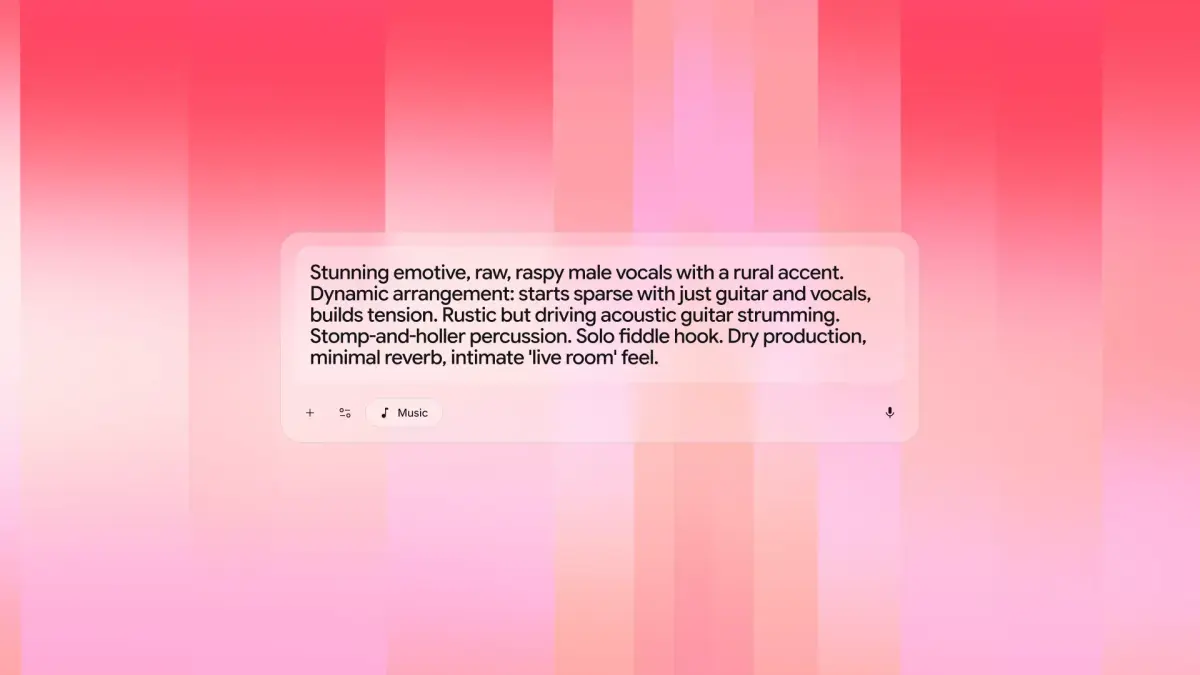

Google continues to expand its suite of AI tools with the introduction of Lyria 3, a new AI music generator. Launched recently, Lyria 3 represents a significant enhancement over previous iterations, simplifying the music creation process for users. This tool is capable of generating high-fidelity, 30-second audio tracks across diverse genres, ranging from brief jingles and lo-fi beats to more intricate musical compositions.
Accessing Lyria 3 for Free
Lyria 3 is currently accessible within the Gemini desktop application, with a mobile app rollout anticipated soon. The tool is free for all users aged 18 and above and supports multiple languages, including English, German, Spanish, French, Hindi, Japanese, Korean, and Portuguese, with more languages planned for future integration.
To begin, users can navigate to the Gemini app and locate the “Music” option, identified by a music note icon, within the “Tools” dropdown menu. A Lyria 3 prompt guide is also available to assist new users.
Understanding Lyria 3’s Functionality

Lyria 3 is capable of generating a 30-second song from a straightforward text, image, audio, or video prompt. Users have the ability to specify the music style, vocals, and tempo directly within their prompt. A notable feature is Lyria 3’s capacity to generate lyrics based on the provided prompt, eliminating the need for users to supply their own. Additionally, Nano Banana can produce accompanying album artwork.
For those looking to synchronize music with visual content, Lyria 3 allows for the upload of photos or videos alongside prompts. This functionality enables creators to quickly generate custom music tracks for their visual media.
An optional template feature offers dynamic suggestions for users seeking inspiration when creating AI-generated songs.
Google states that all music tracks produced within the Gemini app are embedded with a SynthID watermark, indicating their AI-generated origin.
While Lyria 3 is available to free users, subscribers to Google AI Plus and AI Ultra will benefit from increased usage limits.
Copyright Considerations
The AI industry, including models like Lyria 3, has faced criticism from musicians and music publishers regarding the use of copyright-protected works for training without explicit permission or compensation. Numerous lawsuits addressing these concerns are currently progressing through the legal system, with most AI companies asserting that such training falls under fair use.
While major tech companies typically refrain from disclosing specific training data for their advanced models, Google has stated its awareness of musical copyrights. A Google blog post announcing Lyria 3 emphasized the company’s careful consideration of copyright and partner agreements during the model’s training.
Google further clarifies that Lyria is not designed to imitate existing artists. Users are provided with a mechanism to report content if they believe it infringes upon their rights.
The blog post details that Lyria 3’s music generation aims for original expression rather than artist mimicry. If a prompt includes an artist’s name, Gemini interprets this as broad creative inspiration to produce a track with a similar style or mood. Filters are also in place to compare outputs against existing content. Google acknowledges that this approach may not be infallible, and users can report any content that might violate intellectual property or privacy rights. Furthermore, users must adhere to Google’s Terms of Service and Gen AI prohibited use policies, which explicitly forbid such violations.
