


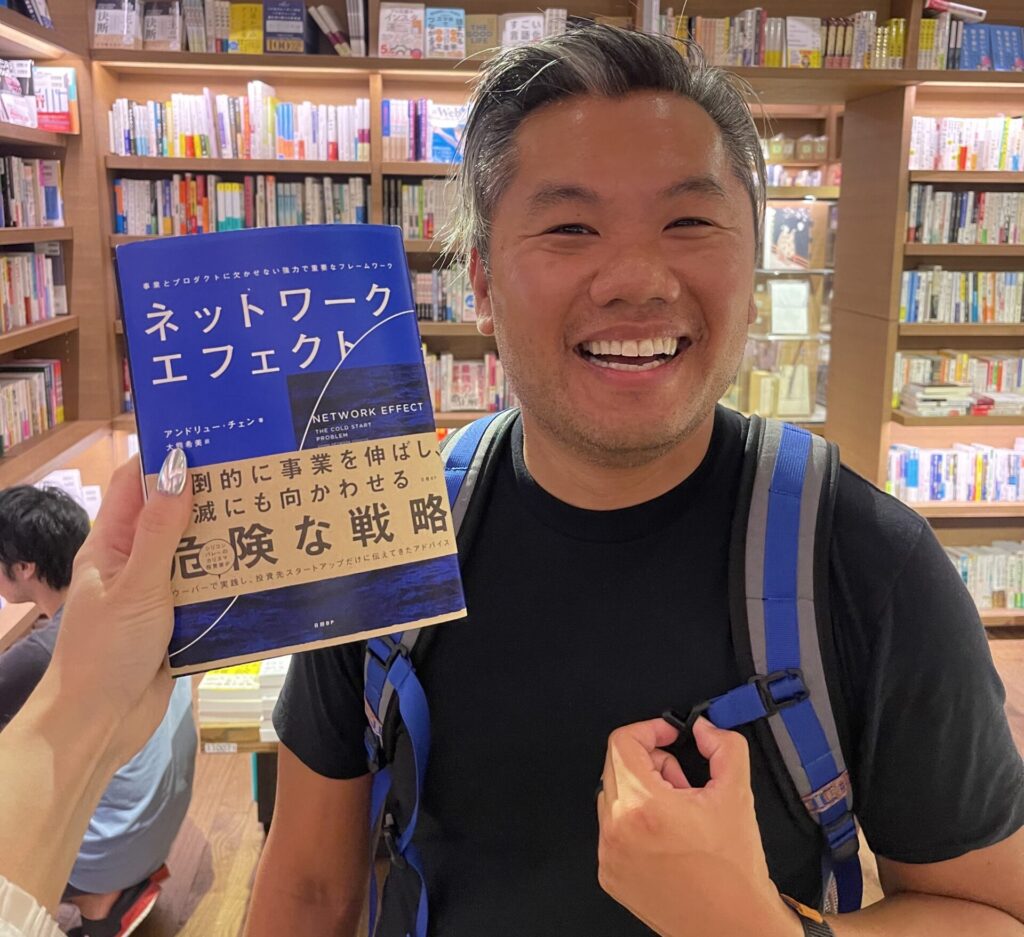
Two years ago, a book titled THE COLD START PROBLEM was published. This book explores why certain products like YouTube, Instagram, Uber, Slack, and Dropbox achieve massive user bases, offering a comprehensive theory of network effects—a concept frequently mentioned in tech but often misunderstood. The book has been successful, reaching a dozen markets and translated into multiple languages, including Japanese, Chinese, Spanish, and Russian.
During its launch week, readers shared many positive images: 
While the experience was rewarding, the author expressed a strong sentiment against writing another book, though acknowledging that one should ‘never say never.’
The creative journey for the book was extensive and complex. This article delves into the challenging behind-the-scenes process of writing such a book, detailing the creative stages, key milestones, and lessons learned.
This insight is intended to be helpful for anyone considering a significant writing project.
The following points will be discussed:
- Month 0: At first, writing a book seems like a fun idea (until you figure out it’s not)
- Month 1-6: Finding an agent, writing a proposal, and opening up your Christmas presents early
- Month 6-12: Collecting and organizing the ideas — lots of fun chats, reconnecting with colleagues, talking to great people
- Month 12: How to write the initial the outline, then the mega-outline — finding the formula
- Month 12-24: The very messy middle, the trough of sorrow, the hard slog, followed by trench warfare (yes, it’s 3-5 years to write a book)
- Month 24-36: Why you’ll feel insecure about the creative process
- Final months: Just ship it already
Links to various intermediate content will be provided, though some confidential materials like interview notes cannot be shared. Here are a few notable examples:
- Initial book proposal (then called MOONSHOT). First thing written!
- First book outline. Very very rough set of topics set across 3 pages
- Mega outline. 30 pages that needed to be expanded to 300 pages
The journey begins now.
Month 0: At first, writing a book seems like a fun idea (until you figure out it’s not)
By mid-2018, after a decade of blogging, the author sought a new creative challenge. Observing the professional success of other authors, such as Elad Gil, Ben Horowitz, and Scott Kupor, who had published books, inspired the author to consider a similar undertaking. The motivation was split between a desire for a creative challenge and an interest in the professional benefits observed in others.
Two main approaches guided the selection of the book’s topic. One involved expanding on common industry jargon, similar to previous definitive blog posts on ‘growth hacking,’ ‘CAC/LTV,’ and ‘viral loops.’ Potential topics included ‘power users,’ ‘network effects,’ ‘product/market fit,’ or ‘MVP,’ all of which lacked deep theoretical exploration despite frequent use.
The second approach focused on answering fundamental ‘why’ questions. The author opted for a niche topic aimed at founders and executives, rather than a broad subject like general career advice or business startup guides, which were deemed too expansive.
Ultimately, network effects were chosen due to their significance, the author’s unique perspective, and the potential to integrate previous work on growth. Discussions with colleagues at a16z led to the recommendation of starting with a book proposal.
Month 1-6: Finding an agent, writing a proposal, and opening up your Christmas presents early
With assistance from the a16z team, including Hanne Winarsky, the author began meeting agents. This led to a partnership with Chris Parris-Lamb from Gernert, known for representing authors like Peter Thiel and Pete Buttigieg. A book proposal, initially titled MOONSHOT, was submitted, structured similarly to a business plan:
- Overview
- Chapter summaries
- The market
- Author bio
- Competitive books
An agreement was quickly reached to collaborate and solicit offers from various publishers. The process, managed by Chris, resembled a streamlined version of venture capital fundraising:
- Chris approached publishers and sent along the book proposal
- They read the proposal and asked for 30 minutes of time
- Calls were held where detailed questions were asked, indicating thorough review of the proposals
- Later, offers were submitted (approximately 7 received)
- Chris then took the top half of the offers, and gave them a second chance to bid again
- The top 2 bids were close, but the author chose to work with Hollis Heimbouch at Harper Business
The decision to work with Hollis Heimbouch at Harper Business was based on her esteemed reputation, having collaborated with prominent authors such as Jim Collins, Clay Christensen, and Satya Nadella. Her previous successful work with Ben Horowitz’s book also influenced this choice. The author received a high six-figure advance, considered substantial for a debut author, disbursed in installments tied to project milestones.
This initial phase spanned approximately 3-4 months. The author likened this period to ‘opening up Christmas gifts early,’ enjoying the positive momentum of selling the book without yet undertaking the writing. However, the demanding work was soon to begin.
Month 6-12: Collecting and organizing the ideas — lots of fun chats, reconnecting with colleagues, talking to great people
The remainder of the first year involved extensive primary research. The author conducted numerous short interviews with respected individuals, often collaborating with Li Jin. These discussions involved open-ended questions, gathering stories, and meticulous note-taking.
Recognizing readers’ desire for strong opinions, the author theorized that collecting such insights could form the core of the book. Concise, opinionated statements, suitable for a tweet, title, or opening paragraph, were meticulously recorded. Examples included ‘launching with Techcrunch is stupid’ or ‘never build a social network, it’s just too hard.’
All interview data was logged in a spreadsheet, linking to individual notes and summaries: 

Over 200 interviews were conducted with industry professionals, resulting in a vast collection of opinions and ideas. Despite the initial disorganization, valuable insights emerged. Later, interviews with senior figures, including founders and CEOs of companies like Slack, YouTube, Twitch, Tinder, Dropbox, Zoom, and LinkedIn, provided compelling stories that became central to the book. These interactions were among the most memorable aspects of the writing process.
Month 12: How to write the initial the outline, then the mega-outline — finding the formula
Faced with hundreds of pages of interview notes, research, and unorganized ideas, an organizing principle was essential to make the content coherent. The author analyzed successful business books like Lean Startup, Crossing the Chasm, and Innovator’s Dilemma to identify common structural formulas.
A recurring structure in many business books typically includes:
- Opening story
- Describe a big problem/dilemma/question
- Present a framework
- Go through one part of the framework
- Start with an anecdote
- Then describe the theory
- Go through another part
- Then another part
- Then again…
- Conclusion
While not universal, this structure is widely adopted. The author adopted a similar approach for the initial outline, resulting in this concise version: The first book outline.
Ryan Holiday’s detailed account of his book-writing process, including numerous photos, is a valuable resource: How to write a book. He illustrates his method with a photo of note cards, each representing a topic or idea, organized into sections: 
A digital equivalent of this method was created, termed the ‘Mega Outline.’ This document expanded every intended opinion and point into a multi-level bulleted structure.
The initial page provides an overview: 
The complete Mega outline, spanning 30 pages, required a tenfold expansion for each page into written prose. This ratio became clear during the initial chapter writing. The author references George R.R. Martin’s distinction between ‘Architect’ and ‘Gardener’ writers. Architects, like Ryan Holiday and the author, impose structure on initial chaos, building the book systematically. Gardeners, like Martin, allow ideas to evolve organically, which can lead to lengthy writing periods.
Month 12-24: The very messy middle, the trough of sorrow, the hard slog, followed by trench warfare (yes, it’s 3-5 years to write a book)
The period following the first year was particularly challenging, leading the author to focus on lessons learned rather than dwelling on the difficulties. This phase primarily involved translating the mega outline into detailed prose. However, several problems arose:
- Standard writing tools are inadequate for book-length projects. While typical documents like emails or reports are manageable with tools like Microsoft Word or GDocs, a book’s complex structure—multiple parts, chapters, and sections—presents unique challenges. Reorganizing content or tracking word counts across different sections becomes cumbersome. The author ultimately adopted Ulysses, an application that supports nested folders for chapters and sections, syncing content as Markdown files to Dropbox for multi-location access.
- Computers are inherently distracting for writers. While a browser is essential for research, it also provides access to social media and other diversions. Even when watching a research-related video, unrelated content can easily sidetrack attention.
- Implementing distraction-free strategies and devices. To maintain focus, the author employed various tools. A plexiglass timer safe was used to lock away a personal phone for set periods. A dedicated laptop, placed in a separate location and equipped with child-safe filters, blocked distracting websites like Reddit and Twitter. Research was often printed to avoid digital distractions. Additionally, BOOX e-ink Android tablets, capable of running Markdown editors and connecting to Dropbox with a keyboard, were utilized.
- Sacrificing personal time for writing. Meeting self-imposed deadlines necessitated dedicating significant holiday, weekend, and evening hours to writing. While sustained writing for more than 3-4 hours was difficult, consistent progress required waking early, exercising, and writing before noon, even on weekends.
A humorous image shows one of the kSafe timers used to store a phone during writing sessions. The author eventually acquired five such devices for various writing locations: 
This period was an arduous grind, representing the most challenging phase where the temptation to abandon the project was strongest.
Month 24-36: Why you’ll feel insecure about the creative process
The solitary nature of book writing often leads to a point of insecurity. After approximately two years and completing around 10 out of 35 chapters, the author faced self-doubt, questioning the work’s quality without external validation.
Questions that arose included:
- Is this book any good?
- Is the content already widely known?
- Is the book too niche or overly detailed?
- Are the stories genuinely interesting, or too obvious/familiar?
The true quality of a manuscript remains uncertain until a partially completed version is shared with trusted readers. The author received valuable feedback from individuals like Lenny Rachitsky, Sachin Rekhi, and colleagues at a16z, alongside initial reviews from the publisher and agent. This feedback highlighted areas such as a slow start, overly theoretical sections, trite topics, and repetition. While the honesty was brutal, it confirmed that the core material was strong and simply required refinement.
This phase involved the most challenging refactoring. Upon completing rough drafts of all chapters, the manuscript reached approximately 100,000 words, a typical length. While finishing in about three years alongside a demanding job was an achievement, the author noted that significant mid-process rewrites could extend the timeline to five years, a common occurrence. Such refactoring often involves combining chapters, consolidating themes, and ensuring proper flow across a 35-chapter book, a far more complex task than editing a blog post or document.
Final months: Just ship it already
Towards the end, exhaustion set in. Despite satisfaction with the polished early chapters, the lengthy and arduous process led to a strong desire to simply finish and publish. The inherent ‘waterfall’ nature of book publishing means that once submitted and printed, the content is finalized.
An interesting negotiation occurred during the cover design phase. The author collaborated with a designer known for work on Stripe Press books, which often feature small text and unconventional materials due to their boutique nature. The challenge was to balance these artistic preferences with practical publishing considerations.

A surprising discovery was that nearly all US hardcover books are printed by a single company. A Vox article excerpt explains this situation:
Most book printing happens in the US. Books with heavy color printing, like picture books, are sent to China, but in order to keep the cost of shipping low, most publishers do the rest of their printing domestically. That’s getting more and more difficult to manage.
Until 2018, there were three major printing presses in the US. Then one of them, the 125-year-old company Edwards Brothers Malloy, closed. The remaining big two, Quad and LSC, attempted to merge in 2020, but then the Justice Department filed an antitrust lawsuit. Quad responded by getting out of the book business entirely; LSC filed for bankruptcy and sold off a number of its presses. Smaller printers have continued to operate, but the infrastructure to keep up with the demand for printed books in North America is in shambles.
This situation is quite remarkable. Other insights gained during the final stages included:
- Achieving bestseller status now requires approximately 10,000 preorders, a significantly lower threshold than in the past.
- Many books achieve bestseller status through authors purchasing numerous copies of their own work, often using anonymous networks to conceal the practice (a method not employed by this author).
- China, not the US, is the primary market for business books by unit sales, typically showing a 3:1 ratio compared to the US.
- The average book sells only 250-500 copies in its lifetime, with the median possibly a few thousand, indicating generally low sales figures.
In the final months, numerous revisions were exchanged with Hollis and her team at Harper Business. Despite exhaustion, significant polishing assistance was provided by Olivia Moore at a16z, agent Chris, and many others. A comprehensive list of acknowledgments is available in the book.
Marketing considerations for the book began only in the final months. Further insights on this topic may be shared in the future. The author hopes this reflection on a significant 3+ year journey has been informative.
