



TechRadar Verdict
The Chuwi CoreBook Air aligns with the current trend of slim, lightweight 14-inch laptops, offering a capable mid-range CPU with integrated graphics. This configuration handles daily tasks, light multimedia editing, and some gaming effectively, provided it is not overtaxed.
- + Decent 16:10 display
- + Lightweight at just over 1KG
- + Powerful Ryzen CPU
- – No RAM upgrade options
- – Trackpad lacks tactile precision
- – Speakers and webcam are average
Chuwi CoreBook Air: Quick Overview
The Chuwi CoreBook Air presents a familiar yet appealing design, following the trend of premium-feeling 14-inch Windows laptops with an aluminum alloy chassis. Its lightweight and solid construction, combined with impressive specifications for its price point (under £500/$500), make it an attractive option.
Key features include a CPU, GPU, and memory configuration capable of handling productivity applications. The laptop also offers a generous selection of ports. During testing, the battery provided sufficient power for a full day of typical use, including word processing and web browsing. While its mid-range specifications are suitable for most office tasks, the CoreBook Air demonstrated the ability to run applications like Blender and CapCut. However, demanding games such as Indiana Jones and the Great Circle experienced noticeable performance issues.
For general productivity tasks like Excel and PowerPoint, the device capably managed large documents. The 14-inch screen offered excellent clarity and effectively minimized reflections, which is notable for a laptop in this price range.
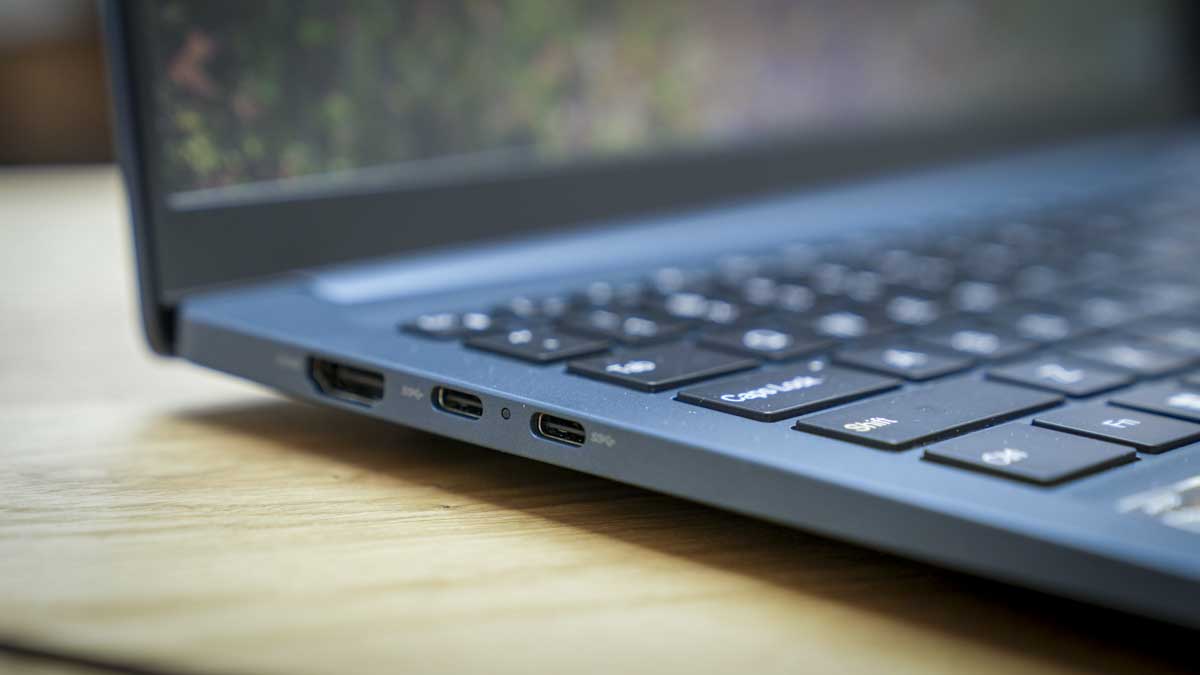
Unlike many budget laptops, the CoreBook Air uses a standard 65W USB-C charger, offering convenient interchangeability. Its three USB-C ports (two on one side, one on the other) and a full-size HDMI port provide extensive connectivity for various accessories, devices, and external displays.
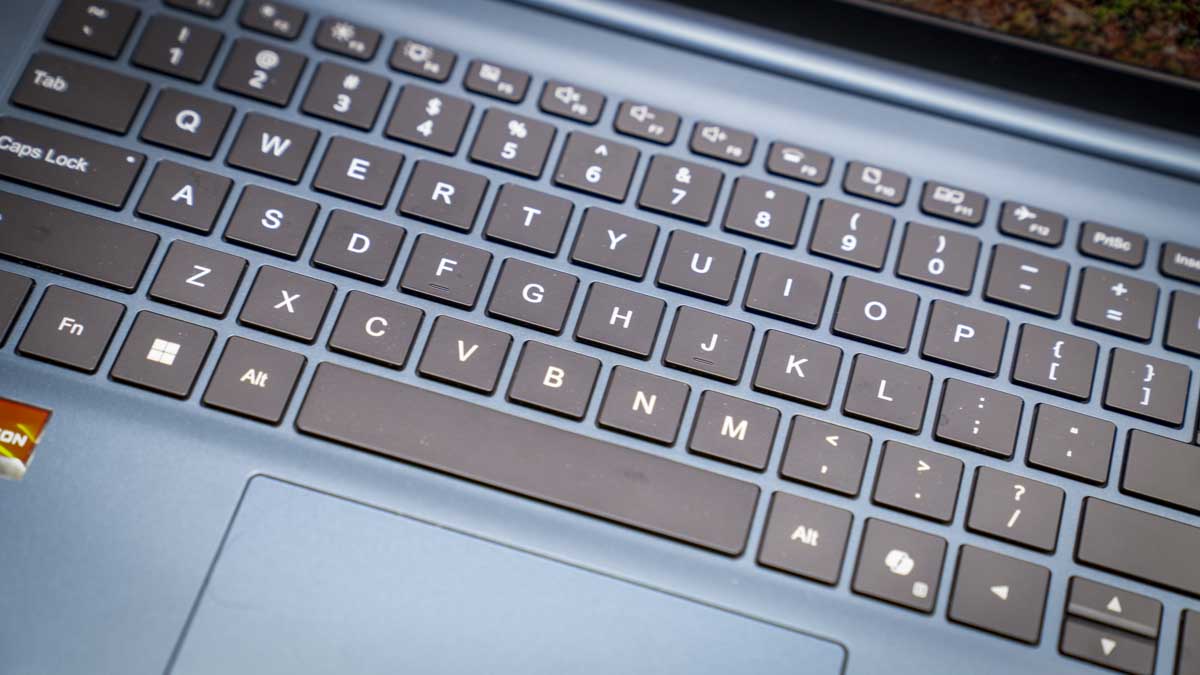
While the laptop’s overall quality is good and cooling performs better than anticipated (though fans can be audible under load), the keyboard and trackpad feel less responsive. The keyboard actuation lacks a satisfying tactile feel compared to premium business laptops. The trackpad also exhibits less precision, requiring deliberate clicks, especially in the bottom-left corner. It is important to note the price difference, as this laptop is significantly more affordable than high-end alternatives like the ASUS ExpertBook Ultra.
Considering its price, the CoreBook Air’s capability to handle productivity, web browsing, word processing, light multimedia editing, and casual gaming is commendable. It serves well for users needing an affordable laptop for work applications, media consumption, and some leisure gaming. However, for intensive media editing or demanding games, a more powerful and expensive machine would be necessary.
Chuwi CoreBook Air: Price and Availability
- The Chuwi CoreBook Air is available for approximately $479 / £404 RRP.
- It can be purchased directly from the Chuwi US and Chuwi Global websites.
Value: 4 / 5
Chuwi CoreBook Air: Specifications
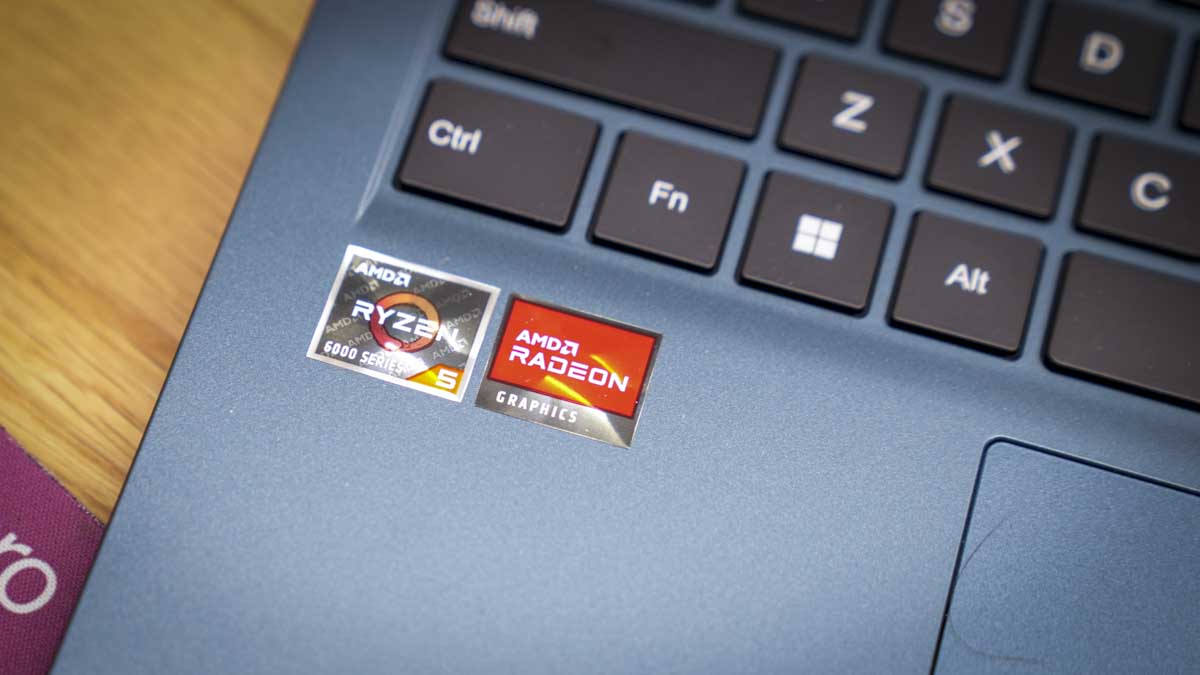
- CPU: AMD Ryzen 5 6600H (6-core/12-thread, up to 4.5GHz)
- Graphics: AMD Radeon 660M
- RAM: 16GB LPDDR5 6400MHz
- Storage: 512GB PCIe 3.0 NVMe SSD
- Left Ports: 2x USB-C 3.2 Gen 2, HDMI 2.1
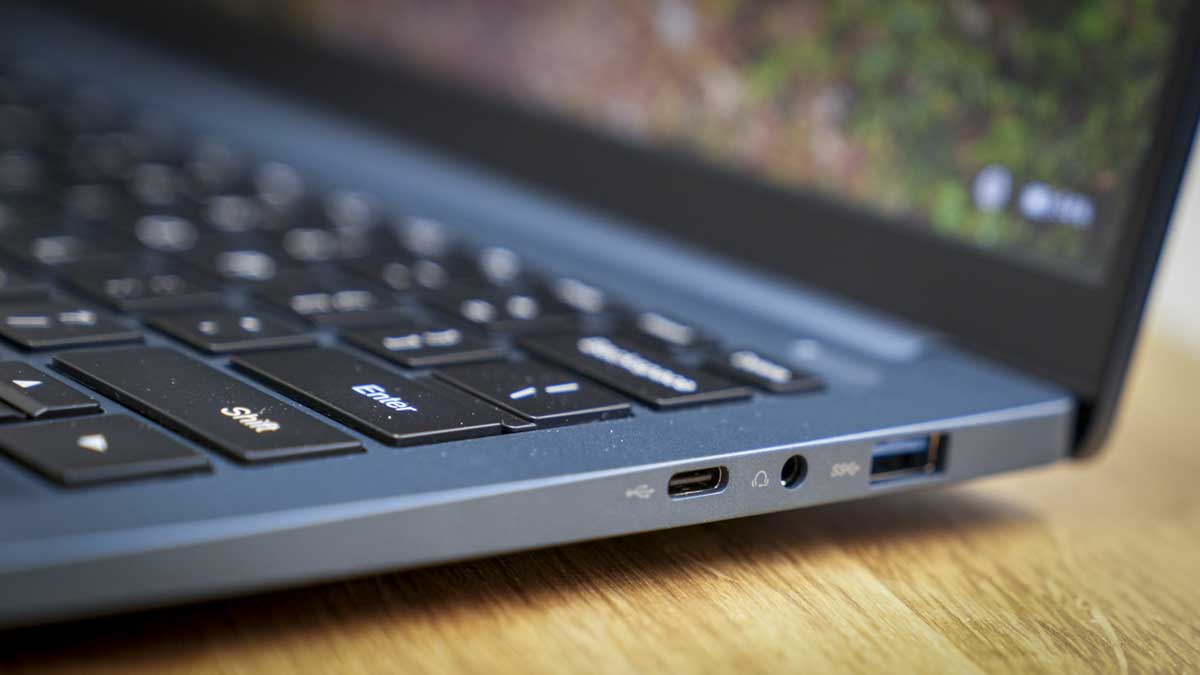
- Right Ports: USB-C, USB 3.2 Gen 1 Type-A, 3.5mm audio jack
- Connectivity: Wi-Fi, Bluetooth
- Audio: 2W stereo speakers
- Camera: 2MP with privacy shutter
- Size: 298 x 221 x 16.3 mm, 1.08 kg
- OS Installed: Windows 11 Pro
- Accessories: 65W USB-C PD charger
Chuwi CoreBook Air: Design
The Chuwi CoreBook Air is a slim, lightweight Windows 11 Pro laptop crafted for portability and moderate power. It suits students, business professionals, and home users seeking a robust and capable device. Its balanced CPU and GPU are excellent for general use, though it remains a mid-range machine, meaning it may struggle with the most demanding games or advanced multimedia software, even if they can load.
Portability is a primary design consideration. Weighing just 1.08 kg and measuring 298.4 x 221.3 x 16.3 mm, it easily fits into most bags, making it one of the smallest and lightest laptops available. Its aesthetic closely resembles the Geekbook X14 Pro, albeit with minor distinctions in corner design and port layout.
On the left side, the laptop features a full-size HDMI 2.1 TMDS port for external displays, alongside two full-featured USB 3.2 Gen 2 Type-C ports for high-speed data transfer and power delivery. The right side includes another USB Type-C port (data only), a 3.5mm audio jack, and a USB 3.2 Gen 1 Type-A port. A notable design element is the sliding mechanical camera privacy cover located on the top edge of the screen, ensuring absolute privacy. The laptop’s base and rear feature extensive, yet subtly profiled, vent panels. Good ventilation is evident between the laptop body and the screen hinge, with warmth noticeable during demanding tasks like gaming. The screen hinge feels robust and secure for daily use, and both the keyboard layout and trackpad are adequately sized.
- Design: 4 / 5
Chuwi CoreBook Air: Features
A significant appeal of this laptop is its compact and lightweight design, weighing only one kilogram. Its full aluminum alloy casing contributes to a robust feel, allowing it to easily fit into a laptop bag or backpack without adding excessive weight.
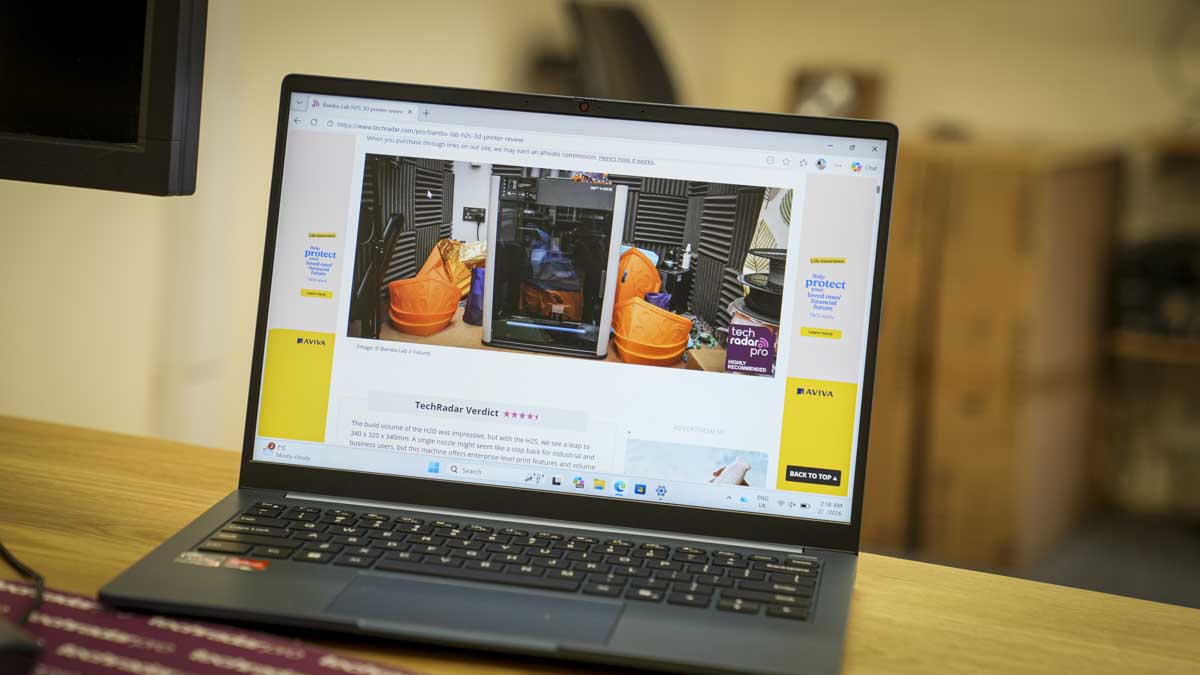
The laptop features a 14-inch Full HD screen with a 1920 x 1200 resolution and a 16:10 aspect ratio. While not the highest resolution available, it is suitable for daily use at this price point. The display offers 315 nits of brightness, which may require some shading in very bright environments. However, the screen surface effectively reduces reflections and glare, enhancing usability.
Audio is delivered through dual custom box-tuned speakers, offering an improved sound experience compared to many other mid-range laptops.
Under the hood, an AMD Ryzen 5 processor with 6 cores, 12 threads, and speeds up to 4.5GHz powers Windows and other applications. This is paired with an integrated Radeon 660M (RDNA2) GPU, which is sufficient for most mid-range games. The system also includes 16GB of LPDDR5 RAM and a 512GB PCIe SSD for storage.
A 55Wh battery provides power for daily use. While not the largest capacity, it offers ample power for a day’s work and charges quickly using the included 65W USB-C PD charger, reaching 60% charge in just 55 minutes.
- Features: 4 / 5
Chuwi CoreBook Air: Performance
Benchmark Scores
- CrystalDiskMark Read: 3064.43
- CrystalDiskMark Write: 1289.67
- Geekbench CPU Multi: 5389
- Geekbench CPU Single: 1397
- Geekbench GPU: 7734
- PCMark Overall: 5850
- Cinebench CPU Multi: 8634
- Cinebench CPU Single: 1429
- Fire Strike Overall: 4492
- Fire Strike Graphics: 4851
- Fire Strike Physics: 18743
- Fire Strike Combined: 1667
- Time Spy Overall: 1720
- Time Spy Graphics: 1528
- Time Spy CPU: 5985
- Wild Life Overall: 8748
- Steel Nomad Overall: 214
- Windows Experience Overall: N/A
Setting up the Chuwi CoreBook Air is simple, with Windows 11 Pro pre-installed. Initial setup, including account sign-ins and system updates, took approximately 15 minutes. It was necessary to manually install the final AMD graphics drivers, as performance was significantly limited without them. Once all Windows and AMD updates were complete, a noticeable performance improvement was observed. Microsoft Word, PowerPoint, and Excel loaded quickly, and the laptop handled documents and presentations without difficulty.
While Microsoft Word performed excellently, Excel and PowerPoint felt somewhat constrained by the display’s resolution. However, the laptop’s full-featured USB-C ports allow for seamless connection to an external 4K display, which the machine supports easily. For general work and productivity, such as writing in Word or switching between Word, PowerPoint, and Microsoft Edge, the laptop’s speed was ideal. It also smoothly handled compiling a multimedia-rich PowerPoint presentation.
PowerPoint is usable on the 1920 x 1200 resolution screen, though more screen space is often preferred for slide management. Connecting to a 4K monitor improved this experience. Even on the Full HD screen, PowerPoint remained functional, with sufficient clarity and brightness for on-the-go presentations.
Beyond resolution, the screen’s brightness is limited to 350 nits. This is generally adequate in dimmer conditions, but in brightly lit offices or outdoors, the display’s visibility can be challenged. For such environments, 350 nits represents a minimum acceptable brightness level.
Overall, the screen is well-suited for productivity tasks, though its limitations become more apparent with creative applications.
After observing solid performance in Microsoft Office applications, creative tasks were explored. Adobe Photoshop ran surprisingly smoothly, handling high-resolution images from a Sony A7 IV for cropping, resizing, and basic enhancements. Photoshop capably managed these files and applied effects, with the primary limitation being the somewhat restricted workspace on the laptop’s screen resolution.
Lightroom, an application better suited for this screen size, performed exceptionally well. Enhancements and adjustments were applied rapidly, and despite the screen’s resolution feeling slightly low, Lightroom Classic proved more than sufficient, even handling bulk exports of adjusted images without issue.
Attempting 4K video editing in Premiere Pro and DaVinci Resolve quickly revealed the laptop’s limitations. Dragging files into the timeline caused significant slowdowns and increased fan activity. However, when re-attempted with 1080p footage downscaled in Adobe Media Encoder, editing a moderately complex five-minute video became manageable, with fans engaging to maintain cooling. For lighter video editing, using less processor-intensive applications like CapCut could be beneficial.
Following the video editing tests, gaming performance was assessed. Indiana Jones and the Great Circle required all settings to be reduced to their lowest and resolution dropped to 720p, yet the game remained jittery and offered a poor experience. Similar issues with scaling and choppy graphics were observed with Red Dead Redemption 2. While the integrated Radeon 660M GPU is capable for multimedia creation, it lacks the power for playing demanding, high-end games.
- Performance: 4 / 5
Chuwi CoreBook Air: Final Verdict
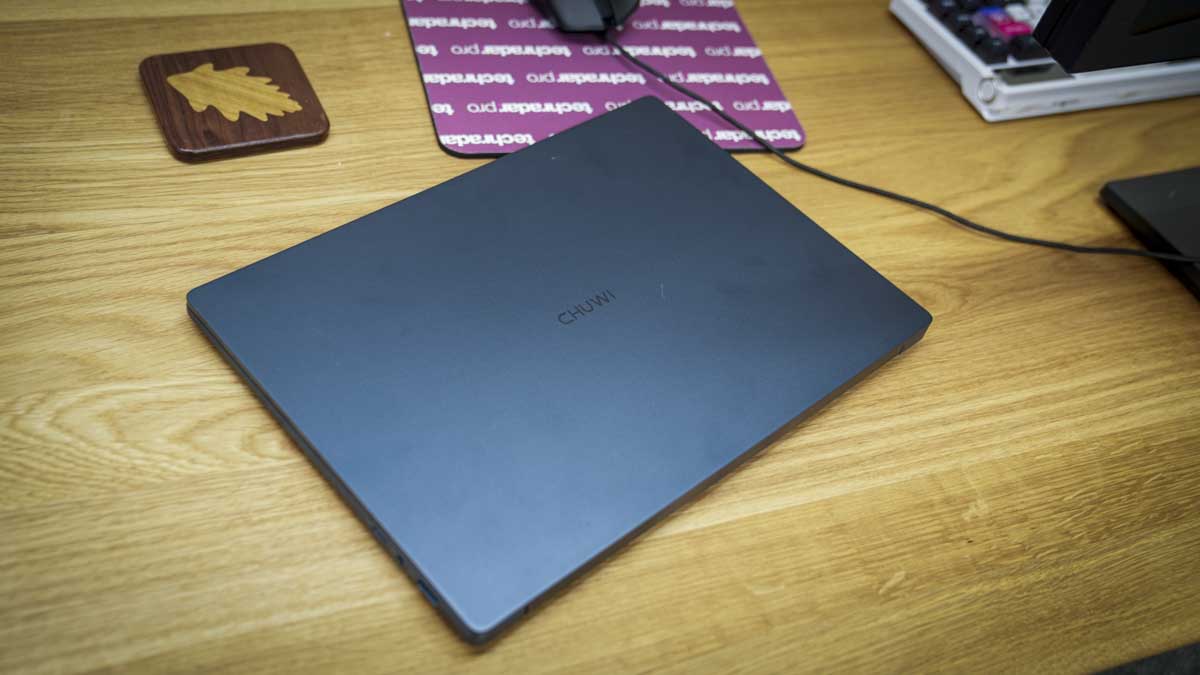
The Chuwi CoreBook Air stands out as a highly capable daily laptop for both office and remote use. Its decent size, lightweight nature, and robust build quality are notable. Although the keyboard and trackpad are not premium, their quality is sufficient for most users, providing a perfectly acceptable typing experience.
The performance delivered by its mid-range CPU and GPU combination is impressive. While lacking AI enhancements for specific applications, this compact laptop offers ample power for daily tasks, multimedia consumption, and web browsing.
Connectivity options are extensive, with Wi-Fi speeds proving robust during testing, especially when paired with devices like the Netgear Nighthawk M7. The inclusion of three USB-C ports (two full-featured, one data-only) provides versatile connection possibilities and the convenience of charging with most modern USB-C chargers.
The 55Wh battery, though not the largest, adequately supports a day of light work involving spreadsheets, Word, and PowerPoint. However, intensive processor use significantly reduces battery life. A notable feature is its ability to achieve a 60% charge from empty in just over an hour.
The CoreBook Air’s price point is particularly striking. It delivers a powerful everyday laptop experience without a hefty cost. While the screen resolution and brightness are somewhat modest compared to some competitors, the robust build quality and capable mid-range CPU/GPU combination make this laptop more than sufficient for the majority of users and workloads.
Should You Buy the Chuwi CoreBook Air?
The Chuwi CoreBook Air offers excellent value, providing strong performance for a mid-range laptop. Its design features good build quality with an aluminum casing, giving it a premium feel. The feature set is well-balanced, making it a reliable workhorse. Performance is strong for productivity and acceptable for creative applications, though it is not ideal for demanding gaming. Overall, it is a well-balanced machine suitable for most office tasks, light creative work, and casual gaming.
Buy it if…
-
You need on-the-go productivity: This laptop is ideal if you require a lightweight machine that smoothly handles office, browsing, and creative tasks in a travel-friendly size.
-
You seek good general performance on a budget: The CoreBook Air offers decent all-around performance, extending beyond basic productivity applications without a high cost.
Don’t buy it if…
-
You require upgradability: The RAM is soldered, meaning no upgrade options are available, which might limit future compatibility or performance needs.
-
You need top-tier media creation tools: While equipped with speakers, a webcam, and a decent GPU, these components may not meet the demands of professional content creators.
For more powerful productivity machines, consider exploring the best mobile workstations.
