
Close Menu
    Latest Post

    Suspected Russian Actor Linked to CANFAIL Malware Attacks on Ukrainian Organizations

    February 22, 2026

    Trump Reinstates De Minimis Exemption Suspension Despite Supreme Court Ruling

    February 22, 2026

    How Cloudflare Mitigated a Vulnerability in its ACME Validation Logic

    February 21, 2026
    Facebook X (Twitter) Instagram
    Trending
    • Suspected Russian Actor Linked to CANFAIL Malware Attacks on Ukrainian Organizations
    • Trump Reinstates De Minimis Exemption Suspension Despite Supreme Court Ruling
    • How Cloudflare Mitigated a Vulnerability in its ACME Validation Logic
    • Demis Hassabis and John Jumper Receive Nobel Prize in Chemistry
    • How to Cancel Your Google Pixel Watch Fitbit Premium Trial
    • GHD Speed Hair Dryer Review: Powerful Performance and User-Friendly Design
    • An FBI ‘Asset’ Helped Run a Dark Web Site That Sold Fentanyl-Laced Drugs for Years
    • The Next Next Job, a framework for making big career decisions
    Facebook X (Twitter) Instagram Pinterest Vimeo
    NodeTodayNodeToday
    • Home
    • AI
    • Dev
    • Guides
    • Products
    • Security
    • Startups
    • Tech
    • Tools
    NodeTodayNodeToday
    Home»Security»February 2026 Patch Tuesday Addresses Six Zero-Days and AI Vulnerabilities
    Security

    February 2026 Patch Tuesday Addresses Six Zero-Days and AI Vulnerabilities

    Samuel AlejandroBy Samuel AlejandroFebruary 14, 2026No Comments3 Mins Read
    Share Facebook Twitter Pinterest LinkedIn Tumblr Reddit Telegram Email
    src 1s4t535 featured
    Share
    Facebook Twitter LinkedIn Pinterest Email

    Microsoft has released over 50 security updates for its Windows operating systems and other software. This month’s Patch Tuesday addresses six “zero-day” vulnerabilities that are actively being exploited by attackers.
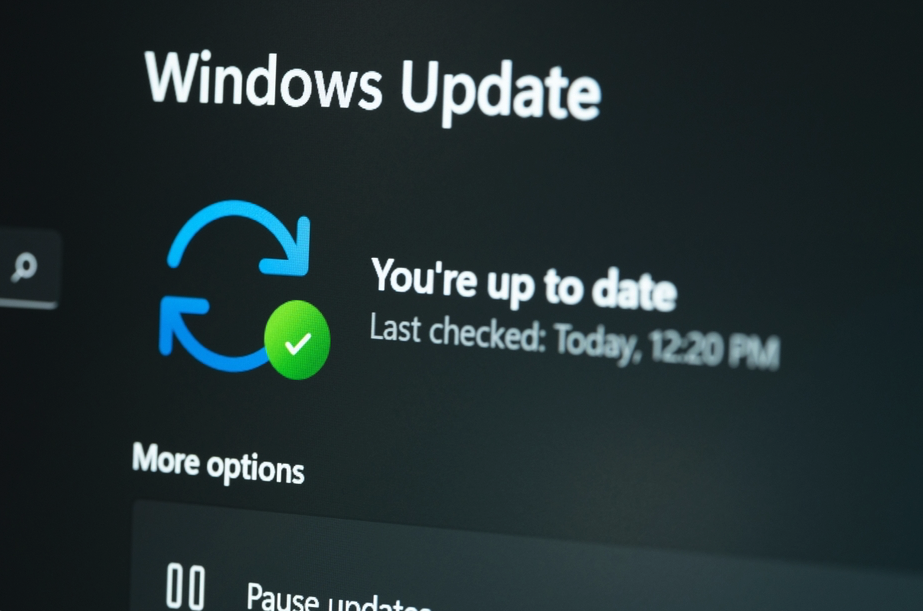
    Image 1

    One of the critical zero-day flaws, CVE-2026-21510, is a security feature bypass in Windows Shell. This vulnerability allows attacker-controlled content to execute without user warning or consent simply by clicking a malicious link. All supported Windows versions are impacted by CVE-2026-21510.

    CVE-2026-21513 is another zero-day security bypass vulnerability affecting MSHTML, the rendering engine used by Windows’ default web browser. A related security feature bypass, CVE-2026-21514, has been patched in Microsoft Word.

    An elevation of privilege zero-day, CVE-2026-21533, impacts Windows Remote Desktop Services, potentially allowing local attackers to gain “SYSTEM” level access. Additionally, CVE-2026-21519 addresses a zero-day privilege elevation vulnerability in the Desktop Window Manager (DWM), a core Windows component. A separate DWM zero-day was patched in the previous month’s updates.

    The sixth zero-day, CVE-2026-21525, is a denial-of-service vulnerability found in the Windows Remote Access Connection Manager, which manages VPN connections to corporate networks.

    Several out-of-band security updates have been released by Microsoft since January’s Patch Tuesday. These include a fix on January 17 for a credential prompt failure during remote desktop or application connections, and a patch on January 26 for a zero-day security feature bypass vulnerability (CVE-2026-21509) in Microsoft Office.

    This month’s Patch Tuesday also features fixes for remote code execution vulnerabilities impacting GitHub Copilot and various integrated development environments (IDEs), such as VS Code, Visual Studio, and JetBrains products. The associated CVEs are CVE-2026-21516, CVE-2026-21523, and CVE-2026-21256.

    These AI vulnerabilities are rooted in a command injection flaw, which can be activated via prompt injection. This involves manipulating an AI agent to perform unintended actions, such as executing malicious code or commands.

    Developers are frequently targeted by threat actors due to their access to sensitive data, including API keys and secrets for critical infrastructure like privileged AWS or Azure API keys. When organizations integrate Large Language Models (LLMs) and agentic AI into developer workflows and automation pipelines, a malicious prompt could have substantial consequences. While this does not suggest discontinuing AI use, it emphasizes the need for developers to comprehend the risks. Teams should clearly identify systems and workflows with AI agent access and implement least-privilege principles to minimize the impact if developer secrets are compromised.

    For a detailed breakdown of each Microsoft fix this month, indexed by severity and CVSS score, the SANS Internet Storm Center provides a clickable resource. Enterprise Windows administrators responsible for testing patches before deployment may find valuable information on askwoody.com, which often reports on problematic updates. Users are advised to back up their data regularly.

    Share. Facebook Twitter Pinterest LinkedIn Tumblr Email
    Previous ArticleSameshi: A Compact Chess Engine Under 2KB with ~1200 Elo
    Next Article The Second-Gen AirTags: An Essential Tool for Finding Lost Items
    Samuel Alejandro

    Related Posts

    Security

    Suspected Russian Actor Linked to CANFAIL Malware Attacks on Ukrainian Organizations

    February 22, 2026
    Security

    An FBI ‘Asset’ Helped Run a Dark Web Site That Sold Fentanyl-Laced Drugs for Years

    February 21, 2026
    Security

    Anthropic Introduces Embedded Security Scanning for Claude AI

    February 20, 2026
    Add A Comment
    Leave A Reply Cancel Reply

    Latest Post

    ChatGPT Mobile App Surpasses $3 Billion in Consumer Spending

    December 21, 202513 Views

    Creator Tayla Cannon Lands $1.1M Investment for Rebuildr PT Software

    December 21, 202511 Views

    Automate Your iPhone’s Always-On Display for Better Battery Life and Privacy

    December 21, 202510 Views
    Stay In Touch
    • Facebook
    • YouTube
    • TikTok
    • WhatsApp
    • Twitter
    • Instagram
    About

    Welcome to NodeToday, your trusted source for the latest updates in Technology, Artificial Intelligence, and Innovation. We are dedicated to delivering accurate, timely, and insightful content that helps readers stay ahead in a fast-evolving digital world.

    At NodeToday, we cover everything from AI breakthroughs and emerging technologies to product launches, software tools, developer news, and practical guides. Our goal is to simplify complex topics and present them in a clear, engaging, and easy-to-understand way for tech enthusiasts, professionals, and beginners alike.

    Latest Post

    Suspected Russian Actor Linked to CANFAIL Malware Attacks on Ukrainian Organizations

    February 22, 20260 Views

    Trump Reinstates De Minimis Exemption Suspension Despite Supreme Court Ruling

    February 22, 20260 Views

    How Cloudflare Mitigated a Vulnerability in its ACME Validation Logic

    February 21, 20260 Views
    Recent Posts
    • Suspected Russian Actor Linked to CANFAIL Malware Attacks on Ukrainian Organizations
    • Trump Reinstates De Minimis Exemption Suspension Despite Supreme Court Ruling
    • How Cloudflare Mitigated a Vulnerability in its ACME Validation Logic
    • Demis Hassabis and John Jumper Receive Nobel Prize in Chemistry
    • How to Cancel Your Google Pixel Watch Fitbit Premium Trial
    Facebook X (Twitter) Instagram Pinterest
    • About Us
    • Contact Us
    • Privacy Policy
    • Terms & Conditions
    • Disclaimer
    • Cookie Policy
    © 2026 NodeToday.

    Type above and press Enter to search. Press Esc to cancel.