


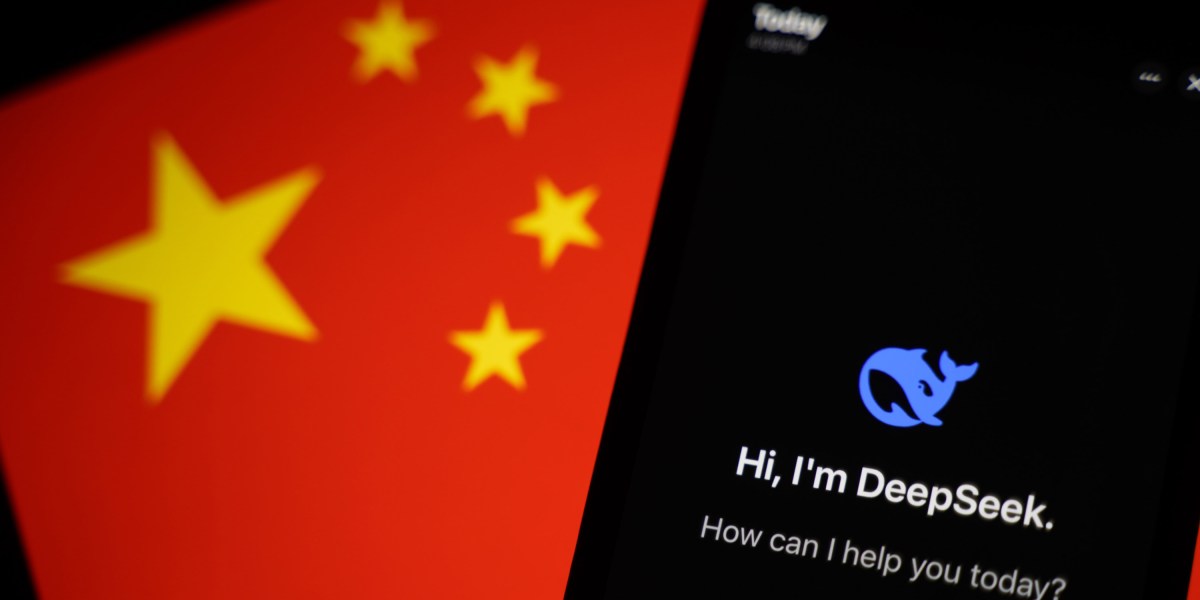

The past year has been transformative for Chinese AI. Since DeepSeek introduced its R1 reasoning model in January 2025, Chinese firms have consistently launched AI models that rival the performance of leading Western counterparts, often at significantly lower costs.
Recently, Moonshot AI, a Chinese company, unveiled its Kimi K2.5 open-weight model. This model demonstrated performance comparable to top proprietary systems like Anthropic’s Claude Opus in initial tests, but at approximately one-seventh of Opus’s price.
On Hugging Face, Alibaba’s Qwen series has become exceptionally popular, surpassing Meta’s Llama models in total downloads after being the most downloaded model family in 2025 and 2026. An MIT study also indicated that Chinese open-source models have exceeded US models in overall downloads. This trend has made advanced AI capabilities more accessible and affordable for developers globally.
A key distinction of these Chinese models from many US models, such as ChatGPT or Claude, is their open-source nature. Unlike proprietary systems that require payment and cannot be examined, Chinese companies release their models’ weights—the numerical values learned during training. This allows anyone to download, operate, analyze, and modify them.
Should these open-source AI models continue to advance, they will not only provide the most economical access to cutting-edge AI but also redefine where innovation occurs and who establishes industry standards.
China’s Continued Commitment to Open Source
The launch of DeepSeek’s R1 model initially surprised many due to its Chinese origin, as it rivaled top US systems. However, its broader impact stemmed from its distribution: R1 was an open-weight model released under an MIT license, allowing free download, inspection, and deployment. DeepSeek also published a detailed paper on its training and offered API access at a significantly lower cost than competitors like OpenAI’s o1.
Following its release, DeepSeek quickly became the most downloaded free app in the US App Store. This event resonated beyond developers, causing a brief $1 trillion market value drop in US tech stocks. DeepSeek rapidly transformed from a lesser-known entity into a symbol of China’s commitment to open-source AI.
China’s embrace of open source is a logical step, given its substantial AI talent pool—second only to the US—and a robust tech industry. After ChatGPT’s widespread adoption, China’s AI sector re-evaluated its strategy, seeing open source as the quickest path to catch up by mobilizing developers, fostering adoption, and establishing new standards.
DeepSeek’s success boosted confidence within an industry that often followed global norms. Alex Chenglin Wu, CEO of Atoms, an AI agent company and key contributor to China’s open-source ecosystem, noted that DeepSeek demonstrates the potential for world-class innovation with strong technical talent and a supportive environment.
DeepSeek was not China’s first open-source achievement. Alibaba’s Qwen Lab had been releasing open-weight models for years, with global downloads exceeding 600 million by September 2024. Qwen accounted for over 30% of all model downloads on Hugging Face in 2024. Other organizations, including the Beijing Academy of Artificial Intelligence and Baichuan, also began releasing open models in 2023.
Since DeepSeek’s breakthrough, the open-source AI landscape in China has expanded rapidly. Companies like Z.ai (formerly Zhipu), MiniMax, and Tencent, along with numerous smaller labs, have introduced competitive models for reasoning, coding, and agent-style tasks. This proliferation of capable models has accelerated progress, with new capabilities emerging in weeks or even days, rather than months.
Liu Zhiyuan, a computer science professor at Tsinghua University and chief scientist at ModelBest, stated that Chinese AI firms have benefited significantly from the open-source approach, gaining reputation and publicity through strong research releases.
Beyond commercial advantages, open source has acquired cultural and strategic importance. Liu observed that within the Chinese programmer community, open source has become a “politically correct” response to the dominance of proprietary AI systems from the US.
This shift is also evident institutionally. Universities like Tsinghua now promote AI development and open-source contributions, while policymakers are formalizing these incentives. In August, China’s State Council proposed a draft policy to encourage universities to recognize open-source work, potentially allowing student contributions on platforms like GitHub or Gitee to count towards academic credit.
With increasing momentum, China’s open-source model initiative is expected to continue in the short term. However, its long-term viability depends on financial outcomes, according to Tiezhen Wang of Hugging Face. Z.ai and MiniMax, for instance, went public in Hong Kong in January. Wang emphasized that while the current focus is on expanding the market, the next challenge involves each company securing its market share.
The Next Wave: Narrower and More Capable Models
Chinese open-source models are notable for both their download volume and their diversity. Alibaba’s Qwen, for example, has developed into a highly varied open model family, offering numerous variants optimized for specific applications. This range includes lightweight models suitable for laptops and large systems with hundreds of billions of parameters designed for data centers. The Qwen family also features community-created, task-optimized variants, such as “instruct” models for following commands and “code” variants for programming.
While this strategy is not exclusive to Chinese labs, Qwen was among the first open model families to provide such a comprehensive array of high-quality, free-to-use options, resembling a full product line.
The open-weight nature of these models facilitates adaptation through methods like fine-tuning and distillation, where a smaller model learns to emulate a larger one. According to ATOM (American Truly Open Models), a project by AI researcher Nathan Lambert, by August 4, 2025, Qwen-derived model variations constituted over 40% of new language model derivatives on Hugging Face, while Llama-based derivatives dropped to about 15%. This indicates Qwen’s emergence as a primary foundation for model “remixes.”
This trend underscores the value of smaller, more specialized models. Liu Zhiyuan noted that computational and energy resources are significant constraints for any deployment. He explained that the rise of small models aims to make AI more affordable to operate and accessible to a wider user base. His company, ModelBest, specializes in small language models designed for local execution on devices like phones, cars, and other consumer electronics.
While typical users might engage with AI via web or app for basic conversations, technically proficient AI users are exploring ways to grant AI greater autonomy for complex problems. OpenClaw, a recently popular open-source AI agent, enables AI to control a computer, performing tasks such as email management and work assignments continuously without human oversight.
OpenClaw, like many open-source tools, allows users to connect to various AI models through an API. Shortly after OpenClaw’s release, its developers reported that Kimi’s K2.5 had surpassed Claude Opus to become the most utilized AI model by token count, indicating it processed more total text across user prompts and model responses.
Although cost is a significant factor in the adoption of Chinese models, Tiezhen Wang suggested it would be inaccurate to view them merely as cheaper imitations of Western frontier systems. A model’s effectiveness, like any product, depends on its suitability for the intended task.
The Chinese open-source model landscape is also becoming increasingly specialized. Research groups such as Shanghai AI Laboratory have developed models for scientific and technical applications, while Tencent has launched projects focused on music generation. Ubiquant, a quantitative finance firm affiliated with DeepSeek’s parent company High-Flyer, has released an open model for medical reasoning.
Furthermore, innovative architectural concepts from Chinese labs are gaining broader recognition. DeepSeek’s work on model efficiency and memory, including techniques to compress the model’s attention “cache” to reduce memory and inference costs while largely maintaining performance, has attracted considerable interest within the research community.
Wang highlighted that the impact of these research advancements is amplified by their open-source nature, allowing for rapid adoption across the field.
Chinese Open Models as Global AI Infrastructure
The adoption of Chinese models is also increasing in Silicon Valley. Martin Casado, a general partner at Andreessen Horowitz, estimated that approximately 80% of startups presenting with open-source stacks are utilizing Chinese open models, as noted in a post on X. Usage data from OpenRouter, an API intermediary tracking AI model usage, corroborates this trend, showing Chinese open models growing from negligible use in late 2024 to nearly 30% in recent weeks.
Global demand is also on the rise. Z.ai, for instance, had to limit new subscriptions for its GLM coding plan due to overwhelming demand and computational limitations. Notably, CNBC reported that the primary user base for this system is concentrated in the United States and China, followed by India, Japan, Brazil, and the UK.
Tiezhen Wang from Hugging Face highlighted the strong interconnectedness between the open-source ecosystems in China and the US. Many Chinese open models still depend on Nvidia and US cloud platforms for training and deployment, creating complex business relationships. Additionally, talent mobility is high, with researchers moving across borders and companies, often collaborating within a global community by publicly sharing code and ideas.
This interdependence fosters optimism among Chinese developers, as their work is disseminated, adapted, and integrated into various products. However, this openness also intensifies competition. Dario Amodei, CEO of Anthropic, commented on this following DeepSeek’s 2025 releases, stating that export controls would not circumvent competition between the US and China, and that US AI companies must develop superior models to maintain their lead.
Historically, Chinese technology in the West has faced high expectations, followed by scrutiny, restrictions, and political opposition. This time, the export is not merely an application or a consumer platform, but the foundational model layer upon which others build. Whether this distinction will lead to a different outcome remains to be seen.
