


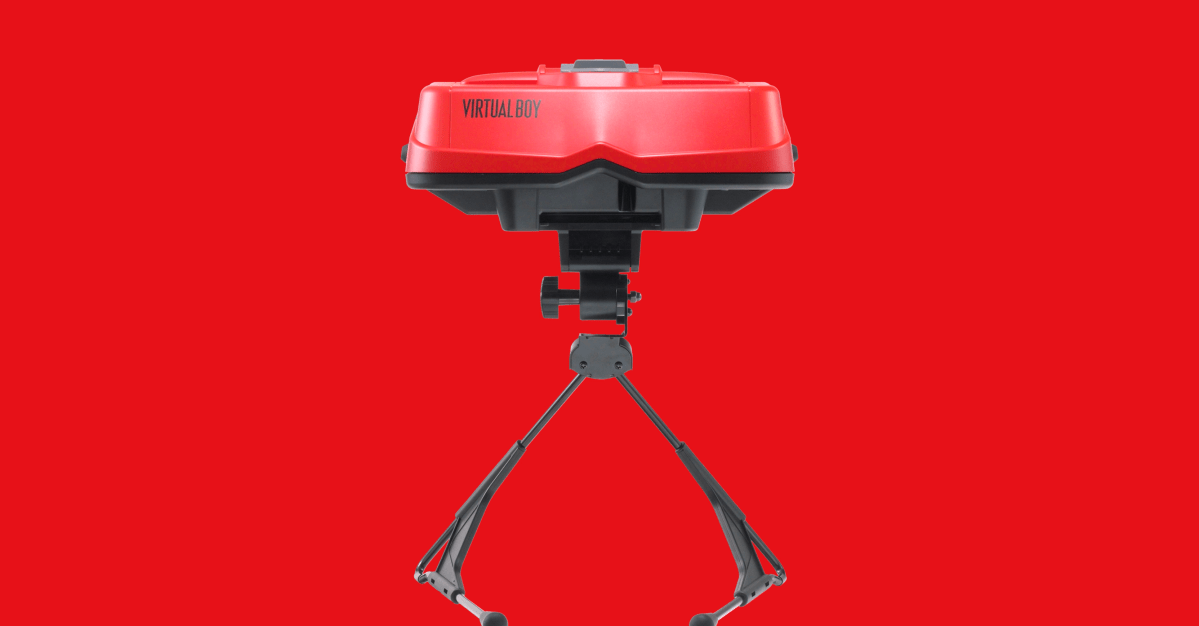
Despite its commercial and critical failure, the Virtual Boy’s notoriety has made it a captivating part of Nintendo’s history. Original consoles continue to fetch high prices on auction sites, and enthusiasts have preserved the Virtual Boy through emulation and homebrew games for years. Initially, Nintendo appeared to want the public to forget the Virtual Boy’s existence. However, the company has gradually become more open to acknowledging and even
in titles such as Super Smash Bros. Melee, Tomodachi Life, and Luigi’s Mansion 3.
Considering the Nintendo 3DS and newer innovations like the Nintendo Switch and
https://www.youtube.com/watch?v=6Qg5jmq7_GQhttps://www.youtube.com/watch?v=6Qg5jmq7_GQhttps://www.youtube.com/watch?v=6Qg5jmq7_GQ
, the resurrection of the Virtual Boy as a Switch peripheral for playing classic Virtual Boy games on Nintendo Switch Online was not entirely unexpected. There is a certain irony in Nintendo’s least successful console being re-envisioned as an accessory for its most successful system to date. The new Virtual Boy’s release suggests Nintendo’s confidence in revisiting a past failure and transforming it into a product that supports the Switch console family.
Upon experiencing the new Virtual Boy, the $100 accessory’s justification seemed questionable. The headset and stand combination presents as an attractive piece of retro technology, offering sufficient comfort. Despite expectations of disorienting visual effects, the device’s stereoscopic lenses did not induce headaches. However, the gameplay of the Virtual Boy’s titles exhibited a clunkiness, making the device feel more like an outdated novelty than a system for extended use.
The primary appeal of this device lies in its faithful recreation of successful aspects from the original console, while also refining some of the issues that contributed to its 1990s failure. For those not particularly drawn to retro nostalgia, opting out of the plastic model and instead revisiting an old Labo kit might be a consideration.

For individuals unfamiliar with the original Virtual Boy and prone to discomfort with VR headsets, the new peripheral offers a surprisingly good fit. Designed to sit on a table and be used with a controller after inserting a Nintendo Switch or Switch 2, the plastic Virtual Boy effectively blocks external light, creating total darkness even in a brightly lit environment, unlike some cardboard Labo headsets.
The darkness enhances the vividness of the Virtual Boy’s monochromatic game selection screen, which can be customized to various colors, as users navigate the limited 3D game library. Nintendo has announced plans to release 14 different Virtual Boy games by the end of the year via its Nintendo Switch Online + Expansion Pack subscription, priced at $50 annually for individual accounts and $80 for family plans. The initial set of Virtual Boy games, along with the $100 peripheral and its $25 cardboard alternative, are scheduled for release on February 17th.
During an experience with the Virtual Boy, titles such as Galactic Pinball, Teleroboxer, and a new port of The Mansion of Innsmouth (previously exclusive to Japan) proved charming yet somewhat underwhelming. The games performed adequately, reflecting Nintendo’s historical experimentation with immersive gameplay. While the lens technology may have been impressive at the original Virtual Boy’s launch, it falls short compared to Nintendo’s achievements with the 3DS, failing to create a convincing 3D illusion.


Ironically, simpler games featuring vector graphics, such as 3-D Tetris and Red Alarm, proved more engaging due to their unique presentation of three-dimensional space. Furthermore, playing these titles in any format has become increasingly challenging over time. While this new peripheral may not initiate a widespread Virtual Boy game preservation movement, it significantly enhances accessibility, particularly for those who did not experience the original console during its short existence.
Although a hands-on experience with the cardboard Virtual Boy was not provided, there was a greater interest in exploring that option and observing how these games might appear on a Labo. The plastic model certainly has an appealing aesthetic and may satisfy a nostalgic desire for those who wished to own a Virtual Boy in the 1990s. However, in 2026, these types of 3D games appear somewhat too outdated to justify the cost, especially without an existing NSO subscription.
