


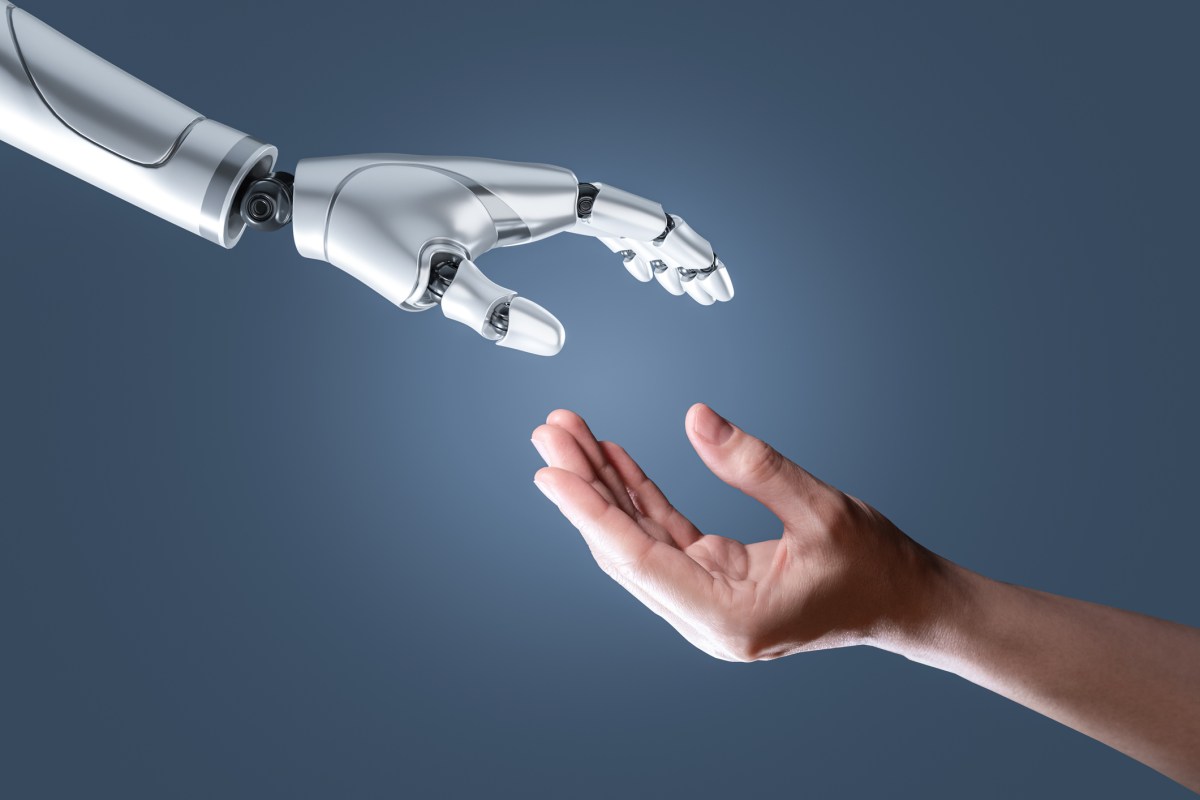
Roboticist Rodney Brooks has raised concerns about a potential investment bubble in humanoid robots, a sentiment shared by others in the field.
In a recent essay, Brooks criticized the significant venture capital flowing into humanoid robot companies such as Figure. His argument suggests that despite substantial investment, humanoids will struggle to achieve dexterity, or precise hand movements, which could limit their practical applications.
This perspective may be unexpected for some venture capitalists in the sector, but it aligns with the views of several robotics-focused VCs and AI scientists. These experts have indicated that widespread adoption of humanoid robots is unlikely for several years, possibly even more than a decade.
Challenges Facing Humanoids
Fady Saad, a general partner at Cybernetix Ventures and co-founder of MassRobotics, stated that a significant market for humanoids, beyond their use as astronaut replacements in space, has not yet emerged.
Saad observed that individuals unfamiliar with or not closely tracking humanoid developments might be impressed by current progress. However, he maintained a conservative and skeptical stance regarding their practical use cases and potential revenue generation.
Safety is another concern, particularly in environments where humans and humanoid robots coexist. Potential hazards could arise in industrial settings like factory floors, and these concerns intensify as companies aim to introduce humanoids into private homes.
Saad highlighted risks such as a robot falling on pets or children, noting this as a significant, often overlooked, challenge. He also questioned public comfort with humanoids in homes, citing potential issues like hacking or unexpected malfunctions.
The uncertain timeline for this technology presents a critical challenge for venture capitalists, who operate with specific fund lifecycles and deadlines for returning capital to investors.
Development Timeline Challenges
Sanja Fidler, Nvidia’s vice president of AI research, noted that while a precise timeline for humanoid development is difficult to establish, the current enthusiasm mirrors the early excitement surrounding self-driving cars.
Fidler recalled that self-driving cars felt tangible around 2016-2017, yet achieving full global autonomy has proven challenging and time-consuming.
Bill Dally, Nvidia’s chief scientist, echoed these sentiments. Their comments are significant given Nvidia’s substantial investment in developing infrastructure to support humanoid technology.
Seth Winterroth, a partner at Eclipse, cautioned that while new technological advancements and demonstrations can generate excitement, humanoids are exceptionally complex. He suggested that their full capabilities are still a distant prospect.
Winterroth explained the difficulty of software releases for systems with six degrees of freedom, noting that humanoids often involve over 60 degrees of freedom. He emphasized the need for sound unit economics and strong gross margins to build a sustainable business, concluding that the technology is still in its early stages.
Generally, humanoid robots are not yet prepared for widespread deployment.
Tesla’s Optimus humanoid project illustrates the challenges faced by companies in this sector. The company announced its development in 2021, with an anticipated introduction in 2023.
This timeline was not met. During its 2024 “We, Robot” event, it was later disclosed that the Optimus bots were primarily human-controlled off-stage. Tesla now aims to begin selling these robots in 2026.
Robotics startup Figure, valued at $39 billion in a recent funding round, has also faced skepticism regarding the actual number of humanoids deployed, a claim the company strongly refutes.
Promising Developments
This does not imply that humanoids lack a future market or that the technology is not worth pursuing.
Brooks acknowledged the eventual emergence of humanoids but suggested they might differ from common perceptions. He predicted future humanoids could feature wheels and other non-human characteristics, with widespread availability still over a decade away.
Startups are actively developing the dexterity technology that Brooks believes humanoids will struggle to achieve. Examples include Y Combinator-backed Proception and Loomia, which offers a kit to integrate touch capabilities into robotic systems.
Several humanoid companies are beginning to attract interest and accept orders for their robots. K-Scale Labs, for instance, secured over 100 preorders for its humanoid bot within five days, a result that surprised its founders, according to CEO Benjamin Bolte.
Hugging Face has also experienced significant developer demand for its humanoid robots. The company launched preorders for its compact Reachy Mini desktop robot in July, generating a strong response with $1 million in sales within five days.
