


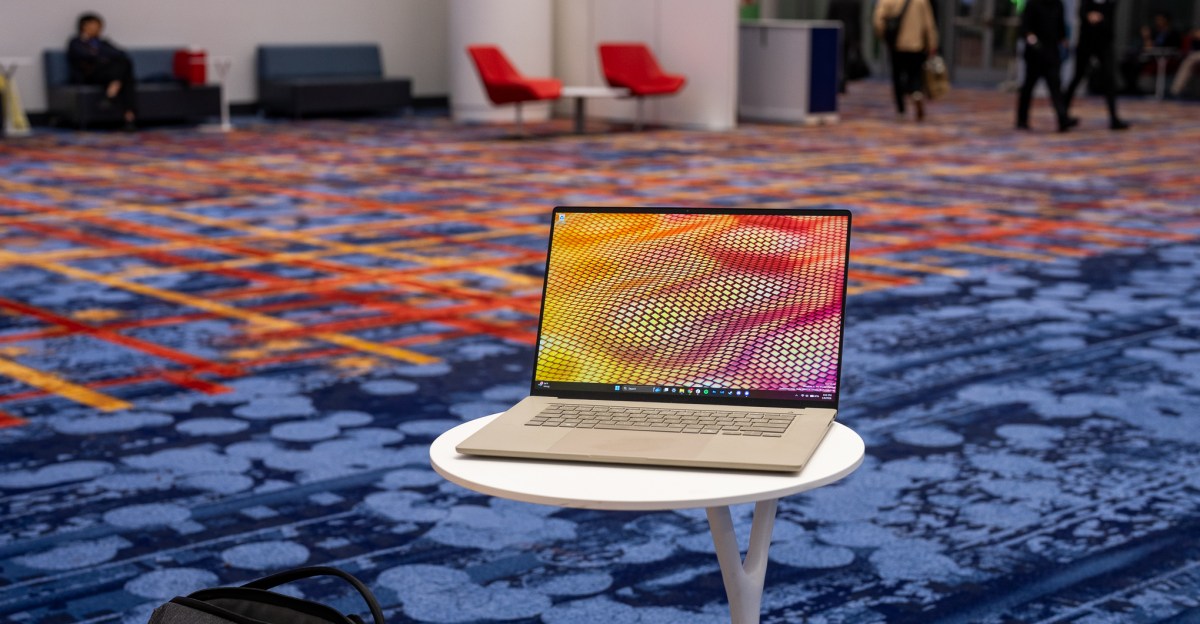
During a chaotic multiday event, working anywhere and always in a rush was a common experience. 

At CES, a pre-production laptop was used as the primary workhorse, which is generally not recommended for such a demanding event. The device in question was the new Arm-based Asus Zenbook A16, a 16-inch laptop weighing less than a 13-inch MacBook Air and featuring a high-end Snapdragon X2 processor. Using a Windows on Arm laptop with an unreleased processor at CES seemed like a recipe for disaster. However, despite some pre-production hardware glitches, the experience was surprisingly positive.
The Zenbook A16 provided for early testing featured a Snapdragon X2 Elite Extreme X2E-94-100 chip. This is one of the flagship chips from Qualcomm’s upcoming X2 processor family, boasting 18 cores (six performance and 12 efficiency). In the A16, it was paired with a substantial 48GB of RAM, a 2TB SSD, and a 2880 x 1800 / 120Hz OLED display. While no official price has been set, it is estimated to be around $1,599.99 or $1,699.99, placing it in the range of a higher-spec 15-inch M4 MacBook Air or an entry-level 14-inch M5 MacBook Pro.

It is important to note that as a pre-production model, this Zenbook A16 was not ready for benchmark testing, and bugs appeared quickly. For instance, Windows Hello face unlocking never functioned, and the laptop unexpectedly entered sleep mode several times a day. Fortunately, it would wake up and resume work within seconds each time. These issues are concerning, but they are expected from pre-production hardware running a Canary build of Windows 11 26H1, which is exclusive to Snapdragon X2 laptops. It is anticipated that these problems will be resolved in the final hardware and software versions.
Despite the bugs, the A16’s performance was impressive. It served as the sole computer for prewriting many CES news embargoes during the holiday break and proved to be consistently snappy. It effortlessly managed a typical workload involving dozens of Google Chrome tabs across multiple virtual desktops, writing in Google Docs and WordPress, messaging in Slack and Signal, and simultaneously streaming music on Spotify. However, the true test involved editing photos in Lightroom Classic, particularly on the go at CES, where rapid edits of 50-megapixel RAW images from a Sony A1 camera were occasionally required.
The Zenbook was brought to CES, with an M5 MacBook Pro as a backup. Initially, there was a readiness to carry both or switch to the MacBook if necessary. However, on the first day, the MacBook was left in the hotel room. The Zenbook was used from a Razer briefing to CES Unveiled, primarily for capturing images for colleagues. The Snapdragon X2 chip demonstrated quick performance when editing approximately 70 photos under tight deadlines.


Using Adobe Lightroom Classic on the Zenbook sometimes felt as fast as with Apple’s chips. RAW images imported quickly from the integrated SD card reader, a feature many wish all laptops included. Culling pictures in the Library module was swift, and making quick brightness and color adjustments in the more demanding Develop module was also fast. Performance only slowed when more aggressive color adjustments were applied (due to challenging CES lighting) and particularly when using Lightroom’s masking tool with automatic subject detection.
The first day at CES with the A16 was successful. However, on subsequent days, hundreds more photos were captured during various appointments and briefings, such as photographing the Lenovo Legion Pro rollable gaming laptop concept and exploring the show floor for items like Asus’ Wi-Fi 8 router concept. During these heavier workloads, the laptop began to show some slowdown.
Lightroom Classic occasionally paused between adjustments and took several seconds to load full-resolution images. This behavior is not uncommon for Lightroom on Windows, and sometimes even on Macs, especially when working quickly without recent reboots to clear cache or optimize the catalog.
On the final full day of the show, a more disciplined approach was taken, closing Lightroom between editing sessions and avoiding unnecessary background applications. The Zenbook then returned to feeling like an agile editing machine. When showing a colleague photos from a stroll across the Las Vegas Convention Center show floor, the speed at which high-resolution shots were flipped through was notable.

While a MacBook Pro might still be preferred for high-demand photo editing, the Snapdragon X2 Elite Extreme helped this Zenbook A16 achieve a more MacBook-like feel than many other Windows laptops. This was particularly true because much of the work was done on battery power. Similar to M-series Macs, Snapdragon X laptops deliver consistent performance whether on battery or plugged in. In contrast, Intel and AMD processors typically exhibit noticeably lower performance when running on battery. It remains to be seen if this will change with upcoming Intel Panther Lake and AMD Gorgon Point chips. This consistent performance on or off a charger is a significant advantage for on-the-fly editing, which is a key reason for preferring Mac laptops for such tasks.
If this initial experience with Snapdragon X2 processors is any indication, Qualcomm’s new chips are expected to impress with performance and battery life. However, for gaming, they will likely still fall short (similar to Macs). Many games remain incompatible, and graphically demanding titles that do run, such as Cyberpunk 2077 and Resident Evil 4 (2023), are playable but appear visually rough.
Despite these limitations, the Asus Zenbook A16 demonstrates significant potential as a thin-and-light Windows laptop offering strong performance. If the price estimates hold true, this performance will come at a premium. Anticipation is high for what a final review unit can achieve, given that this buggy pre-production model successfully navigated the demanding environment of CES.
Photography by Antonio G. Di Benedetto / The Verge
